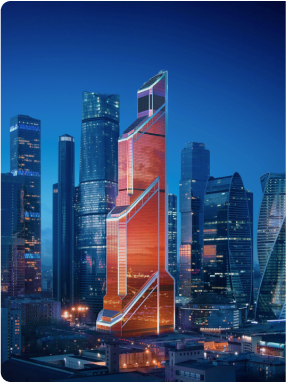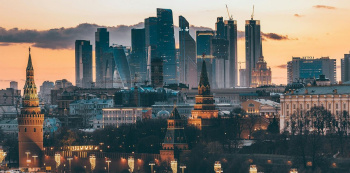



Moscow-City has long been ranked alongside the Kremlin and the Ostankino TV Tower in tourist guides to the Russian capital, proudly earning the title of Moscow landmark. The skyscrapers, prominently displayed against the city's skyline, are easily recognizable from afar, and their names are familiar to anyone who keeps up with the news.
However, on the way to its current form, the Moscow International Business Center, or simply MIBC, irrevocably lost a number of buildings that were intended to replace some of the existing ones. Many interesting designs by prominent Russian and international architects were either abandoned or significantly altered, succumbing to the pressures of constantly changing circumstances. Therefore, we decided to recall what the business center should have looked like according to its creators' vision.
Initial concept
The concept and initial plan for Moscow-City are the work of Studio No. 6 of Mosproekt-2, which was headed by Boris Thor in the late 20th century. His design was approved on March 12, 1991, and accepted for implementation.
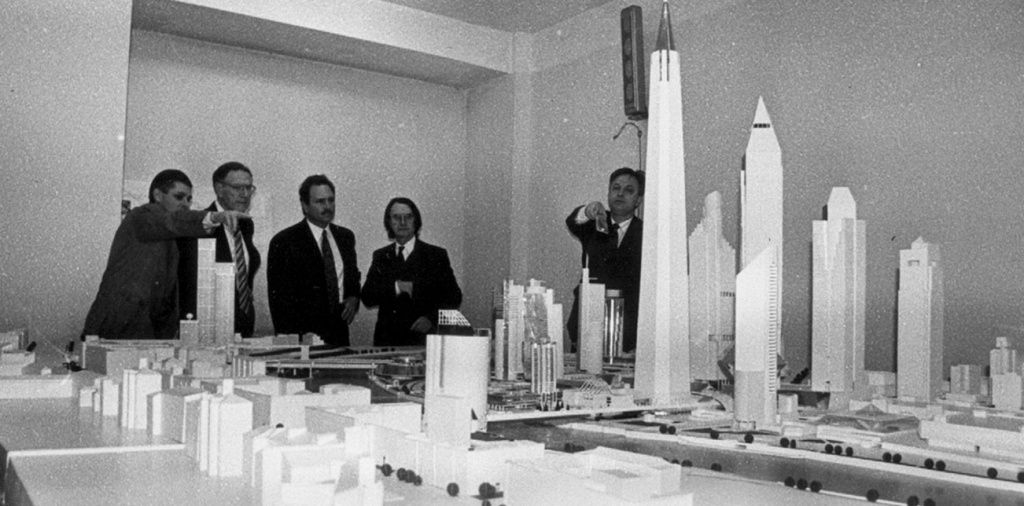
Architects led by B. Thor proposed creating a major business center, comprised of skyscrapers with distinctive architecture, on 50 hectares of former industrial land in the Kamushki district. They envisioned dividing the entire site into 22 plots. The initial design included both a park and a thoroughfare, terminating in parking at each building. Underground parking was also planned.
According to B. Thor's design, the Moscow River floodplain was to be the main structural element of the Moscow International Business Center. Therefore, all the skyscrapers were planned to be arranged in ascending order of size in a horseshoe shape, with a large green public space planned for the center. This solution would have allowed for river views for those living and working on the upper floors of the second-line towers. However, not all of these plans were destined to be realized, even partially.
Core complex
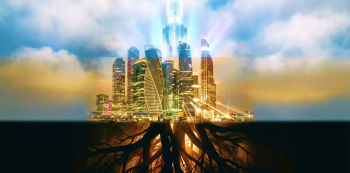
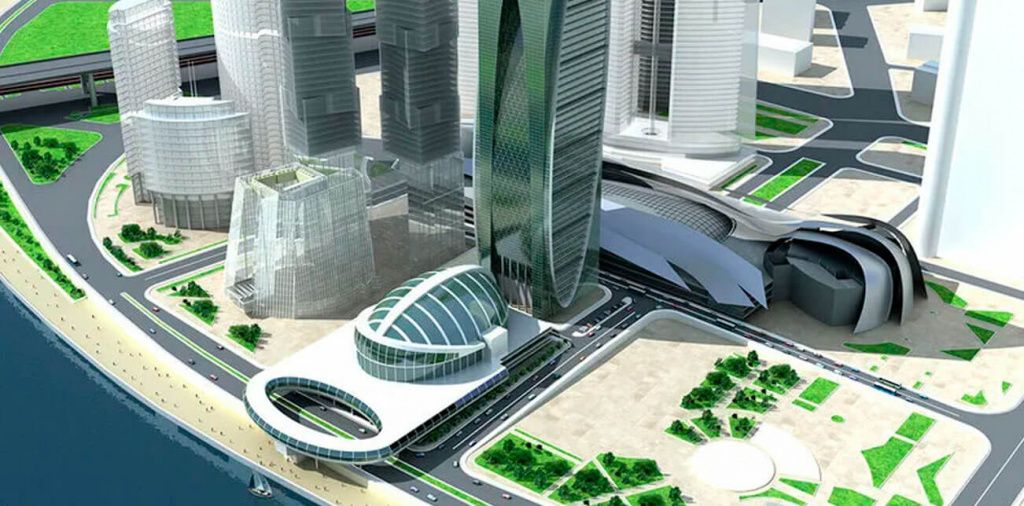
The park included in the design was eventually replaced by a core complex. The idea belonged to architect Meinhard von Gerkan, who envisioned a glass-and-concrete dome that would clearly depict the outlines of the continents. He also proposed creating a light projection depicting the cycle of day and night. The design envisioned a nine-story core complex, which would also house a cinema, museums, and restaurants.
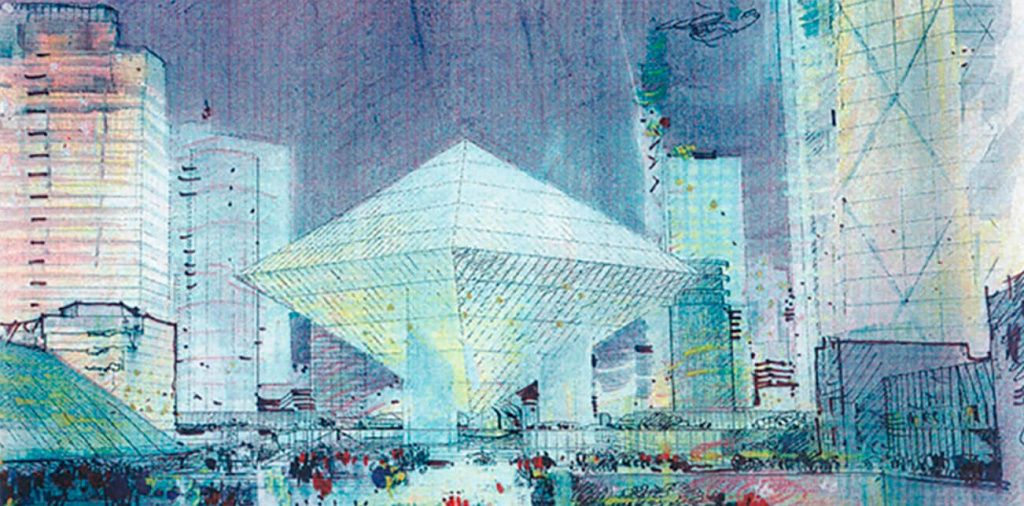
Today, some features of the project created by Gerkan can be traced in the multifunctional cinema and concert hall , still under construction on the 6th section of Moscow-City.
Russia Tower
The high-rise building with the resounding name "Russia" was intended to be the tallest not only in Moscow City but in all of Europe. Boris Thor planned for it to be 600 meters tall, allowing it to accommodate up to 25,000 people. "Russia" was intended to cap the spiral of buildings and have a simple, nearly cylindrical shape, yet stand out from the crowd not only for its breathtaking height but also for its golden color. The building's architecture bore much in common with bell towers, classic in Russian architecture.
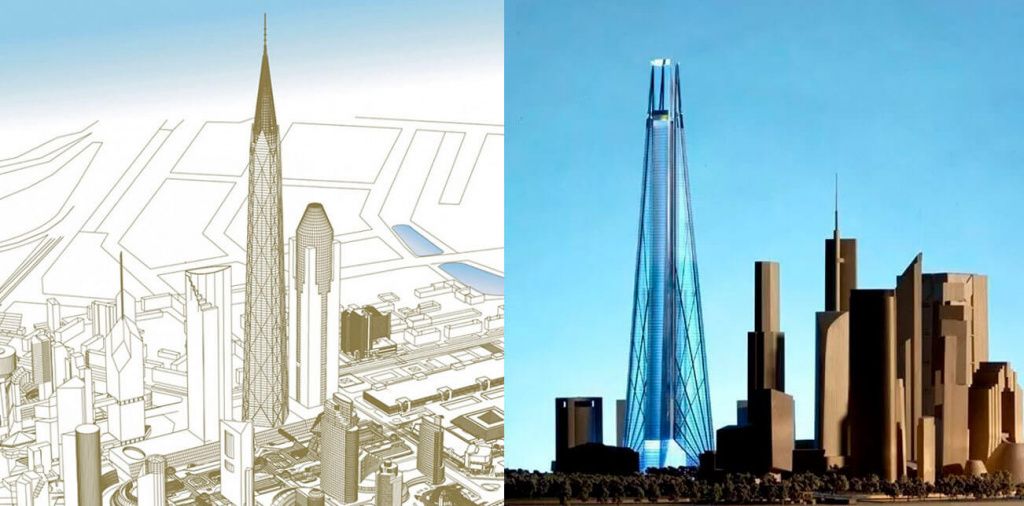
Norman Foster proposed another design for "Rossiya." This renowned British architect envisioned a skyscraper consisting of three cones that would merge into a single structure at the center. This design ensured the skyscraper's ultimate stability, with its height in Foster's design increasing to 612 meters, or 744.5 meters if the spire crowning the central spine is included. An observation deck and a café were planned for the skyscraper's top platform. The British architect also sought to make the building highly environmentally friendly, incorporating energy recycling and rainwater and meltwater collection technologies into the design. Foster's "Rossiya" was intended to cover approximately 500,000 square meters. However, economic circumstances prevented the investor from implementing the project.
Federation Tower with spire
Having abandoned the plans for the "Rossiya" project by B. Thor and N. Foster, it was decided to construct the "Federation Tower" on the site. It was the tallest skyscraper in Europe until the opening of the Lakhta Center in St. Petersburg. The "Federation Tower" was ultimately built, but its current appearance differs somewhat from the original design.
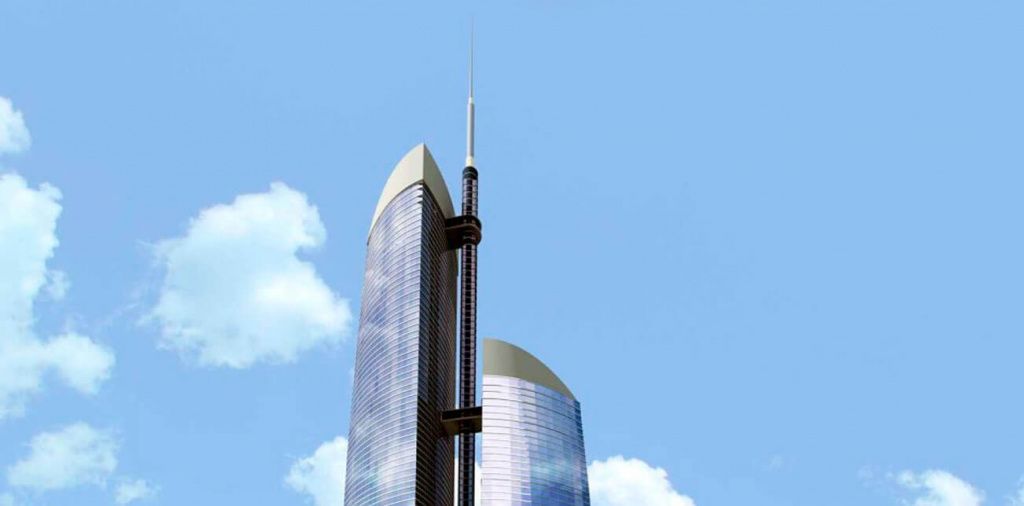
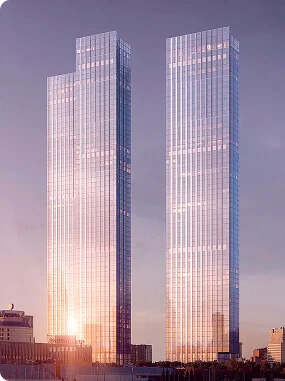
The original plan was to create two towers of different heights, with a glass spire between them. It was to have horizontal crossbars that would serve as a transition between the western and eastern towers. High-speed elevators were planned for the spire, with an observation deck built directly at the top. Installation of the spire was even begun, but the idea was abandoned mid-construction. As a result, the half-built structure was dismantled, and the observation deck was relocated to the eastern skyscraper.
Today, the Federation Tower consists of two skyscrapers, connected only by a shared stylobate. The eastern tower stands 373.3 meters tall, while the western tower stands 242.2 meters.
Moscow City Hall
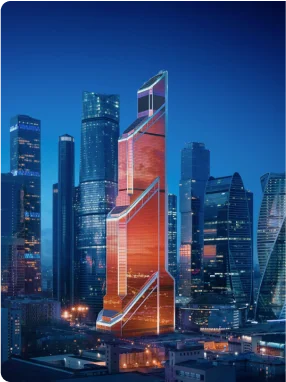
In 2002, the idea arose to build a brand-new Moscow City Hall building in Moscow City. A competition was announced, and Anton Nagavitsyn and Mikhail Khazanov won. These architects designed a 72-story building, rising 308.4 meters.
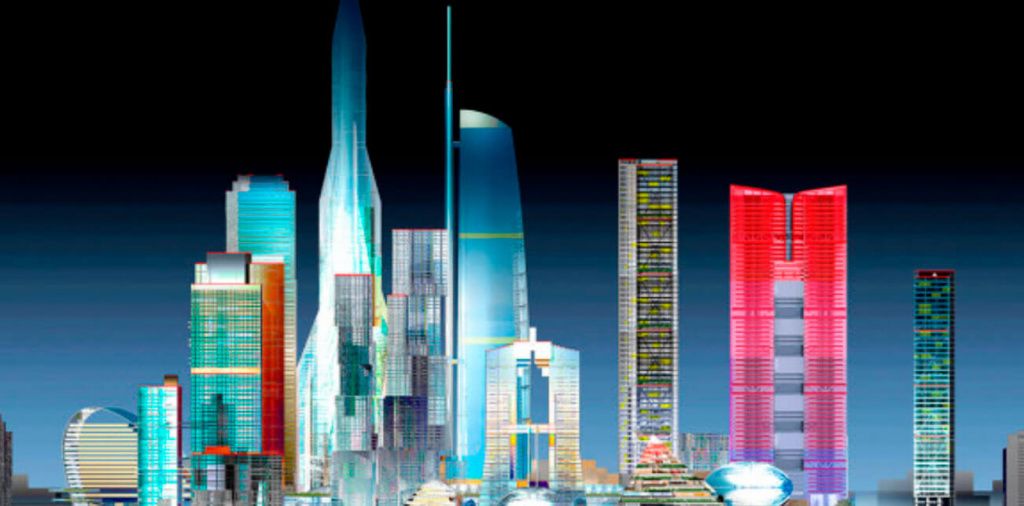
It was to have a strict rectangular shape, broken up by green belts. The skyscraper's highlight was to be the upper floors and roof, designed in the shape of the letter M. The initial concept was for the building to have a uniform color scheme. However, the former mayor of Moscow expressed a desire for the tower's roof to be red, which was taken into account by the architects. However, in 2008, the project was shelved.
Mirax Garden
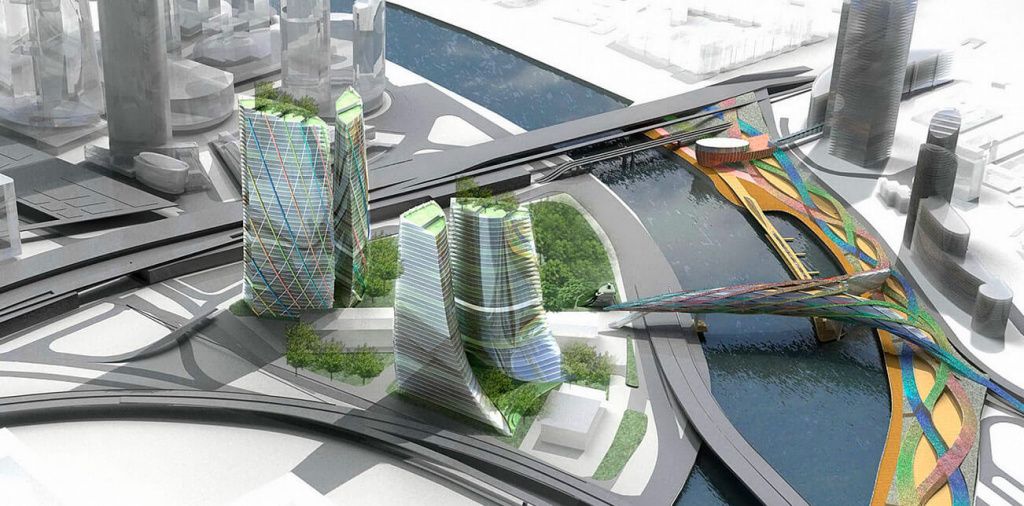
In 2008, the well-known company Mirax Group, owned by Sergei Polonsky, decided to hold an architectural competition for the restoration of the Presnenskaya Embankment. Among all the projects, the one created by Mikhail Asadov's architectural studio stood out. It proposed greening the public space with spiraling ribbons of living plants, residential buildings within the bridge, and a multifunctional recreational complex. The winning design was named "Mirax Garden."
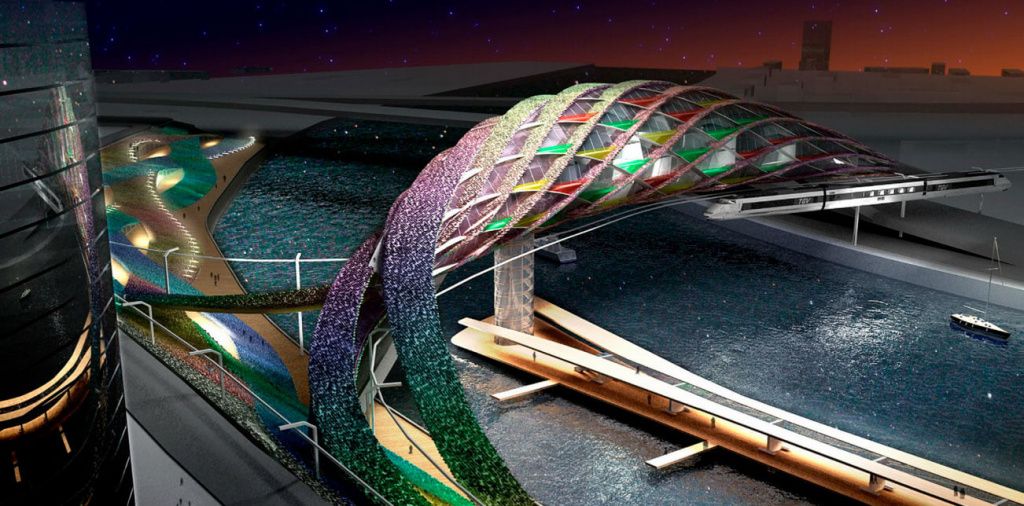
According to the plan, the embankment would feature a pedestrian zone, metro station entrances, a yacht berth, a helipad, and a traffic interchange. The architects also proposed building a multifunctional center nearby, complete with its own shopping mall, underground parking, restaurants, and a rooftop promenade.
The project's main feature was the creation of a multicolored glass bridge for transport and residential use across the Moskva River. It was planned to house a monorail and two-story residential cottages with beautiful green courtyards.
Triumphal Arch
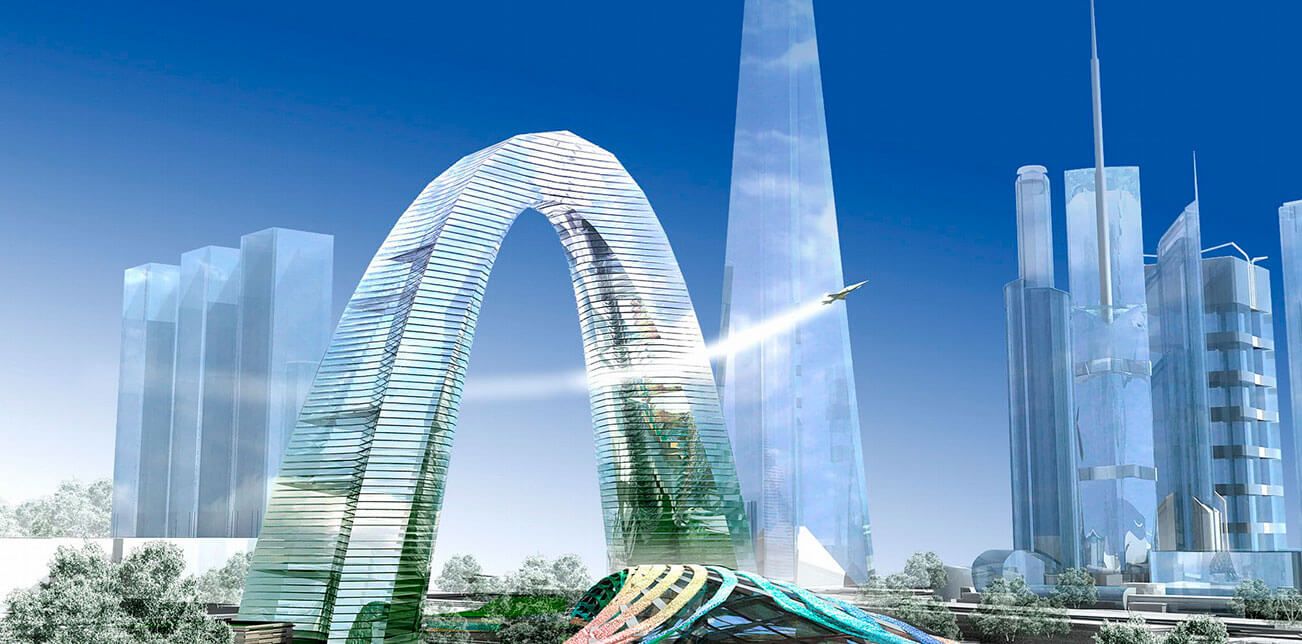
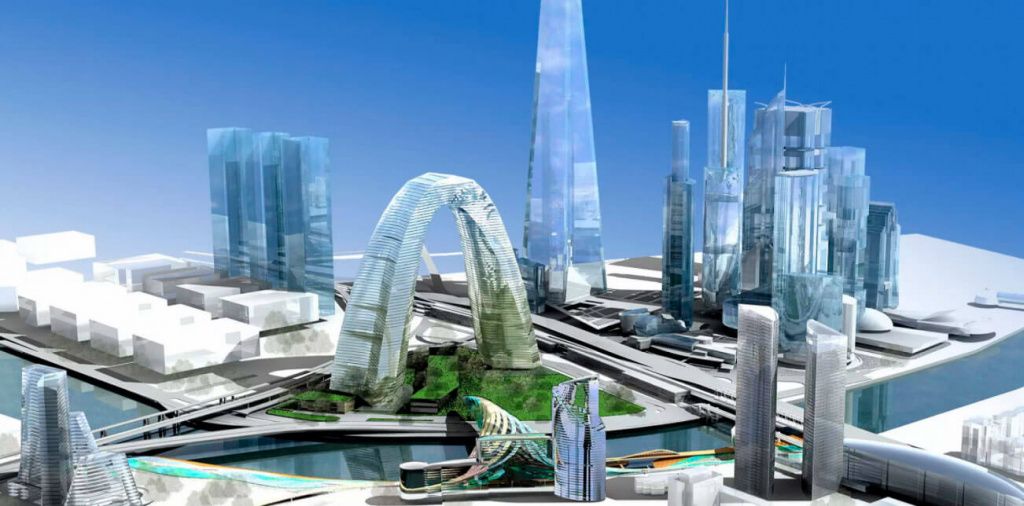
After winning the first architectural complex, Asadov Studio's Mirax Group proposed a development project for two sites adjacent to the embankment. According to the studio's specialists, constructing skyscrapers there would be inappropriate, as they would be lost among the surrounding landscape. Therefore, the decision was made to combine the sites and build an arch on them, a completely fresh idea for Moscow City, which was already crammed with towers. The arch's silhouette was largely reminiscent of the capital's famous Triumphal Arch. However, unlike the latter, the Moscow City arch was to be 280 meters high and cover an area of approximately 500,000–600,000 square meters. Vladimir Travush, chief architect of the Moscow International Business Center, worked on the project alongside the Asadov Studio's architects.
Ivan the Great
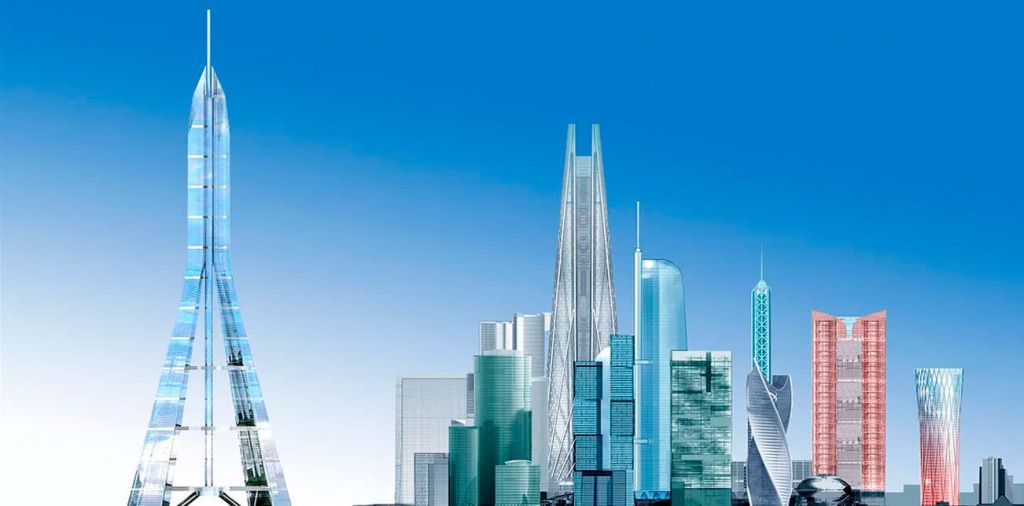
Over time, the grand "Triumphal Arch" of Moscow-City grew into a skyscraper, its height even surpassing that of the magnificent Rossiya Tower by 100 meters. It was named "Ivan the Great" after the Kremlin's tallest bell tower, which remained the tallest building in all of Moscow until 1952.
"Ivan Veliki" was to have two supports, each located on its own plot of land, one of the two available to the architects. At the 410-meter mark, they were to connect and extend as a single structure. However, horizontal crossbars were also designed between the supports, representing so-called "stiffening floors," which were to be landscaped to enhance the building's aesthetic appeal. But the tower, which promised to be a dominant architectural feature of Moscow for many years to come, was also destined to see the light of day.
Butterfly wings
The "Ivan Veliki" project, like the "Triumphal Arch," was abandoned. Instead, Asadov designed two pairs of towers (one on each site) that would mirror each other and form a composition reminiscent of butterfly wings. The buildings comprising them were to be 160 and 200 meters tall.
The high-rise buildings' facades were planned to be decorated with a multicolored patterned mesh that would harmoniously echo the Mirax Garden. The skyscrapers' roofs and open spaces were to be landscaped.
Parliament Center
Mikhail Asadov worked on projects other than those for Mirax Group. He also designed the building for the Federal Assembly of Russia, which was also planned for the Moscow International Business Center. It was to be located on the existing underground structures of the Moscow City Hall, which had been abandoned earlier.
The project's creators reserved the first six floors for the parliamentary library, considering it highly symbolic that deputies and senators would be working on the main repository of laws and knowledge. Starting from the seventh floor, two parallel towers were to be constructed. One of them would house sessions of the State Duma, and the other, the Federation Council.
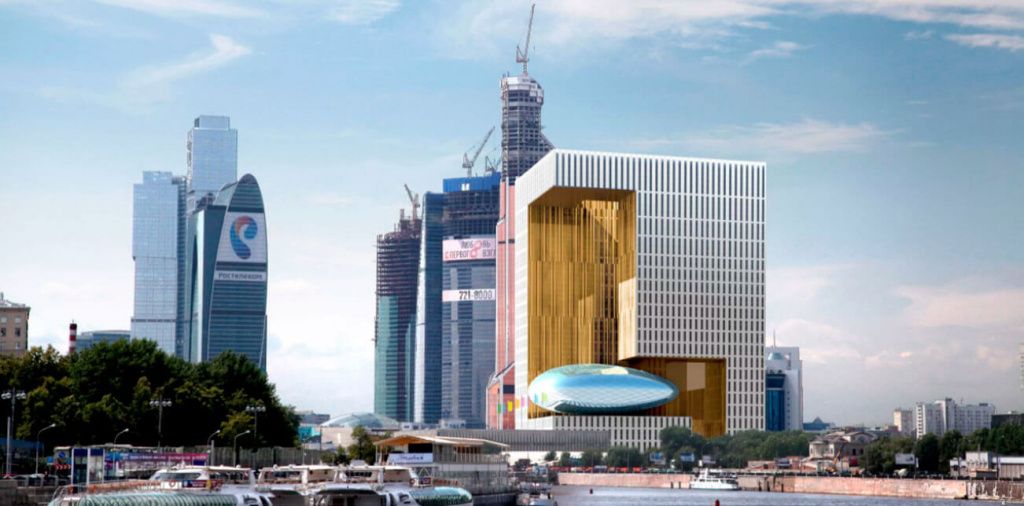
The top three floors of the two towers of the Parliament Center were to be connected by a horizontal bridge, housing both chambers. However, the alcove formed by the two meeting towers was not to be continuous. Its rear "wall," according to the design, was to accommodate three meeting rooms.
Water park
One of the most high-profile failed projects in Moscow City was the water park. It was planned to be built as part of the Imperia Business Center , which was expected to cost approximately $470 million. Of this, approximately $120 million was allocated for the water park.
Initially, the architect Inna Roytburg (Russia) worked on its design, but since 2002, its development has been carried out by an Italian architectural firm headed by Giovanni Corradetti.
Yuri Dolgoruky
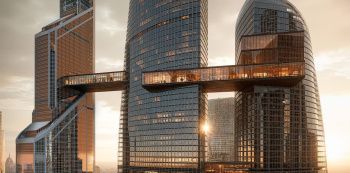
The project, approved and named "Yuri Dolgoruky," was supposed to begin construction in 2016, but work has yet to begin. It belongs to Zaha Hadid, who designed a complex of two oval skyscrapers (56 and 50 stories) connected by a spacious horizontal pavilion and glass bridges.
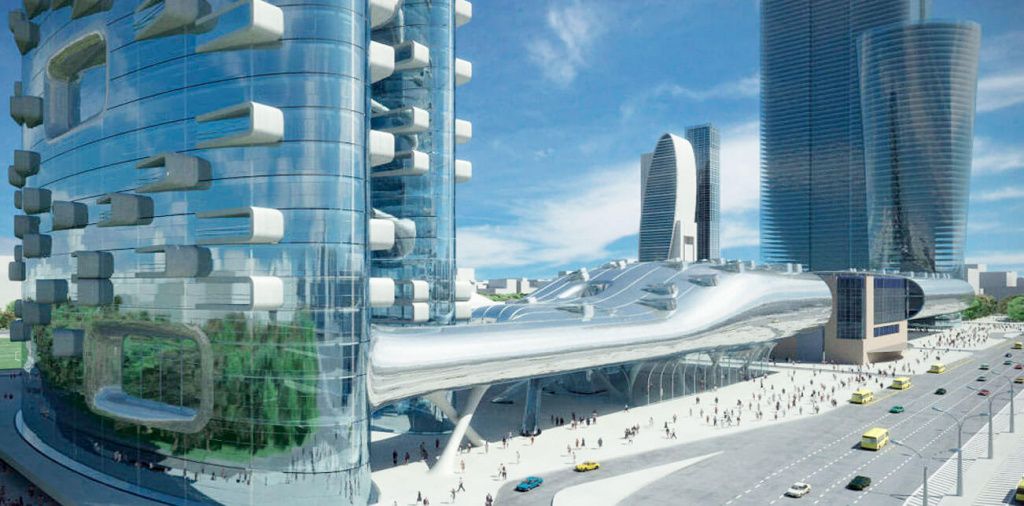
The east tower, like the west tower's penthouse, was originally intended to be used for residential apartments, while almost all of the remaining space in the west tower was to be occupied by a hotel. The horizontal pavilion was planned to house exhibition space, a café, and three small and one large conference hall.