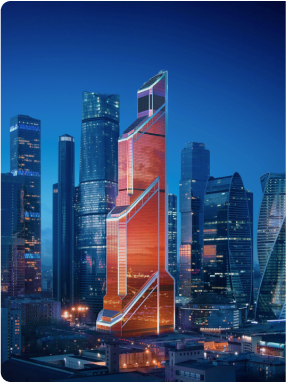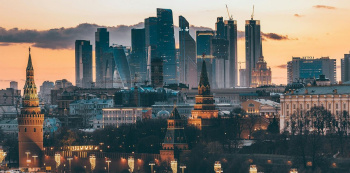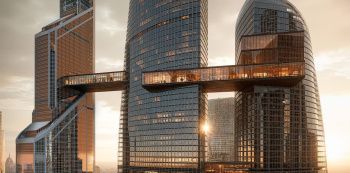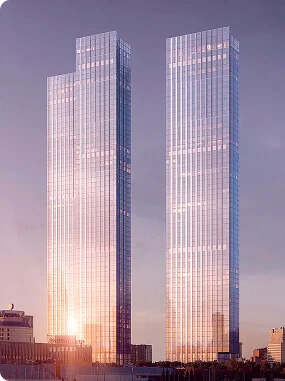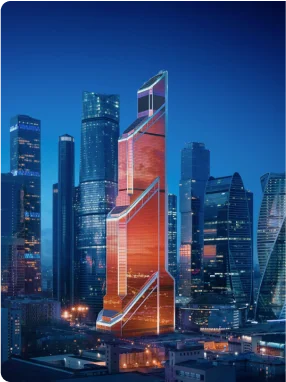




In 2026, the Moscow City real estate market began attracting the attention of investors from the Middle East. However, this is not about a large-scale flow of capital, but rather about a selective entry strategy into individual projects, primarily in the segment of premium residential skyscrapers.
A new interest in “vertical Moscow”
Amid global geopolitical turbulence, investors are increasingly reconsidering their asset structures. In this context, Moscow City is viewed as:
-
an alternative jurisdiction
-
a market with a limited supply of premium-class properties
-
an opportunity to enter projects at an early stage
Particular interest is drawn to new residential towers, where the following are combined:
-
status
-
limited supply
-
potential for value growth
Who is investing and how they enter
Unlike traditional markets, investments are not made through large funds, but through:
-
private capital (family offices)
-
partnerships with developers
-
structured deals through third-party jurisdictions
This format allows for risk minimization and flexible asset management.
Why Moscow is not Dubai
Despite the growing interest, it is premature to say that Moscow City is “replacing” Dubai.
Dubai still remains:
-
a global investment hub
-
with a transparent jurisdiction
-
and high asset liquidity
Moscow, on the other hand, acts as:
a niche market for diversification, rather than a primary capital hub
The key factor is not height, but discount
Investors are attracted not so much by record-breaking tower parameters, but by:
-
the current undervaluation of the market
-
limited supply of new projects
-
the opportunity to secure entry at a favorable price
This is what makes Moscow City competitive in certain scenarios.
Barriers that cannot be ignored
Despite the interest, the market remains complex:
-
currency restrictions
-
legal nuances
-
sanctions risks
-
limited transparency of transactions
Therefore, most investors act cautiously and choose partnership entry models.
What’s next
In the short term, Moscow City will retain its status as:
a point of attraction for selective investments, rather than mass capital
At the same time, the key growth drivers will be:
-
increased market transparency
-
infrastructure development
-
the emergence of new flagship projects
Conclusion
Interest from the Middle East is not a myth, but neither is it a new “gold rush.”
Today, Moscow City is:
-
a market of opportunities
-
but only for those who know how to operate in a complex environment
And this is precisely its main filter and, at the same time, its competitive advantage.