



Office space is undergoing a revolution in Moscow, and Bolshoe City is becoming a key player in the transition to a new generation of workspaces. In this article, we'll explore how the large-scale Bolshoe City project promises to transform Moscow's office market and why this innovative venture is generating such interest among investors.
Context and Geography of the "Big City"
"Bolshoe City" is a multifunctional complex located in Moscow, covering over 100 hectares. It is situated in the prestigious eastern part of the city, at the intersection of three key thoroughfares: Shosse Entuziastov, the Moscow Ring Road, and the Third Ring Road. This location makes it accessible and convenient for transportation, an important criterion for modern office space.
Project concept
The "Big City" project is being implemented in line with modern global trends in urban development and architecture. The complex's core design principles are environmental friendliness, energy efficiency, comfort, and user convenience. The project includes green spaces, bike paths, and pedestrian routes, as well as modern technologies for facility management and operation.
Innovation and technology
The "Big City" project is being built using cutting-edge technologies to create efficient and safe workspaces. For example, a smart lighting system adjusts light intensity based on natural light, saving energy and improving user comfort. Furthermore, the complex will be equipped with modern ventilation, heating, and air conditioning systems to ensure an optimal microclimate in offices and public areas.
Multifunctionality and mixed zones
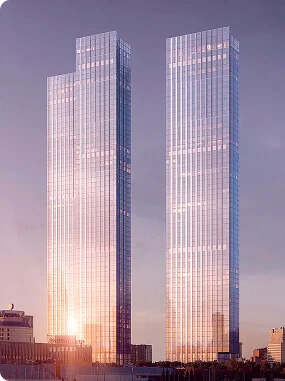
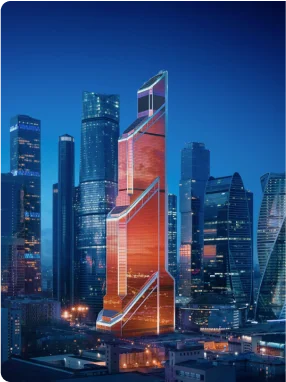
"Bolshoe City" offers its tenants and visitors a wide range of amenities and services. The complex will include Class A and B office buildings, shopping and entertainment centers, hotels, residential properties, and sports and wellness facilities. This creates a unique environment where work, leisure, and everyday life coexist harmoniously, ensuring comfort for all users.
Ecology and green spaces
One of the key features of "Bolshoy City" is its commitment to environmental friendliness and sustainable development. The entire complex will be equipped with modern air and water purification systems, as well as waste disposal. Furthermore, the creation of extensive green areas and parklands makes the project attractive not only for its comfort but also for its environmental benefits.
Prospects and Impact on the Moscow Office Market
"Big City" is one of the largest and most innovative projects in the Moscow office market. Its successful completion will raise the quality standards of office space in the capital and stimulate additional investment in the sector. The "Big City" metropolis is expected to attract major companies, international brands, and innovative startups, making it an important economic and innovation hub for Moscow.
The "Big City" project charts new horizons for Moscow's office market, introducing modern approaches and technologies to commercial real estate. This multifunctional complex, with its eco-friendly solutions and diverse amenities, promises to transform the capital's workspaces and set new standards for office buildings in the city. Its commitment to creating comfortable, innovative, and environmentally sustainable workspaces makes "Big City" a role model not only in Russia but also internationally.
With technological advances and growing environmental awareness, projects like these are becoming increasingly relevant and in demand. "Big City" could become a launching pad for further transformation of the Moscow office market and inspire new investment in similar projects.
Overall, the "Big City" metropolis represents an ambitious undertaking that combines modern technologies, eco-friendly solutions, and comfort for all its users. Its implementation will undoubtedly have a significant impact on the Moscow office market and set a new standard for commercial real estate in the Russian capital. The "Big City" project clearly demonstrates what the future of the office market could look like and the opportunities it opens for businesses and society at large.
Social responsibility and contribution to the city's development
Furthermore, "Bolshoye City" strives to contribute to Moscow's social development. The complex will support local communities by providing spaces for educational and cultural events, as well as foster the creation of new jobs and opportunities for young people. Engaging with city residents and participating in their lives makes the project even more significant and valuable for the capital.
Attracting investment and international cooperation
The successful implementation of the "Big City" project could become a powerful incentive to attract foreign investment into the Russian economy. In addition to international companies considering "Big City" as a potential location for their offices, the project could also serve as a platform for cooperation in technology, science, and culture. Thus, "Big City" not only changes Moscow's appearance but also contributes to strengthening international ties and Russia's reputation on the global stage.
Conclusions
The "Bolshoe City" megalopolis is a unique and progressive project that is making a significant contribution to the development of Moscow's office market. Through innovative technologies, environmental responsibility, and a focus on user comfort, "Bolshoe City" sets new standards for commercial real estate and exemplifies the harmonious combination of business, technology, and ecology.





Any questions or comments?
I would like to see publicly available real figures on: 1) the ratio of Moscow residents and construction areas 2) rational use of space and the possibility of a new format: combining office space and residential area. Possibility of using retail, museum and office space for overnight stays or accommodation. Use of public artificially illuminated areas for vertical farms. 3) it makes sense to create social zones in the constructed first floors of buildings, since insurance and pyramids from insurance do not work for small businesses, this has been shown by experience. Guardians and insurance companies have not fulfilled their direct functions to ensure the lives of people. And this is the reason why the system will not work as before
Site administrators response:
Thank you for your comment! You raise interesting questions, and I will try to provide you with information and thoughts on each of them.
1. The ratio of Moscow residents to construction areas: Unfortunately, I do not have access to precise data on this issue. However, it is worth noting that Moscow continues to expand and modernize, and the city authorities are trying to balance between satisfying the needs of the population and preserving cultural heritage.
2. Rational use of space and the possibility of a new format: The idea of combining office space and residential area may be promising in terms of optimizing the use of space and sustainable development of the city. Such solutions are already used in other cities and can be adapted to Moscow realities. Vertical farms are also of interest as a possible solution for improving food security and the ecology of the city.
3. Social zones on the ground floors of buildings: You propose an interesting idea of creating social zones on the ground floors of buildings instead of small businesses, based on the experience with non-working insurance and pyramids. This may be an option for providing life for people and activating the social space. However, this approach will require additional research and analysis to implement in practice.
Overall, your comment highlights the importance of adaptive and sustainable urban solutions for modern megacities like Moscow.