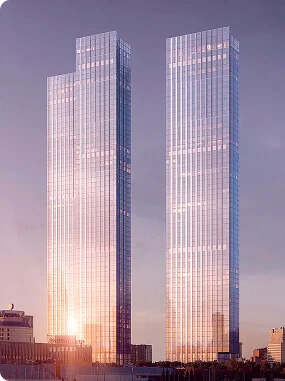



Currently, 78 complexes including skyscrapers—buildings over 100 meters tall—are under active construction in Moscow. This data was provided by Metrium, which uses the international Emporis classification system. In 2019, there were only 50 such projects on the capital's primary real estate market. Currently, the total area of skyscrapers under construction is approximately 8 million square meters. Developers implementing the tallest projects in 2024 include Capital Group, Renaissance Development, Summa Elements, Level Group, and others. These companies have made a significant contribution to transforming Moscow's urban landscape, creating innovative high-rise buildings that are becoming symbols of a new approach to urban planning.
How Moscow Became a City of Skyscrapers
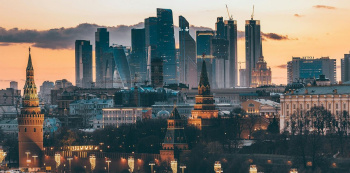
Modern high-rise buildings began appearing in Moscow about a quarter of a century ago, directly related to the rapid population growth following the collapse of the Soviet Union. Ruslan Syrtsov, Managing Director of Metrium, explains that this demographic growth created an urgent need for new urban solutions. Limited land resources and the introduction of cutting-edge technologies forced Moscow to grow vertically. This has led to the emergence of unique skyscrapers that represent not only the capital's economic but also architectural progress.
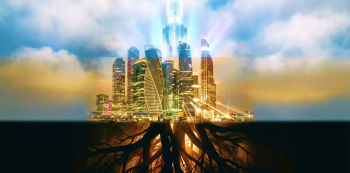
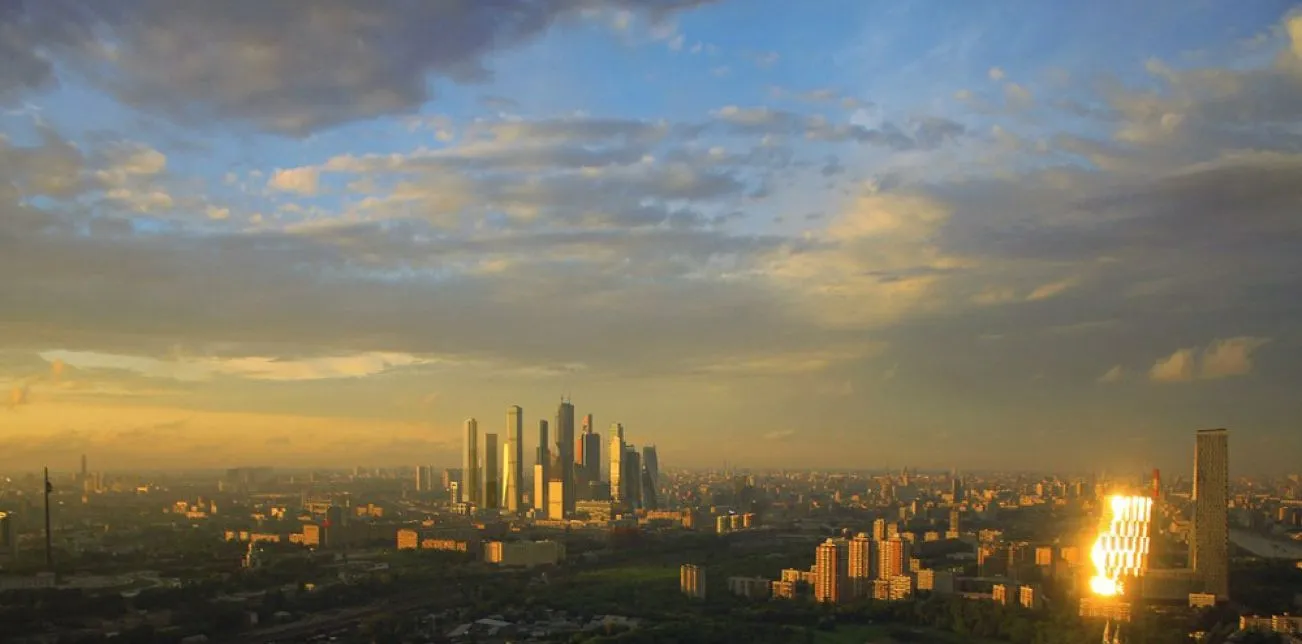
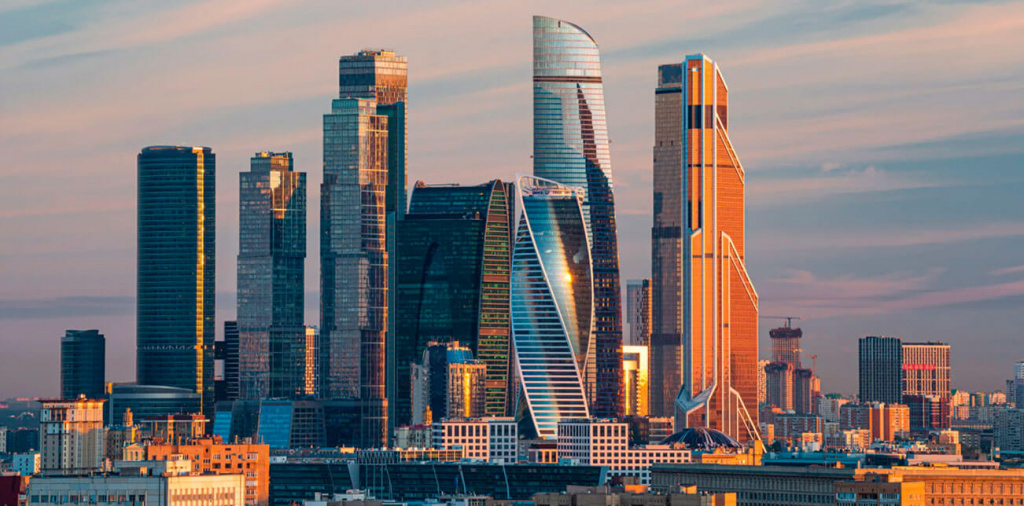
High-rise buildings have become a symbol of a new stage in the capital's development. One of the main examples of this architectural leap is the Moscow-City international business center, whose construction began in the Presnensky district in the late 1990s. Initially, the complex was planned to be built in a unified style, designed by architect Boris Thor. However, over time, the concept changed, and Moscow-City became an amalgamation of various architectural projects. As a result, the center has become a landmark of Moscow and a magnet for both business and cultural activity.
The Impact of Investment and Technology on High-Rise Construction
Olga Guseva, CEO of Key Capital, notes that the implementation of such ambitious projects was made possible by significant investment and the rapid development of construction technologies. Modern building materials have significantly improved the energy efficiency of high-rise buildings, making them more comfortable and environmentally friendly to live in. These architectural innovations distinguish modern skyscrapers from older high-rises, such as Stalinist skyscrapers, making them more suitable for everyday use.
Moscow City is an icon of the capital's high-rise architecture.
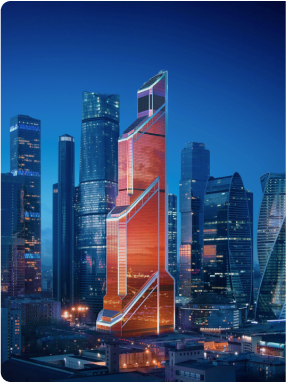
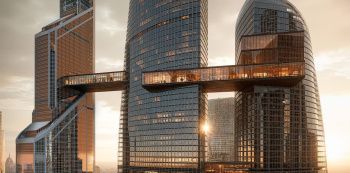
Currently, 25 skyscrapers are already operational in Moscow City. One of the most famous projects is the Federation Complex, completed in 2017. It includes the 374-meter-tall Vostok Tower , currently the second-tallest building in Europe, behind only the Lakhta Center in St. Petersburg (462 meters). Architects Sergei Tchoban and Peter Schweger designed this unique project, and construction was carried out by the Federation Tower mutual investment fund.
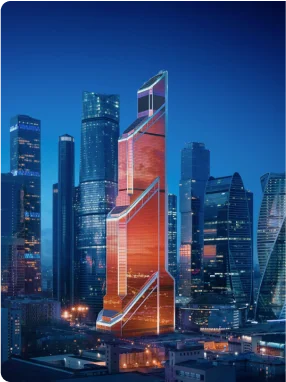
In 2012, the Mercury Tower , although uncompleted, was considered the tallest building in Europe at 338.8 meters. However, it was soon surpassed by other high-rise projects in Moscow City. Six more skyscrapers are planned for construction by the end of the 2020s, including the 85-story, 340-meter-tall residential complex "Dom Dau," which Summa Elements Group plans to complete in 2027. This project will become another architectural landmark for the city.
Landmark projects: from Triumph Palace to new residential complexes
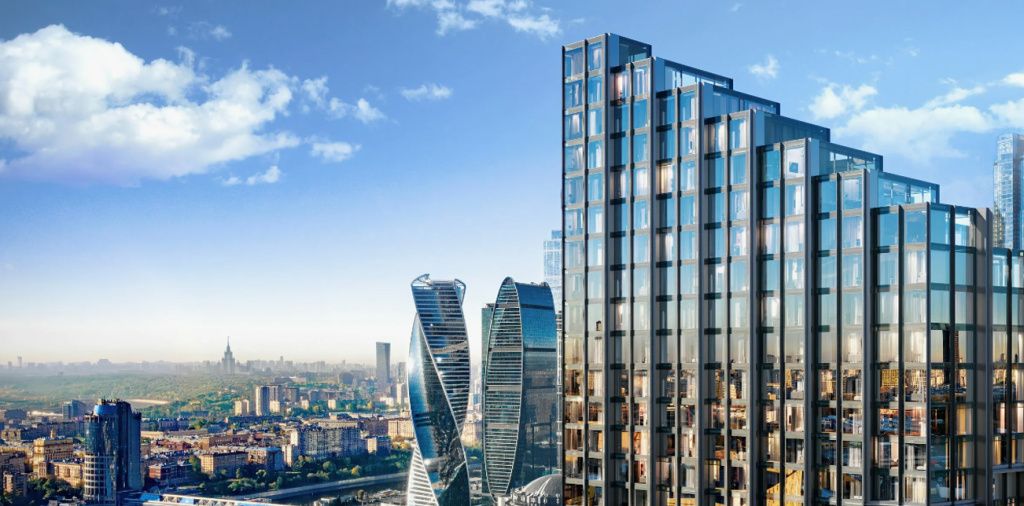
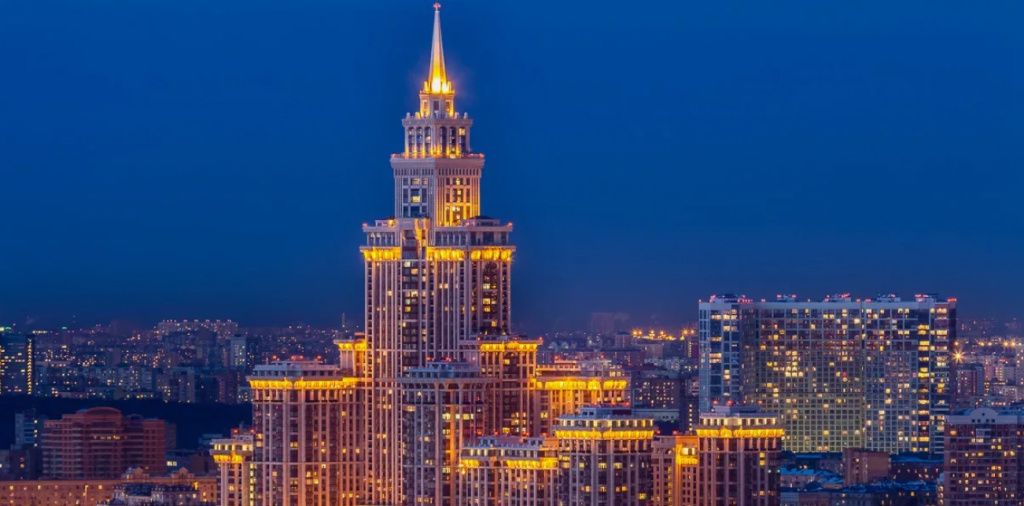
Moscow continues to develop, and each year, high-rise buildings become more expressive and functional. One of the first iconic residential complexes was the Triumph Palace, built in the mid-2000s in the style of Stalinist skyscrapers. This complex in the Khoroshevsky district consists of nine sections of varying heights, united by a common stylobate. The central section, 264.1 meters high, dominates the entire complex and, at the time of its completion, was one of the tallest residential buildings in Europe.
Lifting height restrictions and development prospects
A key step in the development of high-rise construction was the lifting of long-standing building height restrictions in Moscow. In 2012, the city authorities set a limit of 75 meters, but in 2024, Mayor Sergei Sobyanin signed a decree lifting it. Herman Te, Development Director at Capital Group, emphasizes that the lifting of restrictions has allowed for a more flexible approach to design and stimulates the creation of a comfortable urban environment. This opens up new opportunities for the implementation of complex and ambitious projects.
"Badaevsky" - a floating residential complex on columns
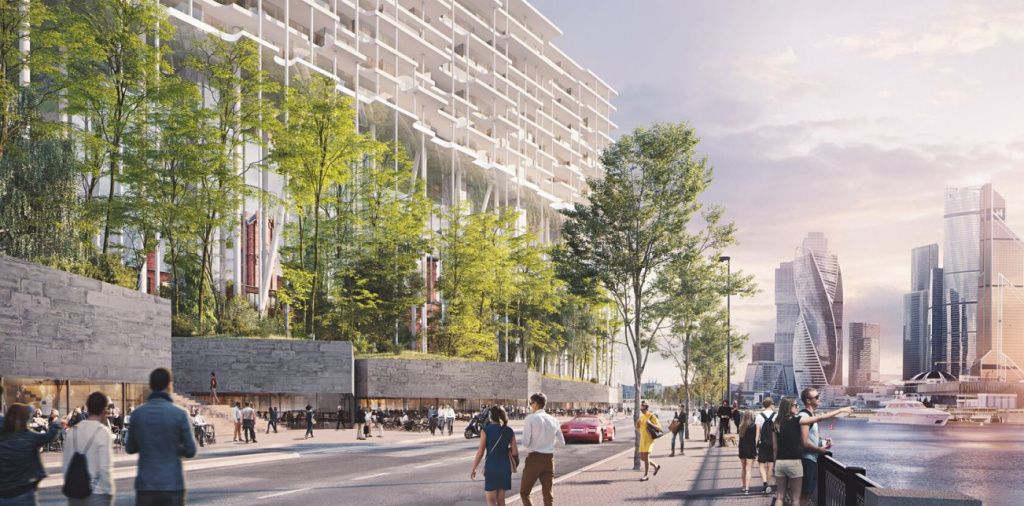
One of the most interesting projects of recent years is the Badayevsky residential complex, currently under construction on Tarasa Shevchenko Embankment. This project represents an innovative approach to high-rise construction—a "floating" skyscraper supported by columns. The building will reach a maximum height of 18 stories, with residential sections located at the top, creating a floating effect. The project was developed by the Swiss firm Herzog & de Meuron, renowned for its innovative and bold approach to architecture. Badayevsky will be a unique example of the integration of modern architectural solutions and historical context, making it one of Moscow's most significant new buildings.
The "15-minute city" concept and the development of high-rise housing
Global urban trends, such as the "15-minute city" concept, are also influencing the development of high-rise construction in Moscow. This concept envisions all essential amenities—shops, offices, and parks—being within walking distance. Mikhail Khvesko, Director of Project Implementation at Capital Group, emphasizes that, as development density and population increase, high-rise construction remains a logical and sought-after solution. Skyscrapers are becoming part of the "vertical streets" concept, where various functions—from commercial space to residential apartments—are concentrated within a single building.
Environmental Standards and the Future of High-Rise Projects in Moscow
High-rise construction in Moscow continues to gain momentum, driven by the city's residents' demand for comfortable and modern living conditions. Future high-rise projects will also take into account important environmental aspects and the implementation of green technologies. Developers are actively developing projects that incorporate energy-efficient materials, green roofs and facades, and rainwater collection and recycling systems, creating comfortable living conditions and reducing environmental impact.
Projects with minimal environmental impact and high energy efficiency, which can address the challenges of climate change, will be particularly in demand. Environmental standards are becoming a key aspect of modern construction, and Moscow strives to be a leader in this area. Thanks to these approaches, the capital's high-rise complexes are becoming not just places to live or work, but also examples of sustainable development and environmental stewardship.
Thus, the growing number of skyscrapers in Moscow reflects the city's desire to adapt to new living conditions and create a comfortable and modern environment that meets international standards. High-rise buildings are becoming an integral part of the capital's landscape, symbolizing the progress and innovation that drive Moscow forward.