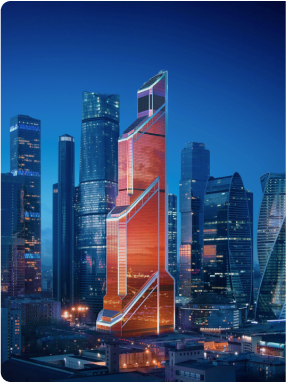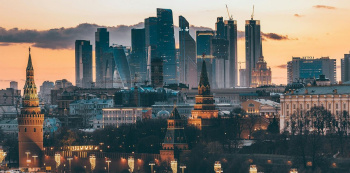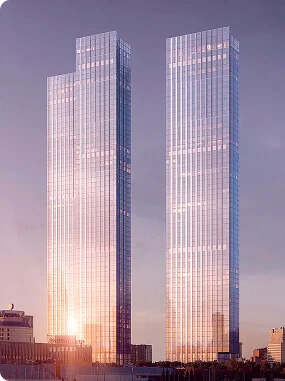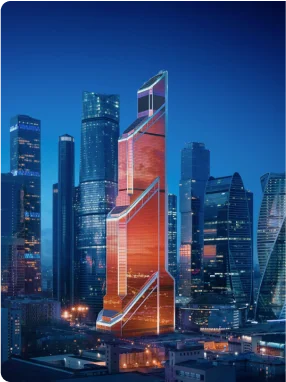



Moscow-City ( MIBC "Moscow-City" ) is a megaproject on Presnenskaya Embankment, conceived in the early 1990s as an international business district. The first completed project was Tower 2000 , with the adjacent Bagration pedestrian and shopping bridge (1996–2001)—the complex's first structure. Dozens of high-rises were later built around it ( Federation Tower , Imperia , OKO , and others), and the transportation core was expanded with new metro stations and hubs. Several sites have been designated for the MIBC: sites 2–3 (where Evolution Tower and the adjacent square are located) and site 6 ( the central core ) were planned to become the site of the City Square between 2011 and 2015. Thus, a new square arose on the connecting link between the embankment, the pedestrian bridge and the concert hall , closing the axis of the Bagration Bridge and creating the public heart of Moscow City.

Architectural concept
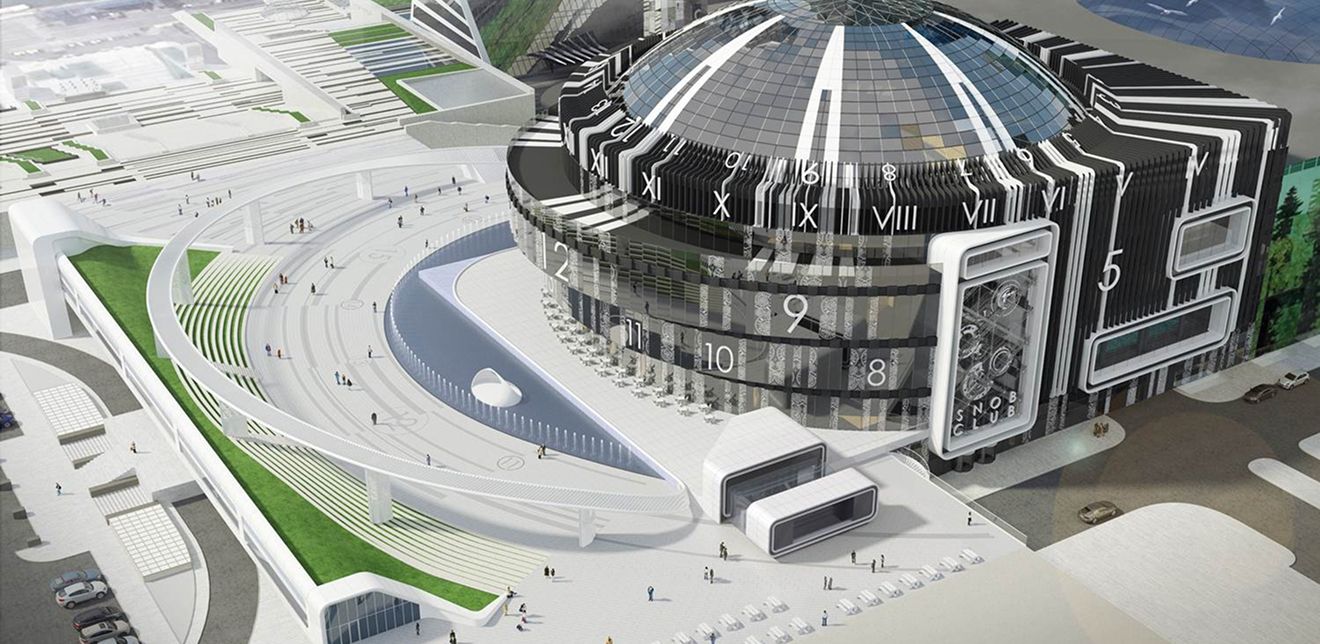
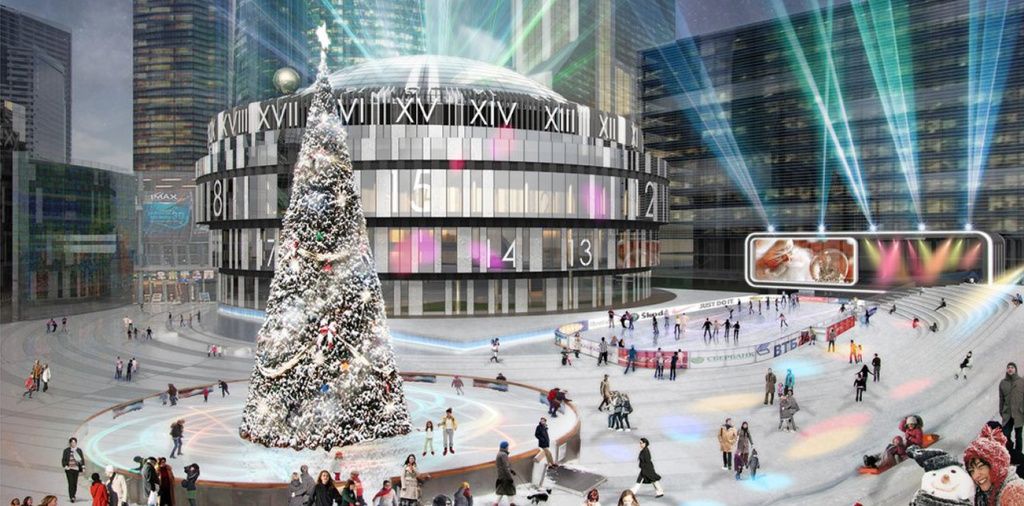
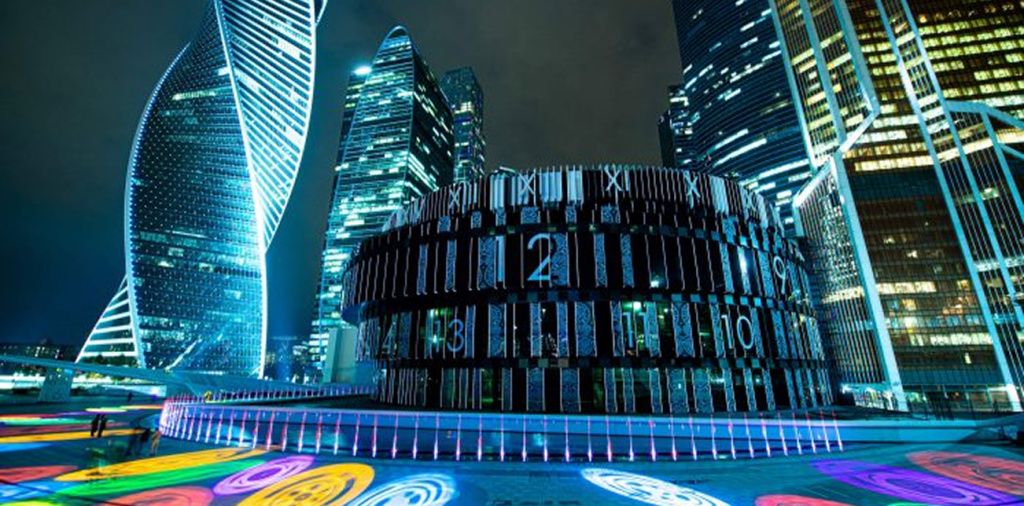
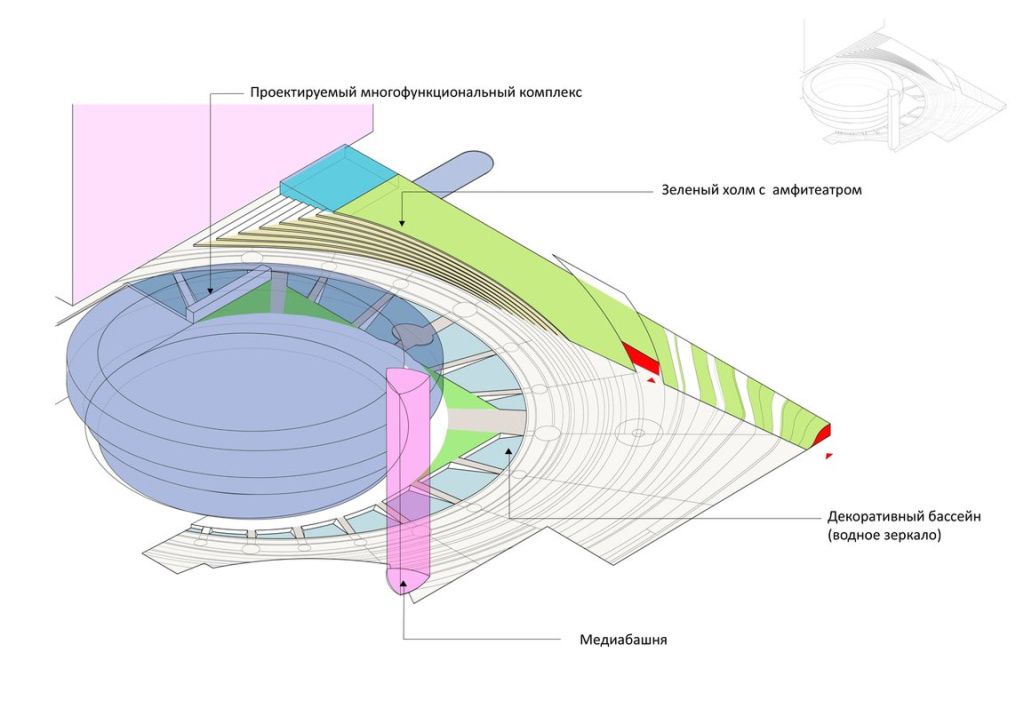
The project's central theme is "Time" (Moscow City's slogan is "Time is Money"). The central element is a cylindrical cinema and concert hall with a translucent dome shaped like a giant clock face. A light beam moves around the perimeter of the dome, indicating the current time. In the evening, the numbers and markers on the dome are brightly illuminated, transforming the building into a "talking clock" for the square.

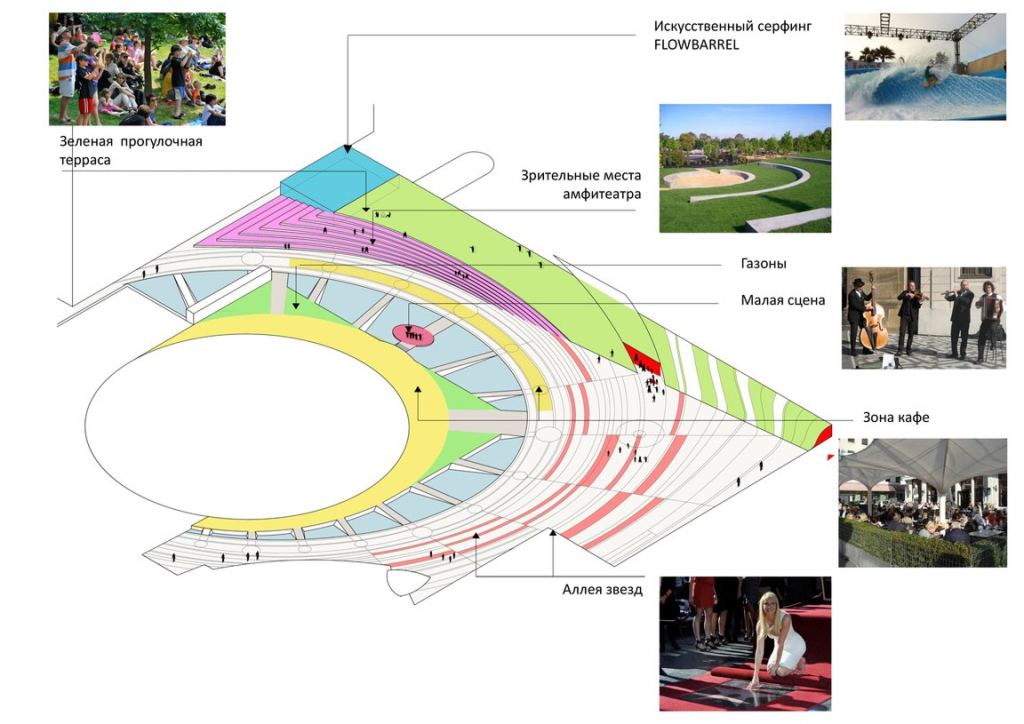
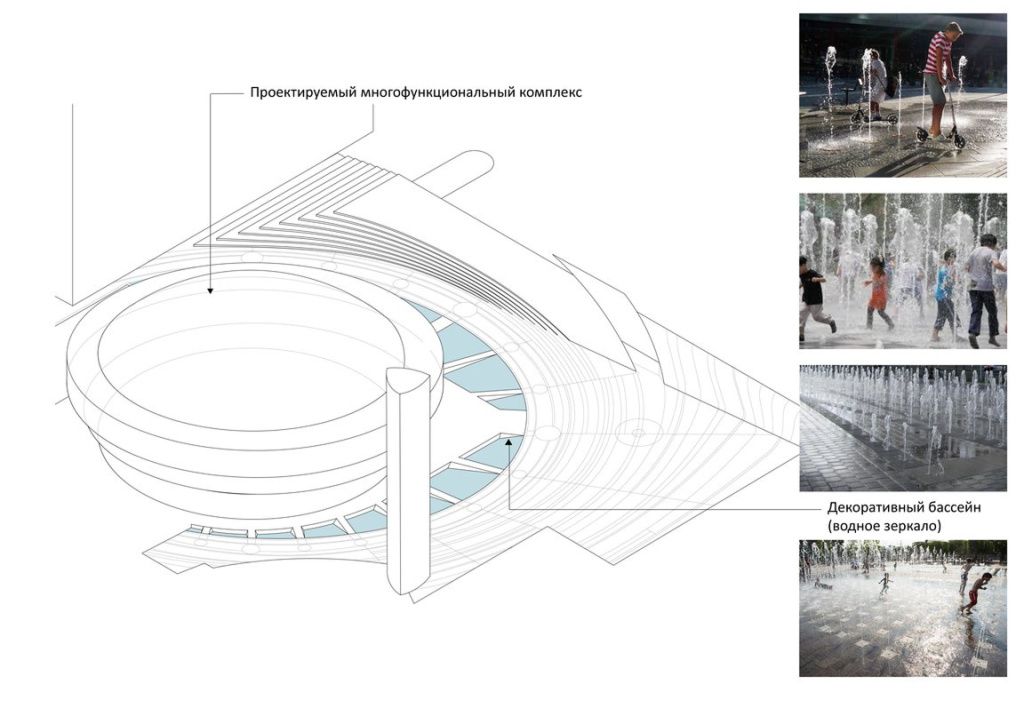
A terraced area—an open space covering approximately 3 hectares—is laid out around the concert hall, of which the upper level (approximately 1.2 hectares) is organized around a cylinder and closed off to the east by an amphitheater. The area is designed as a continuous extension of the clock-like composition: a colorful music fountain is seamlessly integrated into it, and an artificial amphitheater-like hill serves as a "stand" for the audience.
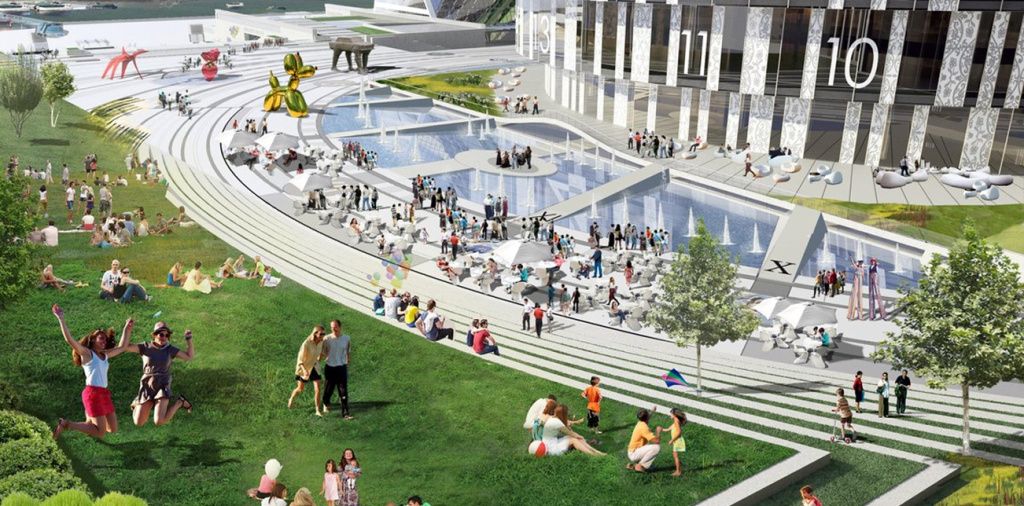
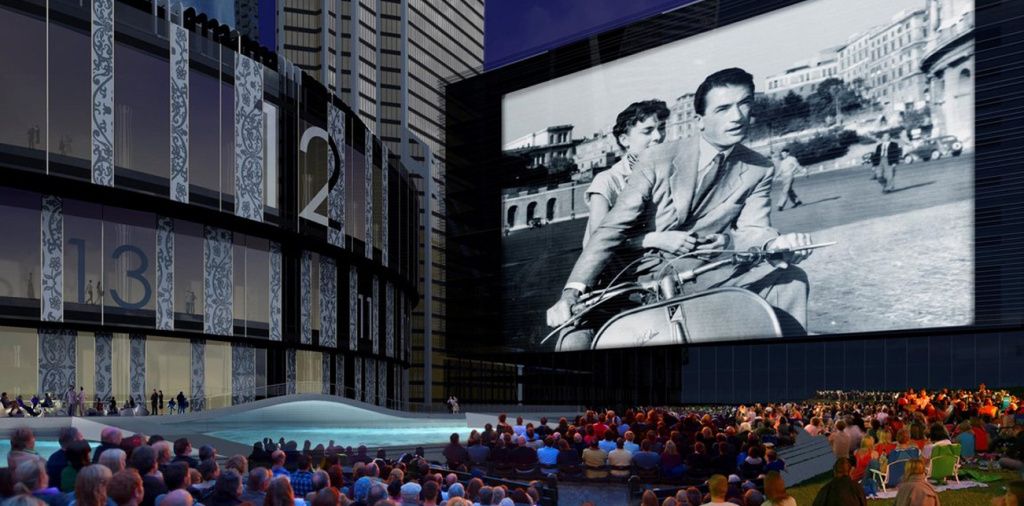
The square's intended function is multi-format: it will host concerts, shows, exhibitions, theatrical performances, and city festivals, as well as cafes, art installations, a New Year's tree, and an ice rink.
Spatial structure and visual dominants
The square's layout emphasizes its connection to the surrounding city. The space is divided into "upper" and "lower" terraces framing the concert hall. The upper part (the main podium) is level, covered with light-colored cobblestones, and surrounded by a decorative spiral pergola. The amphitheater to the east is a staircase-terrace encircling the hill, visually closing the horizon with greenery and stands (645 square meters of spectator benches). This terraced layout simultaneously directs the eye toward the dome and blends seamlessly into the sloping landscape. The visual dominants here are the concert hall's cylindrical "clock," the surrounding white spiral frame of the pergola, and the cascade of amphitheater steps, illuminated by integrated linear LEDs.
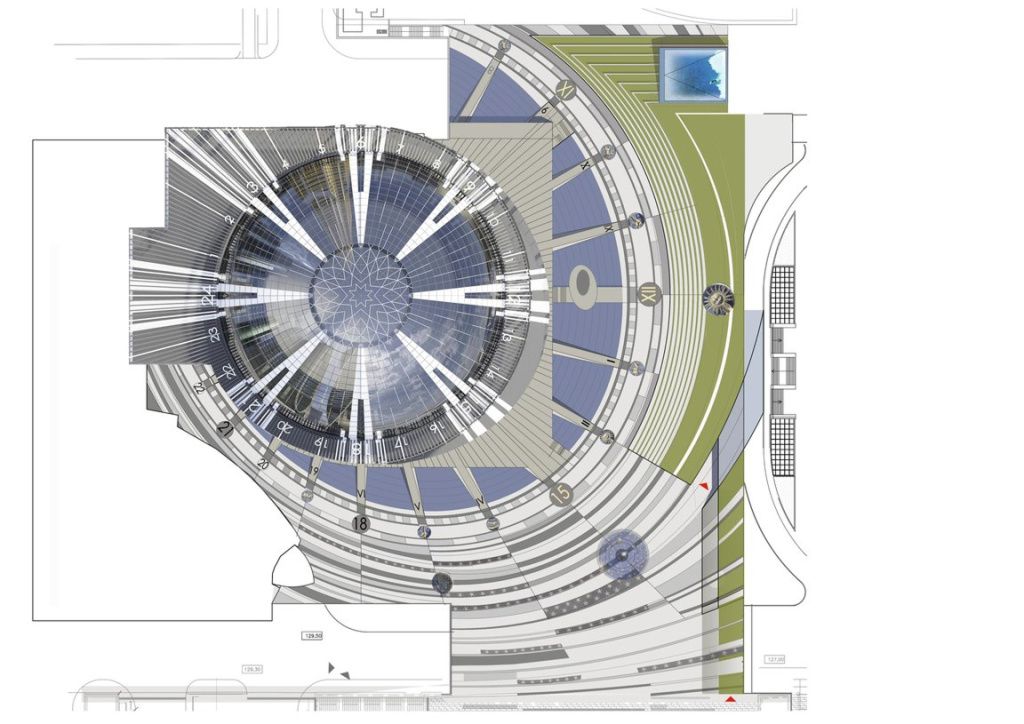
The decorative pergola is a spiral metal structure stylized as a giant clock spring (radius >100 m, length ~200 m). It encircles the site along the perimeter of a landscaped hill with an amphitheater and houses a large amount of specialized equipment: light projectors, artistic lighting, and audio speakers. The pergola serves as both a canopy and a "frame" for the space: it unites diverse functional areas, serves as a support for lighting installations, and simultaneously blends seamlessly with the steel facades of the skyscrapers. This design emphasizes the project's theme and adds dynamism to the square's appearance.

The fountain and night lighting transform the square into a multimedia arena. The fountain itself is designed in three parts: the "Clock"—a large arc with a radius of over 100 m and 93 fountain jets (up to 3 m high)—the "Mirror"—a smooth reflective water surface (~1,300 m²), and the "Waterfall"—a cascading water discharge.

The fountains are synchronized with the passage of time, and sound and lighting controls allow for year-round color and music shows: scheduled to run at the chimes of the clock every winter and summer night. At night, the numerals on the dome, the shimmering fountains, and the illuminated pergola transform the square into a spectacular media space. This composition creates a contrasting connection: the vertical lines of the surrounding high-rises and the dynamic disco effect on the ground make the square captivating in the evening.
A chamber stage and amphitheater complete the ensemble. The central stage, with its oval folding platform, was built by an Italian supplier based on the chief architect's designs; a glass dome hangs over it.

The spectator seating is arranged on an artificial terrace hill in the shape of an amphitheater. Backlit steps and clearly defined seating areas provide excellent visibility and intimacy, even against the backdrop of the open sky. This classic grandstand structure, combined with its high-tech ambiance, makes this arena unique: it can serve as a venue for classical concerts, theatrical performances, or contemporary shows.
Innovative engineering and environmental solutions
The project makes extensive use of cutting-edge technical systems. For example, over 7 km of LED strips and 42 projection lighting fixtures are mounted on the concert hall's façade, creating a dynamic illumination. All equipment is designed for 24/7 outdoor operation: each spotlight and speaker housing is waterproof, with climate control and heating. The light and music show's control is integrated with the city's lighting systems and can be operated automatically year-round. Engineers have included water collection and recycling: although the open sources do not specify the details, a closed-loop filtration system is expected for the fountain's reservoirs. Furthermore, the landscaping utilizes native plants on the terraced hill and a modern drainage system for sustainable drainage and greenery.

The project's significance for the city
The new Moscow-City center could become one of the largest open public spaces in modern Moscow.
The idea is for the square to enliven the business cluster with leisure facilities and become a magnet for the public.

Concerts, city celebrations, and festivals (including food festivals, exhibitions, and master classes) are scheduled to take place here regularly—all the possibilities for this format were included in the project.

A café and a summer restaurant have been specially designed, and art objects and seasonal attractions (a Christmas tree and an ice rink) are included.
The upper tier's capacity of up to 3,000 people provides greater capacity for large-scale events.

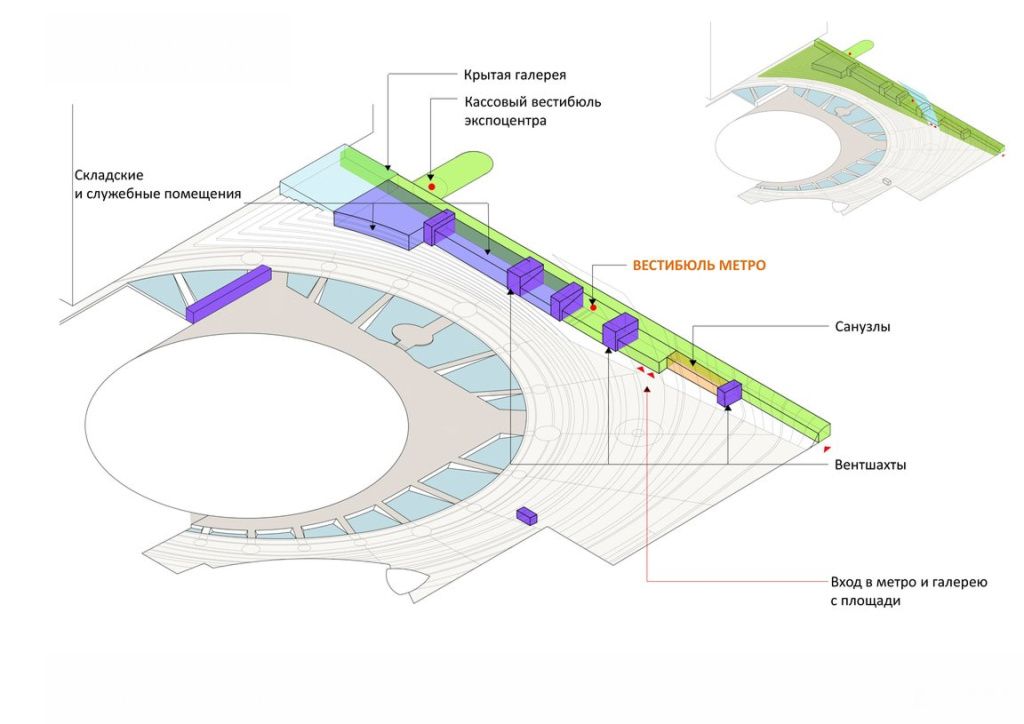
Thus, the City Square not only adds new events to the district's culture, but also has a multi-infrastructure impact: it increases pedestrian flow into Moscow City, increases congestion at transport hubs (the existing metro and the Bagration pedestrian crossing), and creates new jobs and commercial opportunities (restaurateurs, entertainment).
The project serves as a link between commerce and leisure: it enhances the economic attractiveness of the entire area and facilitates the integration of Moscow City into the urban context (including as a tourist destination).
International examples
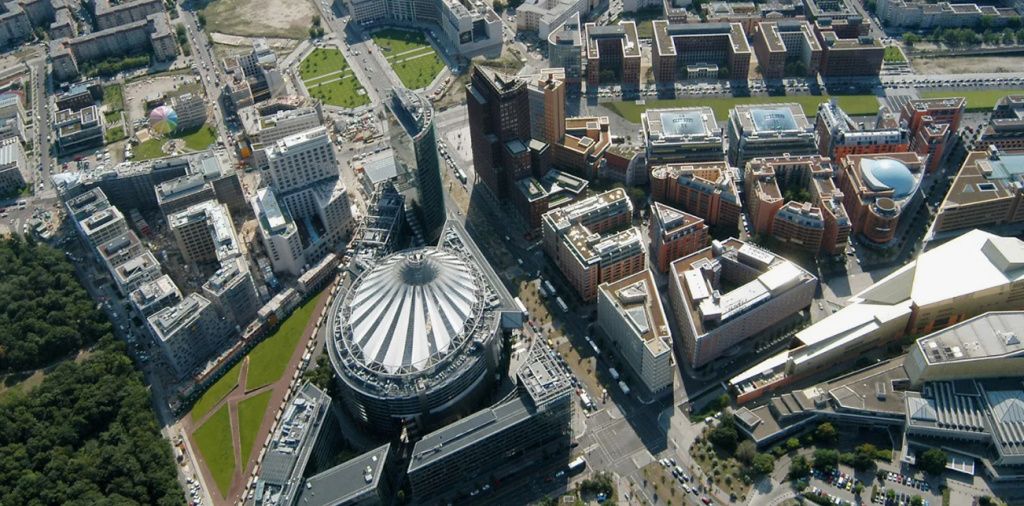
Approaches similar to the principle of "enclosing" a square with media elements are also being used abroad. For example, Potsdamer Platz in Berlin—a major post-socialist reconstruction of the city center—combines modern skyscrapers with a spacious open-air plaza, fountains, and green roofs. This project incorporates sustainable technologies: following expert advice, green roofs and a rainwater recycling system were installed to cool the city's fountain pools.
In the business district of Canary Wharf (London), there are squares (such as Cabot Square) with fountains and regular events, creating public space among the office buildings.

The idea of combining the functions of a "clock," a theater, and an interactive fountain is reminiscent of contemporary European projects where history and techno-art merge within a single space. However, the uniqueness of the Moscow-City City Square lies in its thematic design—the theme of "Time is Money" is integrated into every detail. This imbues the project with its own distinctive artistic message and makes the square recognizable among the world's finest examples of urban plaza projects.
The article uses materials from the official website of GORPROEKT and the architect Nika Myakinenkova.
Additional materials on the topic:
Mikhail Prokhorov has withdrawn from the Moscow City cinema and concert hall project; the project has been handed over to Moscow authorities.