



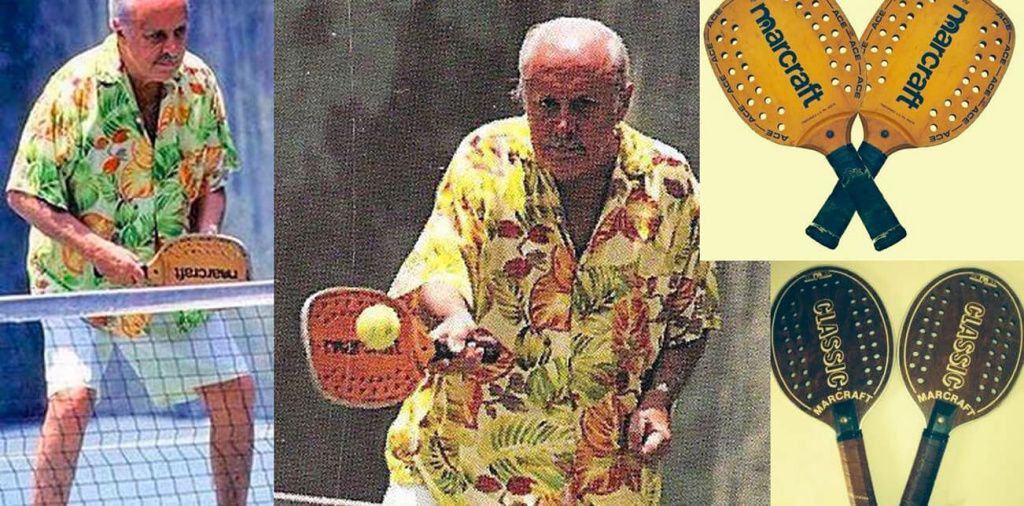
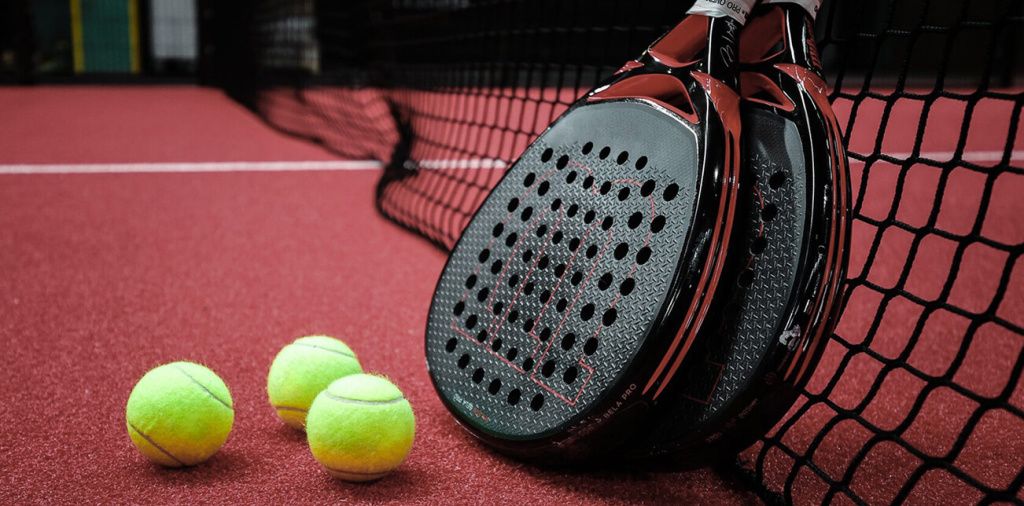
Padel (padel tennis) originated in Mexico in the 1960s. The game was invented by Enrique Corcuera, and in 1969, his wife Viviana formalized the first rules—this year is considered the founding date of padel. In 1991, Argentina, Spain, and Uruguay formed the International Padel Federation (FIP), and in 1992, Spain hosted the first World Padel Championship. Today, padel is a blend of tennis, squash, and ping-pong. The game is played on an indoor court measuring 20x10 meters, surrounded by glass and metal walls: the ball can bounce off these walls to continue the rally. Matches are typically played in a 2x2 format, with serves served underhand and scoring according to tennis rules. The padel racket is solid, unstrung, and has a perforated surface (more like a beach tennis racket). The ball is similar in appearance to a tennis ball, but has less internal pressure, making the game slightly slower. Thanks to its relatively simple rules and compact format, this new sport quickly attracts beginners: experts estimate that after just a few training sessions, players can begin playing confidently.
Reasons for the growing popularity of padel worldwide and in Russia
Padel's popularity is growing worldwide. According to the FIP, approximately 30 million people practiced the sport in 130 countries in 2024. The leaders are Spain (over 5.5 million players), Italy (1.5 million), and Argentina (1.4 million). Expectations have dropped dramatically in Europe and the United States: Sweden already has approximately 700,000 players, with a population of 10.5 million. The sport got off to a slower start in Russia, but demand is growing rapidly: according to various estimates, several dozen clubs (approximately 29-40) have opened across the country. The total number of courts has exceeded 100 in 10 regions of Russia.
The main reasons for padel's popularity are:
-
Accessibility and fun: The game is simpler than tennis and quickly engages beginners. Serving underhand and playing on a smaller court is easier than in traditional tennis, so people don't need years of training to start enjoying it.
-
Socialization and team spirit: Padel is always played in pairs, and the courts themselves are small and closed, which encourages social interaction. Players note that padel fosters its own "community" and allows them to make many new acquaintances. According to former athlete Artem Rebrov, "You get your own community—you can play and meet new people."
-
Popularity among celebrities and the "avalanche effect": Padel is actively supported by famous athletes and artists, from Lionel Messi and Ronaldo to Rafael Nadal and Jennifer Lopez. The interest of public figures attracts media and the public to padel, creating a "fashion effect."
-
Healthy Lifestyle and Fitness: The game is dynamic and intense: an hour-long session will reach a heart rate of 120–130 beats per minute, burning approximately 300 calories. This allows for a combination of fun and exercise, making padel suitable for a wide range of ages and skill levels.
-
Corporate segment : Many companies use padel for team building and informal socializing. Large IT companies, developers, banks, and other firms actively rent courts for corporate tournaments and meetings. Padel events are becoming an alternative to golf or yachting: they are more affordable, require less preparation, and still allow partners and clients to enjoy sports and relaxation together.
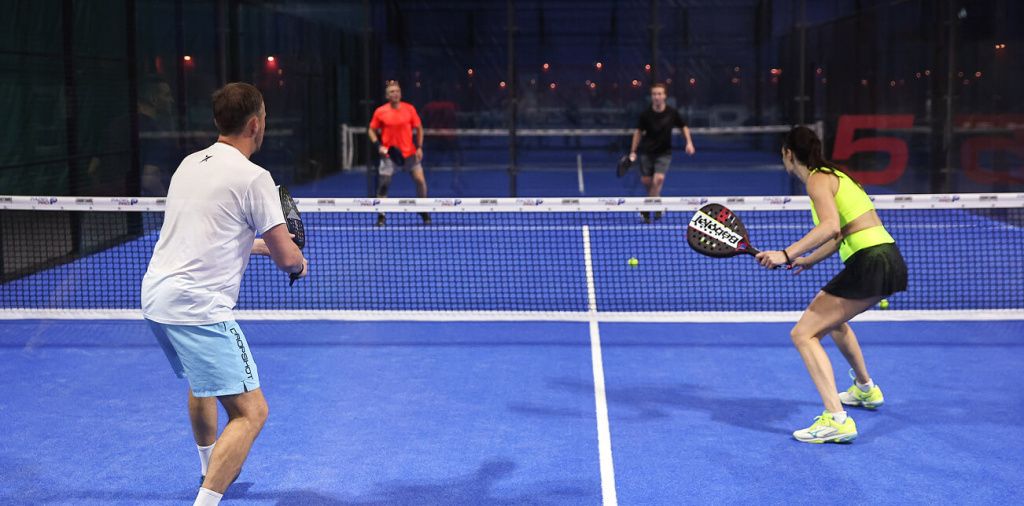
Taken together, these factors are transforming padel from a local pastime into a socially oriented, mass sport. Moscow, for example, is already seeing a shortage: popular courts in the capital are booked up to a week in advance. The number of courts in Russia has tripled over the past two years, and the market is far from saturated, so demand will continue to grow.
The Role of Padel Centers as a New Leisure Format
Padel centers are a hybrid of sports clubs and social and entertainment spaces. They offer not just a game but also a full service for visitors: professional rackets, equipment, and shoes, locker rooms with showers, and related amenities such as a healthy food cafe, lounge areas, spectator stands, and relaxation areas. Many clubs have their own fitness center, warm-up areas, and equipment rentals, turning the gym into a meeting place and a place to unwind.
This format of combining activity and social interaction has proven popular: padel clubs are already being seen as a new kind of "urban hub." Players of all ages (from schoolchildren to seniors) feel comfortable together on the same court. According to several experts, padel has become more than just a game, but an entire culture, "bringing together people of all ages." This further stimulates attendance and creates a loyal following around the club.
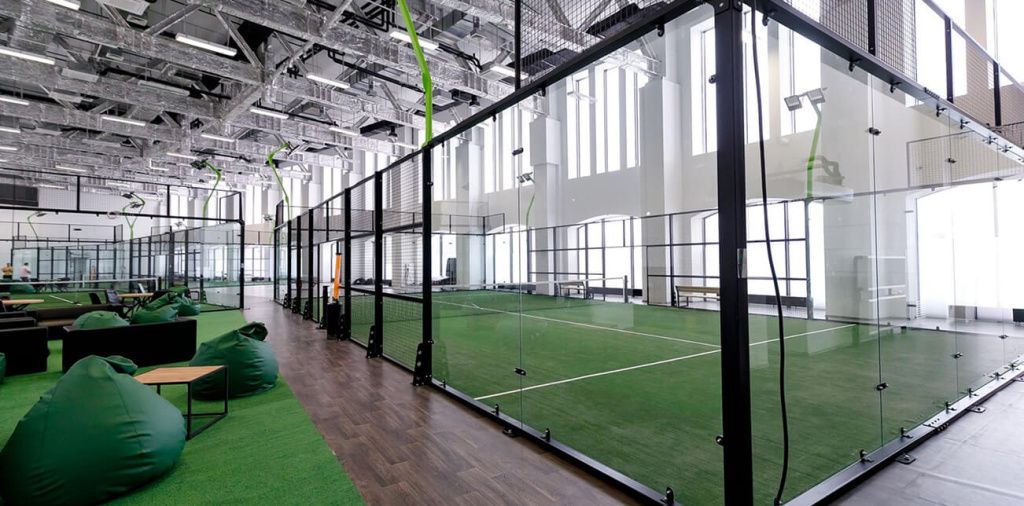
For developers and entertainment zone managers, padel centers attract a wealthy clientele: people spend several hours playing, then relaxing in a café or bar. For example, the Sky Padel sports center (6 courts) in Moscow's Afimall City welcomed over 90,000 visitors in the first half of 2025. Similarly, the recently opened Raketa center in the Leto shopping center (St. Petersburg) is experiencing high occupancy even during the off-season. Thus, padel centers not only offer a new sport but also generate additional traffic for related services (cafes, shops, parking, etc.).
Successful Cases: SkyPadel and Afimall
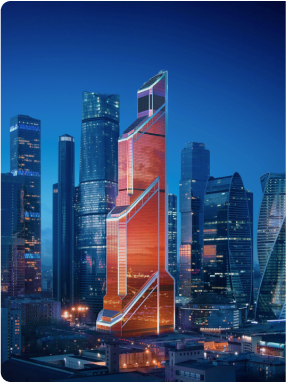
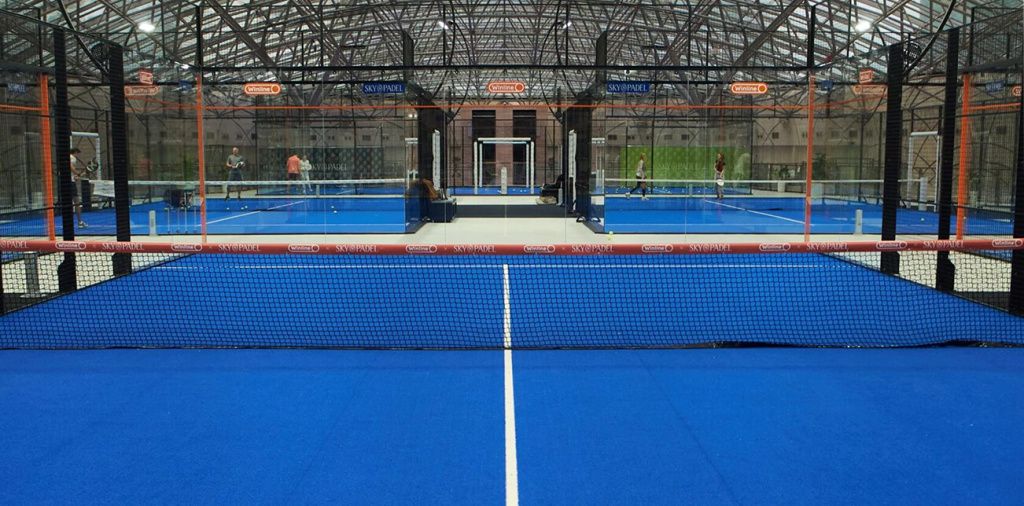
SkyPadel (Moscow). This premium padel club with 6 courts opened on February 2, 2025, on the 6th floor of the Afimall City shopping center (Moscow City) . The club is located under the shopping center's large glass dome—a unique architectural solution that allows for play in natural light. SkyPadel features high-quality court surfaces and comfortable amenities, including spacious locker rooms, showers, a coffee bar, and a lounge area. In a short time, SkyPadel has become a magnet for fans of this new sport: according to media reports, over 90,000 people visited it in the first few months.
TRK "Leto" (St. Petersburg). An outdoor padel court, "Raketa," measuring just 200 square meters, opened here for the 2025 summer season. It's located in the shopping center's parking lot and will remain open until the end of the warm season. Despite its modest size, the club offers a full range of services: court rentals with equipment, training sessions with instructors, and plans to host amateur tournaments. The "Raketa" project exemplifies how even a small padel court can revitalize a shopping center, attracting a new audience.
Both examples demonstrate the principle of integrating padel into the infrastructure of large complexes. SkyPadel became the first fully-fledged padel center in Russia within a shopping mall, which is already benefiting both the club and the mall itself.
Integration of padel centers into shopping malls and the impact on traffic
Incorporating padel courts into shopping and entertainment complexes is a new development trend. Not only do sports courts generate additional foot traffic, but they also provide the complex with a long "hate time": people arrive to play and stay for hours. A CMWP study notes that even with a relatively small investment, a sports club generates significant traffic, but for maximum effectiveness, it should be surrounded by other amenities, such as parking, cafes, and events.
In practice, this is evident: the Afimall City shopping center, as part of AFI Development, provided space for the SkyPadel padel club, ultimately attracting tens of thousands of additional visitors. Similarly, the installation of the Raketa outdoor court at the Leto shopping center in the fall of 2024 transformed a typical food court and parking lot into a trendy leisure spot for St. Petersburg residents. Thus, padel centers serve as "anchor tenants" for the sporting format: they attract customers, and the shopping center's stores, cafes, and cinemas benefit from the associated influx.
Architectural and infrastructural features of padel centers
Padel courts have strict design requirements. The standard size is 20 x 10 meters (smaller versions for children and singles play exist). The court itself is surrounded by walls: typically, the back and side walls are made of tempered glass, while the upper part is made of metal mesh. These panoramic courts allow spectators to watch the game through the glass, like an "aquarium." Due to the compact format, experts estimate that up to three padel courts can be installed in the space of a single traditional tennis court.
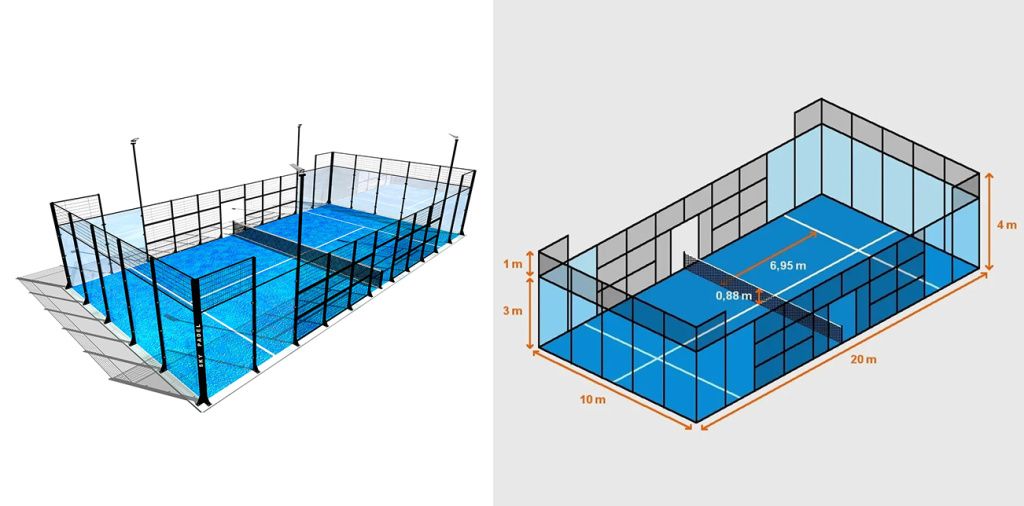
When designing an indoor padel center, high ceilings (usually 8-10 meters) and powerful artificial lighting are essential to ensure uniform illumination across the entire court. High-quality ventilation and air conditioning are also essential – an example is SkyPadel, which has specialized ventilation and air conditioning systems. Support areas are typically located around the court: changing rooms with showers, a training room, rental facilities, and a café. SkyPadel, for example, in addition to the courts, has a fully equipped fitness room and a "healthy coffee bar." Such infrastructure solutions make the padel center comfortable not only for players but also for spectators and support staff.
Commercial potential and investment attractiveness
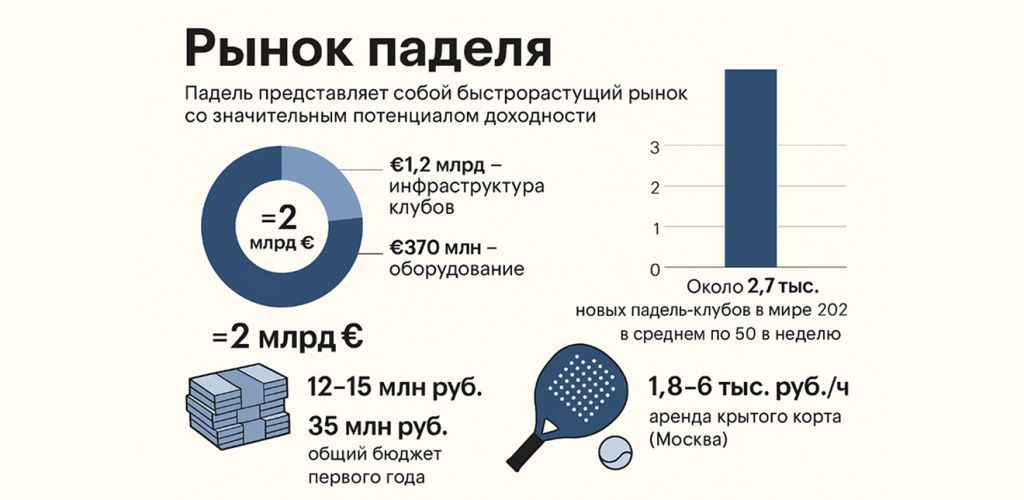
Padel is a rapidly growing market with significant profit potential. The global sports sector is already valued at approximately €2 billion (including €1.2 billion in club infrastructure and €370 million in equipment). In 2023 alone, approximately 2,700 new padel clubs were expected to open worldwide – an average of 50 per week . This growing interest is also confirmed by industry research: many analysts note that the market in Russia is not yet saturated, leaving ample opportunity for investors.
In terms of costs, investing in a padel club is relatively modest: SberBusiness estimates that opening an average club costs 12-15 million rubles , and taking into account annual expenses (rent, salaries, etc.), the total first-year budget requires approximately 35 million rubles . Moreover, the popularity of padel allows clubs to quickly recoup their investment. According to Prime Padel Sol, costs are typically recouped by the end of the first year of operation. It's worth noting that revenue comes from court rentals (in Moscow, prices range from 1,800-6,000 rubles/hour for indoor courts and 2,000-5,000 rubles/hour for outdoor courts) and coaching fees, as well as an accompanying café and retail sales.
The investment climate is favorable: low entry barriers, a rapidly growing client base, and a healthy lifestyle trend attract entrepreneurs. "The quick return on investment and relatively low entry barrier make padel attractive to businessmen, especially given the growing interest in active recreation," notes investor Maxim Penkin. Analysts recommend viewing padel centers not as isolated sports facilities, but as part of an entertainment ecosystem. As D. Krikunov (Academy of the Future) emphasizes, sports courts generate traffic, but for maximum profitability, a club should be surrounded by other services (parking, a café, and event spaces). Overall, even with additional investment, the project's payback period reaches profitability within a few years.
Prospects for the growth and development of padel in Russia and around the world
Padel continues to experience explosive growth and, according to experts, is far from reaching its peak. Globally, the sport is entering the mainstream. In 2024, padel became the number one sport in the UAE, and Qatar Sports Investments acquired and renamed the main international tournament (World Padel Tour → Premier Padel). Significant growth in the number of courts and players is expected in Europe and the United States in the coming years.
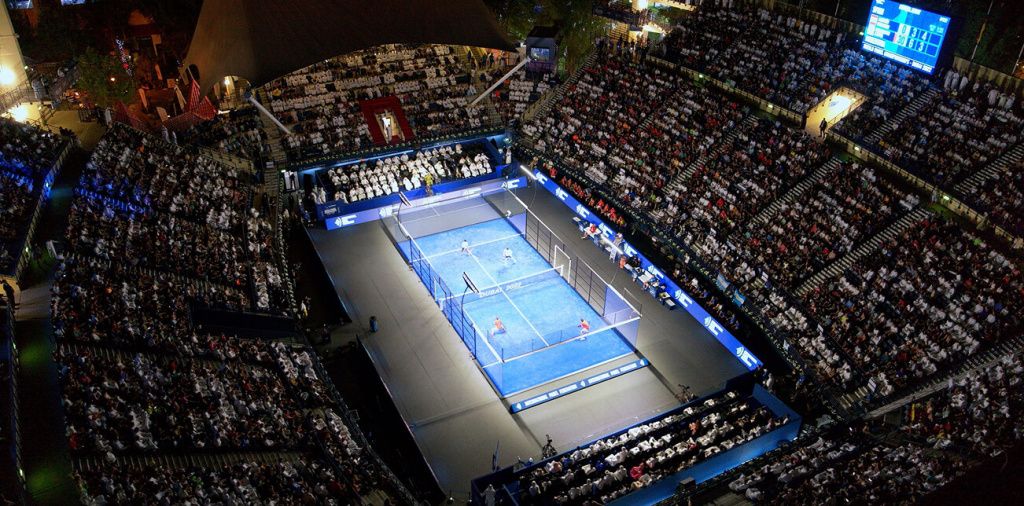
Development in Russia continues at a rapid pace. As recently as September 2024, only eight indoor and five outdoor padel centers were operating in the Moscow region clubs . The Russian Padel Federation expects domestic players to compete successfully at the global level within the next two to three years. With support from major companies and state sports programs, padel's expansion is paralleled by infrastructure development. Analysts predict that padel courts will become a common feature of sports complexes and shopping malls—and under this scenario, the movement of active people outward will be unstoppable.
Thus, padel is not just a fad, but a fully-fledged emerging market. Its unique combination of sportiness, social benefits, and commercial potential makes padel centers an attractive investment and development opportunity. With continued growth in player numbers and business support in Russia, a steady influx of new clubs and tournaments is expected, making this sport even more widespread and popular.