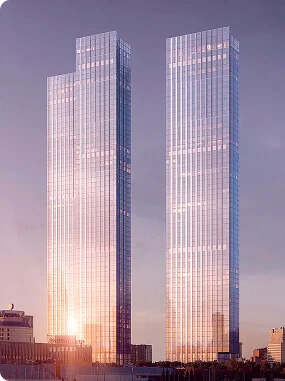




Today, Moscow has 96 buildings taller than 150 meters. By global standards, this places the capital approximately 28th in the world — close to Beijing (99) and Seoul (109), and ahead of Doha (90), Miami (77), and Sydney (62).
Is that a lot or a little?
Compared to Asian megacities, where the number of towers reaches into the hundreds, it is moderate. In a European context, however, it represents absolute leadership. No city in Western Europe comes close to Moscow in terms of the number of 150+ meter buildings.
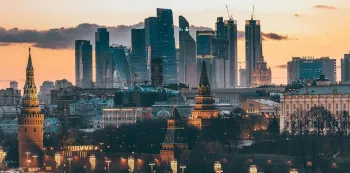
Moscow is undoubtedly a skyscraper city — but with its own distinctive character.

Moscow City — a vertical concentration
The key feature of Moscow is not merely the number of high-rise buildings, but their concentration.
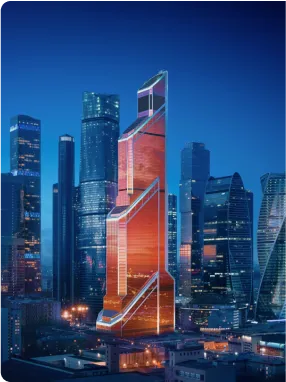
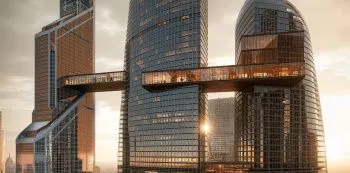
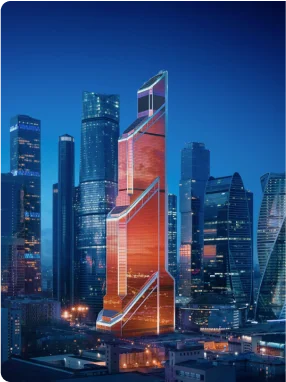
The Moscow City business district has become the largest cluster of skyscrapers in Europe:
- 300+ meter towers;
- ultra-dense office and residential development;
- a recognizable skyline on the international stage.
Unlike London or Paris, where high-rise architecture is distributed selectively, Moscow has created a полноценный vertical district. This growth is strategic rather than accidental.

The global picture: who shapes the vertical world
To understand the scale, let us look at the world’s top ten cities by number of buildings over 150 meters.
Top 10 cities worldwide by skyscrapers (150+ m)
- Shenzhen — 681
- Hong Kong — 677
- New York — 442
- Dubai — 430
- Guangzhou — 288
- Wuhan — 288
- Shanghai — 286
- Kuala Lumpur — 277
- Chongqing — 218
- Tokyo — 215
Six of the ten cities are Chinese. This is not accidental, but the result of three factors:
- large-scale urbanization;
- a state-driven vertical growth strategy;
- the concentration of business and capital in megacities.

Asia: architecture at scale
In China, the skyscraper is not a symbol but an infrastructure unit.
Over three decades, Shenzhen transformed from an industrial city into a global financial and technology hub with hundreds of high-rise buildings. Hong Kong traditionally maintains its position due to limited land and high property values.
Southeast Asia (Kuala Lumpur, Chongqing) also shows steady growth — here the skyscraper has become a standard element of the urban environment.
The United States: historic leadership and selective growth
New York remains an icon of skyscrapers, though its growth is more restrained.
The American model includes:
- premium residential towers;
- renovation and redevelopment;
- district-based growth rather than mass expansion.
The United States historically set the standard for high-rise construction, but today it trails Asia in growth dynamics.
Dubai: a strategy of ambition
Dubai represents a unique case.
In two decades, the city has created one of the most impressive skylines in the world. Here, vertical growth serves as a tool for global positioning, investment attraction, and tourism.
Construction momentum allows Dubai to challenge New York and strengthen its global ranking.
Europe: cautious height
European capitals follow a different approach:
- strict urban regulations;
- protection of historical heritage;
- selective high-rise development.
London remains Western Europe’s leader but significantly trails Moscow in the number of 150+ meter buildings.
Where does Moscow stand in this balance?
Moscow occupies an intermediate position:
- not Asian in scale;
- not European in restraint;
- its own cluster-based development model.
With 96 buildings, Moscow is already a fully-fledged vertical city — and its growth potential remains significant.
The development of the “Greater City” territories, new business zones, and residential clusters could substantially improve the capital’s position in the global ranking over the next 10–15 years.

What defines a “skyscraper city”?
Quantity is only one indicator. Equally important are:
- height range (300+ m);
- development density;
- architectural expressiveness;
- the economic role of the high-rise cluster.
Moscow already possesses all these elements.
Conclusion
Moscow is the largest skyscraper city in Europe and a notable player on the global vertical urbanism map.
It lags behind Chinese megacities in sheer numbers but excels in concentration and compositional integrity.
The question is no longer whether Moscow qualifies as a skyscraper city — the answer is clear.
The real question is where it will stand a decade from now, when a new wave of projects окончательно shapes the capital’s skyline.