


The Congress went down in real estate history as the largest event of its kind. It was attended by 8,067 professionals. Guests came from 85 Russian regions, represented by 380 cities. Participants from nine other countries were also present. The project was supported by the Russian Chamber of Commerce and Industry.
Over 70% of those attending were participating in such a large-scale event for the first time. All stages of the Congress were covered in detail by TASS, RBC, Izvestia, and other leading media outlets. In total, over 160 professional journalists attended the Congress.
The business program included consideration of many topical issues:
- business management;
- import substitution;
- digitalization of the construction sector;
- innovations aimed at finding and serving customers;
- work with personnel, etc.
The discussion focused on changes that arose amid widespread restrictions—the cost of new buildings, mortgage rates, and the ability of domestic real estate IT products to become a worthy replacement for foreign counterparts.
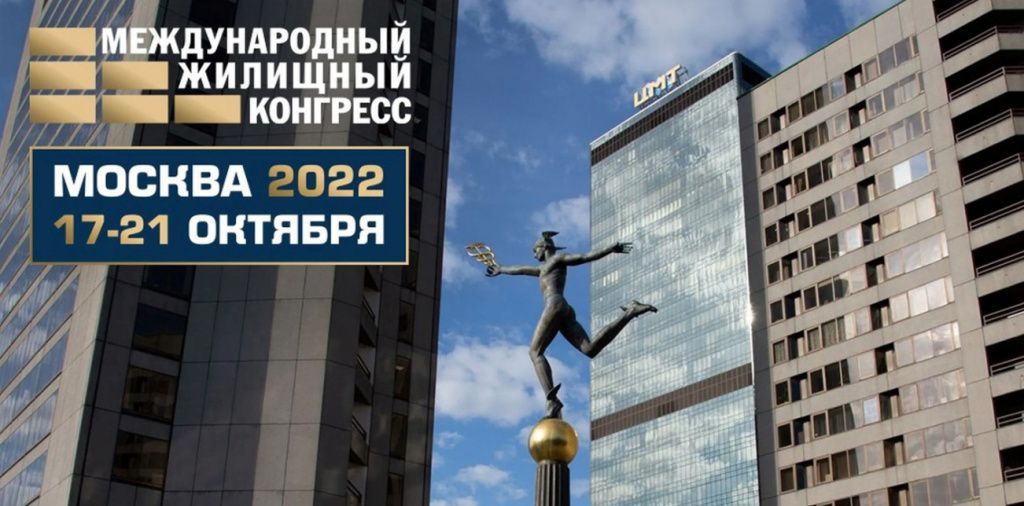
Congress speakers delivered informative presentations to those in attendance. A number of events were held on mortgage lending, the real estate business, and other topics. Sections focused on information technology, various types of real estate, interregional transactions, and the provision of high-quality personnel were also held. The number of sections related to the primary market increased.
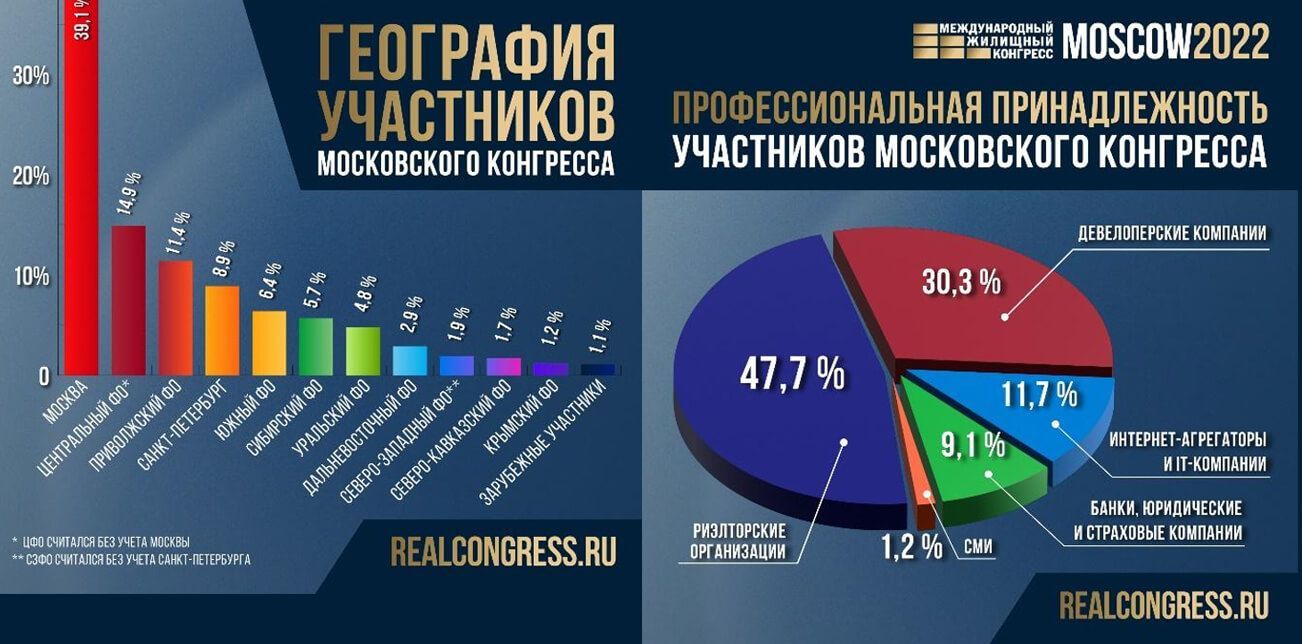
Changes affected the professional affiliations of Congress participants (see chart below). Over 2,400 of them (approximately 30% of the total) represented successful construction companies and leading developers.
Several hundred events of various formats were held. Visitors had the opportunity to participate in trainings, master classes, and off-site business tours on management, luxury real estate, and new construction.
Guests listened to presentations from more than 700 keynote speakers, who shared their experiences in the real estate market during the crisis and described the most effective tools. Speakers included executives from leading construction firms and major agencies, as well as professional business coaches. Speakers included such renowned figures as Radislav Gandapas, Natalia Glebova, Ilya Balakhnin, and others.
Those present were informed of the results of the National CREDO Award – the most prestigious national competition for all those who have contributed significantly to the development of the real estate market in the Russian Federation.
Sports competitions, entertainment events, and evening meetings were a fitting addition to the main program. According to the heads of the country's leading professional associations and government agencies, the project impressed all those in attendance with its unprecedented scale and the wide range of topics it covered, all of which are particularly relevant to the real estate industry.
Comment from S. Razvorotneva, Deputy Chair of the Committee on Construction and Housing and Utilities: "Today, all real estate market participants, without exception, must deal with fundamentally different requirements. The Congress facilitates the development of updated strategies and helps us gain valuable experience and useful information."
In a review, E. Nikolaeva, Chair of the Moscow Urban Development Commission, emphasized that everyone who attended the event had the opportunity to engage in a lively, constructive dialogue. This will certainly help many to thrive in the current climate.
V. Dedyukhin, Vice President of Russia's leading Union of Builders, expressed his opinion on the event: "We were truly delighted by the carefully thought-out business program and the discussion of the most pressing issues. Thanks to the Congress, we will be able to develop a number of innovative proposals capable of improving the construction industry."
V. Patonov, Head of the Moscow Chamber of Commerce and Industry, called the Congress a top-level event. He praised the composition of its participants and the broad range of issues covered. Significantly, this event was held in Moscow for the first time and received strong support from the Chamber of Commerce and Industry.
I. Zyryanova, head of Russia's leading realtors' guild, noted that the Congress facilitated a productive dialogue between leaders and newcomers to the modern real estate market. She elaborated: "The project combined our efforts to the fullest extent possible. The event served as a platform for accelerating the creation of new technologies for market development."
As E. Vekshina, President of the Moscow Guild of Realtors, explained, the Congress effectively demonstrated the nuances of the future development of the real estate profession. Many participants will undoubtedly benefit from the developments proposed by the speakers and experienced market practitioners.
Next year, the Congress will be held in Sochi from April 17 to 21. Registration is already open. Over 5,000 guests are expected to attend.