


In mid-summer 2020, the Moscow Architectural Council approved the design for the third phase of the World Trade Center (WTC), developed by one of Russia's most renowned architects, Sergei Tchoban, head of the SPEECH architectural studio. Sergei Tchoban is the recipient of numerous architectural awards, a participant in various architectural exhibitions, and a member of the Skolkovo Foundation's urban planning council. His designs have already been used in numerous buildings not only in Russia but also in Europe.
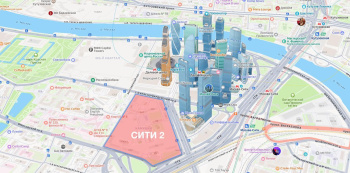
All members of the Architectural Council, including S. Skuratov, V. Plotkin, N. Lyashenko, and Yu. Budrova, unanimously supported the project submitted to their consideration for the construction of a two-tower complex on Krasnopresnenskaya Embankment, or more precisely, at the intersection of Mantulinskaya and 1905 Goda Streets. Moscow's Chief Architect, Sergei Kuznetsov, openly congratulated both the architect and the project's client on the unanimous acceptance of the proposed ideas, calling the WTC's third phase project not only high-quality but also landmark.
What will the third phase of the World Trade Center be like?
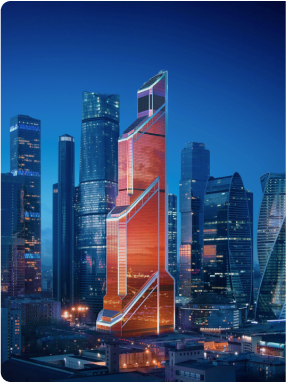
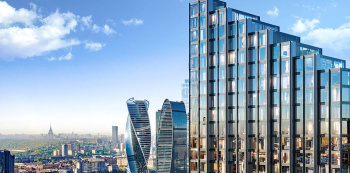
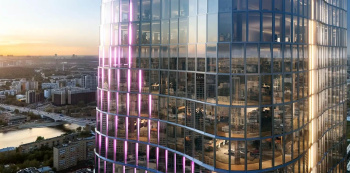
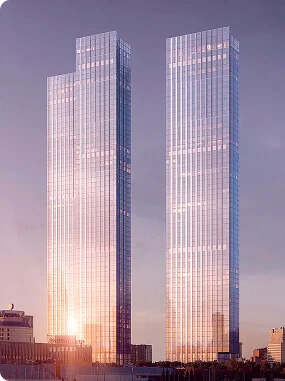
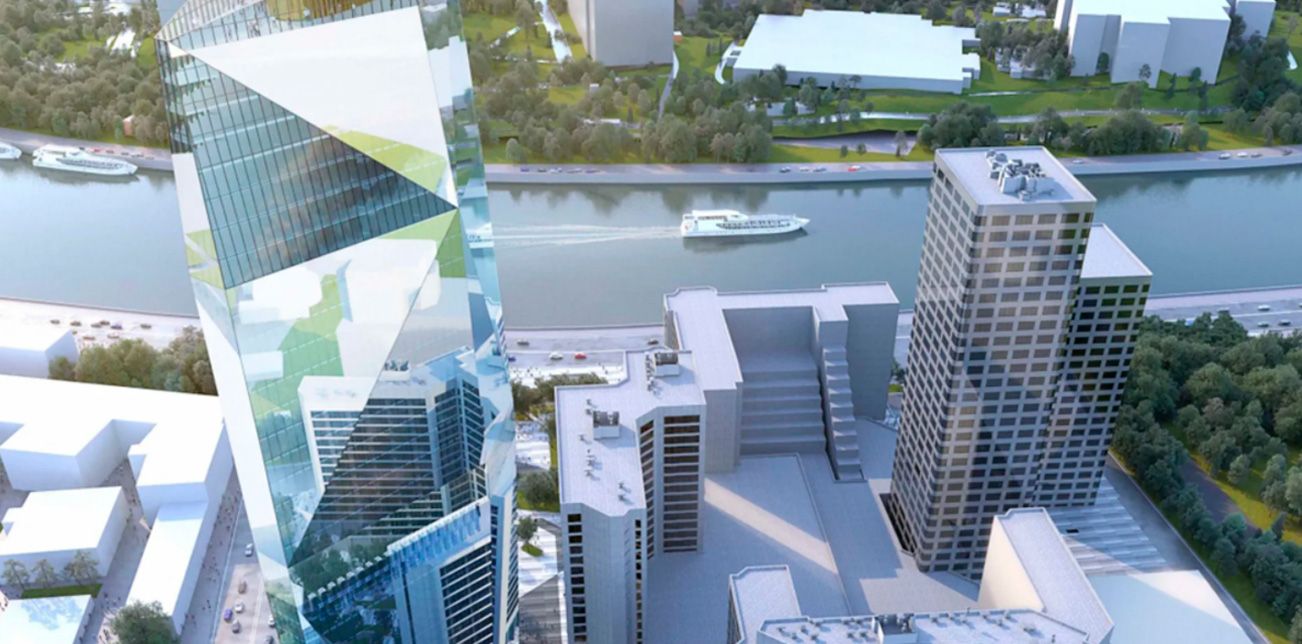
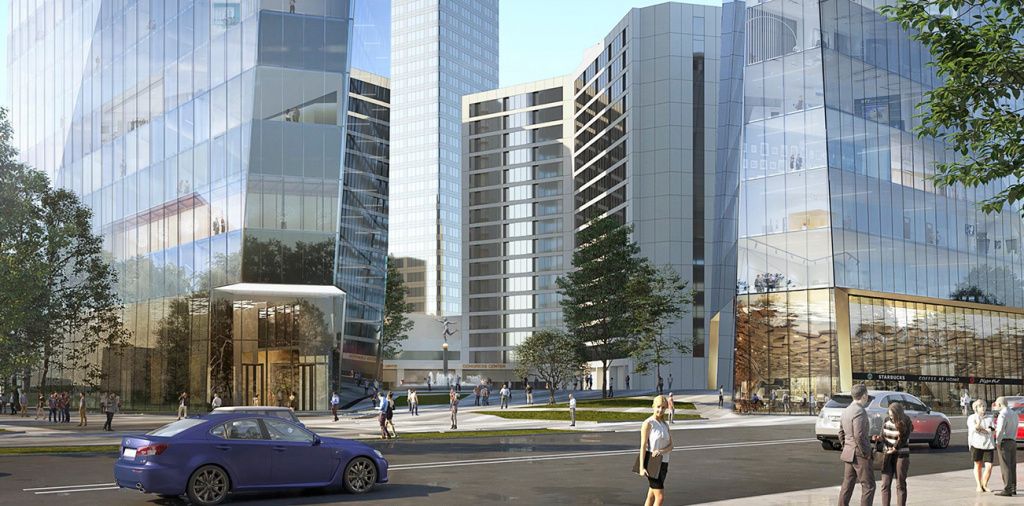
According to S. Choban's design, the third phase of the WTC will feature a tower facing 1905 Goda Street, featuring a complex and highly original crystal shape with asymmetrical facets. Its height will be 200 meters. A 57-meter building in the same style is planned next to it, facing Mantulinskaya Street.
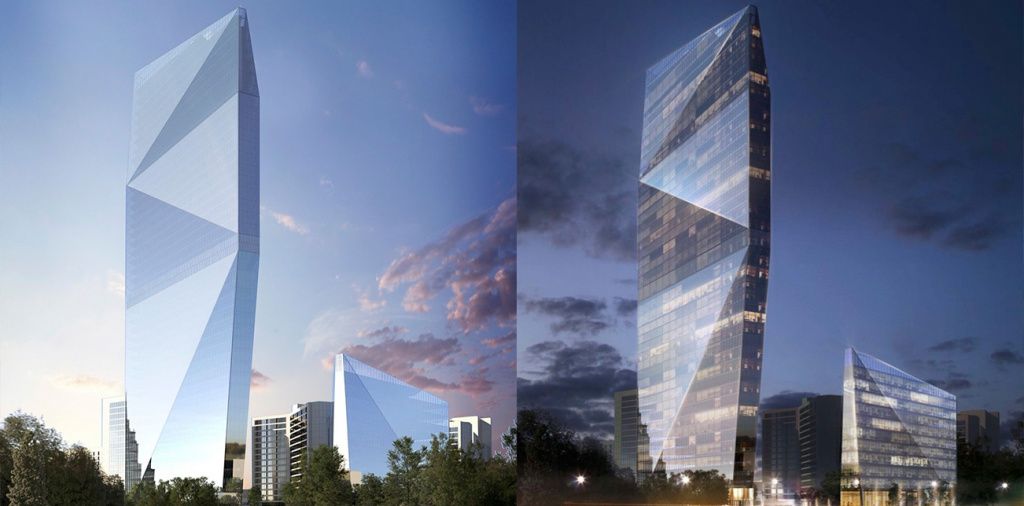
An observation deck is planned for one of the upper levels of the taller, crystalline skyscraper, and the building's total floor area will be approximately 60,000 square meters. Its lower floors will house commercial space, including cafes and shops. The lower building, which will also feature asymmetrical edges like the 200-meter tower, will have a floor area of approximately 13,000 square meters.
Sergei Tchoban, according to himself, was inspired by the WTC complex itself, one of the most important architectural monuments of the late Soviet modernist era. It was the result of the collaborative efforts of Soviet and American architects. When designing the new phase of the WTC, he hoped that the recognizable glass tower would serve as a landmark for the subsequent modernization of Krasnopresnenskaya Embankment, Ukrainsky Boulevard, and several other major thoroughfares in the area.
Overall, the new complex, which will rise in front of the existing Hermes Fountain, is planned as office buildings. The project also includes a three-story underground parking garage beneath the complex, designed for 600 cars. The guest parking lot will only have 35 spaces.
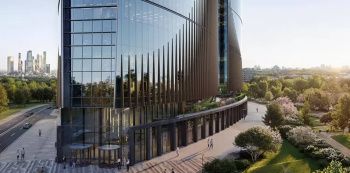
Furthermore, the adjacent area leading to the embankment is planned to be improved by creating a high-quality public space. According to Sergei Tchoban's plan, a public and promenade area will stretch along the back, which, in his opinion, will help the new complex blend seamlessly into the urban landscape and alleviate the shortage of such spaces in the area.
However, Sergey Kuznetsov noted that this issue would require further attention. Therefore, he advised the client, PAO CMT, to organize another competition to secure an interesting concept for the pedestrian zone.
The project is tentatively scheduled to begin in early 2021. Construction is expected to take 10 years.
Project Features
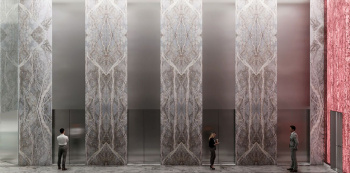
The crystal-like glass towers will provide a beautiful, modern frame for the entrance and driveway to the World Trade Center's main plaza, serving as a gateway to Moscow City. They will also harmonize with the architecture of the existing complexes. The design features a highly flexible, open-plan interior layout, which, coupled with high-speed twin elevators and spacious, bright entry halls, will make the high-quality office space created here quite attractive to tenants.
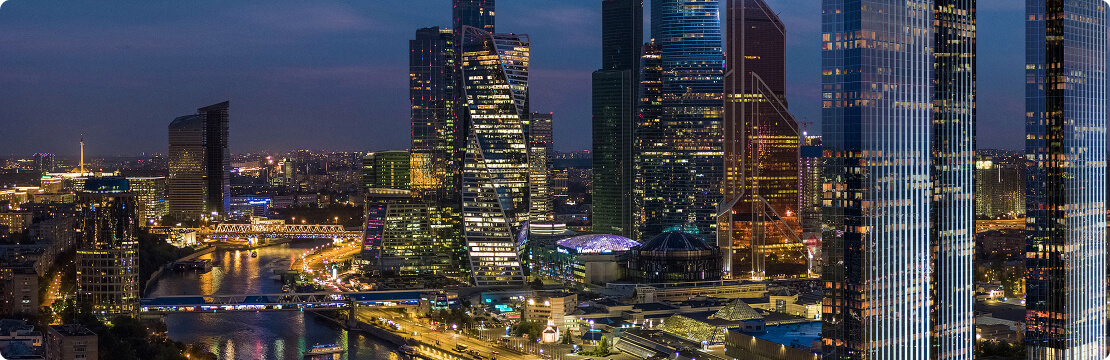
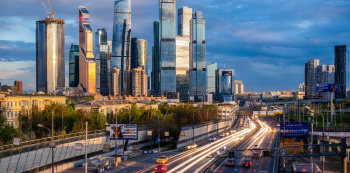
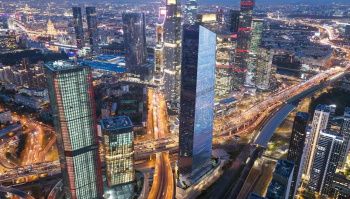
Sergey Tchoban believes the new WTC complex will become the district's dominant feature, while also seamlessly complementing the Moscow-City district located some distance away. Its location ensures both excellent views from its windows and a harmonious blend with the architectural landscape of this Moscow district. The complex won't obscure the business center's skyscrapers, but will subtly complement the existing panorama.
The architect also shared the technical features of the future buildings. He stated that their construction will utilize the latest technologies, including high-strength concrete, an energy-efficient structural façade, and more.