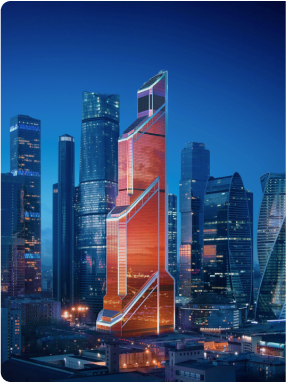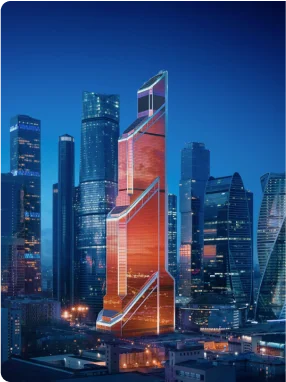



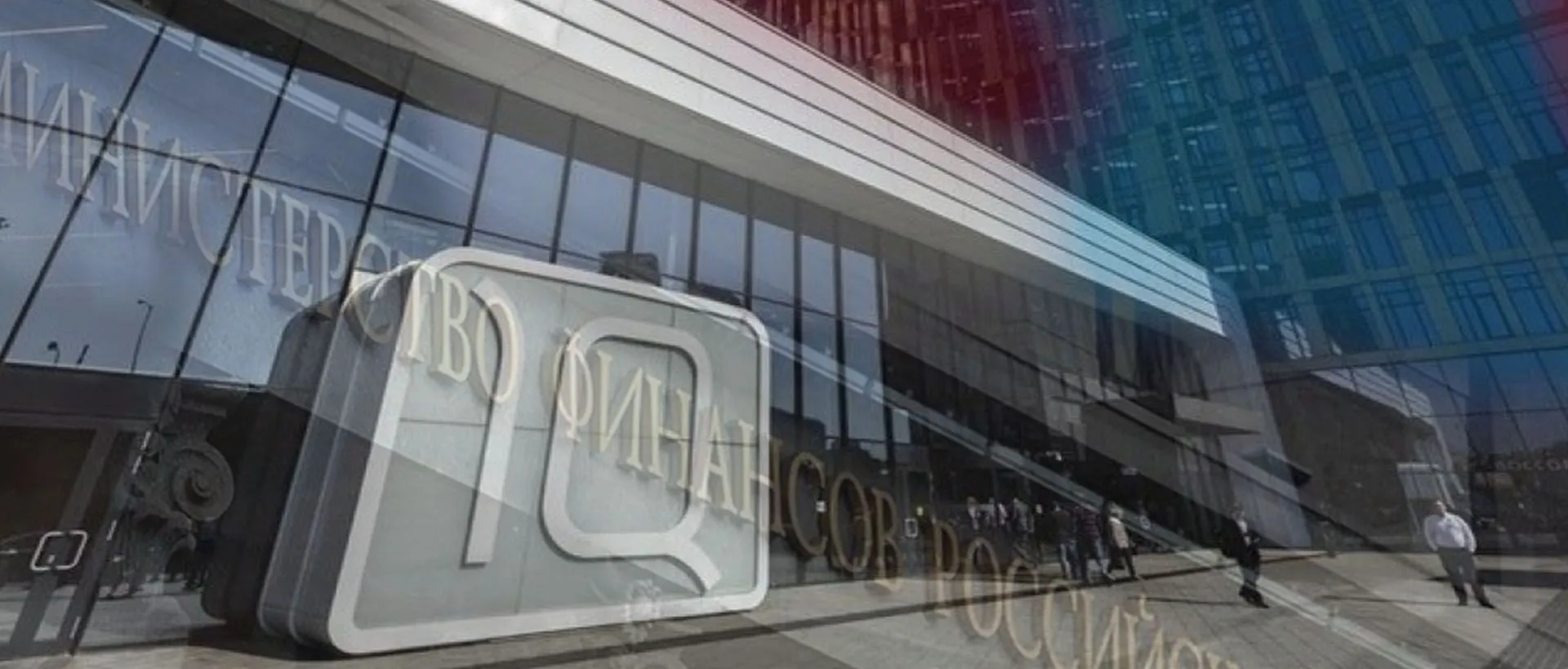
Six ministries have already fully relocated to one of the IQ-Quarter towers during the spring of 2019. It has been dubbed the "Ministry Tower." Another 14 ministries are planned to be housed there in the next few years, but this won't happen before 2021. However, the number of officials who have already arrived and begun their work in Moscow City has been sufficient to significantly accelerate the development of the entire business district.
The most significant improvements are observed in the office and retail segments. However, the presence of government agencies within the Moscow International Business Center will certainly impact the residential real estate market, both in terms of purchase and rental income. There's no doubt about the positive changes awaiting Moscow City, as over 5,000 solvent individuals now work within its boundaries. Thanks to them, there's been a significant increase in footfall in street retail, particularly food service establishments and companies providing various services. It's perfectly logical that newly arrived ministry employees are actively inquiring about apartments in the various multifunctional complexes in the area.
Thus, by the summer of 2019, the Ministry of Economy, the Ministry of Communications, the Ministry of Industry and Trade, the Federal Agency for State Property Management, the Federal Agency for Technical Regulation and Metrology, and the Federal Agency for Tourism had become permanent residents of the "Tower of Ministries." Their staff exceeded 5,000. Their accommodation required approximately 75,000 square meters of office space, accounting for approximately 7% of all leased space in Moscow City.
These first signs mark the beginning of a large-scale project to relocate virtually all government agencies to the Moscow International Business Center. The only exceptions will be the security agencies, the Ministry of Emergency Situations, the Ministry of Foreign Affairs, and the Federal Archives Agency. Therefore, to relocate 14 more ministries to the IQ-Quarter skyscraper, an additional 195,000–250,000 square meters of office space will need to be prepared to accommodate the remaining 13,000 employees.
Since the move won't take place before 2021, it's too early to expect a sharp surge in demand for apartments, flats, and commercial real estate in the business district submarket. It will likely be gradual, as the number of options declines each year, leaving new buyers with fewer options. For example, in the second quarter of 2019, 97 apartment transactions took place. However, by the third quarter of the same year, their number had fallen to 71, representing a 15% and 30% decrease compared to the previous year, respectively.
The specifics of "jacket" apartments
As of today, the majority of the most sought-after offers in the Moscow-City submarket have been fully sold. Developers still have 604 lots available for purchase, of which only 68 apartments are offered in the Federation Tower, 240 in the OKO mixed-use complex, and 296 in Neva Towers. Based on sales trends, it's safe to say that by the end of 2020, there won't be a single unsold lot in the actively under-construction Neva Towers complex, as an average of 27 apartments are currently finding new owners each month.
Given the expected influx of buyers, the current supply on the market is insufficient. Demand from ministry employees will likely be met by projects just getting ready to launch sales, such as One Tower, which will bring over 1,500 apartments to market in the near future.
The average lot size in Moscow City is 119 square meters, while in other districts it does not exceed 104 square meters in the premium housing segment. Moreover, almost 50% of the properties offered in the Moscow International Business Center are apartments of 50-100 square meters.
The average price of housing in the business district is 71.8 million rubles. By comparison, the average price for the rest of the capital's premium market remains at 62.5 million rubles. However, almost half of all apartments on the primary market are priced between 30 and 60 million rubles.
Consequently, both the average area and average price in the MIBC skyscrapers are 15% higher than similar indicators in premium properties in other Moscow districts. However, the lot structure differs only slightly: in both cases, approximately 39% of offers are in the 50-100 sq. m range, with prices ranging from 30-60 million rubles.
The main buyers of lots in the Moscow International Business Center are people under 40 who are not yet married and are looking to buy a second apartment close to their workplace. Therefore, the level of development of children's infrastructure is not important to them, nor is the size of the home a decisive factor.
These factors significantly distinguish apartments in Moscow City from premium apartments in other districts, where the level of development of children's infrastructure is a primary consideration, which is reflected in the asking price.
Thus, a large number of budget apartments fully meet the requirements of so-called "suitable apartments." This makes them popular among buyers working in the MIBC towers and wanting the opportunity to remain in the business district after a long day at work or at any other time.
Who would benefit from living in Moscow City?
Although the number of apartment purchases from developers in 2019 fell by almost 20% compared to 2018, sales volume increased to 14 billion rubles. This is almost double the 2018 figures.
Meanwhile, in 2018, sales of apartments in the new Neva Towers multifunctional complex began. These sales increased the overall number of transactions concluded within the project by 1.5 times, as many people were eager to purchase apartments at the starting price. As construction progressed and prices rose, accompanied by a gradual decrease in liquid inventory, a slowdown in sales was observed. This had a direct impact on the total number of transactions concluded within the MIBC.
Thus, the most affordable lots were sold in 2018. In 2019, prices gradually increased by up to 6% compared to the previous year. Compared to the average apartment price in the first quarter of 2018, prices for 2019 increased by as much as 20%.
These factors played a decisive role in the growth of the average sales budget. In 2019, it reached 45.6 million rubles, a 22% increase compared to 2018. However, this is 24% lower than other properties in the Moscow premium primary market, primarily due to the predominance of small, "suite" apartments in the overall number of transactions.
Nevertheless, Moscow City also saw some major transactions in 2019. For example, seven lots located on the 86th floor of the Federation Tower multifunctional complex, the East, were simultaneously transferred to a private investor.
Therefore, it's too early to confidently predict a strong increase in demand in 2019 amid the relocation of government agencies, as these will be spread out over time. Moreover, not everyone will be interested in purchasing housing in Moscow City. For many officials, especially those with families, projects with their own landscaped grounds, located near the Moscow International Business Center but adjacent to green spaces or closer to kindergartens and schools, may be more attractive.
It's government officials with children who are least interested in purchasing housing in Moscow City, as the business district clearly lacks green spaces and designated areas for children's leisure. However, some multifunctional complexes have already addressed these shortcomings, resulting in the creation of private parks on the roofs of stylobates and the opening of children's centers. This situation promises to improve over time. Plans are already underway to expand green and pedestrian areas, entertainment facilities are opening, and construction of a cinema and concert hall is underway. However, their final implementation will take at least several years, so housing in Moscow City remains extremely attractive to bachelors and wealthy individuals buying more than one apartment and looking to acquire their own corner of the City.
What to expect next?
According to Rosstat data, in 2018, approximately 10% of employees of the 14 agencies planning to relocate earned more than 130,000 rubles per month, meaning they could afford to buy housing in the Moscow International Business Center or nearby areas. The average number of employees in each agency is 760, bringing the total number of ministry employees to 10,640. Therefore, to meet this demand, approximately 1,000–1,200 apartments would be needed. If we include officials already working in the IQ quarter, the total number of apartments needed would reach 1,600–1,800.
Of course, some will be more attracted to nearby areas, particularly the Heart of the Capital, Beregovoy, and HeadLiner, and we can't forget the secondary market. But regardless, the business district is certain to see a boom in sales and rentals. After all, new buyers could come not only from the ranks of ministry employees but also from private companies working with them. Therefore, there are all the preconditions not only for prices to remain relatively high for a long time but also for them to rise.
Today, Moscow City is a virtually fully formed submarket with its own laws and development characteristics. At the same time, the mass relocation of ministries will inevitably impact it in many ways, from an increase in residential real estate sales to the attraction of a new wave of large companies, which will positively impact street retail. Therefore, we can confidently expect a rise in demand for apartments and flats in the business district's skyscrapers next year of at least 20%.