



Bybit is a cryptocurrency exchange that started as a platform for derivatives trading and over time has turned into a full-fledged ecosystem with broad functionality. Founded in 2018, it grew активно in the 2020–2022 period, when the crypto futures market became especially popular. Binance being blocked for residents of the Russian Federation also added popularity to the crypto exchange, since many clients moved over to Bybit.
In short, Bybit is not an “exchange for everyone”, but rather a platform that is especially comfortable for those who:
- trade futures and use leverage;
- like a fast interface without visual noise;
- work with stablecoins as a base asset;
- regularly participate in promos, launchpads, and marketing activities.
At the same time, the platform has spot trading, staking, NFTs, and its own ecosystem tokens. But the core is still derivatives. And the most important thing is that Bybit works in Russia.
History of development and position in the market
Bybit launched as a futures platform with a focus on perpetual contracts (perpetual futures). At that time, many traders were leaving older exchanges that were visually and functionally overloaded, so Bybit appealed because of its simplicity.
As of recent years, Bybit has consistently been in the top 5 by derivatives trading volume. Daily volumes can fluctuate from 8 to 15 billion dollars depending on the market phase. During periods of high activity, even higher.
It is important to understand that volumes are not just a pretty number. They are:
- order book depth;
- less slippage;
- more predictable execution of large orders.
In simple terms, if you need to execute an order for a large amount, you don’t have to worry that there will be delays or that the price will deviate сильно from the market.
That’s why Bybit is often chosen not by beginners, but by those who have already tried other platforms and understood that not only “interface beauty” matters, but also real liquidity.
Registration and verification on Bybit
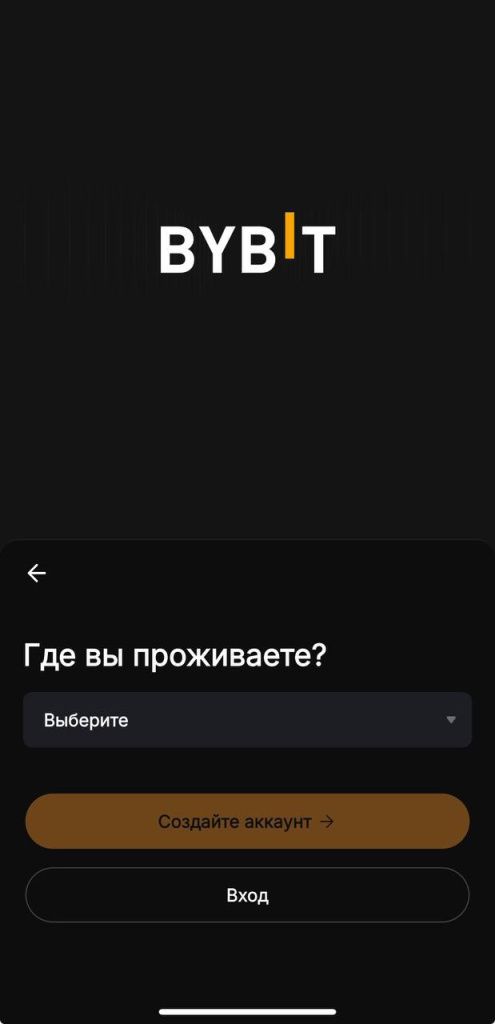
The registration process is standard: email or phone number, password, confirmation code.
With verification, the situation depends on the region and functionality. Basic registration allows you to use trading functions, but when increasing withdrawal limits or in case of suspicious activity, the platform may request KYC identity verification.
Here it is important to understand one thing: in 2026, practically no large centralized exchange (and nevertheless, they exist) lives in a “full anonymity” mode.
To pass the procedure, you will need a photo of a passport or another identity document, пройти Face ID, and sometimes you also need to confirm your registration address using a bank statement.
Interface and trading platform
The Bybit interface is one of the strongest arguments in favor of the platform. It is:
-
quite minimalistic;
-
not overloaded with secondary tabs;
-
provides fast access to the order book, chart, and orders.
The trading terminal supports:
-
limit and market orders;
-
stop-loss and take-profit;
-
conditional orders;
-
isolated and cross margin.
The platform feels “built” for active trading. Compared to overloaded ecosystems where dozens of tabs distract you, working here feels more focused.
Spot trading on Bybit
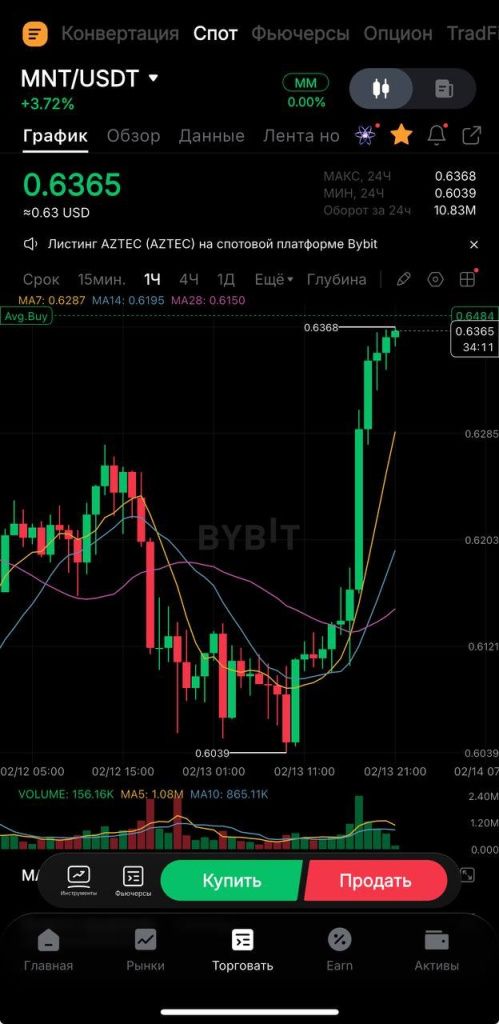
Although Bybit is known for derivatives, its spot market is also developing. The main pairs are available:
-
BTC/USDT
-
ETH/USDT
-
SOL, XRP, ADA and other major assets
-
a wide selection of altcoins
Spot fees in the basic model are around 0.1%, which matches the market standard. Discounts are available for active traders and holders of internal tokens.
Spot is not the main hero here, but it works stably and is suitable for:
-
buying and holding base assets;
-
participating in launchpads;
-
preparing margin collateral for futures.
Futures and leveraged trading
This is Bybit’s strong side.
The platform supports:
-
perpetual contracts (perpetual);
-
contracts settled in USDT and in cryptocurrency;
-
leverage up to 100x (depending on the pair).
It is important to note: leverage is a tool, not a way to “get rich quickly”. In practice, most liquidations happen precisely because of improper leverage management and the absence of a stop-loss. Always follow risk management and use high leverage only with full confidence and having extensive experience.
Bybit also offers:
-
flexible margin settings;
-
automatic margin addition;
-
a liquidation calculator.
For an active trader, these are important details because they directly affect risk management.
How to fund a Bybit account
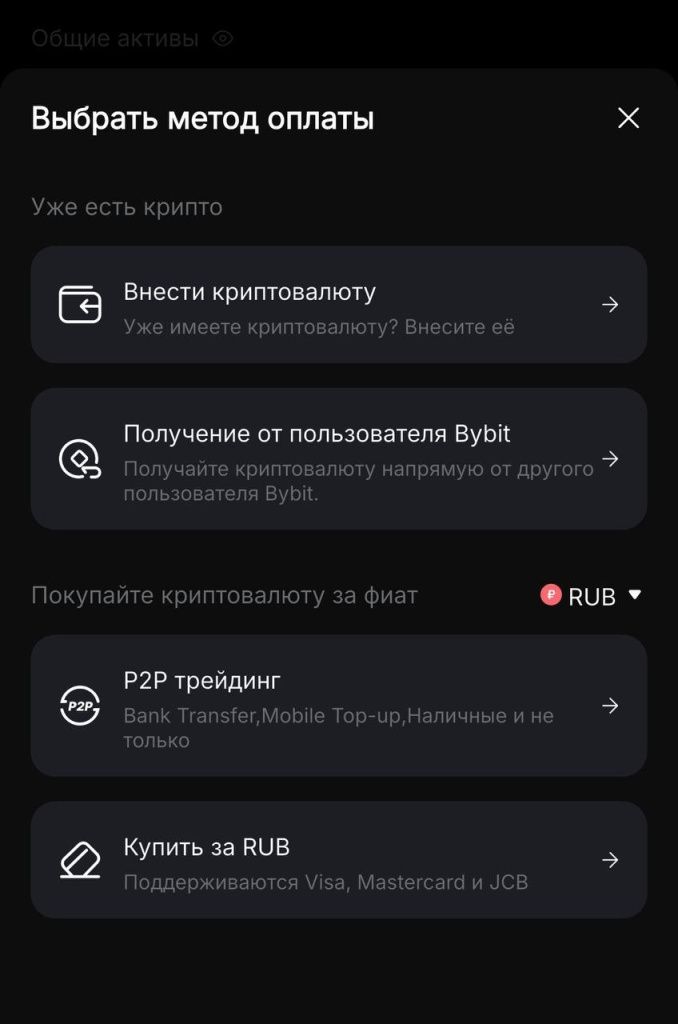
Funding a Bybit account is set up quite flexibly. The exchange understands that a user may come with different tasks: someone already holds USDT in a wallet, someone wants to buy crypto with a card, and someone prefers P2P.
Main funding methods:
-
transferring cryptocurrency from an external wallet;
-
one-click purchase;
-
funding via fiat payment systems;
-
P2P purchase from other users.
The choice depends on what you already have “on hand” — crypto or fiat.
Transferring cryptocurrency to Bybit
If you already have cryptocurrency in another wallet or exchange, this is the most direct way.
The algorithm is simple:
-
In the “Assets” section, the required coin is selected, for example USDT.
-
The “Deposit” button is pressed.
-
The network is selected (ERC20, TRC20, BEP20, etc.).
-
The address is copied.
-
Funds are sent from another wallet.
The key point is choosing the network. If you send USDT on the TRC20 network to an ERC20 address, the funds will not arrive. This is the most common beginner mistake.
As for speed, everything depends on the network:
-
TRC20 – usually 1–3 minutes;
-
ERC20 – can take longer, especially during high congestion.
The transfer fee is paid by the sender, and it depends on the chosen network. A typical practical situation is a transfer to yourself from another account or crypto wallet. Then you just need to copy the Bybit wallet address and paste it into the wallet when sending (for example, a non-custodial one, Trust Wallet or Metamask).
One-click purchase
The “Buy Crypto” or “One-Click Buy” function is a way to quickly buy cryptocurrency with a bank card or via payment services.
The scenario looks like this:
-
The payment currency is selected (USD, EUR, RUB, etc.).
-
The amount is specified.
-
The asset to purchase is selected (for example USDT or BTC).
-
Payment by card is confirmed.
It feels максимально close to a banking app. But there is a nuance: the rate here is often slightly less favorable than on P2P or when trading via spot, keep that in mind.
Fees can be higher due to:
-
the payment provider’s fee;
-
currency conversion (the rate is often драконовский);
-
built-in spread.
This method is convenient when you need to enter the market quickly without extra steps. For example, you urgently need crypto in your account.
Funding with fiat money
Bybit supports working with fiat via partner payment gateways. This is not always the exchange’s direct bank account, but more often an integration with providers.
What is important to consider:
-
fiat availability depends on the country;
-
there may be limits on the first purchase;
-
sometimes basic identity verification is required.
For large amounts, it is often more convenient to use a bank transfer if it is available, because card fees become noticeable on big volumes.
P2P on Bybit
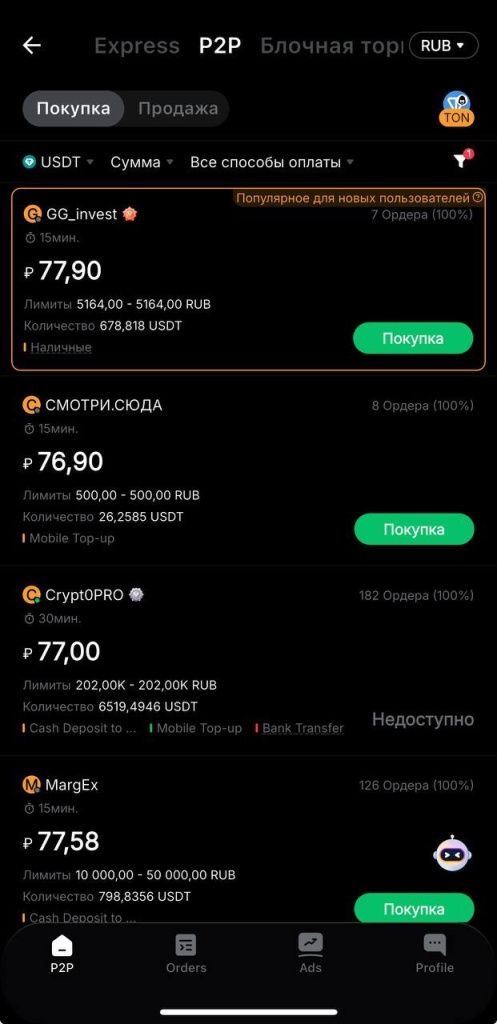
P2P is one of the most popular ways to fund an account, especially in countries where direct bank payments are restricted. Its essence is as follows: different exchange users buy/sell assets to each other, and the platform simply acts as an intermediary and controls the fairness of transactions.
The mechanics are as follows:
-
In the P2P section, the currency is selected (usually USDT).
-
The payment method is filtered (a specific bank, transfer, e-wallet).
-
A seller is selected.
-
Funds are transferred to the seller.
-
After confirmation of payment, the crypto is released from escrow.
It is important not to take the deal “off-platform”. All communication and confirmation must take place within the system.
P2P often gives a more favorable rate than one-click buying. But here the human factor comes in: you need to choose a seller with good stats and a high rating.
How to withdraw money from Bybit
Withdrawals are set up as flexibly as deposits. You can:
-
withdraw cryptocurrency to an external wallet;
-
sell crypto via P2P and receive fiat;
-
use a fiat gateway (if available).
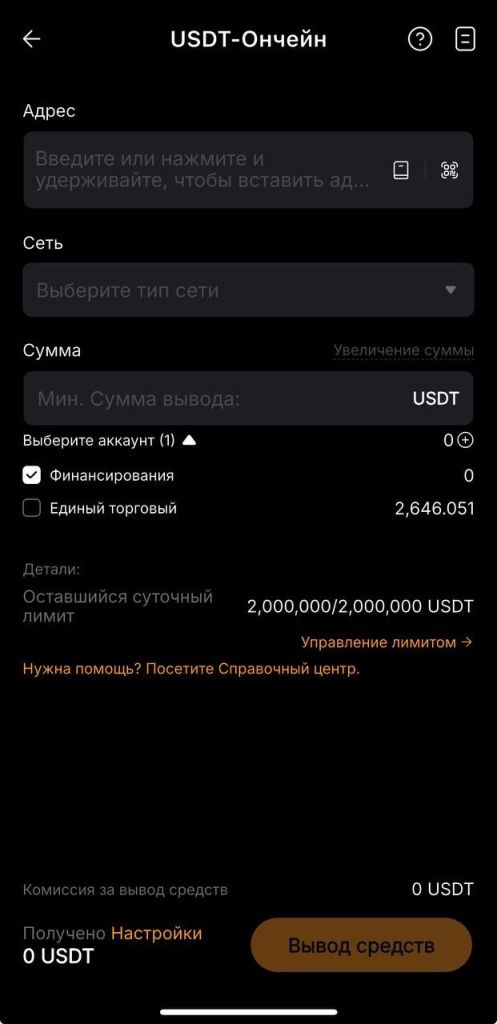
Withdrawing cryptocurrency
Standard algorithm:
-
Select the asset.
-
Click “Withdraw”.
-
Paste the recipient address.
-
Select the network.
-
Confirm the operation.
The fee depends on the network and the asset. For example, withdrawing USDT on the TRC20 network is usually cheaper than on ERC20.
The exchange may also request additional confirmation via email or two-factor authentication.
How to withdraw money from Bybit
Direct withdrawal to a card is not available in all countries. More often, the P2P scheme is used:
-
Sell USDT for fiat.
-
The buyer transfers money to your card.
-
After confirmation of payment, the crypto is released.
This is the most common scenario for withdrawals in regions where there are no direct banking gateways.
Important:
-
verify the funds have arrived before confirming;
-
do not confirm the deal until the funds are actually credited;
-
consider bank limits and fees.
How to transfer USDT to Bybit
If USDT is already in an external wallet or another exchange:
-
In the “Assets” section, select USDT.
-
Click “Deposit”.
-
Select the network (TRC20 is often cheaper).
-
Copy the address.
-
Send the funds.
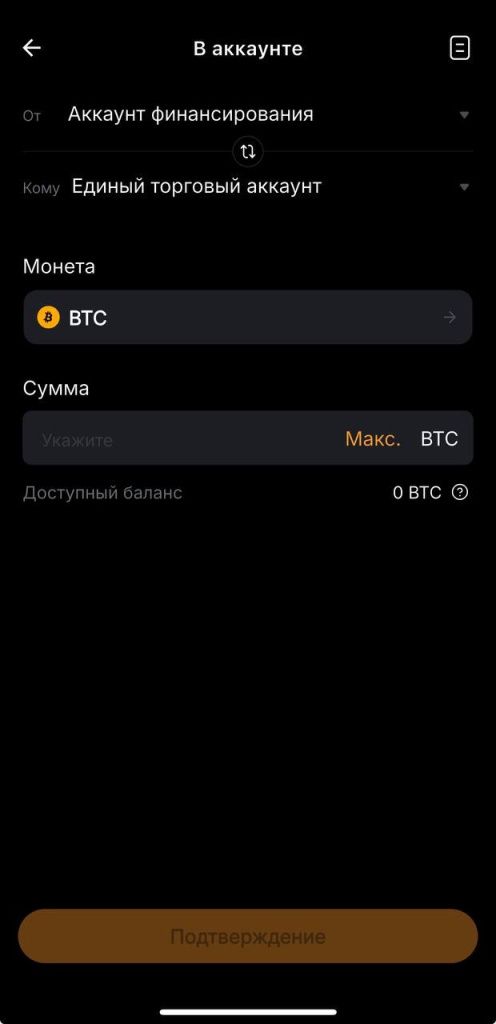
If you need to transfer USDT внутри Bybit itself (for example, from spot to futures), use the internal transfer function:
-
select “Transfer”;
-
specify the direction (Spot → Derivatives or vice versa);
-
confirm the operation.
Internal transfers are instant and have no fee.
Practical nuances of deposits and withdrawals
There are a few points that are rarely written in instructions, but they save нервов:
-
do not keep all funds in the derivatives wallet — for active trading it is convenient to distribute assets;
-
check withdrawal limits in advance, not at the moment when the money is urgently needed;
-
consider processing time — sometimes withdrawals are processed in batches;
-
for large sums, do a test transfer of a small amount.
And most importantly, double-check the wallet address you are withdrawing to. Not only the last characters, but the entire address. Because this is one of the most common scam schemes, when a scammer swaps a fake address into the clipboard.
And one more point: if the amount is large, the exchange may request additional verification. This is normal practice for centralized platforms, and it’s better to be ready for it in advance.
Fees
Base fees:
-
spot – about 0.1%
-
futures – about 0.01–0.06% (depending on the maker/taker model)
At first glance, the difference in hundredths of a percent seems like a trifle. But with a monthly turnover, for example, of 500,000 dollars:
-
0.02% = 100 dollars
-
0.06% = 300 dollars
The difference is already tangible.
That’s why active traders внимательно look not only at the interface, but also at the fee schedule.
Bybit Earn and additional products
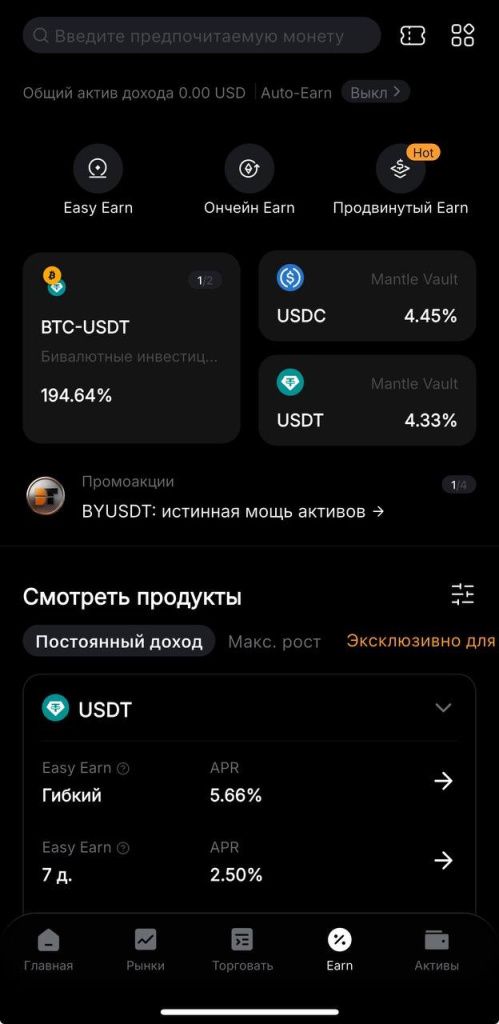
In addition to trading, Bybit has an Earn section:
-
staking
-
flexible deposits
-
fixed products
-
launchpool
Sometimes yields look attractive — 5–15% per year on stablecoins during promo periods. But it is important to understand that such conditions are often limited in time and volume.
This is more a way to temporarily “park” funds than a full-fledged investment strategy.
Launchpad and marketing activities
Bybit actively uses a marketing engagement model:
-
launchpads for new tokens;
-
airdrop campaigns;
-
trading competitions;
-
volume bonuses.
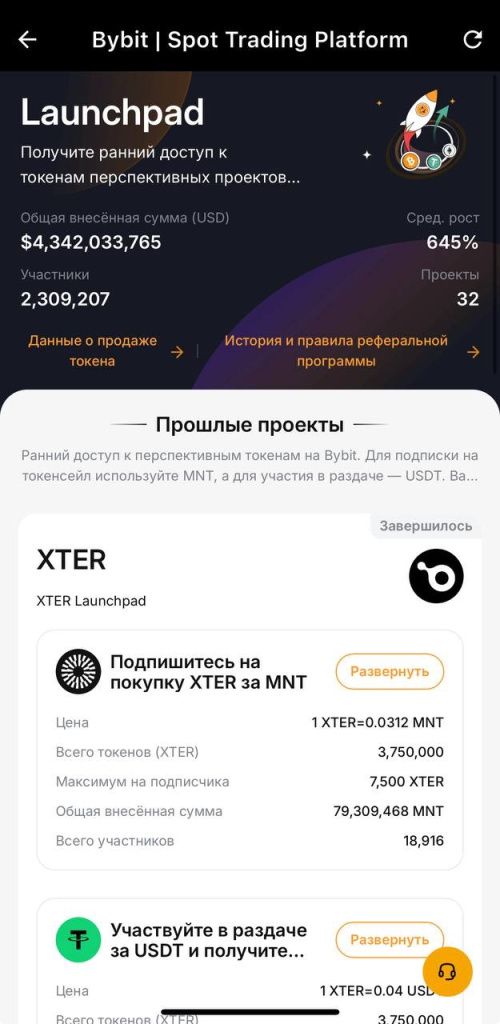
Sometimes participation in a launchpad requires depositing a certain amount, for example 5–10 thousand USDT, to receive an allocation. The return may be 3–10% over a short period, but it is not guaranteed.
Such activities are especially interesting for those who actively keep funds on the platform and regularly generate volume. This is especially true for holders of the exchange’s own token — Mantle (MNT). It often has bonus participation terms in pools.
Copy trading
Bybit offers a copy trading feature — the ability to replicate trades of a selected trader.
The mechanics are simple:
-
choose a “master”;
-
connect a certain amount;
-
the system automatically copies their positions.
In practice it looks attractive, but there is an important nuance: copying does not отменяет market risk. Even successful traders have drawdowns. And blind copying without understanding the strategy often ends in disappointment. Copy trading is not “money from the sky”, but a very risky trading method, you need to understand that.
Security and reserves
Bybit claims:
-
storing funds in cold wallets;
-
a multi-level protection system;
-
an insurance fund against liquidations.
Over the years of operation, the platform has not faced major collapses comparable to loud industry bankruptcies. But the basic rule remains the same: a centralized exchange is not a personal safe. For long-term storage of large amounts, it makes more sense to use non-custodial wallets.
Pros and cons
pros
-
strong derivatives infrastructure
-
works in the Russian Federation
-
high liquidity
-
convenient and fast interface
-
competitive fees
-
well-developed marketing programs
cons
-
a high concentration on futures can provoke beginners
-
for large withdrawals, KYC requirements may appear
-
like any CEX, it carries centralized risk
Comparison of Bybit with alternative exchanges
| Parameter | Bybit | OKX | MEXC |
|---|---|---|---|
| Availability for users from the Russian Federation | Works, popular among traders from the Russian Federation | Works, but some fiat directions are restricted | Works, often used without verification |
| KYC (verification) | Required for increased limits and some functions | Required for full functionality | Partial operation without KYC is available |
| P2P section | Yes, actively used | Yes, a developed listings market | Limited or less active |
| Spot fee | about 0.1% | about 0.08–0.1% | from 0–0.1% (often zero-fee promos) |
| Futures and leverage | Up to 100x, strong derivatives market | Up to 100x, developed infrastructure | Up to 200x on certain pairs |
| Interface for beginners | Minimalistic, geared toward trading | Universal, many features | Simple, but less structured |
| Earn, launchpads, promos | Active marketing campaigns and Launchpad | Launchpad, Earn, DeFi tools | Frequent listings and promo campaigns |
| Who it suits | Active traders and launchpad participants | Those who want a universal exchange | Those looking for many altcoins and minimal KYC |
Compared to OKX and MEXC, the Bybit exchange looks like a balanced platform for active trading. It confidently holds its position in the futures segment, offers a clear interface, and has working P2P for users in Russia. By core parameters — fees, liquidity, feature availability — Bybit is on the level of large international exchanges and suits those who are looking for a stable platform for regular trades.
If we compare exchanges for Russians without harsh restrictions, it is clear that each has its own niche. MEXC is more often chosen because of softer conditions without KYC and a large number of altcoins, OKX as a universal ecosystem, and Bybit remains a popular option for futures, P2P, and active trading. Therefore, for queries like “Bybit or OKX”, “Bybit alternative” or “best crypto exchanges for Russians”, the platform looks like one of the main and logical options.
Who Bybit is suitable for
Bybit is especially suitable for:
-
active futures traders;
-
those who regularly use leverage;
-
launchpad participants and marketing program users;
-
users who value interface speed.
Less suitable for:
-
“buy and forget for 5 years” investors;
-
those who don’t want to dive into derivatives;
-
users who want maximum simplicity like in a banking app.
FAQ
What is Bybit?
It is a centralized cryptocurrency exchange focused on trading derivatives and spot assets.
Can you trade without verification?
Basic registration allows you to start trading, but for increased limits and certain operations KYC may be required.
What are the fees on Bybit?
Spot fee is about 0.1%, and futures fees are lower — around 0.01–0.06% depending on the order type.
Is Bybit safe?
The platform uses cold storage and protective mechanisms, but like any centralized exchange, it does not eliminate operational risks.
Is Bybit suitable for beginners?
Suitable if you are interested in futures and active trading. For a fully passive investor, there are simpler alternatives.
Conclusion
Bybit is an exchange with a clear character. It does not try to be “everything for everyone”, but focuses on active trading, derivatives, and user engagement through marketing mechanics.
If the task is to trade actively, use leverage, and work with a liquid market, the platform looks like a logical choice. If the goal is to simply buy BTC and forget it for years, this may not be the most obvious first entry point.
As with any exchange, the key factor is not the name, but how well it matches your tasks and how well you understand the risks.