




Contents:
- DeFi in simple terms
- Mini glossary: blockchain, wallet, stablecoin, smart contract
- How it all started
- Ethereum as a platform for DeFi
- DeFi in 2026
- How DeFi works in simple terms
- Where a beginner should start: a basic setup and safety rules
- Stablecoins: why half of DeFi revolves around them
- DeFi use cases
- Staking
- Tokens are not just “digital money”
- Lending protocols
- Decentralized exchanges and liquidity pools
- Who needs decentralization — and why
- DeFi remains a high-risk experiment
DeFi in simple terms
DeFi (Decentralized Finance) is a set of financial services that run not through a bank, broker, or payment processor, but through code on a blockchain (a digital ledger). In simple terms, DeFi is finance delivered as a digital service. A user opens an app, connects a crypto wallet, and performs familiar actions: swaps assets, deposits funds to earn interest, takes out a loan, or earns income from fees. All actions follow the rules defined in a smart contract (blockchain program code), which automatically executes the terms of a transaction based on pre-written rules embedded in the code. Those rules are set by the developer or the project team.
These features distinguish DeFi from traditional financial systems, where there is almost always an intermediary that holds the money, checks documents, can stop a transaction, and may refuse to execute a client’s request for its own reasons — sometimes arbitrary. In DeFi, there is no intermediary. It is replaced by a protocol where the rules are known in advance, public, and transactions are executed under the conditions encoded in the contract — and no one can change them.
Anonymity in DeFi is conditional and not absolute, although it is far less transparent than in banks. Most blockchains are open ledgers where every transaction is recorded forever and can be viewed by anyone. The difference is that instead of a name and passport, a wallet address is used. But as soon as that address “shows up” somewhere — for example, on a KYC exchange or in a payment service — the entire chain of transactions can potentially be linked to a specific person. So it’s more accurate to talk not about full anonymity, but about pseudonymity, where privacy largely depends on the user.
Mini glossary: blockchain, wallet, stablecoin, smart contract
Blockchain
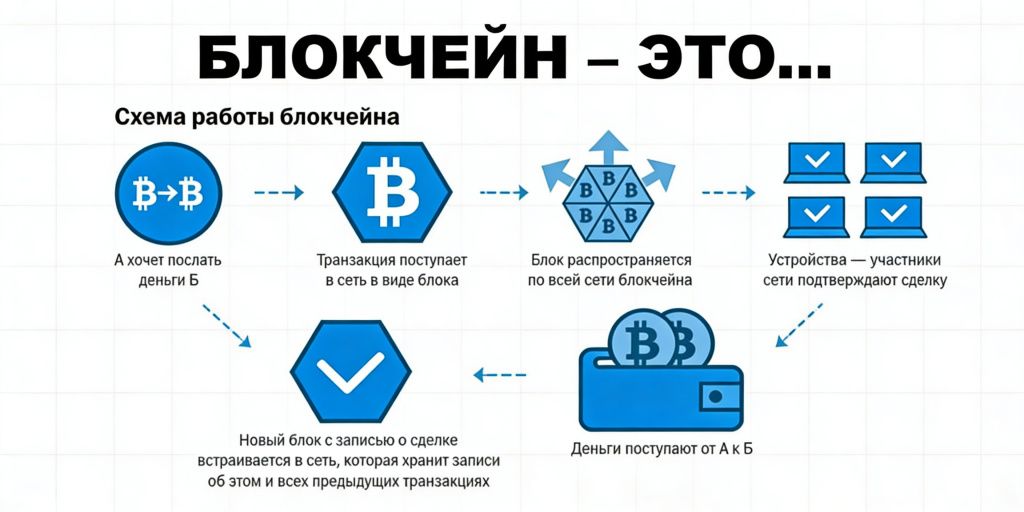
A blockchain is a shared digital ledger where transactions are recorded. It is stored not in one place, but by many participants in the network. That’s why there is no “main server” that can be turned off, and no single administrator who can quietly rewrite history.
In simple terms, imagine that residents of an apartment building keep a shared log of meter readings, and a copy of the log is held by everyone. To fake an entry, you would need to replace the log for most of the neighbors at the same time. That’s practically impossible, so the log is considered reliable.
Crypto wallet
A crypto wallet is not an “app that holds money,” but an access tool. It stores your keys (more precisely, it helps you manage them) that you use to sign transactions. The funds do not “sit in the wallet” — they are recorded on the blockchain, and the wallet simply gives you the right to control them.
That leads to the main conclusion: if you lose your keys, you lose access. In most cases there is no “restore with your passport.” That’s why wallet security is not a checkbox — it’s half of success in DeFi.
Stablecoin
A stablecoin is a crypto asset that tries to keep a stable price, most often around 1 US dollar. It exists because paying salaries and calculating returns in a volatile coin is inconvenient. Stablecoins provide a familiar unit of account inside the crypto market: a kind of “digital dollar.”
At the same time, stablecoins come in different types. Some are backed by reserves (roughly: real assets are claimed to support them), while others are algorithmic constructions that hold the peg through mechanics and demand. Market history has already shown that “stablecoin” does not always mean “rock-solid stability.”
Smart contract
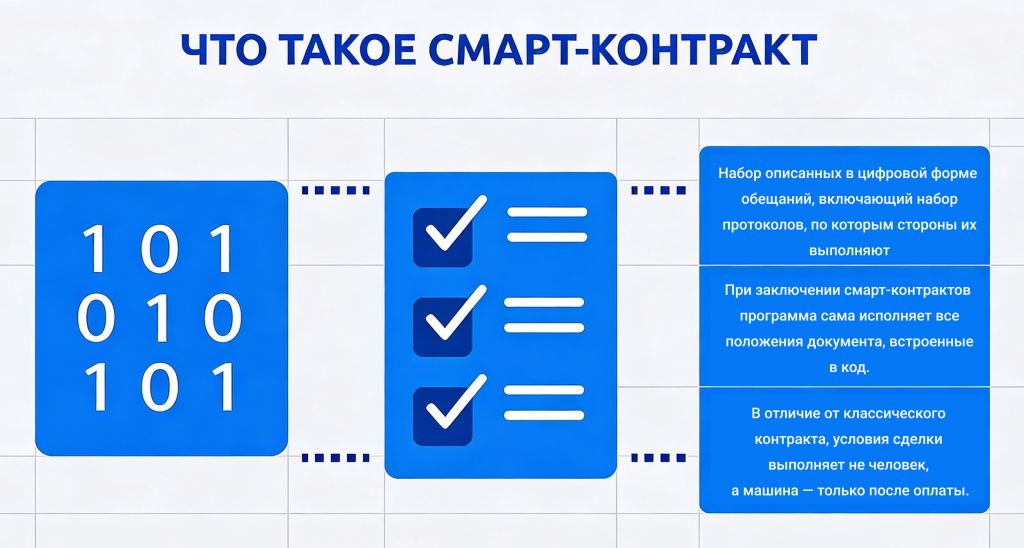
A smart contract is a program on a blockchain that automatically executes the rules of a deal. It’s not “intelligence” and not a “lawyer in code,” but simply a set of conditions: if A happens, do B. It can’t empathize, it can’t “make an exception,” and it can’t “fix a mistake retroactively.” But it can enforce rules equally for everyone, without the human factor.
The clearest analogy is a coffee vending machine. A coin is inserted, a button is pressed, and coffee is dispensed. No one argues, no one delays it “for review,” and no one asks you to fill out a form. In DeFi, instead of coffee it can be a token swap, a loan issuance, or interest accrual.
How it all started
The idea of DeFi didn’t grow out of fashion — it grew out of practical needs. First came a basic question: can money be transferred without a bank? In late 2008, an author under the pseudonym Satoshi Nakamoto published the paper “Bitcoin: A Peer-to-Peer Electronic Cash System.” It described a scheme for electronic payments where transfers happen directly between users, and the network confirms that no one is trying to spend the same coin twice.
In early 2009, the system went live as the Bitcoin network. It was a turning point for the entire crypto industry: people could argue about technology, theory, and prospects, but a working protocol showed in practice — for the first time — that transfers between people can be made directly, without a bank, a payment system, or any other intermediary.
Over time, Bitcoin started to be seen more broadly. It began to be used as an investment asset, as a tool for international transfers, and as a form of long-term value storage. But Bitcoin’s architecture remained intentionally simple: it is built for reliability and predictability, not for complex financial scenarios.
Once people had a digital asset they could hold and transfer without a bank, a natural question appeared: can we do the rest of finance the same way? Swap assets without an exchange. Earn interest without a bank. Borrow without a credit department. Create “if the price hits this level, sell” deals without a broker.
In practice, things were much more mundane. Bitcoin and other coins already existed, wallets worked, and transfers could happen without banks. But as soon as it came to swaps, loans, or other operations, most people still had to use centralized services.
The result was a strange picture: I store coins myself, but I swap them through an intermediary. I transfer directly, but for credit I go to a platform that can shut down at any moment, freeze funds, make a mistake, or simply fail to satisfy regulators. Formally, crypto offered independence — but in reality many key actions still depended on specific companies and their rules.
Bitcoin didn’t fully solve this demand. It proved itself as digital money — for storing value and direct transfers between people. But as a universal financial tool for everyday tasks, it was limited: for example, you couldn’t quickly swap one token for another right inside a wallet, or take out a loan without a bank on top of it. For those operations, the market needed more flexible solutions.
Ethereum as a platform for DeFi
Against this backdrop, developers started looking for new solutions: if a blockchain can already transfer value without a bank, can we build a blockchain that can also execute financial logic? Not just “send a coin,” but “carry out a deal under specific conditions.”
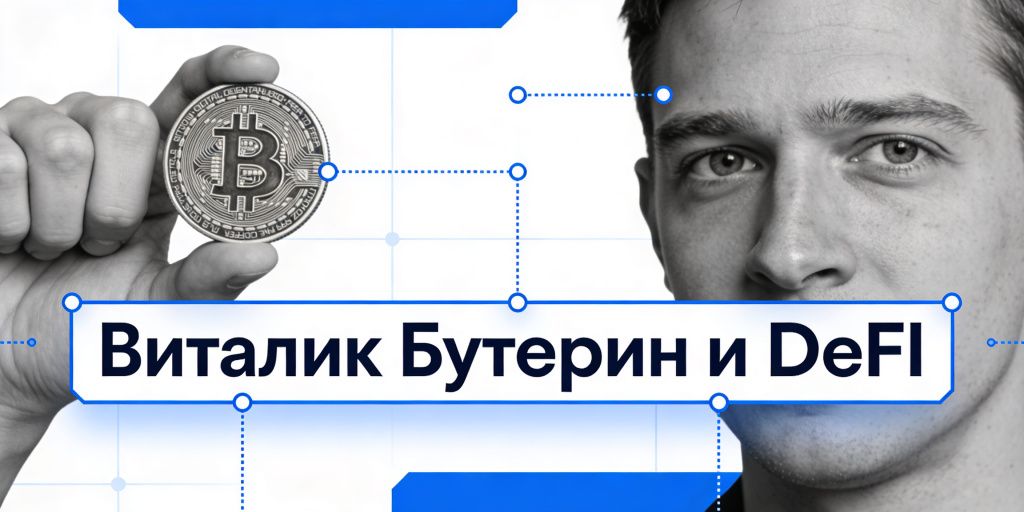
One of the people who formulated this as a dedicated platform was programmer Vitalik Buterin. In 2013, he published the concept of Ethereum — a blockchain designed as a universal environment for applications. In 2014, the project’s white paper was released and a major crowdsale took place (a simple way to raise money for a launch by selling the project’s tokens at a special price, and then using the proceeds to build and launch the project). In the summer of 2015, the Ethereum mainnet launched.
What Ethereum delivered in practice
Ethereum brought a simple but powerful thing to the industry: smart contracts became a mainstream tool. Financial rules could now be written in code, deployed to the network, and made available to anyone with a wallet.
For an everyday user, this means you don’t go to a bank and sign a contract — you interact with a program. If you deposit collateral, the program issues a loan. When a date arrives, the program accrues interest. If an asset reaches a price, the program performs a swap, and so on. Not because someone decided it, but because that’s how it was written.
That was the birth moment of DeFi as a phenomenon: financial services that operate without a traditional intermediary, yet still perform important functions for ordinary users — quickly and without unnecessary bureaucracy.
High fees problem and the solution
In public blockchains, block space is limited, so during peak periods users compete with fees: whoever pays more gets processed faster. In Ethereum, this was especially noticeable during the DeFi and NFT booms, when even a simple token swap could become expensive and unprofitable for everyday users.
The market responded pragmatically. New blockchains emerged with a focus on high throughput and low-cost transactions, and within the Ethereum ecosystem itself, second-layer solutions — Layer 2 — began developing rapidly.
In short, Layer 2 means transactions are executed in a separate network faster and cheaper, while the final result is settled on the Ethereum main chain. For the user, it looks almost the same: the same wallets, the same DeFi services, but fees are dramatically lower.
By 2026, this approach became the main direction of development: most everyday activity moves to rollup-based Layer 2 networks, while Ethereum increasingly plays the role of the base security and settlement layer for the whole ecosystem.
DeFi in 2026
DeFi has long stopped being “Ethereum only.” Today, activity is spread across several major ecosystems. Each has its strengths: more liquidity here, lower fees there, better interfaces somewhere else, and faster transactions elsewhere.
Where users go most often
-
Ethereum. The most “foundational” ecosystem: many protocols, deep liquidity, lots of solutions that have survived multiple market cycles. For larger sums and “battle-tested” tools, it remains one of the main centers.
-
Ethereum L2 ecosystems. The go-to choice for everyday actions where cost and speed matter. These popular Layer 2 solutions provide access to familiar DeFi mechanics with much lower fees.
-
Solana. An ecosystem with fast transactions and low operation costs. It’s well suited for frequent actions and active use of on-chain exchange tools.
-
BNB Chain. A mass-market network with many apps and users. There are many simple scenarios and trading services, but protocol quality can vary widely, so choosing requires attention.
-
Polygon and other Ethereum-compatible environments. They are often used for apps with large user bases and smaller amounts, where fee economics matter.
DeFi is built so you can move between ecosystems, choosing infrastructure for a specific task: store here, swap there, earn yield elsewhere.
Speed of popular blockchains (2025–2026)

Comparison table of popular blockchains for DeFi (2025–2026)
| Ecosystem | Approx. TVL (2025–2026) | Average fee | Real TPS | Main use case | DeFi market share |
|---|---|---|---|---|---|
| Ethereum (L1) | ~$90–110B | $3–20+ | 15–30 | Larger amounts, battle-tested protocols | ~55–60% |
| Ethereum L2 (Arbitrum, Optimism, Base, etc.) | ~$35–50B (combined) | $0.05–0.50 | 2,000–4,000+ | Everyday actions, low fees | ~20–25% |
| Solana | ~$8–12B | <$0.01 | 2,000–5,000+ | Active trading, frequent operations | ~5–8% |
| BNB Chain | ~$4–6B | $0.05–0.30 | 100–300 | Mass-market DeFi services, simple scenarios | ~3–4% |
| Polygon (PoS and ecosystem) | ~$1–2B | <$0.05 | 1,000–7,000 | Mass apps, smaller amounts | ~1–2% |
Evolution of the crypto market
The market has gone through its own “growing-up lessons.” Some people entered a new protocol with pretty numbers on the homepage, saw promised tens or hundreds of percent APY, and didn’t think about where that yield actually came from. At first everything looked great: tokens went up, rewards arrived daily. Then the project could suddenly stop withdrawals, collapse due to a bug in the code, or simply disappear along with the liquidity. And those who were happy about yields yesterday ended up today with worthless tokens and an empty wallet.
Users became more cautious and started looking at whether there is an audit, what reserves the protocol has, where the yield comes from, and how the project’s economics are built. Today, DeFi increasingly focuses not on promises, but on real resilience and transparency.
How DeFi works in simple terms
If you strip away the marketing, most DeFi protocols have a few basic roles:
-
Users who execute actions: swap tokens, take loans, close positions, move liquidity. They pay fees.
-
Liquidity providers: those who add assets to pools so swaps can happen at all. They receive a share of trading fees.
-
Borrowers and lenders: borrowers pay interest, lenders earn interest for providing capital.
-
Validators and stakers in networks: they support blockchain operation and earn rewards for security and transaction processing.
In the end, money in DeFi usually doesn’t come “out of thin air,” but from fees and interest. Yes, there can be incentives and bonuses, but sustainable protocols over the long run rely on clear economics: someone pays for a service, and someone earns for making that service work.
Where a beginner should start: a basic setup and safety rules
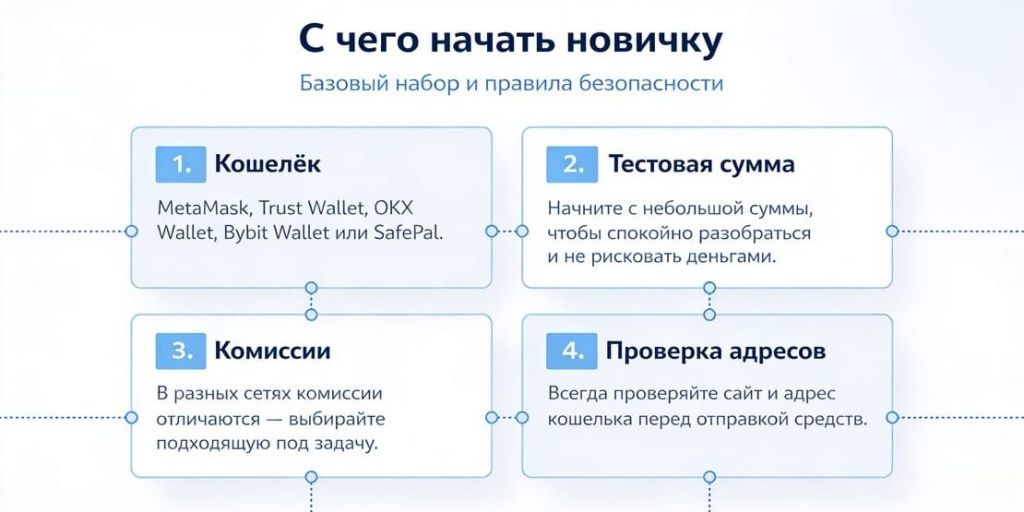
Beginners often feel they need to “understand everything at once.” In practice, a basic kit is enough:
-
Wallet. It’s best to start with a popular option that supports the needed networks and has a clear interface. In 2025–2026, some of the most widely used wallets remain MetaMask, Trust Wallet, OKX Wallet, Bybit Wallet, and SafePal — used both in Russia and worldwide.
-
A small test amount. It’s better to learn DeFi in small steps. Beginner mistakes are almost inevitable, and it’s cheaper when they don’t cost much.
-
Understanding fees. Transaction costs vary across networks, and that affects where it makes sense to do small actions.
-
Verifying addresses and websites. Phishing in crypto is not a horror story — it’s an everyday reality. The habit of checking domains and addresses saves money.
In DeFi, yield almost always reflects risk. If something looks “too good,” it helps to ask: what exactly is paying for it? Understanding the source of yield is a core skill. It matters more than knowing which buttons to click in an interface.
Stablecoins: why half of DeFi revolves around them
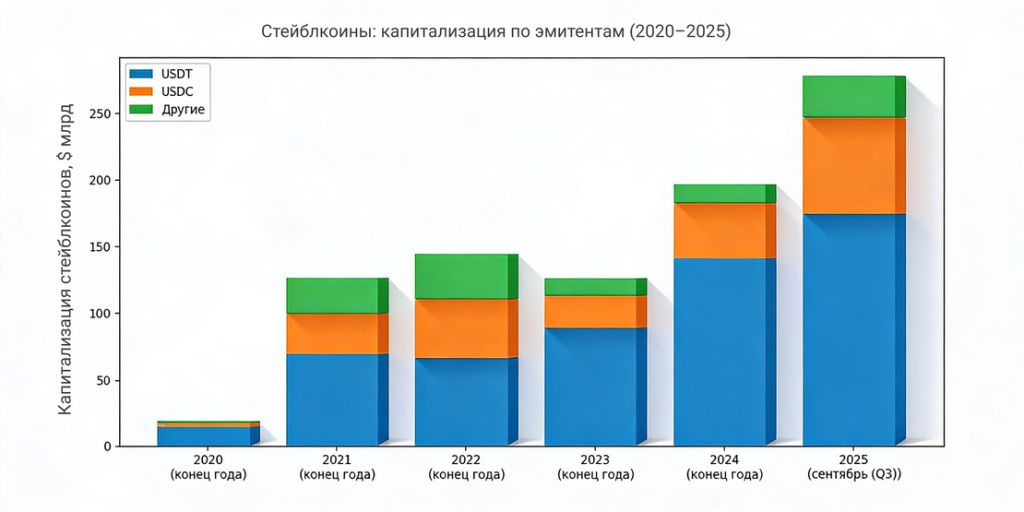
Stablecoins (crypto whose price is pegged to traditional money, most often the US dollar — e.g., USDT) became the working “unit of account” inside DeFi. They make it convenient to measure profit, lock in value, and keep part of capital without constant exposure to market volatility. Loans are often issued and deposits accepted in stablecoins, because it’s easier for people to understand 10% APY in digital dollars than returns in an asset that can swing +30% or -30% in a week.
Why it matters to distinguish stablecoin types
The market has already lived through a period when many people treated the word “stable” as a guarantee. Reality is more complex. Some stablecoins rely on claimed reserves and the issuer’s infrastructure. Others try to maintain the peg through algorithms, incentives, and market mechanics. History has shown that under stress, such mechanisms can break.
The takeaway is simple: a stablecoin is a useful tool, but you should treat it as a product with a risk model — not as a “digital bank deposit.”
DeFi use cases
When someone first reads about DeFi, it can feel like a closed system where everyone does nothing but trade tokens with each other. At first glance, it really does look like a separate “parallel economy” living somewhere on the internet. Some participants speculate, others provide liquidity, others take collateralized loans — and money keeps circulating inside this environment.
But if you look a bit deeper, it becomes clear that many DeFi mechanics are gradually moving beyond purely crypto-native operations. Blockchain payments, stablecoins, and decentralized protocols are already being used in real financial scenarios: transfers, settlements between companies, and even retail payments.
How DeFi starts working beyond crypto exchanges
The core idea is simple: if a blockchain can move money faster and cheaper than traditional systems, it can be used not only for trading, but also for everyday payments. In some countries this is already happening in practice. In El Salvador, you can pay with Bitcoin for specific things: buy coffee in a café, pay for lunch at a restaurant, a taxi ride, or even a hotel room. And in Argentina, many person-to-person deals happen in stablecoins — for example, paying a freelancer, renting housing, or buying electronics — where both sides settle in “digital dollars” directly, without a bank.
Blockchain-based payment services work roughly like regular bank cards or mobile apps. The user pays in the familiar way, but inside the system the money moves through a blockchain rather than classic bank processing.
For the customer, it looks like a normal card: they tap it at the terminal, pay for a ride, buy groceries, or order a taxi. But the transaction can be processed faster and cheaper because settlement happens directly through the blockchain network.
Crypto cards on blockchain rails
One early and often-cited example is the CHAI payment card, which was popular in South Korea. Its key feature was that settlements inside the system ran through a blockchain, while for the user it looked like an ordinary bank card or app.
When someone paid for a taxi ride, food, or purchases in a store, the transaction was processed via blockchain. For the merchant, that meant a lower fee and faster settlement. In the classic banking system, funds could take several days; here settlement took seconds.
Because of lower fees, the service could offer users bonuses, cashback, and discounts. As a result, many people chose such a card simply because it was profitable and convenient — and a large portion of them didn’t even think about the fact that blockchain was used inside.
Technically, the system operated through a stablecoin pegged to the national currency. When a user paid for purchases, the transaction went through the blockchain, and the merchant received funds almost instantly.
For the ecosystem, that meant a constant flow of transactions and fees. Those fees became a source of income for network participants: validators, stakers, and other infrastructure actors. In other words, revenue was generated not only from speculation, but also from real payments in the economy.
This is a good example of how decentralized finance gradually intersects with everyday life. For the user, it’s just a convenient card; for the blockchain, it’s a real stream of transactions and economic activity.
Staking
One of the most basic tools in DeFi is staking. Without technical terms, it’s similar to owning a share in a blockchain. A user buys the network’s token, locks it in the system, and earns a portion of the income generated by the network itself.
In networks that use Proof-of-Stake, these tokens are used to validate transactions. Validators verify operations and produce new blocks, while stakers delegate their tokens to validators. In return, the network pays rewards.
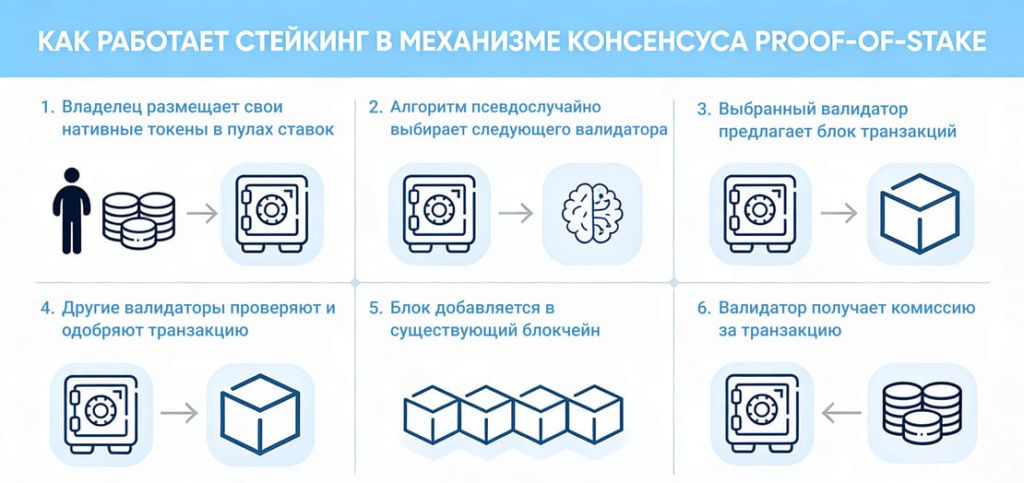
Staking yield typically comes from two main sources: transaction fees and block rewards. That’s why staking is often seen as a more “infrastructure-based” return. As long as the network is used and there is activity, validators and stakers receive their share of fees.
But there is an important risk — the price of the token itself. If it falls, staking rewards may not offset the loss. If the network grows and attracts users, the token can rise in price, and then total returns come from two components: staking rewards and asset appreciation.
Beyond the financial side, staking often gives the right to participate in network governance. Token holders vote on upgrades, fee parameters, and other protocol changes. Voting weight depends on the number of tokens.
In that sense, a blockchain resembles a digital joint-stock company: tokens are like shares, staking is like dividends, and votes are like shareholder meetings.
Tokens are not just “digital money”
One of DeFi’s key ideas is that a token can play different roles depending on the protocol. It’s not necessarily just a “currency.”
-
Like shares. A token can represent a stake in a project and grant rights to a share of fees or participation in governance.
-
Like bonds or a deposit. A token can represent a right to interest or a future payout.
-
A utility asset. A token can provide access to a service, discounts, loyalty programs, or specific features within an ecosystem.
This versatility is what makes tokens the foundation of the entire DeFi ecosystem. The same instrument can act as money, as a stake in a project, and as a way to earn income.
Lending protocols
The next major element of DeFi is lending protocols. In logic, they resemble a bank, but they run entirely through smart contracts. Users can deposit funds to earn interest or borrow against crypto collateral.
The model is usually built like this: to borrow $100, you need to post collateral worth more, for example $150–200. This is necessary because crypto assets are volatile. If the collateral price drops sharply, the system automatically sells part of the collateral and closes the loan.
Everything happens without employees, calls, or manual checks. Conditions are written into code in advance: if the collateral ratio falls below the allowed level, the collateral is liquidated automatically.
Why people borrow against crypto collateral
At first glance, it looks strange: why lock up $200 to get $100? But these loans have their own logic.
First, it’s a way to get liquidity without selling the asset. For example, a person holds crypto and believes it will rise. Instead of selling, they borrow against it and use the money for other needs.
Second, such loans can be used for leveraged strategies. A user borrows and increases exposure, betting on price growth.
Third, in some jurisdictions, a collateralized loan is not treated as a sale and may not trigger a taxable event. But this depends on local laws.
Lending protocol risks
-
Liquidation risk. If the collateral price drops, the system may automatically sell the asset.
-
Smart contract risk. A bug in the code or a hack can lead to loss of funds.
-
Stablecoin risk. If the loan or deposit is denominated in a stablecoin, its price can deviate from $1.
Decentralized exchanges and liquidity pools
Another key element of DeFi is decentralized exchanges, or DEXs. These are platforms where users can swap tokens directly from their wallets.
Unlike centralized exchanges, there is no company holding users’ funds. Trading happens through smart contracts, and liquidity is created by the users themselves.
For an exchange to work, it needs liquidity pools. A user deposits two tokens of equal value into a pool. Those assets are used for swaps, and the liquidity provider earns a share of the fees.
How people earn by providing liquidity
In these services, users deposit their coins into a shared reserve that others use for swaps. In return, liquidity providers earn income from fees charged on each trade, and sometimes additional protocol incentives. If trading volume is high, rewards can be noticeable — but the risks can also be higher: strong price swings of one coin (which can reduce the total value of the position), smart contract bugs or hacks, and a sudden drop in interest in the service when swap volume falls and income disappears.
The main nuance is so-called impermanent loss. It occurs when one coin in the pair changes in price significantly relative to the other. Because of how the swap mechanism works, the final value of your assets in the pool can end up lower than if you had simply held them in your wallet.
So the rule is simple: the more volatile the pair, the higher the promised yield usually is — and the more carefully you should evaluate the risks.
Who needs decentralization — and why
After learning the main tools, it’s natural to ask: who actually needs DeFi, and why give up familiar banking services?
The decentralized model has several key advantages — but each comes with a trade-off.
Self-custody: full control over funds
The main difference between DeFi and the banking system is that funds are held not in a company account, but in the user’s personal wallet. No one can freeze an account, stop a transfer, or demand documents for a transaction.
The user decides who to send funds to, when to transfer, and how much to use. If you have access to the wallet, the funds are under your control.
But with freedom comes responsibility. In DeFi, there is no support desk you can contact if something goes wrong. Losing access to a wallet or sending funds to scammers usually means an irreversible loss.
Low fees and fast transfers
In many networks, transfers take seconds and cost pennies, even for international payments. The services themselves run with minimal overhead because most processes are automated via smart contracts.
Where a bank needs offices, employees, and complex infrastructure, a DeFi protocol can service significant volumes of funds with lower operating costs.
A global market
In traditional finance, a lot depends on where you live. Bank accounts, checks, currency controls, and bureaucracy can seriously limit access to financial tools.
DeFi has fewer of these barriers. Anyone with internet access and a crypto wallet can connect to a service built in another part of the world.
Composability: a financial LEGO set
Most DeFi applications have open code. This allows new services to build on existing protocols and combine them.
As a result, complex products appear that are assembled from multiple services. One protocol can borrow liquidity from another, use lending functions from a third, and automatically distribute profit.
This model is often compared to a LEGO set: new financial mechanisms are built from ready-made blocks.
AML and KYC in DeFi
In “pure” DeFi protocols, AML and KYC procedures typically don’t exist because these are not companies with offices and staff, but open programs on a blockchain. A user simply connects a wallet and starts using the service without registration, verification, or uploading documents.
- KYC (Know Your Customer) is identity verification — in practice: passport, selfie, proof of address.
-
AML (Anti-Money Laundering) refers to anti–money laundering rules: monitoring suspicious activity, blocks, and reporting to regulators.
Inside DeFi itself, these procedures are absent because the protocol doesn’t know who is behind a wallet address. In practice, checks still appear at the “junctions” with the traditional financial system — when a person buys crypto with fiat on a centralized exchange, withdraws to a bank card, or uses regulated payment services.
So the real picture is this: inside DeFi you may operate without KYC, but at the entry and exit points of the crypto market, identity checks are usually still present.
P2P in DeFi: direct exchanges between users
P2P (peer-to-peer) in DeFi means deals directly between people, without a bank, broker, or payment intermediary. One user sends one asset, the other sends theirs, and the blockchain or a smart contract records and executes the terms of the deal.
The simplest example is swapping crypto between two wallets. A more complex fiat P2P deal looks like this: one person transfers money to a card or account, and the other sends crypto. Often these operations run through major exchanges with P2P sections (Bybit, OKX, Binance, and KuCoin) using an escrow mechanism, where funds are temporarily locked until the deal is confirmed.
Popular crypto exchanges with P2P: volumes, terms, and features
| Exchange | Approx. P2P volume | Escrow | Fiat support | Notes |
|---|---|---|---|---|
| Binance | $8–12B/month | Yes | 100+ methods | Deepest liquidity, many listings |
| Bybit | $2–4B/month | Yes | Banks, cards, e-wallets | Popular among CIS users |
| OKX | $1–3B/month | Yes | Cards, bank transfers, local payment rails | Wide choice of countries and currencies |
| KuCoin | $0.5–1B/month | Yes | Cards and bank transfers | Simple onboarding, basic feature set |
The main idea of P2P is to remove the intermediary and let users agree directly. This can lower fees and expand access, but it requires more caution: check the deal terms, the counterparty’s rating, and use services with fund protection.
DeFi remains a high-risk experiment
Despite rapid growth and large amounts of capital in protocols, the decentralized finance industry remains experimental. There are no bank guarantees, deposit insurance, or familiar regulation.
Almost every DeFi tool involves risks. It could be a smart contract hack, a token price crash, a protocol failure, or a stablecoin issue.
High yields in DeFi always come with risk. The biggest percentages are usually offered by new projects, token farming, and pools with volatile pairs like ETH-ALT or SOL-new-token. Yes, you can earn a lot there — but it’s also easy to lose funds due to price drops or protocol flaws. More conservative and lower-risk options — staking major coins like ETH, SOL, or ATOM, lending stablecoins like USDT and USDC in well-known protocols, or stablecoin-only pools — offer smaller returns, but are more predictable.
At the same time, it’s the speed of development that makes DeFi interesting. New protocols, payment solutions, and financial models appear constantly. Some projects will disappear, some will transform, and a few may become the foundation of a new financial infrastructure.
DeFi does not replace banks yet, but it already shows how money and financial services can work in a fully digital, global environment. For those who simply hold crypto, there are simpler passive income options — for example, staking ETH, SOL, or other coins in a wallet or via a protocol where assets participate in securing the network and earn a modest yield without active trading.