




Centralized cryptocurrency exchanges (CEX) in 2026 are introducing more and more identity verification procedures. This is driven by pressure from financial regulators and governments, which, in turn, are trying to combat money laundering. KYC (Know Your Customer) on a crypto exchange almost always implies not only disclosing passport/ID data, but also verifying a residential address with supporting documents, such as a bank statement.
This level of de-anonymization is not suitable for everyone, for obvious reasons. And it’s not only about “grey” schemes — a simple example is when someone is under 18 but already wants to trade crypto or just use an exchange. That’s why people search online for crypto exchanges that do not require KYC verification. In this article, we’ll cover which platforms are the most popular, their pros and cons, and the key nuances of using each one.
How identity verification works on exchanges
What is KYC in practice, and how difficult is it for an average person to pass? A typical process looks like this:
- First, you need to scan or screenshot your documents — usually you can choose between an international passport, a driver’s license, or a national ID. Then you upload the images to the verification section on the exchange.
- Next, you must complete Face ID — in simple terms, move your face in front of the camera. At this stage, specialized services (often AI-powered) analyze whether the face on the document matches your real face.
- At the final stage (often defined as a deeper verification level), you must confirm your real residential address by attaching a document that includes both your current address and your personal details. Services usually suggest 3–4 options, but in most cases it’s either a bank statement or a utility bill.
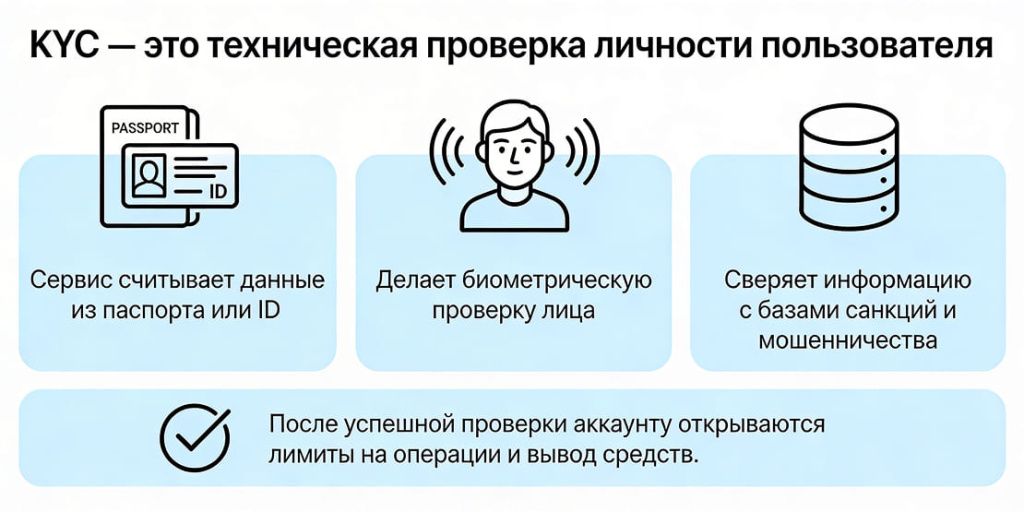
After all documents are uploaded and the AI checks your “face,” everything is sent to the exchange’s compliance department. The result — approval or rejection — can arrive in minutes or take several days. Rejections typically happen due to unsuitable documents, low-quality scans, or similar issues.
Can you bypass KYC?
In theory, yes — there are several “grey” ways to bypass exchange verification today. But you should understand that all of them carry certain risks, so if you plan to operate with large amounts, this option is not suitable.
A common example is buying a “drop.” In simple terms, you purchase a “turnkey” account with KYC already completed. Most often, these are accounts registered to people from India, Africa, or Asia (Indonesia, etc.). Such “drops” are relatively cheap — around $5–$20. But the risks are significant: the exchange can easily demand re-verification, and without the original person, you won’t be able to complete it. As a result, the account may be blocked and you may lose access to the funds.
Of course, some people try even “darker” bypass methods — for example, photoshopped documents or altered address/age or other data. But the downsides are obvious even to beginners. It’s better not to get involved with this, or at least study the topic very deeply.
CEX exchanges that do not require verification
There are two main types of cryptocurrency exchanges — centralized (CEX) and decentralized (DEX). DEX platforms, by default, do not require KYC because that is the core idea behind them. Below, we’ll explain why and list several of the most popular decentralized platforms. For now, let’s look at the best CEX options where verification is not required.
MEXC
One of the older and “highly ranked” crypto exchanges that allows trading and withdrawals without passing KYC. Founded in 2018, it ranks quite high by daily volume — 9th among all centralized exchanges according to CoinMarketCap.
- Daily trading volume: $2–3 billion
- Fees: 0.05% spot and 0.01% futures
- Daily withdrawal limit without verification: 10 BTC (approximately $700,000 at the current Bitcoin rate)
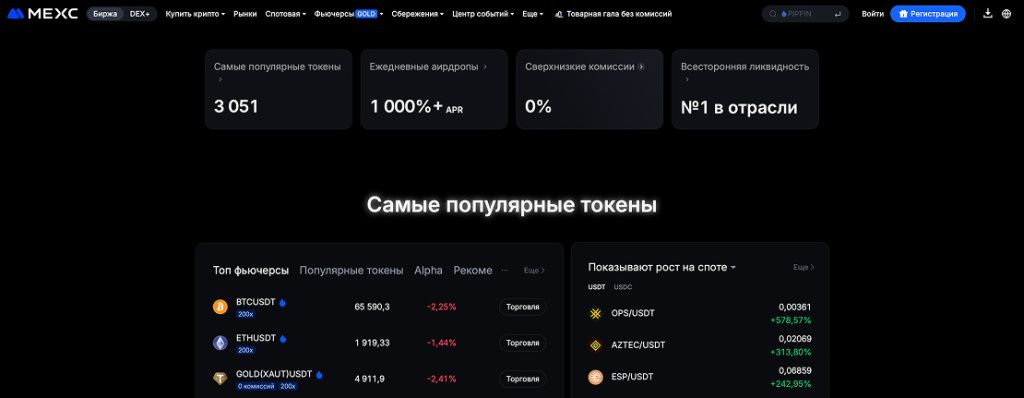
In practice, MEXC is considered a solid mid-tier exchange. It’s not a top-tier giant like Binance or OKX in terms of reserves and perceived reliability, but it has been operating for a long time and there have been no major issues widely associated with the platform. Note that MEXC often lists new tokens from lesser-known startups that are not available on top exchanges. Also, it’s not uncommon to find attractive staking conditions on MEXC.
BingX
A relative “newcomer” to the crypto exchange market, but one that has already reached decent volumes and built recognition through aggressive marketing. In the CIS market, it became widely known in 2020–2021, when many niche influencers actively promoted BingX due to an attractive referral program.
- Daily volume: around $1 billion on average
- Fees: 0.02% on futures and 0.1% on spot
- Daily withdrawal limit: 50,000 USDT
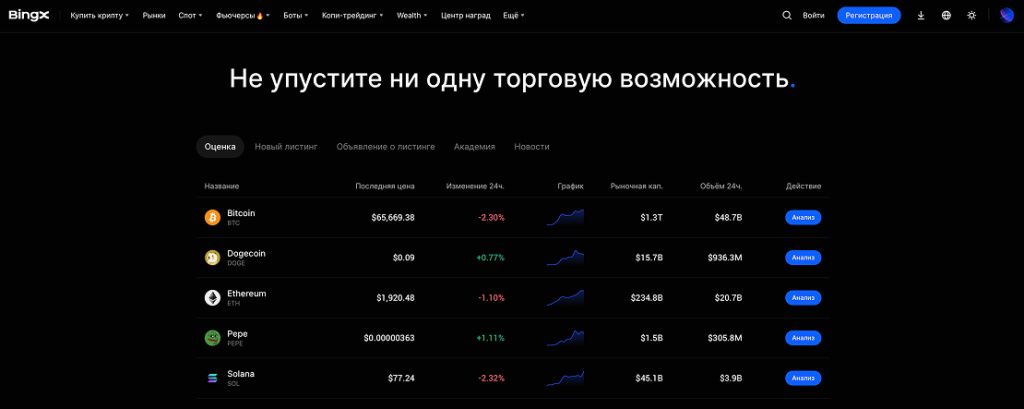
With its 13th place in the CoinMarketCap ranking, the platform can also be considered mid-tier. However, its reputation is generally seen as slightly lower than MEXC, which built its track record over many years. That said, there have been no major scandals or unfounded account blocks widely associated with the exchange.
HTX;
Another “dinosaur” of the market is HTX — a platform that has been operating for a very long time. Effectively since 2013, when the crypto trend was only emerging and Bitcoin cost around $150 per coin. Back then, the project was called Huobi and was one of the top players in the industry. In 2022, the exchange was sold to well-known crypto enthusiast Justin Sun and rebranded as HTX. Here you can also use the platform without passing KYC up to certain withdrawal and turnover limits.ё
- Daily trading volume: around $1–1.5 billion
- Fees are relatively high: 0.2% on all trading operations
- Daily crypto withdrawal limit: up to 5 BTC (approximately $350,000 at the current rate)
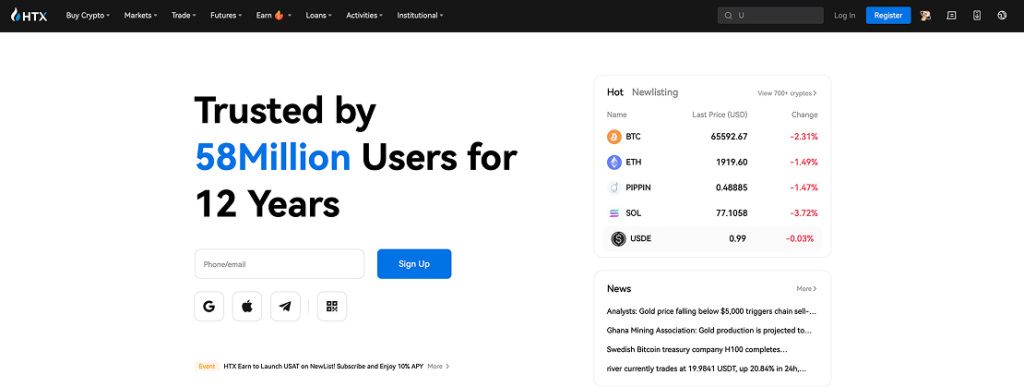
The exchange sits at 10th place in the ranking, so it is roughly comparable to MEXC in scale. Many enthusiasts note that trust in HTX may be slightly higher, as it is associated with well-known personalities and has operated for a very long time.
CoinEX
Next, we move to less well-known players in the exchange market. CoinEX was founded in 2017 and ranks 35th in the CMC platform ranking; it was launched in 2017.
- Daily trading volume: around $100 million
- Fees are also on the higher side: 0.2% on all trades, which is higher than top exchanges
- Daily withdrawal limit is relatively small: only 10,000 USDT
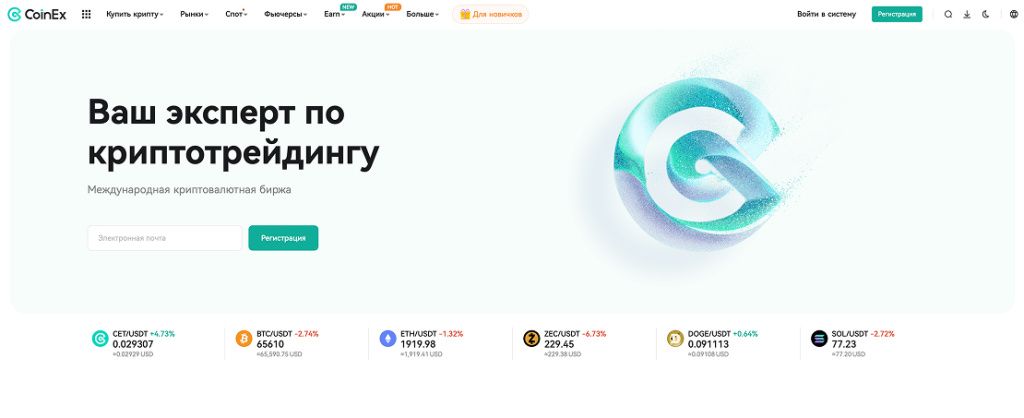
It should be noted that in 2024, CoinEX introduced a rule requiring mandatory KYC if you want to withdraw privacy-coin assets, such as Zcash or Monero (XMR). Keep this in mind.
Phemex
Founded in 2019 and ranked 36th among crypto exchanges on CoinMarketCap. It is considered a “young” market player that has not yet distinguished itself in any major way. On the one hand, that can be good; on the other, it has relatively few real user reviews.
- Daily trading volume: around $500 million, which is significant for an exchange of this size
- Fees: something in between top exchanges and “dark horses” — 0.1% spot and 0.06% for futures trades
- Daily withdrawal limit: 50,000 USDT
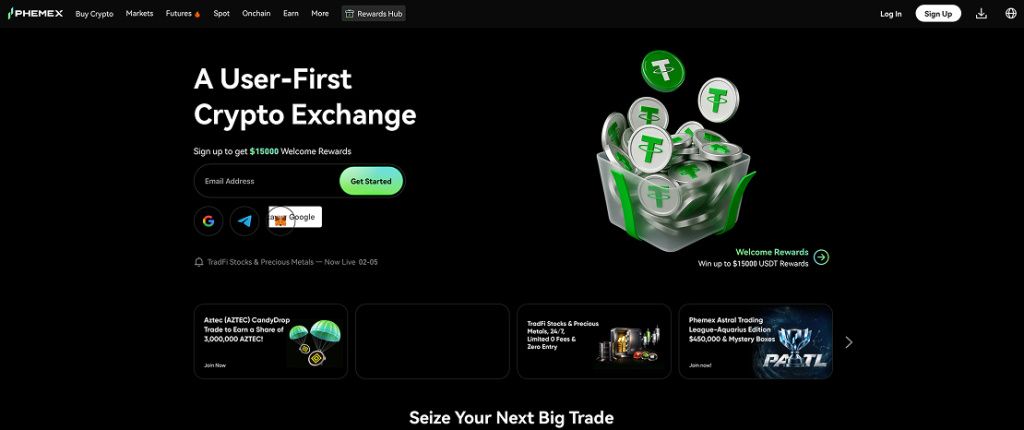
It’s important to understand that “second-tier” crypto exchanges like Phemex carry a certain level of risk. They typically worry less about reputation and brand than top players like Binance. That’s part of the trade-off when you’re looking for exchanges without verification.
Bitrue
Another crypto exchange ranked 50+ on CoinMarketCap is Bitrue. The platform was founded in 2018.
- Daily trading volume: around $400 million
- Fees are fairly high: from 0.1% to 0.15%–0.20% for some trading pairs
- Daily crypto withdrawal limit: up to 2 BTC (about $150,000 at the exchange rate at the time of writing)
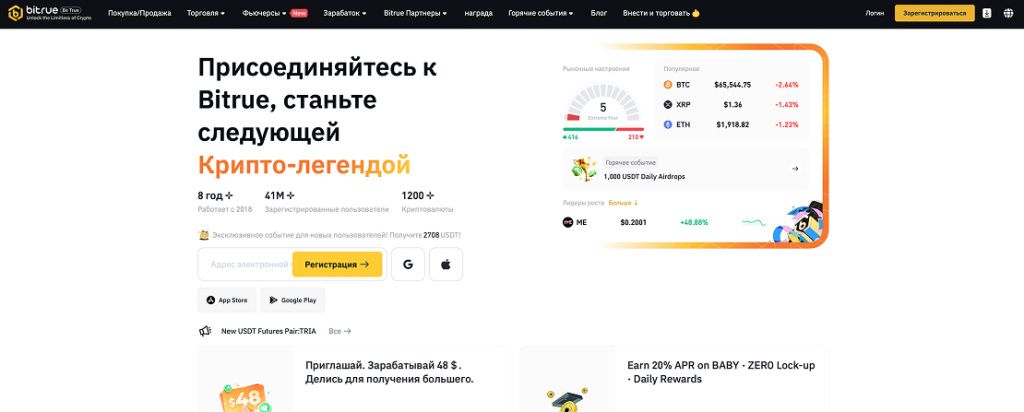
On Bitrue you can also trade and withdraw without a KYC-verified account level. Importantly, a phone number is not required — registration via email only is possible.
CoinW
A fairly reliable “second-tier” exchange, ranked 30th on CMC. It has been operating since 2017 and does not have notable negative reviews or major issues behind it.
- Daily trading volume: $5 billion, which is a strong figure for exchanges in this category
- Fees: also fairly competitive — 0.04% futures, 0.1% spot, but note that for some pairs the fee can reach 0.2%
- Daily crypto withdrawal limit: 70,000 USDT
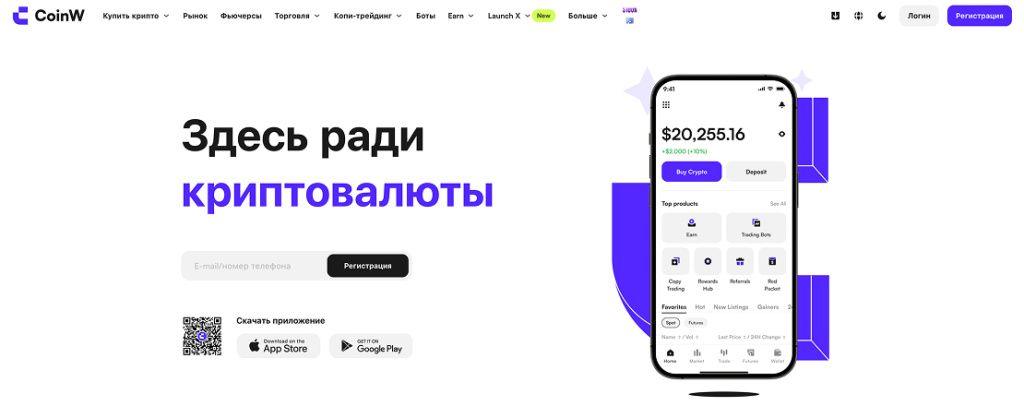
CoinW operates in more than 120 countries and has large trading volumes. Still, you should keep in mind that the exchange may request additional account checks or verification if there are suspicions of fraudulent transactions or other suspicious user activity.
Ranking of exchanges without KYC verification
| Exchange | Type | Founded | Volume (per day) | Fees (spot / futures) | Withdrawal limit without KYC | Ranking/position | Special notes |
|---|---|---|---|---|---|---|---|
| MEXC | CEX | 2018 | $2–3B | 0.05% spot / 0.01% futures | 10 BTC | #9 (CoinMarketCap) | Frequent new token listings; sometimes attractive staking |
| BingX | CEX | — | ~$1B | 0.1% spot / 0.02% futures | 50,000 USDT | #13 (CMC) | Popular in the CIS; lower reputation than MEXC |
| HTX | CEX | 2013 | $1–1.5B | 0.2% per trade | up to 5 BTC | #10 | Former Huobi; brand relaunch |
| CoinEX | CEX | 2017 | ~$100M | 0.2% per trade | 10,000 USDT | #35 (CMC) | KYC required for privacy coins |
| Phemex | CEX | 2019 | ~$500M | 0.1% spot / 0.06% futures | 50,000 USDT | #36 (CMC) | Second tier; fewer reviews |
| Bitrue | CEX | 2018 | ~$400M | 0.1%–0.20% | up to 2 BTC | 50+ place | Email-only registration |
| CoinW | CEX | 2017 | ~$5B | 0.1% spot / 0.04% futures | 70,000 USDT | #30 (CMC) | Operates in 120+ countries; additional checks possible |
The difference between CEX and DEX exchanges
We reviewed the most popular centralized crypto exchanges that allow you to trade and withdraw coins without passing identity verification. The key point here is that all CEX platforms manage their clients’ wallets. In practice, when you deposit funds to a centralized exchange, you give your money to the platform, and only then does it credit your account and allow you to trade. Put simply, until you withdraw funds back, they remain on the exchange’s accounts and temporarily are not fully under your control. This is called a custodial wallet. You can access it, but the exchange controls it.
Table comparing CEX vs DEX crypto exchanges for beginners
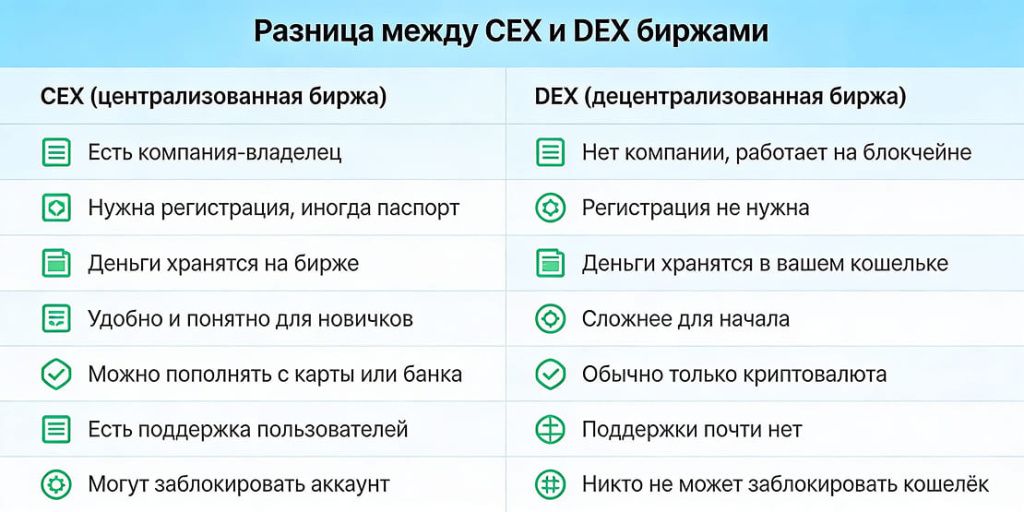
On the other hand, there are non-custodial crypto wallets — for example, MetaMask, Trust Wallet, Ledger, and many others. In short, the idea is simple: you download an app or a browser extension, generate a secure access code/seed phrase that only you control, and then fund the wallet with crypto in one way or another. In this setup, you have full control over your assets, and no intermediary — exchange or company — can block your account.
When it comes to decentralized cryptocurrency exchanges, it becomes clear why verification is not even a question. A DEX provides only its infrastructure — interface, execution programs, liquidity. It does not need to know who the customer is or where they live. Wallets simply connect and use the ability to swap one token for another — that is, to trade. Therefore, on DEX platforms you can connect your personal wallet without disclosing KYC data.
The most popular DEX exchanges
Uniswap
Uniswap is both a market leader and a pioneer. It was the first project to launch decentralized token swapping between users back in 2018.
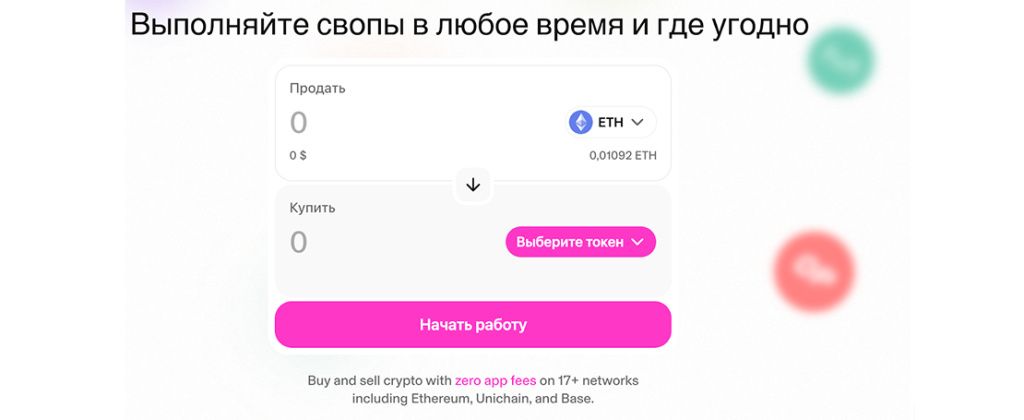
All you need to do is open the project’s dApp or website, connect your non-custodial wallet, and start trading tokens.
Uniswap’s daily trading volume is roughly $1.3–$1.5 billion across various tokens.
Fees on DEX platforms work differently than on centralized exchanges, but there are still fees distributed to liquidity pool participants (those who provide their tokens as liquidity for other users’ swaps). On Uniswap, it’s about 0.3% per swap. Naturally, this leads to another key advantage: any user can stake tokens into a pool and earn a percentage of the fees. It’s similar to a bank deposit, but decentralized — no one controls it, and your account cannot be blocked or seized.
Pancakeswap
Initially, this exchange was built specifically for the BNB Chain (Binance’s own blockchain), but later it grew into a full ecosystem. Like Uniswap and other DEX platforms, it now supports many networks — from Ethereum to Base and Aptos.
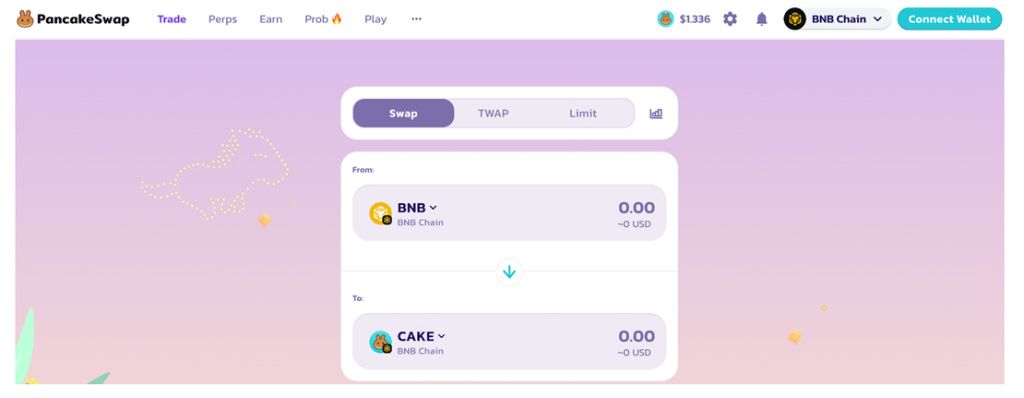
Founded in 2020. Estimated daily trading volumes are around $1–$1.2 billion. In addition, users can farm fees in liquidity pools and even participate in new token launches via the Launchpad section.
Liquidity pool fees are around 0.25% per token swap.
Hyperliquid
This is a slightly different type of decentralized exchange — a Perp DEX, meaning a platform that, like a CEX, supports leveraged trading (futures) and allows shorting (selling an asset without holding it, using collateral). It is known for launching in 2025 and distributing a record-breaking airdrop to early users — more than $2 billion was given away to participants who traded on the platform.
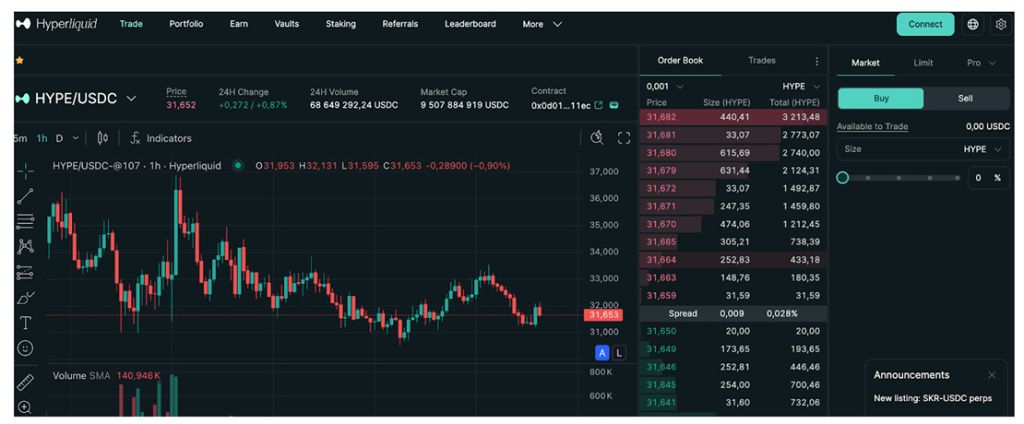
The principle is the same as with classic DEX platforms: connect a wallet and start trading. A key feature of Perp DEX platforms is that they often have no trading fees — trading is effectively free, aside from network gas fees (ETH, BNB, and so on).
Many believe this model has a strong future because it is максимально выгодно for users. And HyperLiquid is already proving itself, as it is considered a unicorn in the market.
How to choose a crypto exchange without verification
We reviewed the best CEX and DEX crypto exchanges where KYC verification is not required, along with their differences, usage nuances, and outlook. Now let’s define which parameters matter most when choosing a platform for trading.
Fees: for many users — especially those planning to trade large amounts — fees play a decisive role. Even basic math shows the difference: with a monthly trading volume of $500,000 (a typical active trader), a 0.02% fee equals $100, while a 0.1% fee equals $500. That’s a significant difference, isn’t it?
The exchange’s name and reputation. This criterion matters for everyone. Never trust no-name platforms — it’s a real risk of losing your entire deposit. Even top players have gone bankrupt in crypto history, for example, Cryptopia and FTX.
Daily withdrawal limits. For some people, withdrawing $5,000–$10,000 USDT per day is enough; for others, even $50,000 isn’t. Everyone’s needs and deposits are different, so you should consider limits.
Legal status and jurisdiction. Many no-name exchanges register in offshore zones or operate under questionable jurisdictions. You should always check these details before signing up.
Availability in Russia. This is an important point to verify. In this overview, we listed platforms that work for residents of Russia, but some exchanges may restrict access — so you should double-check.
The list of supported tokens. Before registering, make sure the exchange supports all the coins you’re interested in.
FAQ: questions and answers about exchanges without verification
What is required to pass KYC verification on a crypto exchange?
In most cases, exchanges require an identity document (passport or ID), a Face ID check via camera, and proof of residential address. For address verification, a bank statement or a utility bill with the owner’s details is usually accepted.
Can you bypass verification?
Theoretically, such methods exist, but most of them come with serious risks. Using someone else’s accounts, “drops,” or forged documents can lead to account blocks and loss of funds. Therefore, for large amounts, these schemes are not suitable.
Are there still crypto exchanges in 2026 where identity verification is not required?
Yes, the market still has centralized exchanges with limited functionality that can be used without KYC — for example, MEXC, BingX, HTX, and some others. In addition, decentralized exchanges (DEX) do not require verification by design, since trading happens directly through a personal crypto wallet.
How do you choose an exchange without KYC?
Pay attention to fees, withdrawal limits, the platform’s reputation and track record, and its jurisdiction. Also, check whether the exchange is available in your country and supports the cryptocurrencies you need.
Is it safe to store funds on exchanges without verification?
Any centralized exchange remains a custodial service, so it is not recommended to store large amounts there long-term. For long-term storage, it’s better to use personal non-custodial wallets, and use an exchange only for swapping and trading.
Conclusion
We reviewed the ranking of the best centralized and decentralized crypto exchanges where identity verification is not required, their nuances and pitfalls, and the key criteria for choosing a platform that fits you. The main point is simple: there are risks everywhere, and if you work with large sums, you should take the choice seriously.
It’s also important to keep in mind that exchanges ranked below 20–30 on CoinMarketCap are, by default, a riskier option, and require extra caution and smaller position sizes. Always check the platform’s security level, reserves, and its history of working with clients.