


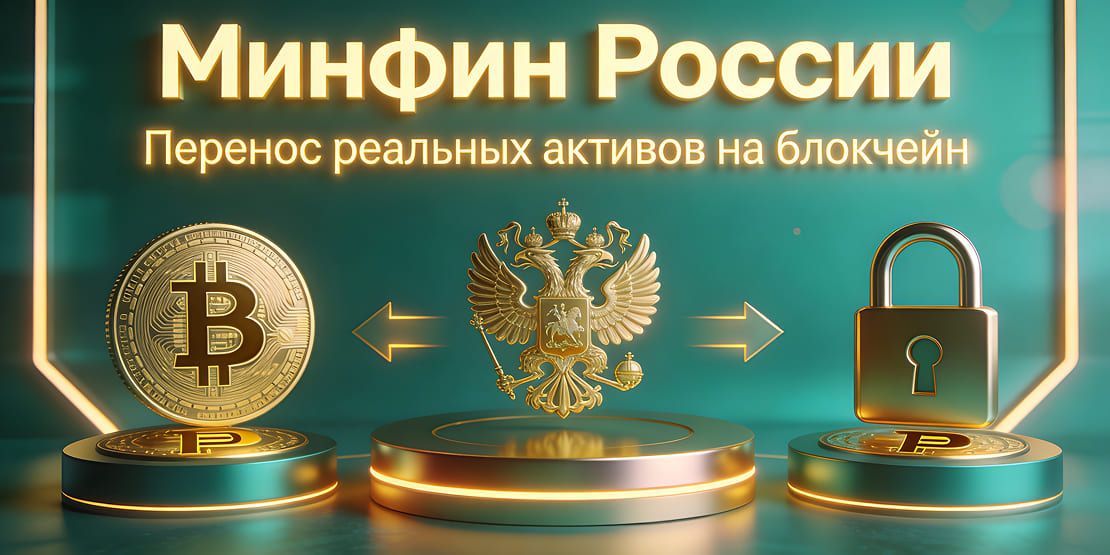
06.02.2026 The Ministry of Finance of Russia presented a concept for the tokenization of real sector assets, which предусматривает перенос прав собственности на блокчейн-инфраструктуру. The document has already been approved by the government, and the authorities are now moving to the practical stage of implementation. This is not about theoretical discussions, but about building a full-fledged digital system in which real assets can exist as tokens and circulate alongside traditional financial instruments.
According to the concept, the goal is broader than simply issuing digital versions of assets. The state aims to effectively “digitize” part of the real economy and move it into a distributed ledger environment. Blockchain technology will be used to record ownership rights, execute transactions, and manage assets without unnecessary intermediaries. The approach is based on creating new types of digital rights that will include not only financial claims but also full property rights.
Why the government is focusing on tokenization
The Ministry of Finance emphasizes that interest in digital rights already exists and is supported by real economic results. Companies and investors are beginning to use such instruments as an alternative to traditional capital-raising methods. This indicates that the market is gradually ready for deeper changes, including the tokenization of ownership and other real-world assets.
The main goal of the concept is to implement digital solutions based on distributed ledger technology and create a more flexible investment environment. The ministry believes tokenization will increase asset attractiveness due to several factors:
- reduction of transaction costs by 20–40% compared to traditional schemes;
- increased asset liquidity through fractional digital shares;
- a 5–10 times lower entry threshold for retail investors;
- faster transactions, from days and weeks down to minutes.
In addition, digital instruments are expected to improve the quality of secured loan portfolios at banks and make the Russian economy more attractive to foreign capital. According to international analysts, the global market for tokenized real-world assets could reach $10–16 trillion by 2030.
Which assets will be tokenized first
At the first stage, pilot projects are planned. The initial focus will be on tokenizing ownership rights to property and intellectual assets that do not require state registration. Other areas under consideration include:
- tokenization of documentary securities (except promissory notes);
- converting shares in LLC authorized capital into digital form;
- creating blockchain-based circulation of intellectual property rights.
According to preliminary estimates, the first pilot deals may appear within 1–2 years, and a full-scale tokenized asset market in Russia could begin forming by 2027–2028.
How the new system of digital rights will work
According to the Ministry’s plans, tokenization is not meant to simply complement existing tools but to create a new system for the circulation of ownership rights. In this model, the blockchain will simultaneously serve as a registry, intermediary, and settlement infrastructure. This will automate processes, increase transparency, and reduce errors related to the human factor.
As part of the concept’s implementation, several key tasks must be addressed:
- training specialists to work with digital assets;
- analyzing the use of tokenization in current business processes;
- developing new models for managing assets in a digital environment;
- assessing risks and regulatory restrictions;
- creating a legal framework for market development.
To coordinate these processes, an interagency working group is expected to be formed with the participation of the Bank of Russia and other authorities. A roadmap with specific stages for implementing tokenization is also planned.
How this could affect the market in the coming years
If the concept is implemented according to the baseline scenario, within the next 3–5 years new classes of digital assets linked to the real economy may emerge. These could include tokenized company shares, rights to real estate, equipment, and intellectual property.
For businesses, this means:
- a new channel for raising capital without traditional bank loans;
- a 10–30% reduction in financing costs;
- the ability to quickly sell asset shares through digital platforms.
For investors, the effects may include:
- access to investments in real assets starting from a few thousand rubles;
- an increase in the number of digital investment instruments;
- higher liquidity compared to traditional assets.
In the long term, tokenization could change the very structure of the financial market. If the global trend continues, by the end of the decade a significant portion of real assets may exist simultaneously in both physical and digital form, with blockchain becoming the standard infrastructure for their circulation.