





How to Choose the Best Cryptocurrency Exchange
If you’re reading this article, crypto is no longer a “magic word” from the news for you — it’s a topic you’ve come right up against. When theory ends and practice begins, a perfectly logical question appears: where exactly to buy cryptocurrency, how to store it, and how to earn with it. In other words, it’s time to choose a crypto wallet, decide which coins to buy, and pick a crypto exchange.
For users in Russia, choosing an exchange is especially important. Some major platforms have introduced restrictions: fiat operations are blocked, direct top-ups from bank cards are unavailable, and transfers are limited. The reasons are a separate topic — these are the current realities, and you have to work with what’s available.
So, we’ve arrived at the logical question: which are the best crypto exchanges for Russians in 2026 to consider as a working tool for buying, storing, and trading.
Let’s start with the fact that the request itself isn’t entirely correct: everyone has their own definition of a “best exchange.” For one person it’s low fees, for another it’s stable withdrawals, for a third it’s futures or rare altcoins. So we’re not talking about the “best exchange overall,” but about a financial tool that fits a specific task or set of tasks.
As you’ve probably already understood from the introduction, the question is complex and multi-layered — there is no simple answer here, and there won’t be. You’ll have to study the topic, stop reading standard copywriter texts written by people who don’t understand what they’re talking about, ignore “TOP crypto exchanges” lists made purely for advertising, and avoid the attempt to give you a “correct answer.” There is only one correct answer: the best crypto exchange is the one that fits your goals. As they say in the story “Lefty” by N. S. Leskov and in the quote from the film “Brother” in the dialogue between Danila and the German: “What is good for a Russian is death for a German.”

Commentary from a Crypto Trading Expert
"When I remember my first experience with exchanges and the stage of choosing the 'best' one, I can only cry and laugh. I opened five tabs, listened to inexperienced friends who bought a couple of assets for $100, watched reviews of so-called TOP-5 and TOP-10 lists, evaluated fees only by withdrawal costs, and read reviews written by 'experienced traders' (the quotes are there for a reason) — and thought that was enough. Then I ran into important details: somewhere withdrawals turned out to be more expensive, somewhere the button I needed was hidden, somewhere verification popped up at 'that exact' moment, and somewhere I got banned altogether (Account suspension). Since then, I treat rankings calmly: they’re useful as a reference, but the choice always depends on your strategy and goal. Almost everyone who stays in crypto for the long run ends up with a setup of 'two or three exchanges for different tasks.' This isn’t a luxury — it’s a жизненная necessity.
Criteria for Choosing Crypto Exchanges
To make the ranking more objective, it helps to lock in a few criteria by which we’ll compare and evaluate exchanges.
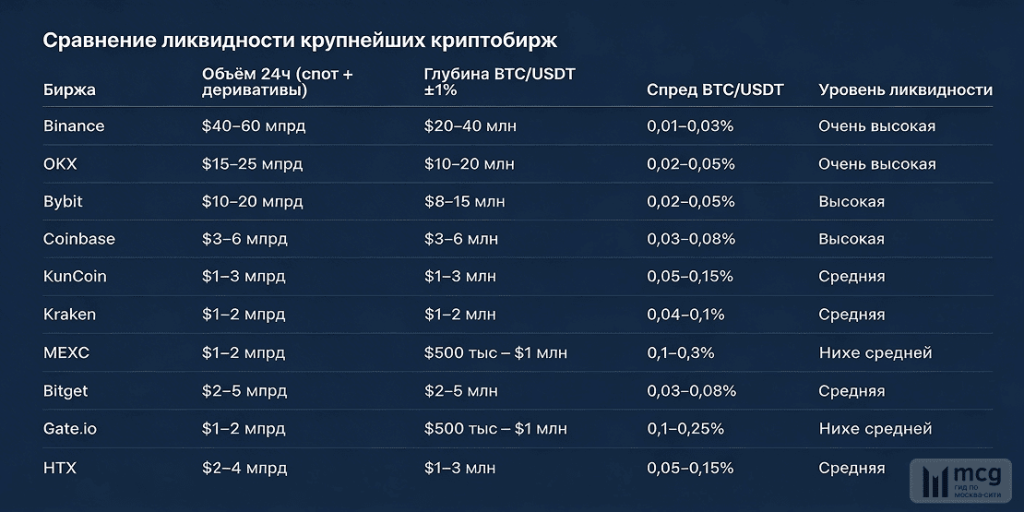
Liquidity and Market Depth
If an exchange has a large trading volume, it means there are constantly many buyers and sellers there. In that situation, trades go through easier and faster: less slippage (when you click one price but the trade executes at another), a smaller spread (the difference between buy and sell prices), and overall order execution is more predictable.
Put simply: you see one price on the screen — and with high probability you buy or sell at that exact price, without unpleasant surprises. On exchanges with low volume, the price can “jump,” and trades may execute worse than expected.
For active trading, this is decisive: every small detail affects the final result. For a “buy and hold” strategy it also matters — you just feel it less often because trades don’t happen as frequently.
Fees
Spot fees often hover around 0.1% (give or take), but in real life the total cost is made of small things: trading fee, spread, withdrawal fee, conversion, and sometimes even payment-method fees. The difference between 0.1% and 0.2% sounds like nothing — until you make 200 trades in a month.
Derivatives and Tools
If you need futures — trades on price going up or down without buying the actual coin — it’s important to remember that not every exchange is equally convenient. Some are built for active trading: charts work fast, orders execute without delays, and the interface is clear. Others have futures “kind of available,” but they’re hard to use: buttons are hidden, fees are higher, trades execute with delays, even if small. All these factors hit not only your wallet but also your нерв system (as we know, trading is about cold calculation, not emotions). Then anxiety appears and you feel like you’re “reacting to the market with a delay.” Because of that, many start trading impulsively: entering more often, increasing leverage, trying to “win back” losses. As a result, mistakes accumulate and stress grows.
The same applies to leverage, when an exchange essentially gives you additional money to open a larger position. For an experienced trader this is a working tool, but on an inconvenient platform such trades turn into extra stress because of delays, unclear settings, and странные liquidations. At the same time, that exchange may have other strong sides: convenient deposits and withdrawals, a simple interface for buying crypto, reliability, or good conditions for storage. So again it comes down to the task: the same platform can be great for holding and completely неудобна for active trading.
Reliability, Track Record, Stress Tests
An exchange that has survived several market cycles and didn’t disappear is usually better prepared for overloads, panic, and explosive volumes. It’s not a guarantee of safety, but it’s an important signal.
Platforms that operated during sharp crashes, “black Thursdays,” meme-coin hype, and overloaded networks have already faced real stress scenarios: mass liquidations, user surges, fee spikes, and DDoS attacks. Such exchanges typically have experience, backup systems, more resilient engines, and clear procedures for force majeure.
To avoid going far, let’s recall the wild March 2020 — the so-called “black Thursday,” when Bitcoin dropped in one day from about ~$8,000 to ~$3,800. The BitMEX exchange went offline several times. At the peak of liquidations, the matching engine stopped, users couldn’t log in and close positions, while the market kept falling. Some traders claimed that BitMEX’s downtime temporarily slowed the crash because mass liquidations stopped.
Similar situations happened on other platforms in different years. For example, in 2021, during DOGE’s sharp rally and network congestion, many smaller exchanges and brokers simply disabled trading or introduced withdrawal limits. Users couldn’t sell at the peak because the system couldn’t handle the load.
At the same time, large exchanges like Binance or OKX also experienced overloads in such periods, but usually maintained basic functionality: logins remained possible, orders executed with delays, but without a complete shutdown of actions.
The collapse of FTX in November 2022 is a classic story of how the “industry genius” Sam Bankman-Fried — with his messy hair and crypto-wunderkind image — built one of the world’s largest exchanges in a couple of years and then brought it down just as fast. While conferences talked about a “new financial system” and printed the FTT token as a symbol of ecosystem success, внутри the company client funds were calmly “moving” between related entities.
Everything rested on trust, красивый presentations, and an in-house token that supported the balance sheet on paper. When the market doubted FTT’s real value and mass withdrawals began, it turned out there wasn’t enough liquidity for everyone. The exchange halted withdrawals and filed for bankruptcy a few days later.
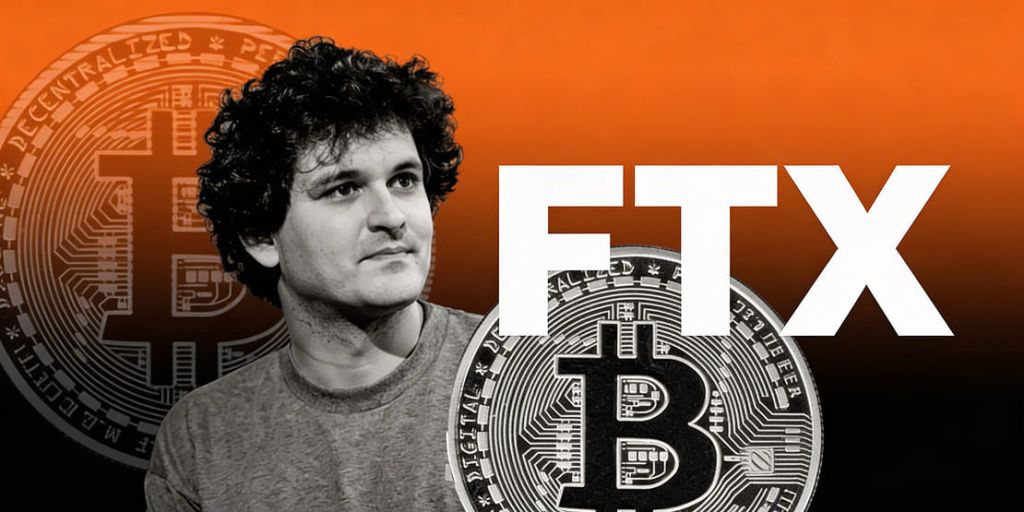
The takeaway is telling: billions of dollars got stuck, the “genius” became a criminal defendant, and the whole market was reminded of a simple idea — if an exchange looks too perfect and invincible, it doesn’t mean everything is fine inside. In crypto, as in life, beautiful stories end quickly when it comes to real money.
In practice, such stories show the difference between an exchange that has already been through serious market stress and a young platform tested only in calm times.
Interface Convenience
It sounds subjective, but this point is absolutely worth considering — it’s real practice, not theory. An exchange can be “the most liquid on the market,” “with the best spreads,” and “top-1 by volume,” but if the interface annoys you every time, you’ll start making mistakes. Somewhere you click the wrong thing, somewhere you mix up the account, somewhere you don’t notice a fee — on one trade it’s nothing, but across dozens of operations it turns into a noticeable difference in money. That’s everyday math: minus $3 here, minus $5 there — and suddenly your “strategy profit” quietly flew to Dubai without you.
What was most often mentioned in interface complaints in 2025
Binance, KuCoin, and Gate suffer from overloaded interfaces — for beginners it feels like a spaceship control panel where a simple swap requires a quest of tabs and menus. OKX, Bybit, and Bitget love splitting balances into dozens of sections, and a beginner feels like they’re in the accounting department of a large holding. Coinbase, on the other hand, is simple, nice, and clear — but it can feel like buying crypto at an airport exchange booth. And there’s a separate category — platforms with raw or unstable elements like MEXC and HTX, where it feels like you’re participating in a beta test you weren’t warned about.
Regulatory and Regional Nuances
Sometimes an exchange is good “overall,” but specifically for your country it has restrictions on deposits, withdrawals, or verification. And it’s better to know that in advance — not when your money is already sitting in the account.
As we wrote at the beginning of the article, for users in Russia in 2026 there are restrictions on funding and withdrawing directly via bank cards. But P2P exchange is available, where you buy USDT from another user for rubles, and the exchange acts as a guarantor and holds the crypto until payment is confirmed. This method has become the main “bridge” between rubles and crypto. Different banks treat such operations differently, exchange rules and limits change, so before any deal always check current requirements and rules.
Next, we’ll look at which choices make sense for different tasks.
How to Choose a Crypto Exchange for Your Task
So the exchange ranking doesn’t turn into a “brand list,” we recommend following one principle: task first, platform second. Below are the most common scenarios and what you should look at first.
- For beginners (buy/sell and withdraw to a wallet): a non-overloaded interface, clear withdrawals, reasonable fees, stable support.
- Futures and active trading: derivatives liquidity, maker/taker fees, terminal stability, risk management (stops, margin, isolated/cross).
- P2P and a “fiat bridge”: payment-method selection, deal speed, limits, risk rules (AML), and counterparty reputation.
- Altcoins and early listings: breadth of listings, real pair liquidity, spread, listing transparency, and “thin order book” risk.
- Long-term storage: here an exchange acts like a safe, so withdrawal convenience and security are the top priorities.
If the question is “which crypto exchange is best to trade on in Russia?”, the main criterion is simple: where it’s convenient to deposit and withdraw via P2P, and the interface doesn’t get in the way.
Experienced investors and traders split by tasks: one main exchange for your primary use case and one additional exchange for occasional purchases.
So, we’ve defined the selection criteria. Let’s move on to the exchanges themselves. It’s worth noting right away that describing each exchange within a single article is simply impossible — you’d end up with 300–400 pages just about Bybit and Binance. So we take the key pros and cons, compare them, and as a bonus you’ll get a nice (hopefully) comparison table, plus answers to the most popular questions and a short conclusion at the end.
Binance
Binance is still the largest exchange by turnover. If you look at the numbers, combined daily spot and derivatives volumes often reach tens of billions of dollars. You can feel it in the order book — sometimes almost physically: you place a limit order and it gets “eaten” instantly.
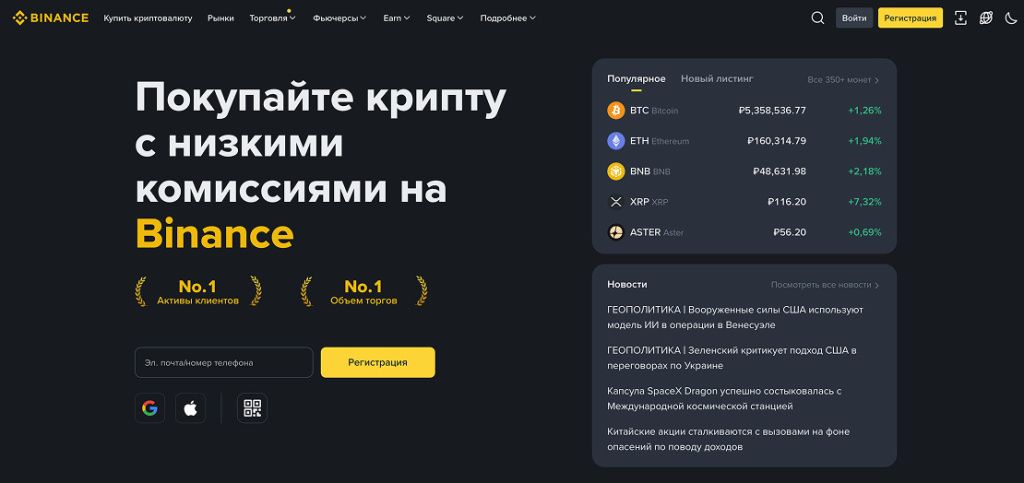
The base spot fee is 0.1%, then discounts kick in by tier and by using BNB. Derivatives fees are usually lower, especially if you don’t do micro-trades 50 times a day.
Binance’s strong side is the ecosystem and liquidity. Binance’s weak side is the ecosystem and liquidity — because there’s too much inside: Earn, Launchpad, products, tabs, prompts, promotions. For a beginner it can feel like “wow, everything is here,” but over time it starts to look like a hypermarket where you came for milk and lost half an hour in the household chemicals aisle.
Another noticeable advantage of Binance is additional marketing programs. For example, Binance Alpha points, which you earn for daily trading. Later, these points can be used to claim airdrops (free distributions) from various projects launching on the exchange. According to user feedback, during the first months of this promo program it was possible to earn a few hundred dollars per account — but conditions change, and as always, risk exists.
Pros and Cons of the Exchange
Pros
- truly the top of the market by reputation, “name,” and volumes
- very high liquidity and tight spreads on major pairs
- wide selection of assets and tools
- strong infrastructure, many services
- competitive fees, especially at higher volumes
Cons
- overloaded interface, easy to get confused
- regulatory changes across countries can affect feature availability
- as a “place to store for years,” an exchange doesn’t provide the same peace of mind as a cold wallet
- the exchange is banned in Russia, which is a significant drawback for residents
OKX
OKX is often chosen by those who trade more systematically. The exchange looks stricter, with less “marketing noise,” and a stronger focus on derivatives. By volume it’s usually near the top, but below Binance: roughly $5–10 billion per day depending on the market phase.
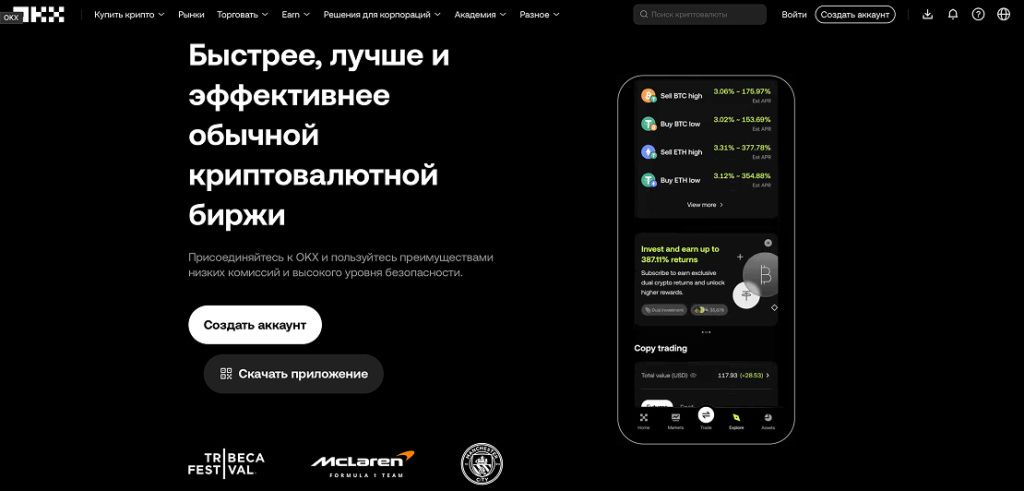
Spot fees are around 0.08–0.1% and decrease as volume grows. Derivatives conditions often look more attractive, especially if you trade regularly rather than once a week.
There’s a nuance: the entry threshold is slightly higher. Not in the sense of “hard,” but in the sense that you need a couple of evenings to get used to it. But after that it’s more comfortable to work — fewer unnecessary buttons.
Sometimes OKX runs launchpads — token launch events. Usually you need to deposit around $5,000–$10,000 in ETH or USDT and then collect something like an extra 3–7% on your deposit over a week.
Pros and Cons of the Exchange
Pros
- strong derivatives, good toolset
- calm, work-oriented interface without overload
- competitive fees for active trading
Cons
- for beginners it may not feel as “intuitive” as they would like
- some features depend on regional restrictions and platform policy
Bybit
Bybit was long associated with futures, and that is still its core strength. Now it actively develops spot, Earn, and other services, but the “heart” of the exchange still feels like derivatives and fast trading.
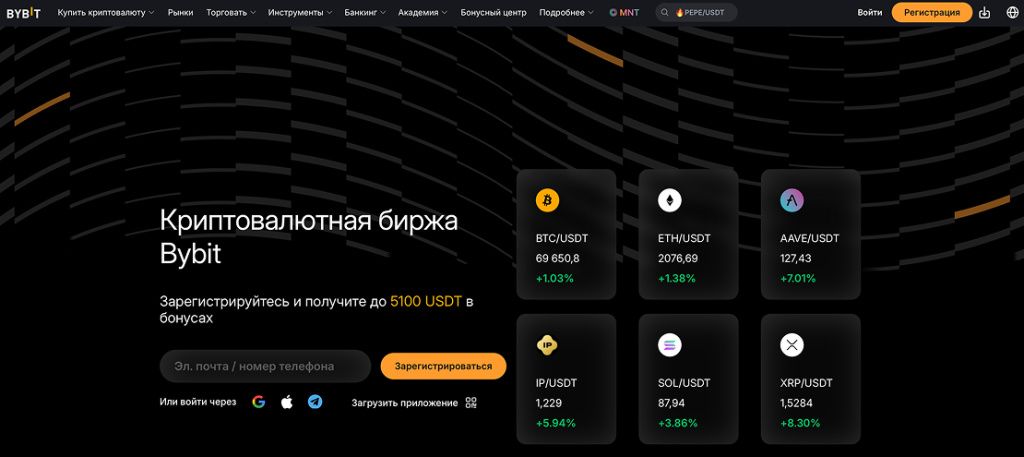
Daily volumes on Bybit often sit around $8–15 billion (it fluctuates with the market). Its interface is more beginner-friendly than some competitors: you can trade without feeling like you’ll accidentally click the wrong thing and create an extra problem.
Futures fees are competitive, and if you trade actively, the fee difference starts to be felt fairly quickly. Not on day one, but also not after a year.
The exchange has an affiliated token — Mantle (MNT). It’s often used in promo campaigns where staking in pools gives rewards in new tokens. Sometimes you can collect $50–$100 in a couple of days, but note that you’ll need to lock a deposit of a few thousand dollars.
Pros and Cons of the Exchange
Pros
- strong futures and a convenient trading interface
- good liquidity on major instruments
- clear navigation, less “visual clutter”
Cons
- spot and “long-term storage” aren’t always the exchange’s main focus
- for beginners, the futures section can be too addictive — and that’s a separate risk
Coinbase
Coinbase is almost a different philosophy. It’s an exchange that bets on regulatory compliance and simplicity — especially in the US. By volume it may lag behind Asian giants, but it remains one of the key venues: roughly $3–5 billion in daily volume during active periods.
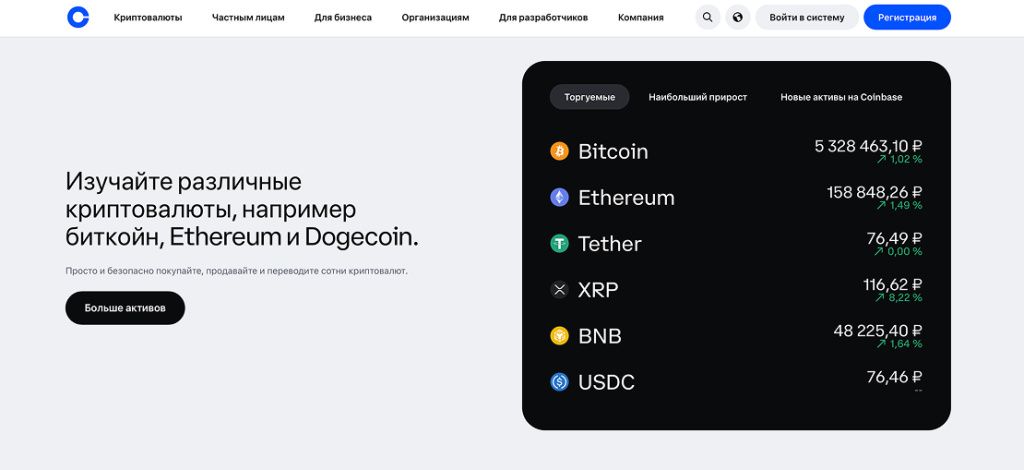
Its main advantage is simplicity and “transparency” for institutions. The interface is clear for beginners: buy, sell, check balance. But you often pay for that simplicity with fees. Depending on the product and purchase method, fees can feel high, especially on smaller amounts.
If you’re an active trader, Coinbase usually isn’t your first-line choice. If you want a relatively calm entry into crypto and the feeling of a “clean” platform matters to you, Coinbase can work.
Pros and Cons of the Exchange
Pros
- clear interface, low cognitive noise
- strong reputation in regulated jurisdictions
- convenient as an “entry point” for beginners
Cons
- – fees are often above the market average, especially at small volumes
- – less flexibility and fewer tools for active trading than derivatives leaders
KuCoin
KuCoin is loved for altcoins and early listings. By volume it’s below the leaders, but still not small: often $1–3 billion per day. That’s enough for most tasks, but liquidity can be thinner on certain pairs — and you need to account for that.
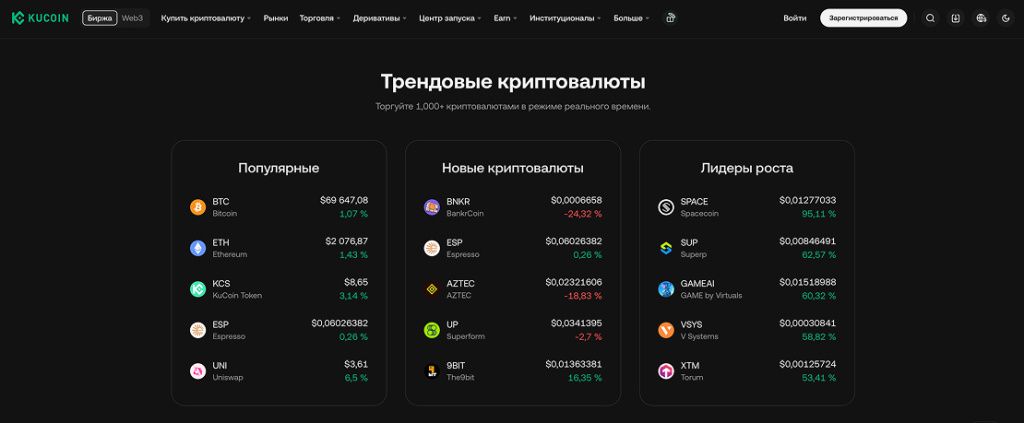
KuCoin is often chosen when you want to buy something less “mainstream” that hasn’t appeared on the biggest platforms yet. That’s convenient, but the risk is higher — both in terms of liquidity and overall “price predictability.”
Spot fees are usually around 0.1%, with discounts via the KCS token and activity tiers.
Pros and Cons of the Exchange
Pros
- many altcoins, often early listings
- reasonable spot fees
- works well as an additional exchange for niche buys
Cons
- liquidity on some assets can be weaker
- higher overall risk compared to the largest platforms
- sometimes transparency and support aren’t as good as you’d like
Kraken
Kraken is one of the oldest major exchanges, especially prominent in Western markets. It’s valued for stability and a “grown-up” approach: less hype, more infrastructure. By volume, Kraken is usually not next to Binance, but it’s not a small platform — it’s just a different segment.
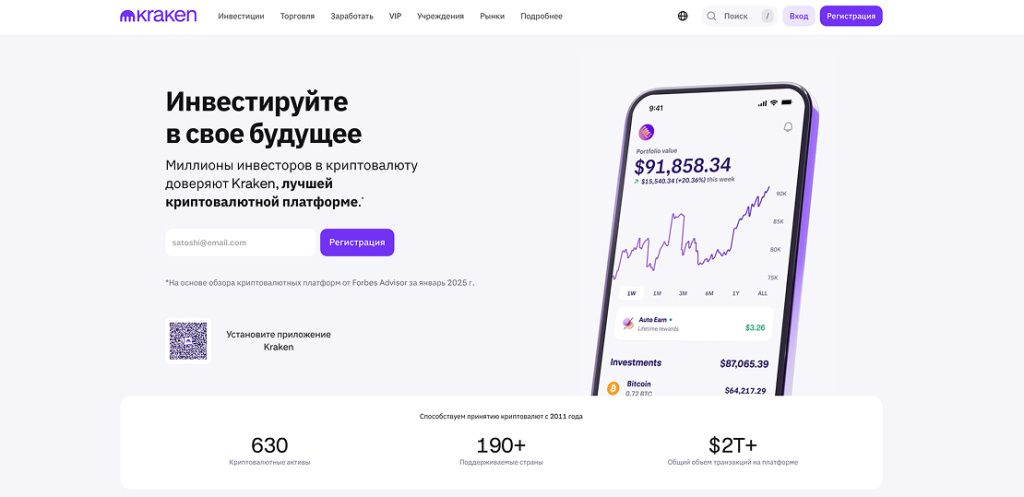
If you value a calm interface, support, and more “classic” exchange logic, Kraken may fit. But the altcoin selection may be more modest than on Asian exchanges, and fees may not feel the lowest.
Pros and Cons of the Exchange
Pros
- strong reputation and long track record
- stable operations, fewer “surprises”
- comfortable for those who like order and minimalism
Cons
- smaller altcoin selection than exchanges focused on “everything at once”
- conditions and availability depend on the country; restrictions may apply
- not always the best place for “hunting new tokens”
MEXC
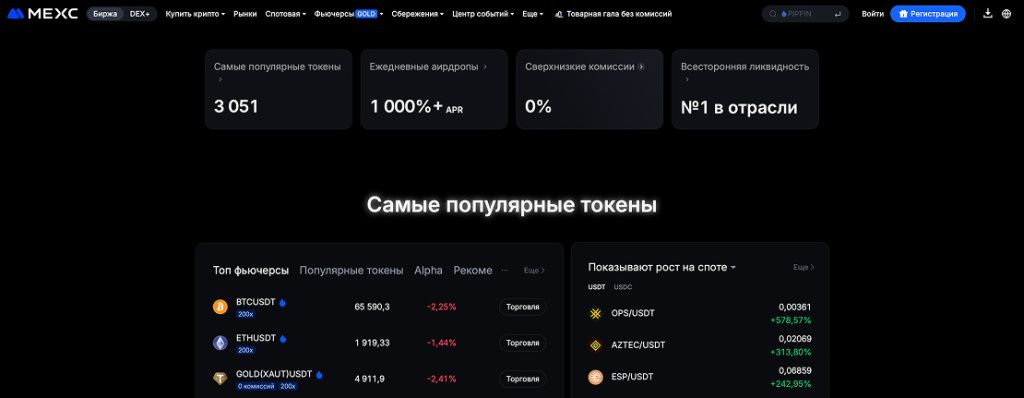
MEXC is often used as an exchange “for altcoins and new listings.” New coins appear there regularly, sometimes earlier than on major platforms. For some that’s a plus; for others it’s a red flag — it depends on your approach.
Spot fees are often advertised as competitive, but it’s important to look not only at the number — also at the pair’s liquidity and the spread. Because sometimes “low fees” get eaten by a thin order book.
MEXC is usually used as an additional platform: buy a rare asset, try something new, work with small amounts.
Pros and Cons of the Exchange
Pros
- many tokens, often early listings
- good for niche operations and experiments
- relatively easy entry if you already have some experience
Cons
- liquidity on some pairs can be weak; slippage is possible
- higher risk compared to top exchanges in terms of reliability and predictability
- beginners can get carried away by “new listings,” and that usually gets expensive
Bitget
Bitget активно markets itself as a platform for trading and derivatives, plus it has strong marketing around copy trading. By volume it can noticeably lag behind the top 3, but in a number of scenarios it looks convenient — especially if you need a clear interface and quick access to futures.
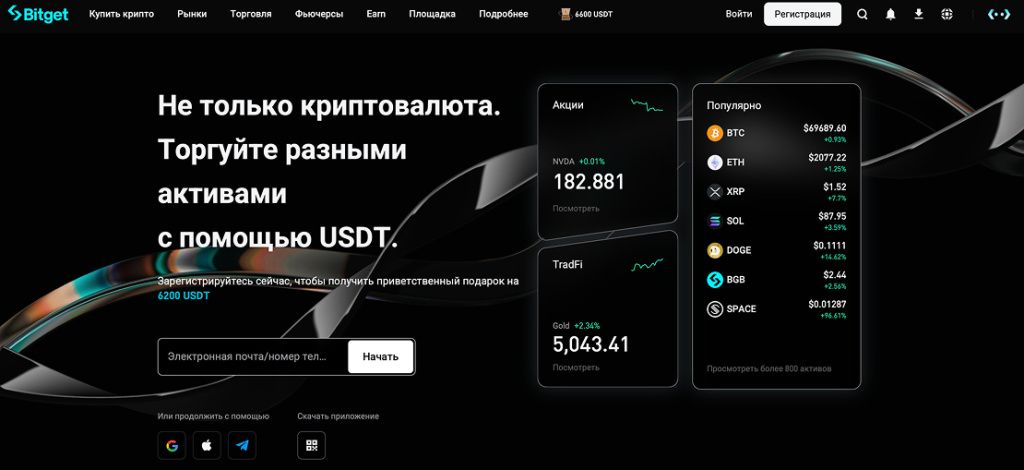
With copy trading, it’s simple: either it fits you or it doesn’t. But it’s important to remember that copying trades is easier than later explaining a loss to yourself. That’s probably the main “personal” conclusion many people reach after a couple of attempts. It’s crucial to understand that copy trading is not a cure-all, not a “money button.” If that existed, everyone would be rich. There are no people who never make mistakes.
Pros and Cons of the Exchange
Pros
- strong focus on derivatives, convenient tools
- notable copy trading functionality
- usually enough liquidity for major pairs
Cons
- copy trading often creates a false sense of simplicity for beginners, resulting in a blown deposit
- as a primary “everything” exchange it doesn’t suit everyone; чаще it’s an extra tool
- conditions and products can change; you need to follow details
Gate.io and “Niche” Platforms
Gate.io, HTX, and a number of other exchanges are often chosen for specific tasks: rare tokens, specialized instruments, local advantages. They’re chosen less often as a main exchange, but quite often as an additional one.
The logic here is simple: if you understand why you need this particular exchange, it’s useful. If you choose it just because “it’s in the ranking,” it’s better to slow down and clarify the task. For example, a token you want to buy launched on a smaller exchange, or it offers a high APR yield. In short — for a narrow target scenario.
Pros and Cons of the Exchange
Pros
- many altcoins and niche markets
- useful as an additional platform for a specific scenario
Cons
- uneven liquidity and market quality
- higher risk if used as your only exchange
So instead of a universal “top for everyone,” it makes more sense to look at crypto exchange rankings based on real operating conditions from Russia: feature availability, verification, deposits, and withdrawals.
Crypto Exchange Ranking for Russians in 2026
| # | Exchange | DEX/CEX | Liquidity | Fees (spot) | Derivatives (futures) | KYC | Interface Convenience | Reputation | Sanctions / Restrictions for Russia | Best for |
|---|---|---|---|---|---|---|---|---|---|---|
| 1 | Binance | CEX | Very high | ~0.1% with discounts | Very strong | Required | Medium, overloaded | Global market leader | EU (restrictions for Russia) | Universal: spot, futures, high volumes |
| 2 | OKX | CEX | Very high | ~0.08–0.1% | Very strong | Usually required | строгий, work-oriented | Top exchange with track record | Partial (regional policy) | Derivatives, systematic trading |
| 3 | Bybit | CEX | Very high | ~0.1% | Strong focus | By limits (partial) | Convenient and clear | Top for derivatives | No restrictions (for Russia) | Futures, active trading, works well for Russia |
| 4 | Coinbase | CEX | High | Above average | Limited | Required | Very simple | Strong regulation | US (restrictions for Russia) | Buying crypto, beginner entry |
| 5 | KuCoin | CEX | Medium | ~0.1% | Available | By limits (partial) | Medium | Popular for altcoins | No hard restrictions | Altcoins, early listings |
| 6 | Kraken | CEX | Medium | Average | Available | Required | Calm | Established exchange | US/EU (restrictions for Russia) | Conservative spot trading |
| 7 | MEXC | CEX | Medium | Low (as advertised) | Available | Not always required | Simple | Exchange for new listings | No restrictions (for Russia) | Rare altcoins, experiments |
| 8 | Bitget | CEX | Medium | Competitive | Strong focus | By limits (partial) | Convenient | Growing exchange | No restrictions (for Russia) | Futures, copy trading |
| 9 | Gate.io | CEX | Below average | ~0.1% | Available | By limits (partial) | Medium | Niche segment | Partial (regional policy) | Rare tokens, niche operations |
| 10 | HTX | CEX | Medium | ~0.1% | Available | By limits (partial) | Medium | Established Asian exchange | Partial (regional policy) | Additional exchange, altcoins |
If you’re in Russia and choosing one “main exchange,” it’s better to look at those where deposits/withdrawals via P2P work stably and liquidity is decent. If derivatives matter — look at market depth and futures fees; for altcoins — focus on real spreads and pair liquidity.
Centralized (CEX) and Decentralized (DEX) Exchanges
All crypto exchanges fall into two main types: centralized (CEX) and decentralized (DEX). The difference is felt not in theory, but in daily use.
- Centralized exchanges are the most familiar format with registration, an account, and a “bank-like” interface. You deposit funds to your balance, trade within the platform, use spot, futures, P2P, Earn, and other services. Such exchanges are convenient for beginners, offer high liquidity and fast execution. Most popular platforms in rankings are CEX.
- Decentralized exchanges work differently: there is no real account — you simply connect a crypto wallet and trade directly via smart contracts. Funds always remain with you, and all responsibility lies with the user. The interface is a bit more complex, fees depend on the network, and support is practically nonexistent.
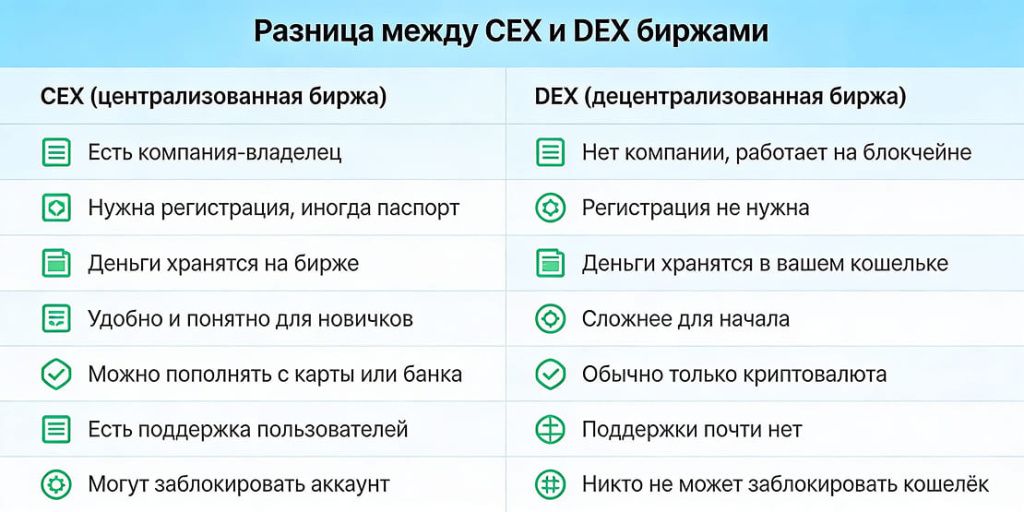
That’s why experienced crypto users use a combination: a centralized exchange for deposits, withdrawals, and active trading; and a decentralized one for storage, swaps, and DeFi work (a detailed article on what DeFi is).
Read more about the differences, pros, and cons of each format in a separate article: types of cryptocurrency exchanges.
A Nuance for Users in Russia
For users in Russia, the “best exchange” topic often comes down not to interface or fees, but to practical restrictions: somewhere deposits/withdrawals are harder, somewhere verification requirements change, somewhere fiat directions work нестабильно.
That’s why many end up with a setup: one exchange for trading, another for certain assets, and a third as an intermediate “gateway.” It doesn’t sound ideal, but it reflects the current market reality.
As of February 15, 2026, Binance for users in Russia (banned) operates with significant restrictions: some functions are unavailable or reduced for Russian citizens due to sanctions and regional policy. Therefore, users in Russia use alternatives — Bybit, MEXC, and KuCoin, where operating conditions remain more flexible.
Which Networks to Use for Transfers
When transferring cryptocurrency, not only the exchange fee matters, but also the network you use to send coins. For USDT, TRC20, TON, BEP20, and ERC20 are most commonly used — and the cost difference can be significant. USDT TRC20 is chosen for stable and low fees, USDT TON for fast transfers and convenience, USDT BEP20 for low costs within the BNB ecosystem, while USDT ERC20 is usually more expensive due to Ethereum network load. The main rule is simple: the sender and receiver must use the same network. If you’re unsure, make a test transfer for a minimal amount — that’s cheaper than trying to “recover” funds sent to the wrong network.
How to Buy USDT for Rubles via P2P
P2P — which we mentioned earlier — is the most popular way in 2026 to buy USDT for rubles, since fiat top-ups are limited. In short: you choose a seller, transfer rubles, and the exchange holds the USDT in escrow until payment is confirmed. Step by step:
- Go to the P2P section on the exchange and choose to buy USDT for RUB.
- Filter sellers by payment method (bank/SBP), limits, and rating.
- Open a deal and carefully read the terms (time limits, comment requirements, bans on words like “crypto/USDT”).
- Transfer rubles strictly to the details shown in the order and without extra comments if the seller asks.
- Click “Paid” and wait for the seller to confirm receipt of funds.
- After the deal is completed, USDT will arrive on your P2P balance.
- Transfer USDT to spot (internal transfer between accounts) to trade.
- If your goal is storage, withdraw USDT to a personal wallet after selecting the correct transfer network.
AML Freezes and the Risk of Blocks
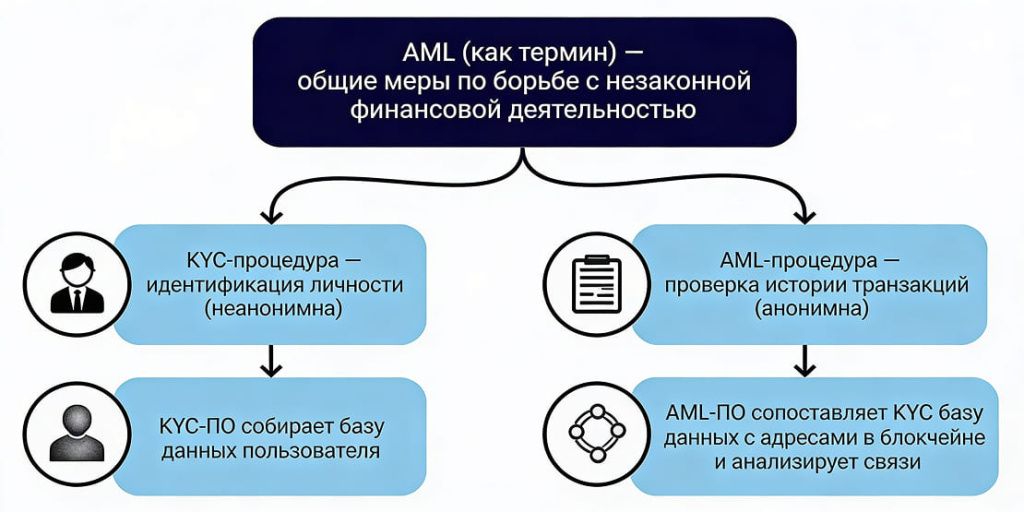
As of 2026, one of the most unpleasant situations is a transfer freeze during Anti-Money Laundering checks. AML is a set of security measures aimed at preventing the laundering of illegally obtained funds. An exchange may flag elevated risk when it sees “tainted” sources of funds, suspicious transaction chains, atypical operations, or issues with a P2P counterparty. To reduce the risk of a block, don’t accept transfers from random third parties, don’t use “shady” exchangers, avoid splitting operations like “10 payments in a row,” and always make a test transfer. If a freeze does happen, additional checks and proof of funds origin are usually required — so it’s better to keep part of your assets off-exchange in advance and not store all your money in one place.
Security: 8 Steps Before Your First Trade
Most losses in crypto happen because of small things: inattention or haste. We prepared a short checklist that will help you protect yourself and реально save money and нервs.
- 2FA via an authenticator app — extra account protection requiring not only a password but also a one-time code from a phone app.
- An anti-phishing code in emails — a personal marker in messages from the exchange that helps distinguish official emails from scammers.
- A separate password for the exchange — a unique password used only for your exchange account.
- Withdrawal address whitelist — a list of pre-approved wallets to which withdrawals are allowed, preventing funds from being sent to an чужой address.
- Test withdrawal — a trial transaction with a minimal amount before a large transfer.
- Transfer network check — confirm which blockchain network is used, because different networks use different addresses and fees.
- Keep part of your assets off the exchange to reduce risk if your account is blocked or the platform has issues.
- Be cautious with leverage — careful use of futures and margin trading, especially on volatile assets.
Common Mistakes When Choosing a Crypto Exchange
The most common pattern looks the same: a person chooses an exchange, deposits funds, everything is fine for a couple of days — and only then they discover that withdrawals are “not that way,” fees are “not that,” or the needed feature is available only after extra steps. It’s not because someone is dumb — it’s simply that most problems appear not during selection, but during the first real operation.
Below is a ranking of the most common mistakes from practice:
- Mistake number one: choosing an exchange “because it’s the most popular” and stopping there. Popularity doesn’t guarantee convenience for your task.
- Mistake number two: keeping all funds on one exchange — even if it’s the biggest. An exchange is a working tool, not a personal safe. If you want to sleep better, people usually move part of their funds to non-custodial wallets. In general, it’s better to keep assets across different exchanges plus personal wallets — that’s basic diversification.
- Mistake number three: ignoring fees over time. The difference between 0.1% and 0.2% seems funny until you calculate monthly turnover. In active trading it becomes real money — and quite fast.
FAQ
-
Which crypto exchange is best for beginners?
Usually the one where you won’t get lost on day one: clear buying, simple withdrawals, minimal extra buttons. If the interface causes irritation from the first minutes or fear of “clicking the wrong thing,” that’s a bad sign, even if the exchange is top by volume. -
Which crypto exchange is the most reliable?
Most often people mean large exchanges with high liquidity and a long track record that have survived crises and didn’t disappear. But exchange reliability doesn’t отменяет a basic idea: keeping large sums on an exchange for years is still riskier than non-custodial storage. -
Which crypto exchange has low fees?
It’s not only about the “0.1%” number. In practice, low fees are felt where spreads are tight, liquidity is solid, and there are no unpleasant surprises on withdrawal. Sometimes an exchange with a formally low fee ends up more expensive due to slippage and spreads. -
Which crypto exchange is best for futures?
People usually choose platforms where derivatives are truly in focus: stable systems, a good order book, low futures fees, and convenient order types. If you trade actively, the difference between “futures exist” and “futures are comfortable to use” becomes obvious quickly. -
Can you use multiple crypto exchanges at the same time?
Yes — and it’s often the most practical approach. One exchange is better for spot, another for derivatives, a third for a specific token. It’s not “hard,” it’s just a working setup that many come to after a couple of problematic situations. -
Is it worth storing cryptocurrency on an exchange?
It’s convenient, especially if you trade. But for long-term storage it’s safer to move at least part of your assets to non-custodial solutions. An exchange is not a bank and not a deposit — it’s better to remember that before problems, not during them. -
What is KYC on a crypto exchange, and is it mandatory?
KYC (Know Your Customer) is identity verification. The exchange asks for documents, a selfie/video, and sometimes proof of address. In practice, it’s an internal “passport control” needed to comply with AML rules and reduce fraud risk. Whether it’s mandatory depends on the exchange and your account mode: in some cases you can use basic functions without KYC, but limits apply to withdrawals, fiat deposits/withdrawals, P2P, or certain trading tools.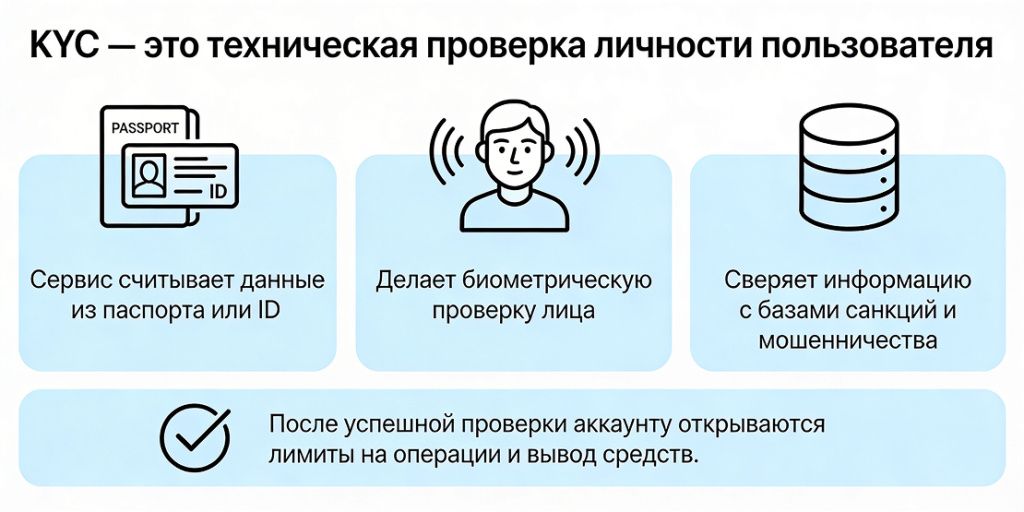
If stable withdrawals, P2P, and decent limits matter to you, you need to pass KYC. If your goal is “buy a small amount once and withdraw to a personal wallet,” sometimes a basic mode is enough — but terms can change.
If you specifically look for exchanges without mandatory verification and want to compare restrictions, limits, and risks, we have a separate breakdown: exchanges without KYC.
Bottom Line
If we sum up the conclusions. A crypto exchange ranking is not a “#1 place” table — it’s a map for choosing by task. Binance is strong in liquidity and scale; OKX and Bybit are often chosen for derivatives; Coinbase for a regulated “entry”; KuCoin and MEXC for altcoins and new listings; Kraken for a calmer, more “classic” approach.
If you want a practical takeaway, it sounds like this: choose one main exchange for your primary task and one additional exchange for secondary needs. And don’t try to turn an exchange into a personal multi-year safe — there are other tools for that.








Any questions or comments?
Отличный текст, мне, как новичку на поле бирж и криптовалют, очень доступно и понятно. С лучшей не определилась, но определяться научилась. Спасибо!
Comment