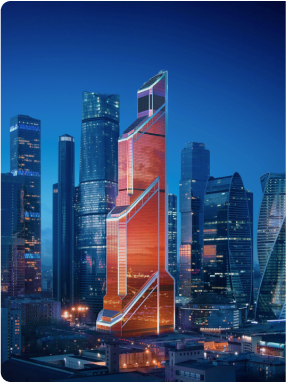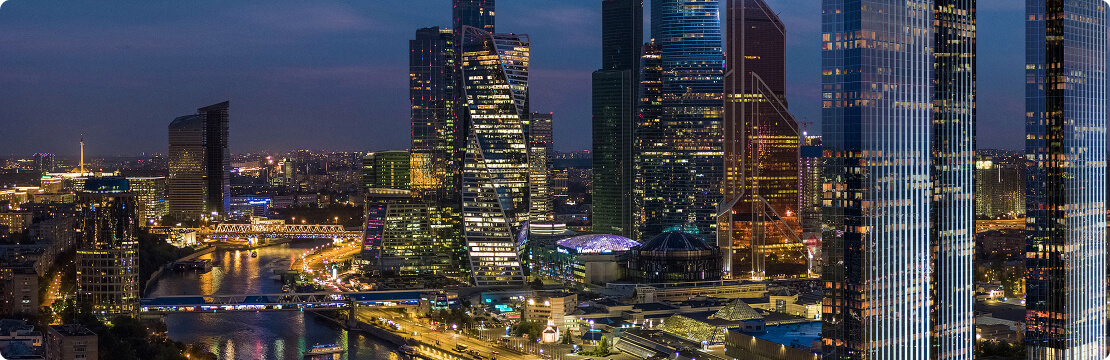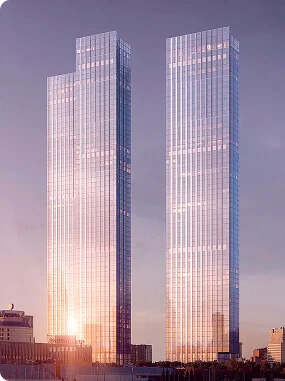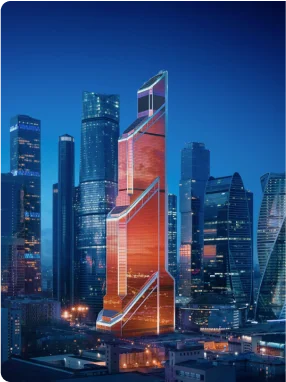



In December 2024, the lobby of the Moscow Towers complex in the Moscow-City business center will be adorned with a monumental mural entitled "Deus Particula," created by the talented artist Andrey Berger. This work will become more than just an interior decoration, but a true symbol of artistic breakthrough and contemporary interpretation of art in the city's public spaces.
Creative concept
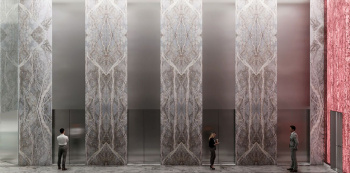
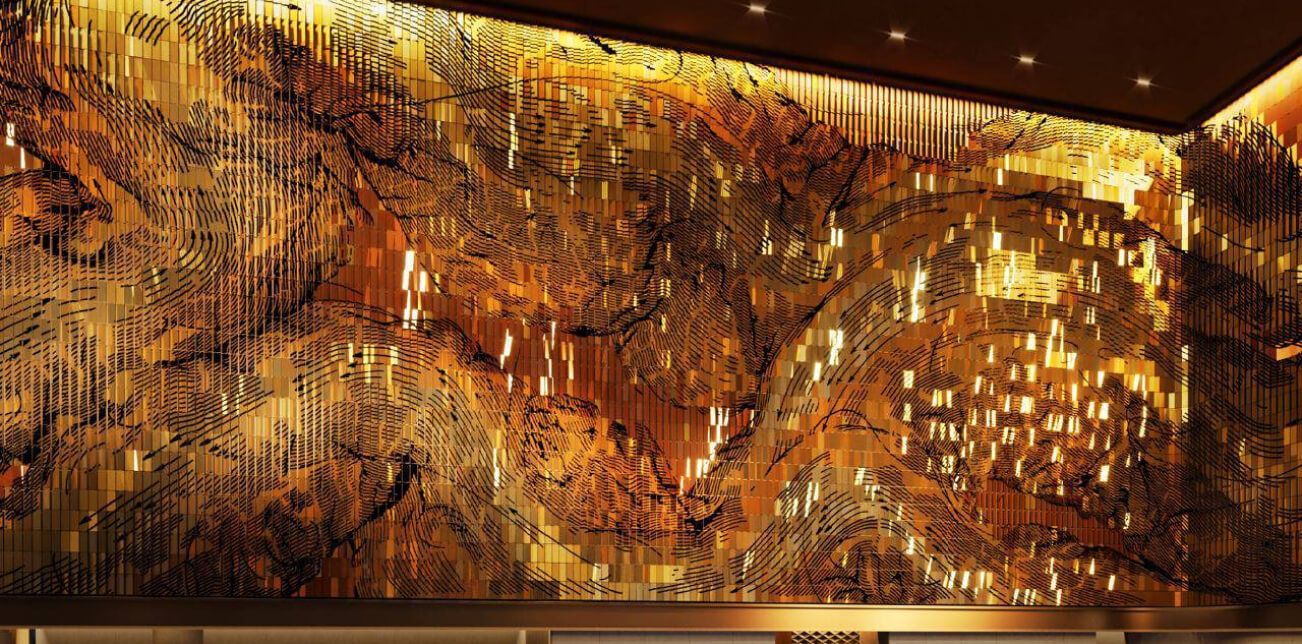
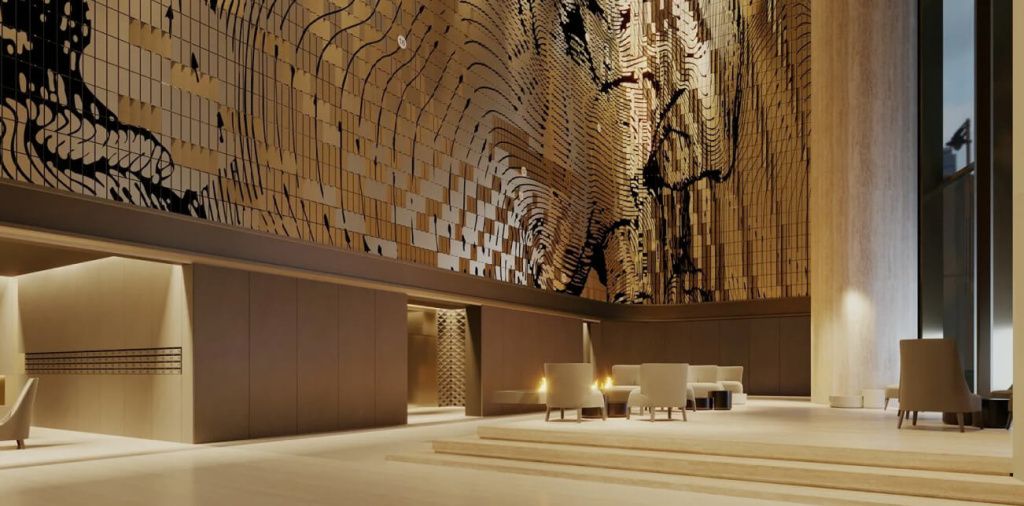
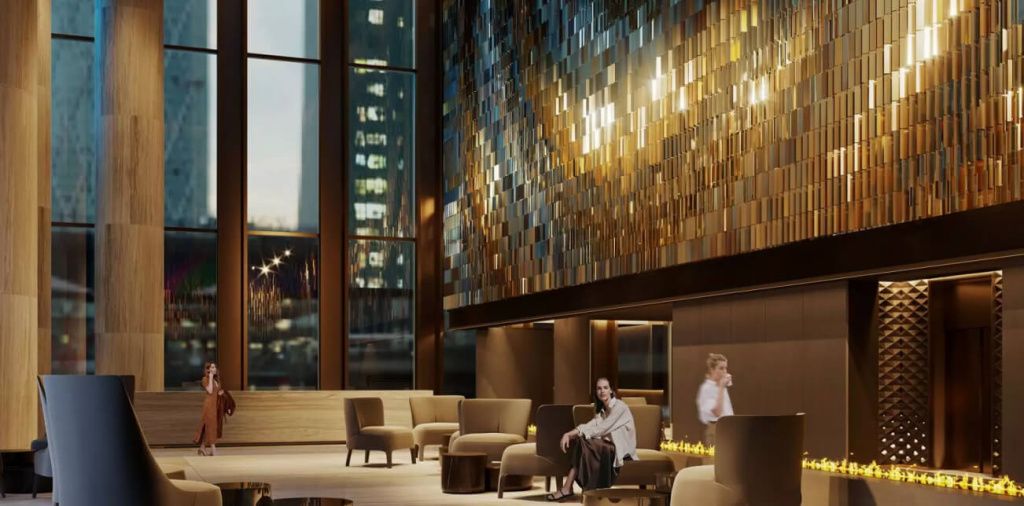
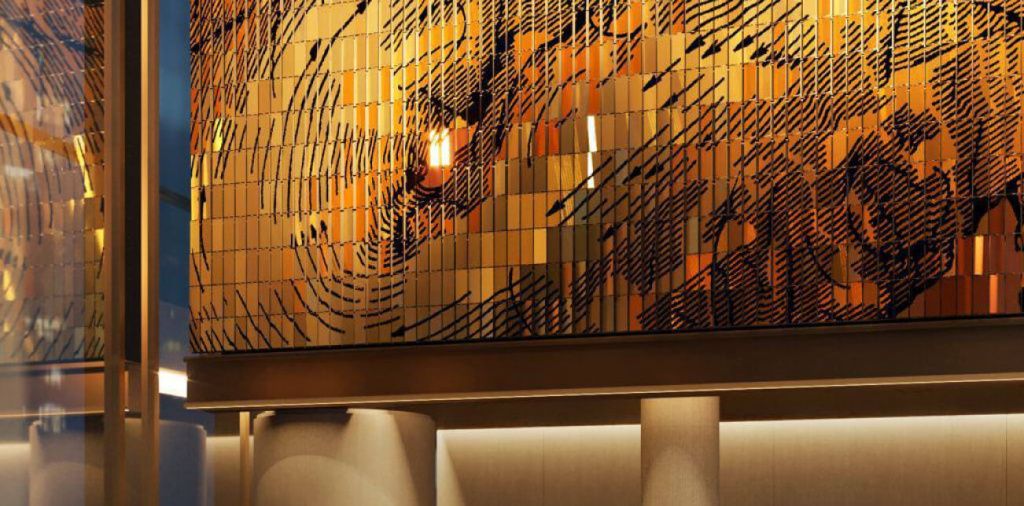
The Deus Particula panel is more than just a decorative element; it embodies the concept of light penetrating architectural boundaries and filling space. The artists were inspired by the image of a beam of light rushing into a building, filling it with reflections and creating a sense of movement. Berger proposed expressing this idea through a complex structure composed of thousands of metal plates, each acting as a "divine particle." These particles not only symbolize light but also constantly interact with the surrounding space through a unique rotating mechanism, adding dynamism to the entire piece.
The mural will be executed in the form of two enormous frescoes, measuring 32 by 11 meters, which will adorn both sides of the complex's lobby. The concept itself reflects the artist's philosophical approach to the architectural environment: he seeks to connect the building with its surroundings, emphasizing the inextricable interaction between people, art, and urban dynamics.
Creative team and execution
The project was the result of an open competition held by the Ars Nova agency in 2023. Several renowned artists participated, but the winner was Andrey Berger, whose work has long been renowned not only in Russia but also in Europe. His works adorn the cities and properties of such global brands as Puma, BMW, MTS, Xiaomi, Swatch, and Hugo Boss.
To implement the project's technical implementation, a unique consortium of companies, Makrofabrika-Struktura, specializing in integrating art into architectural spaces, was created. This collaboration created a veritable art factory, where 14,000 gold plates used for the murals underwent a meticulous, multi-stage preparation process. These plates were laid out on a specially designed easel, allowing for the convenient application of continuous lines of paint, creating complex artistic images on a perfectly flat surface.
Once the painting was completed, the panels were divided into sections and sent for final installation in the Moscow Towers lobby, where each panel would be positioned at the precise angle, forming a multi-layered, three-dimensional work. This process required meticulous precision, as each "particle" must interact with the surrounding space, creating a perpetual movement of light and shadow.
Architectural concept and unique technologies
UNK Interiors, the architectural firm responsible for the Moscow Towers lobby interior design, developed the overall concept, which perfectly incorporated the art installation "Deus Particula." The primary goal was to create a space that would not only reflect the business center's aesthetics but also become part of the city's cultural environment.
Innovative engineering solutions developed by the Makrofabrika-Struktura consortium played a key role in the project. The company's engineers translated the artist's sketches into an algorithmic model that takes into account all the building's architectural features, including complex ventilation and lighting systems. This model served as the basis for precise load calculations and the development of substructures that will ensure the stability and durability of the art object.
Impact on the urban environment
The Deus Particula project goes beyond the typical design of commercial properties. The core idea is to create an artistic environment that will become a new focal point for Moscow residents. Unlike traditional art found in museums and galleries, this art piece will be part of the daily lives of those passing through the towers' lobbies. The monumental mural will serve not only as a decorative element but also as an artistic bridge connecting the building's architecture with the urban environment.
The appearance of Deus Particula also highlights Moscow City's commitment to integrating art into its business environment, making it not only functional but also aesthetically rich. This project exemplifies how modern technology and creative art can transform public spaces, imbuing them with new meaning and creating an emotional impact on visitors.
Thus, the Deus Particula art object will become an important cultural event not only for Moscow Towers, but for all of Moscow, emphasizing its status as a center of contemporary art and architecture.
We previously wrote about "Algorithms and Art: Reimagining the Moscow Towers Lobby in the Moscow-City International Business Center "