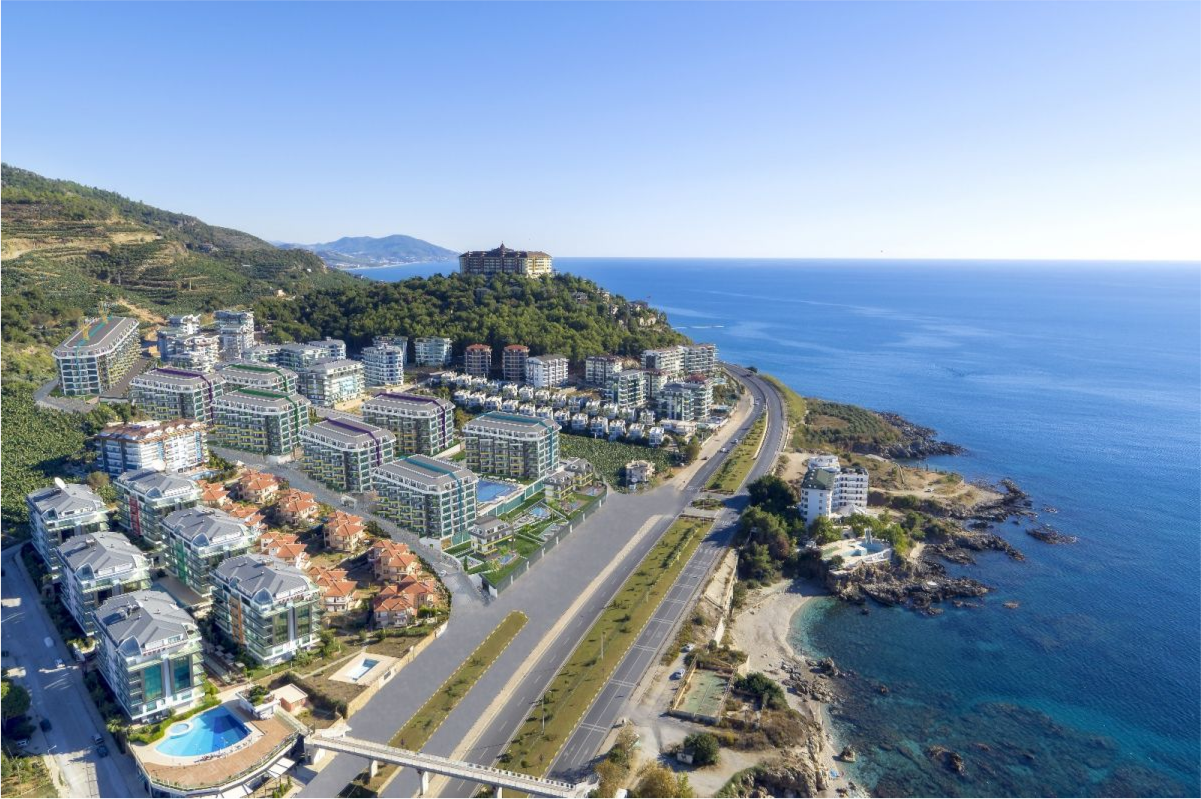




Until relatively recently, the logic was simple: a city has a central core, an administrative center, and a nominal periphery. Everything else is just satellites. Today, this model is rapidly losing its relevance. Russian cities are increasingly developing not along a radial principle, but through the formation of new local poles—complex, multi-layered, rich in symbolism and functions.
Business clusters are becoming more than just places where businesses are concentrated. They act as nodes in a new urban geography, where economics, prestige, identity, and political expression are intertwined. And each city expresses this expression in its own unique way.
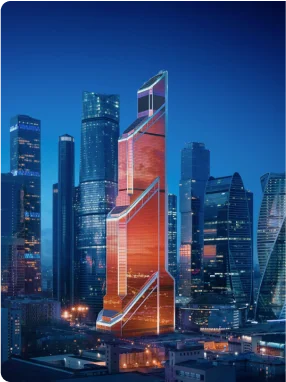
Moscow City: The Point Where Everything Changed
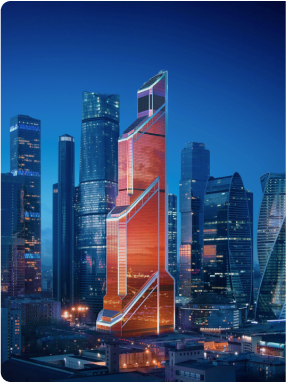
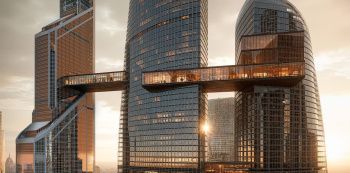
Moscow City has long ceased to be just a "skyscraper district." It has transformed into a city within a city, with its own temporal logic, dense interactions, and parallel reality. Here, the sense of verticality is heightened—not as an architectural dominant, but as a way of existence.
What's important isn't so much the number of towers as the redistribution effect: business activity has shifted, human flows have been reconfigured, and the notion of Moscow's "modern center" has been radically transformed. It was here that the idea was born that a cluster could be not an addition to the city, but an independent entity within it.
But Moscow-City also became a trap for the regions: they began copying it without understanding the reasons for its success. And the reason wasn't just its height—it was the concentration of functions, the density of meaning, and the ability of the environment to remain vibrant beyond the daytime.
City 2: The capital's second attempt to reinvent itself
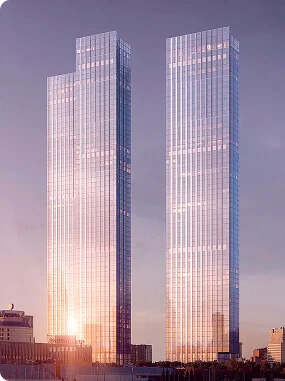
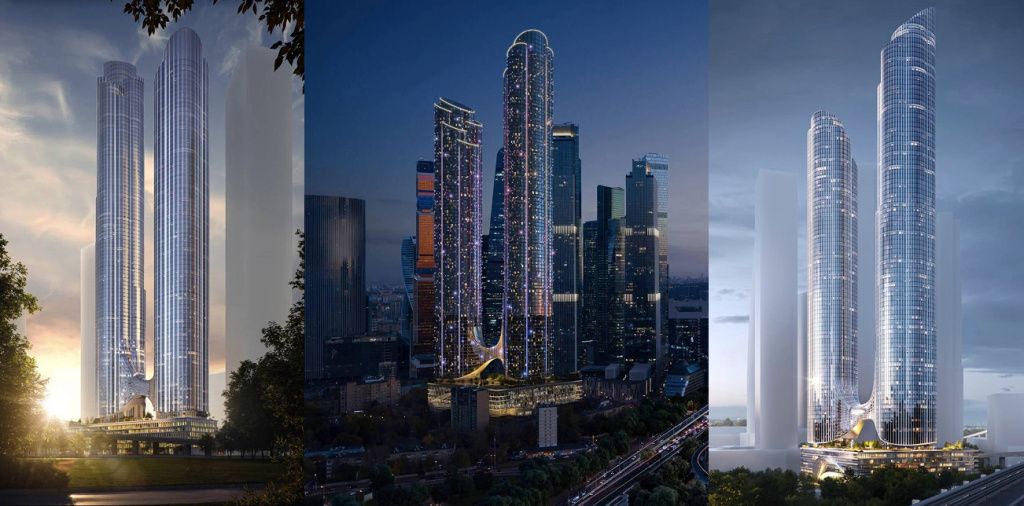
Today, Moscow is moving forward. The City-2 project , being developed in the area of former industrial zones next to the existing business core, is not a repetition, but an attempt to re-assemble the concept.
There's less ostentatious monumentality here, and more emphasis on flexibility, mixed-use scenarios, integration with the residential environment, infrastructure connectivity, and a long-term use cycle. This is no longer just a business district, but a fully-fledged urban fabric of the next generation.
Grozny City: A Business Cluster as a Manifesto of a New Identity
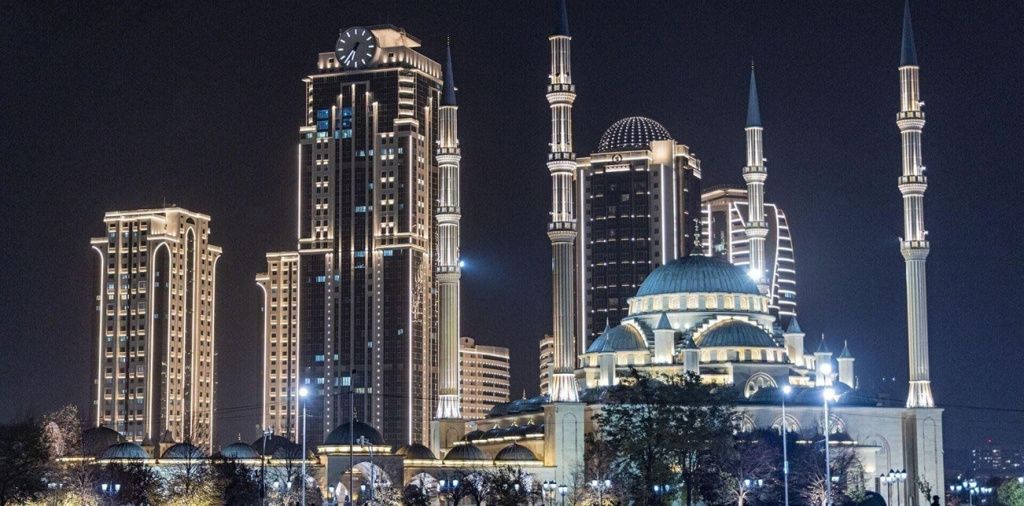
Grozny-City deserves special attention—one of the few fully realized regional clusters in Russia. Unlike most projects with uncertain futures, it doesn't exist in renderings—it's operational, alive, and shaping the city's image.
Seven high-rise buildings with commercial, hotel, and residential functions have become more than just an architectural ensemble. They are a political and symbolic gesture, declaring the city's restoration, sustainability, and new self-identity.
Grozny-City serves as a demonstration that a business cluster can serve not only as an economic but also as a reputational tool, becoming a visual anchor for the regional narrative.
Petersburg City: Ambition Met with Reality
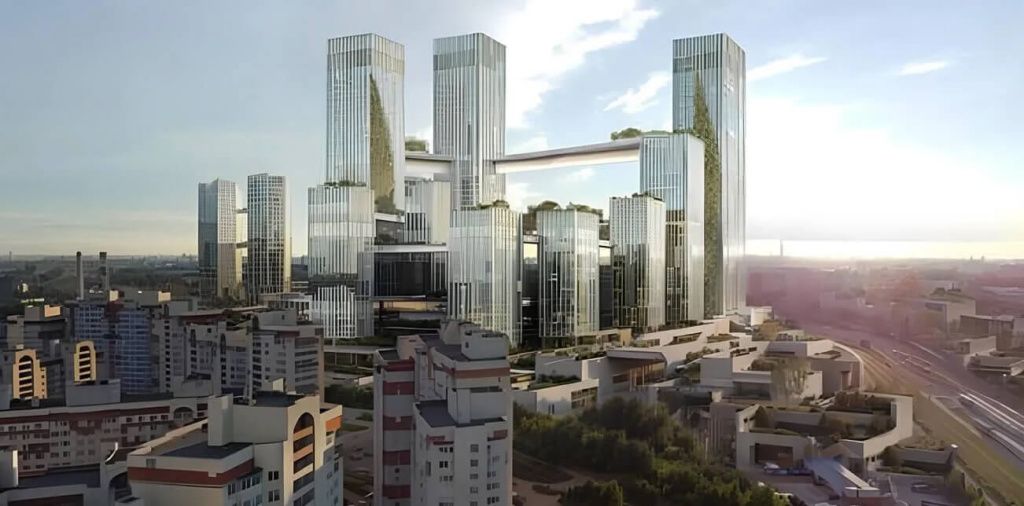
The history of Petersburg City illustrates how a major plan can become dependent on urban planning and political mechanisms. The idea of creating a new business hub near Ladozhsky Station was presented as a challenge to the traditional city center.
However, the area was not included in the integrated development mechanism, and the project failed to receive support in its proposed format. As a result, it has been put on hold: neither cancelled nor feasible in its current configuration.
This case is important precisely because of its ambiguity. It demonstrates that architectural logic today is increasingly dependent on the regulatory environment, and the urban future is shaped not only by developers but also by institutional decisions.
Perm-City: a cluster as a statement, not just an object
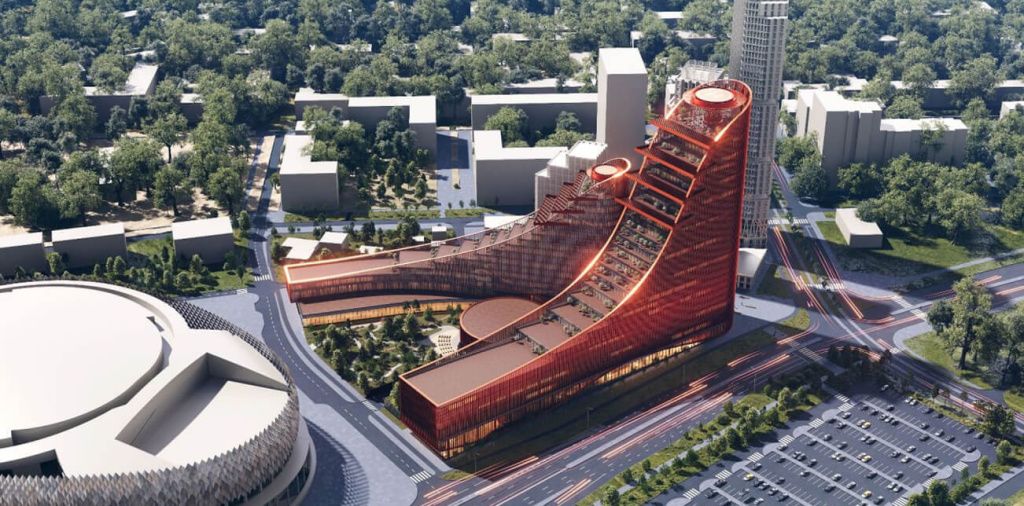
Perm took a different approach—through symbolism. Valode & Pistre's concept, built around the image of the Firebird, makes the business cluster less a functional structure and more of a cultural statement.
There's less overt pragmatism here and more of an attempt to set a new tone for the city. This space doesn't seek to replicate the capital. It's developing its own language—based on industrial memory, local character, and an attempt to shift toward a knowledge-based economy.
Kazan-City: A Modern Cluster as a Tool for Soft Expansion
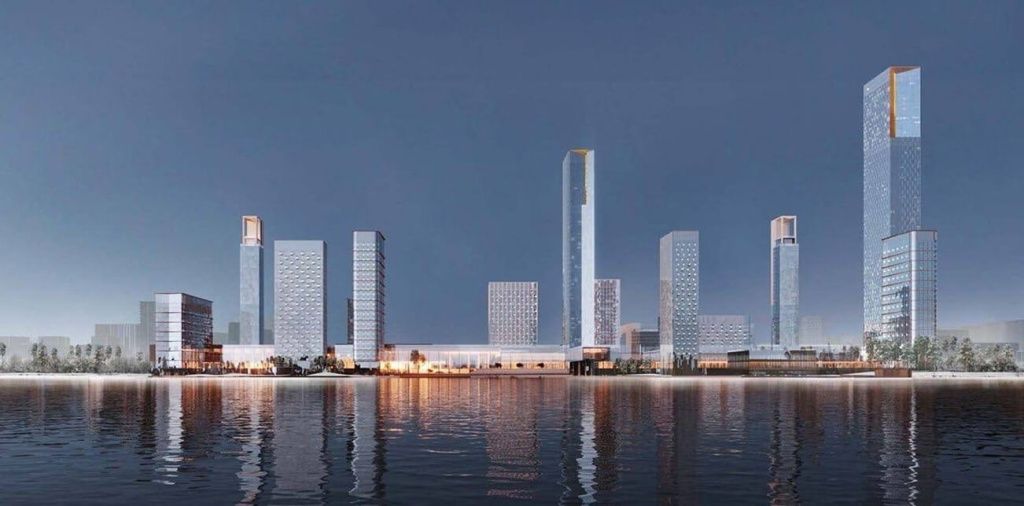
The Yar Park mixed-use development project, a large-scale business complex on the Kazanka River embankment, is increasingly being publicly referred to under this name. After receiving the state expert review, it has entered its active phase, making it one of the most promising emerging clusters in the country.
Kazan City demonstrates a model of balanced growth: business functions are combined with public spaces, housing, tourist infrastructure, and the embankment as a focal point. It is not a rigid corporate hub, but a flexible urban scene.
Yekaterinburg and Krasnoyarsk: Delayed construction of new centers
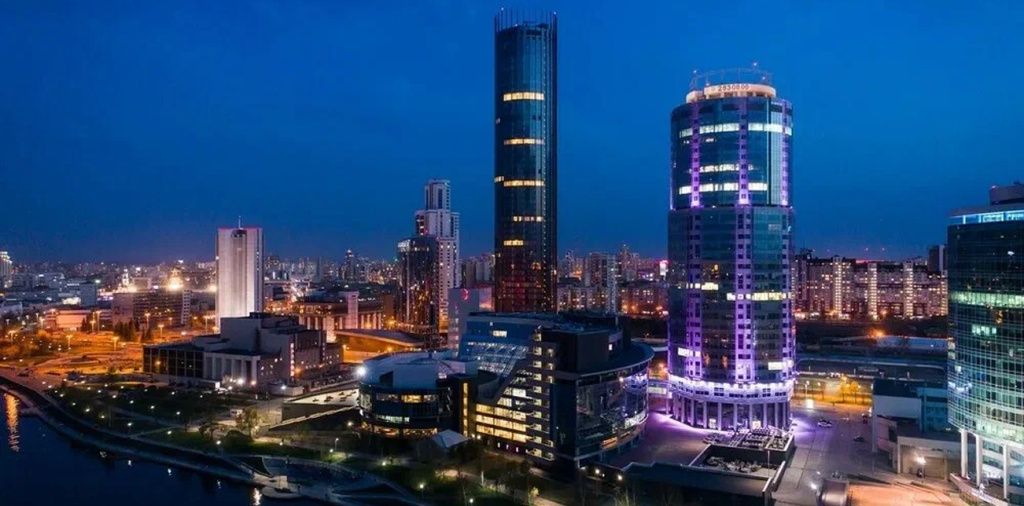
These two cities illustrate a more complex trajectory. Here, clusters are formed not suddenly, but through a series of architectural accents, adjustments, and attempts at rethinking.
Yekaterinburg-City is developing as a collection of business dominants, forming a new horizontal center, but still searching for a common logic.
Krasnoyarsk-City, which began as a grandiose megaproject, has evolved over time into a more complex urban structure, where business functions intertwine with residential and infrastructure.
Both examples show that resilience is not formed through speed, but through the ability to reassemble.
Sochi and Novosibirsk: polar scenarios
Sochi City was conceived as a hybrid resort and business hub. Here, the vertical coexists with recreation, and business with leisure. This is one of the few cases where a cluster was built for the dynamic nature of a tourist destination, not an industrial center.
Novosibirsk City, by contrast, remains an example of ambition never fully realized. Several concepts, changes in location, discussions about height and infrastructure—all of this shaped the image of a project that never became a coherent system.
Why do some clusters become cities while others remain a facade?
Viability is not determined by scale, but by the ability to integrate.
A cluster works when: it is integrated into the city's everyday life, it attracts different social groups, it lives at different times of the day, it adapts to change.
When architecture exists only to demonstrate ambition, the territory quickly loses its meaning.
New Philosophy: From Demonstration to Meaning
Russia is gradually moving from copying the Moscow-City image to a conscious search for its own formula. Perm through symbolism, Kazan through flexibility, Grozny through reputational gestures, Moscow through scale, and St. Petersburg through confrontation with limitations.
This is how a new urban culture is being formed, where the business cluster is not so much architecture as a way for the city to express itself.
Final observation
Today, a business cluster is more than just a territorial project. It's a mirror of ambition, a tool for reimagining the city center, and simultaneously a test of the maturity of an urban strategy.
Every realized or proposed "-City" expresses what the city wants to be: rigorous, flexible, symbolic, technological, or politically expressive. And it is precisely in this choice that its true identity lies.