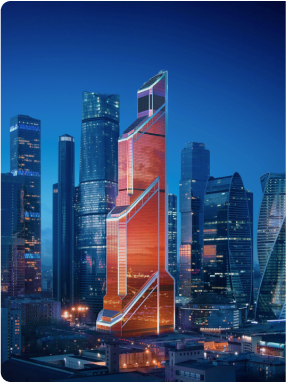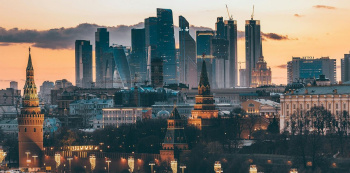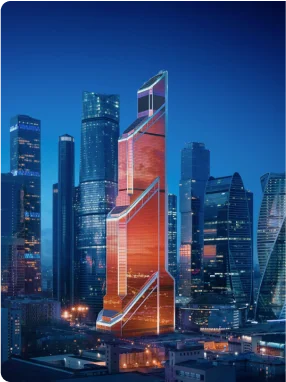



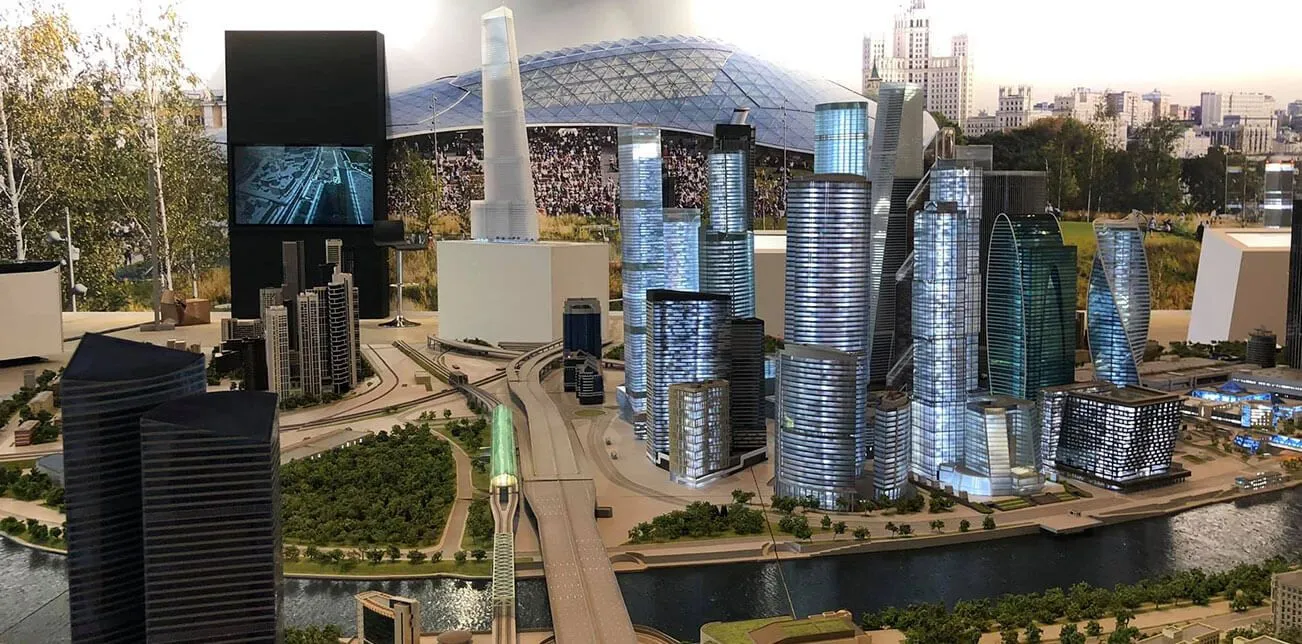
The western part of the Presnensky district is home to exceptionally high-quality, high-end, and yet still some of the most expensive real estate in Moscow. It has everything: housing, office space, and developed infrastructure. Needless to say, this is the very same Moscow City that has attracted genuine interest from businesses, investors, and ordinary citizens, as well as visitors to the capital, for over 20 years.
Moscow-City, like Sochi before it, is steadily expanding. The first skyscrapers to appear created quite a stir, but soon there will be no undeveloped land left on the 60 hectares allocated for the business center. Already, the areas adjacent to the City are beginning to be actively developed with high-rises, including skyscrapers and residential complexes that will compete with the already hyped towers .
More is in store for us in the future, as the city authorities have not only approved but also accepted the project, working title "Big City," for implementation. It envisions the development of a site over 3 hectares. This includes the territory occupied by Moscow-City. However, at only 60 hectares, it can be considered no more than a drop in the ocean of future changes.
What is the Big City project?
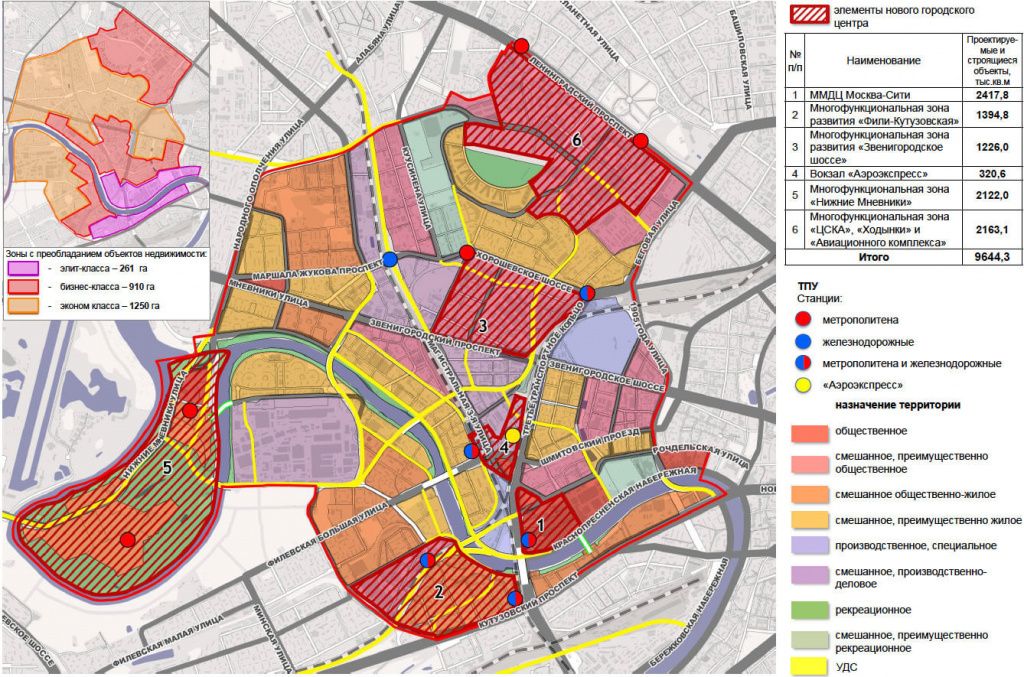
The "Big City" project covers a vast area in western Moscow, which is still occupied by defunct industrial and manufacturing plants, as well as old residential buildings slated for renovation. Overall, "Big City" encompasses territories across four administrative districts, including the Central, Northern, Western, and Northwestern Administrative Districts (CAO), or the area from Leningradsky Prospekt to Kutuzovsky Prospekt, covering a total area of 7,070 hectares. This area includes a 3,224-hectare planning review zone.
This perfectly reflects the trend of recent years – the redevelopment of industrial zones, and the pioneer Moscow City is a shining example of this form of construction.
The Moscow City Master Plan envisages a comprehensive reorganization of the industrial and communal areas of this zone, creating multifunctional public and residential microdistricts while preserving federal enterprises and city infrastructure facilities.
Thus, within the framework of the Big City project the following will be implemented:
-
creation of elements of a new city center in areas of major transport hubs;
-
intensification with increased participation in urban life of the territories adjacent to the Moscow River in areas with the best transport accessibility and reconstruction of the remaining territories within the districts;
-
development of spatial accents of territories along the Moscow River with the creation of housing and landscaping of embankments, development of public spaces.
The implementation of the "Big City" project is divided into three stages, the first of which, with the implementation of previously adopted decisions, was completed by 2020, the second is planned for completion by 2025, and the third by 2035. Each stage involves the balanced development of construction, transport, engineering and social infrastructure.
In other words, the authorities have allocated a total of 19 years for the implementation of the "Big City" project, during which time almost a quarter of Moscow is to be transformed into a thriving, modern district, and be replenished with 5 million square meters of real estate for various purposes, new highways, public spaces, and developed infrastructure.
Thus, the "Big City" project will integrate this entire area into the city's life, create new transportation links, and reconstruct the old housing stock. The first changes are already visible, although they only affect the areas immediately adjacent to Moscow-City.
Housing near the business district
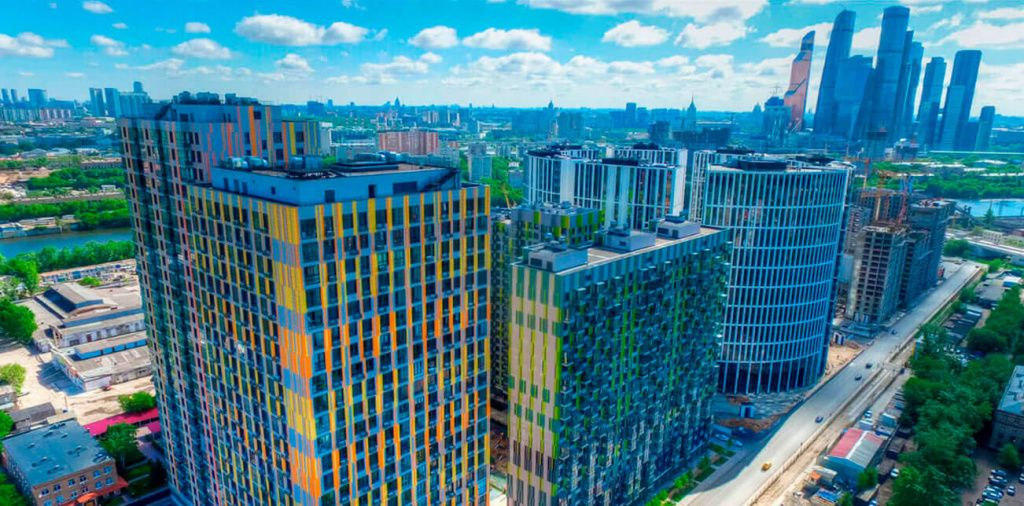
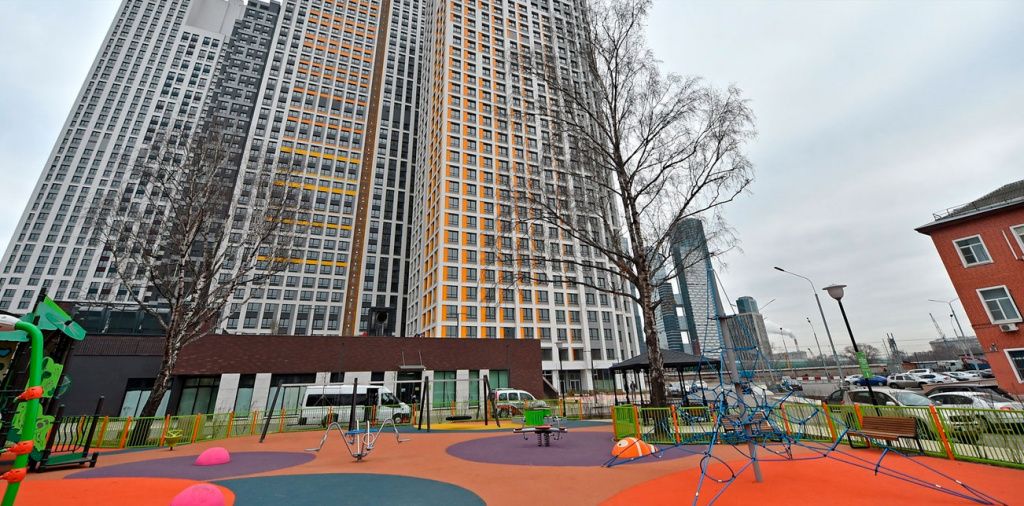
In the heart of "Big City" lies Shmitovsky Proyezd, a high-rise residential development. Formerly part of the industrial zone of the former Flour Mill No. 4, it is now being transformed into a comfortable residential area thanks to the construction of the Headliner residential complex. A couple of years ago, the new building on Shmitovsky Proyezd became the most sought-after in all of Moscow. And today, demand for housing there remains unabated.
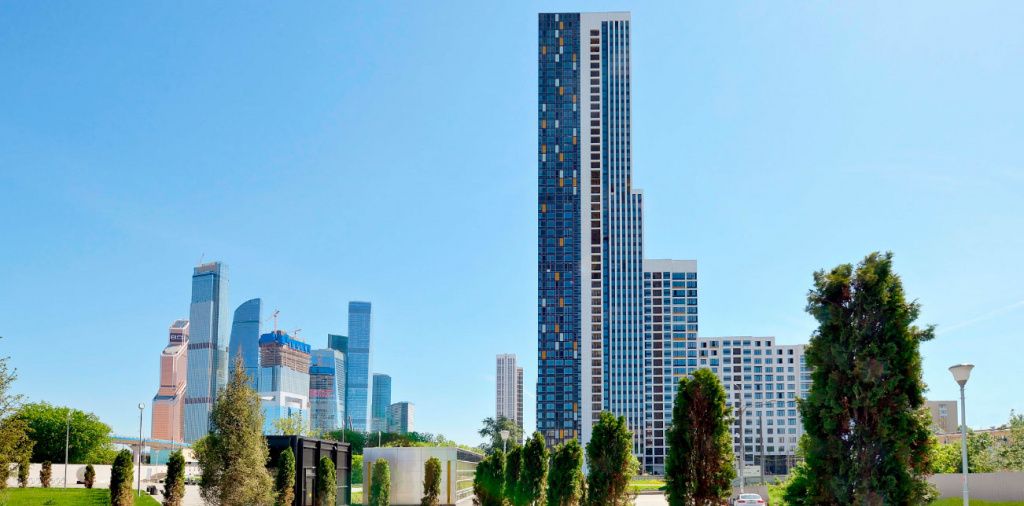
Three buildings in the complex, 54, 11, and 33 stories tall, have already been commissioned. The new complex fits seamlessly into the neighborhood's architecture while continuing the principles of Moscow City, with its dominant 54- and 55-story towers. It consists of 10 buildings constructed using monolithic technology, each with its own unique architectural and façade features that blend harmoniously with the surrounding development.
The Headliner residential complex offers a wide variety of apartments, including a wide selection of even small apartments with a variety of layouts. The complex will include a 3,000-square-meter kindergarten, which is part of the first phase of the project. A spacious underground parking garage with space for 549 cars will be located beneath the residential complex. Furthermore, the complex will boast its own diverse infrastructure, located on the ground floors of the buildings. This will include shops, restaurants, service providers, bank branches, offices, and more.
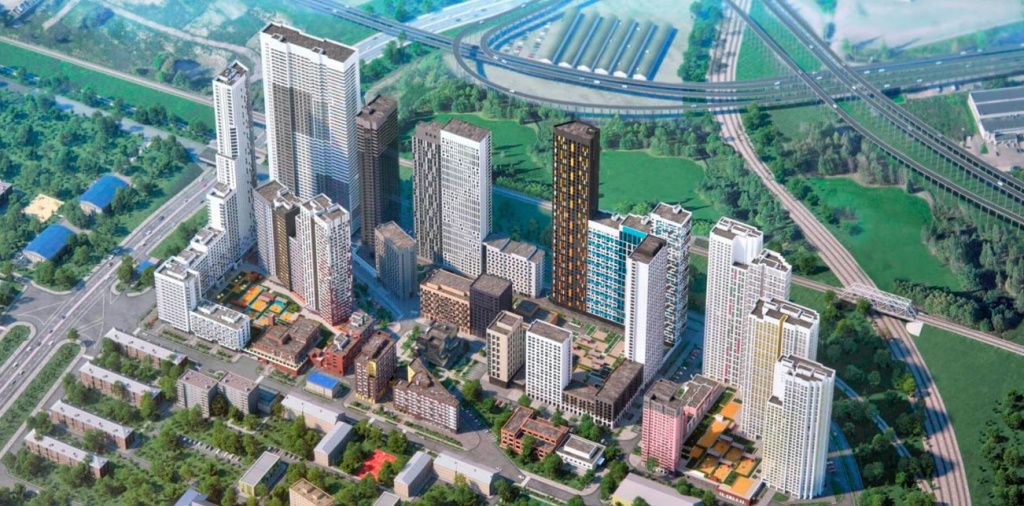
At the same time, apartments in the Headliner residential complex are quite reasonably priced. An average-sized two-bedroom apartment of 58 square meters costs approximately 14.1 million rubles, while a three-bedroom apartment of 70 square meters can be purchased for 15.8 million rubles. These are some of the best deals in the entire Central Administrative District.
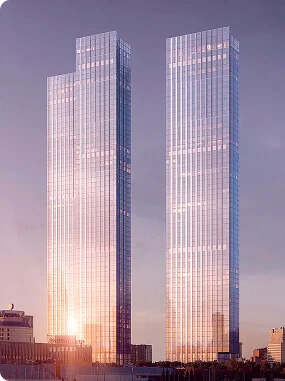
In addition to the Headliner residential complex, construction of One Tower began in 2019 within Moscow-City. Its completion is scheduled for 2025. It is expected to become the tallest residential building in Europe, only slightly shorter than St. Petersburg's Lakhta Center. However, the price of apartments in this skyscraper clearly reflects its premium segment.
Another residential complex under construction within the "Big City" development is "Heart of the Capital." It comprises eight buildings, six of which have already been commissioned.
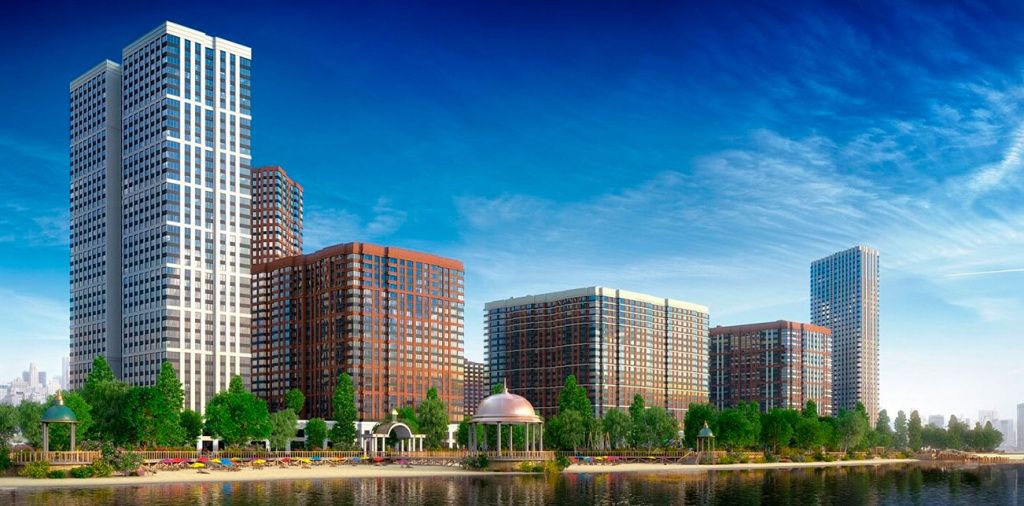
The redevelopment of the opposite bank of the Moskva River, part of the first phase of the "Big City" project, has not been overlooked. On this side, the "Western Port" industrial zone is undergoing rapid reconstruction, and a residential complex of the same name is under construction on the site of the former Kazakov Plant. The project also includes a clinic capable of accommodating 110 people per shift, underground and surface parking, as well as preschools and a school. The kindergartens will accommodate 120 and 220 children, respectively, with one scheduled to open in early 2021 and the other a year later. A comprehensive school for 750 students will also be built in this neighborhood.
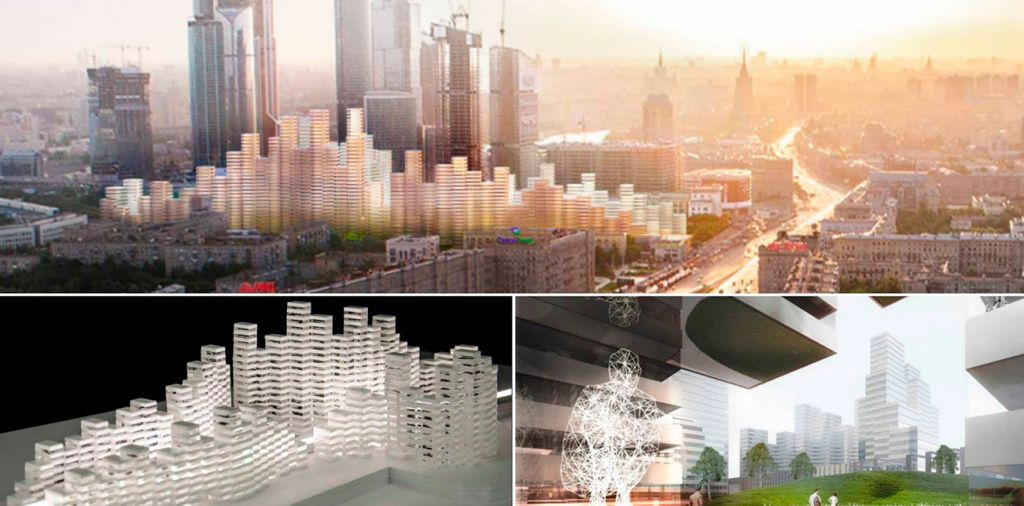
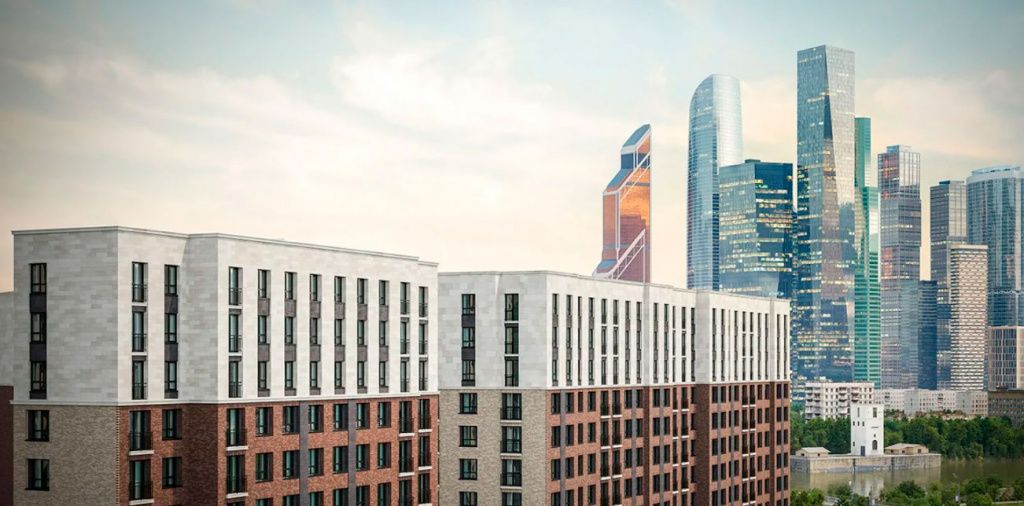
The Dorogomilovo district will also receive new housing. A residential complex will be built on the site between the Northern Bypass of Kutuzovsky Prospekt and the railway tracks, replacing the former FiliKrovlya plant and surrounding warehouses and small businesses. It will add 149,100 square meters to Moscow's housing stock. Additionally, a 22,400 square meter educational center will be built nearby. This educational center will include a kindergarten for 200 children and a school for 460 students. A semi-underground parking lot with space for 1,254 cars will also be built. The project was designed by renowned Japanese architect Kengo Kuma, his first foray into the Russian capital.
The industrial zone opposite the Western Port, that is, the area on the other side of the Shelepikhinsky Bridge, is also slated for reconstruction. This is the industrial zone of the Filevsky Park district, 32 hectares of which will be built with brand new buildings. Construction of the Beregovoy residential complex is already underway there. It includes four 29-story brick-monolithic buildings, one of which has already been commissioned.
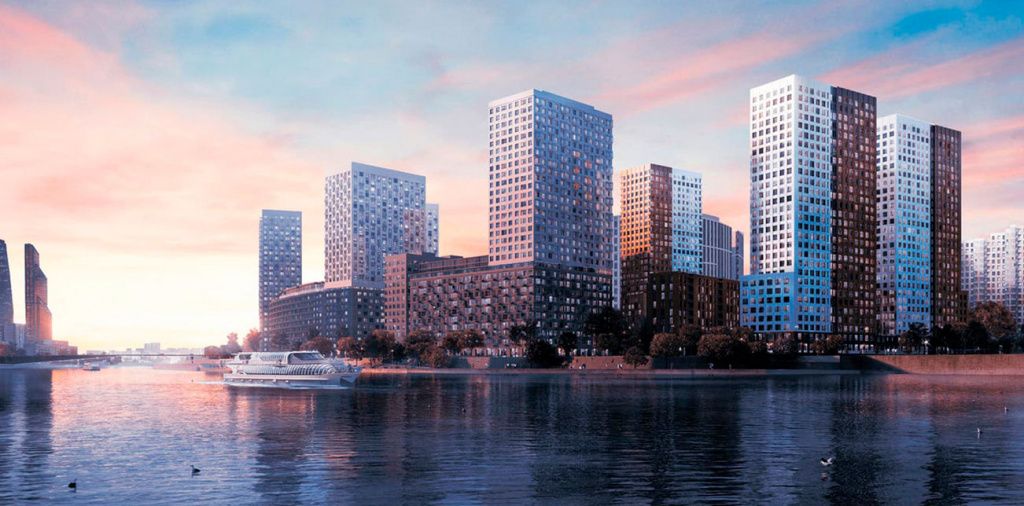
In addition, the Fili Grand residential complex has already been fully completed.
and LCD Only .
Transport interchanges
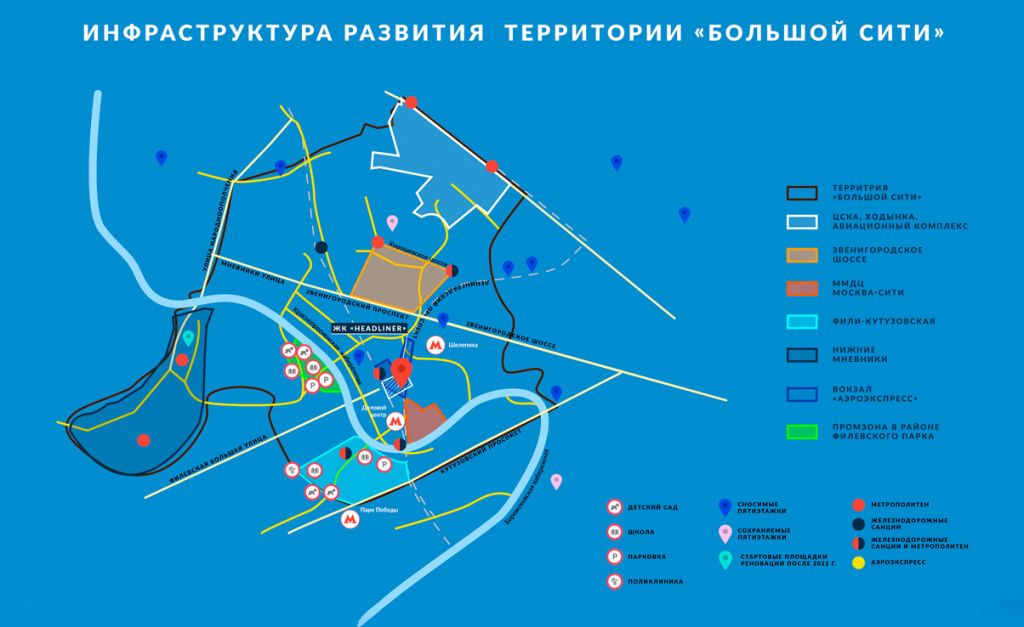
Marat Khusnullin, Deputy Mayor for Urban Development Policy, explained that the existing metro, modern highways, and new modes of transportation make it possible to implement the "Big City" project and integrate it into Moscow. He also stated that as part of the "Big City" project, three new bridges will be built across the Moskva River, which will significantly improve traffic flow in the area. Currently, there are only three crossing points:
-
along the Shelepikhinsky bridge;
-
along Zvenigorodskoe highway;
-
along Kutuzovsky Prospect.
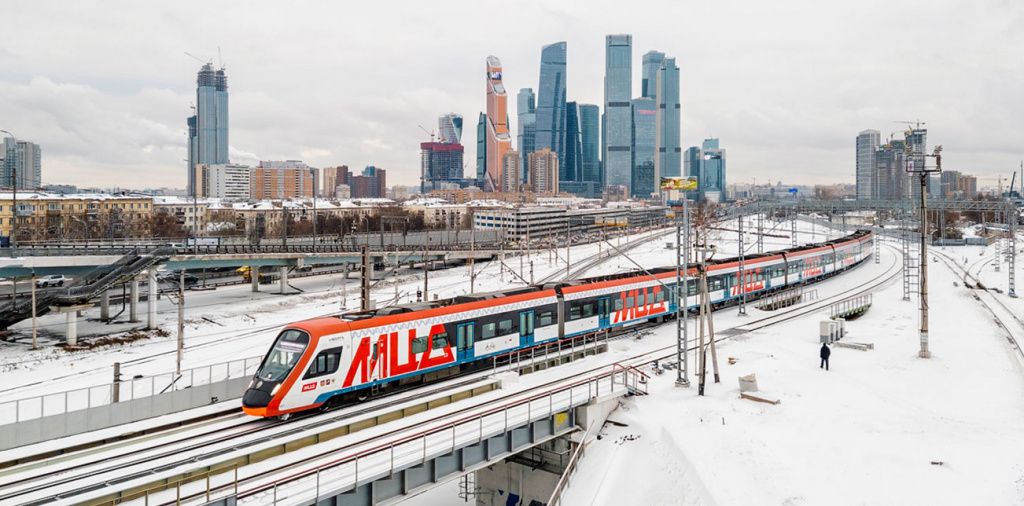
But for such a large and developed region, this is insufficient. Therefore, the number of bridges must at least double. One of them will lead to the planned new station on the Rublevo-Arkhangelskaya metro line, called "Presnya," and the other two will lead to the stations "Mnevniki" and "Karamyshevskaya." At the same time, the MCD-4 "Aprelevka-Korolev" route will also be extended with a new railway bridge.
Public transportation has long been available in the area, but its capabilities are limited. Those who have lived here for a long time still remember how they used to get to the Expocentre, which was still under construction at the time, on overcrowded buses and minibuses departing from the Ulitsa 1905 Goda metro station. Even later, the situation was quite challenging. Drivers used to have to endure long traffic jams to get to Moscow-City.
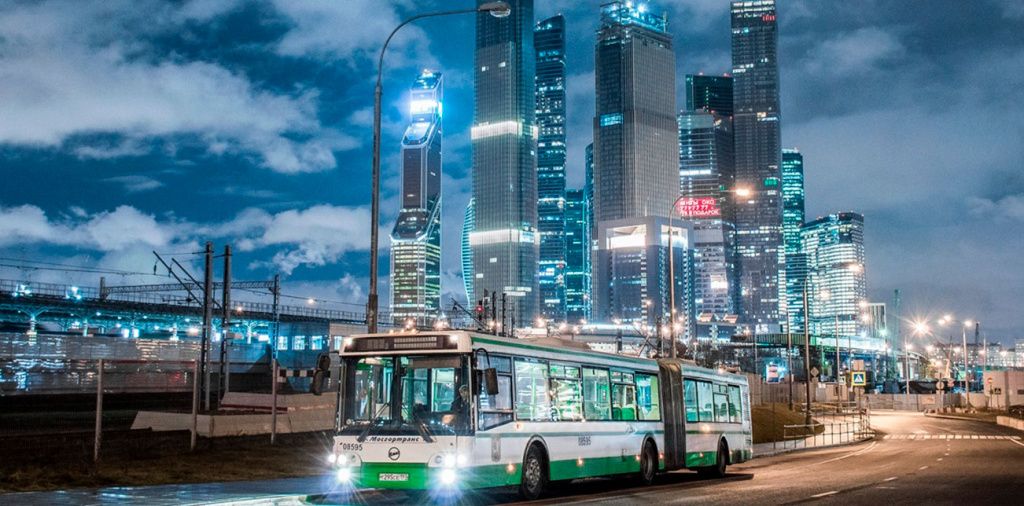
Of course, a lot of water has flowed under the bridge since then, and the public transport situation has improved significantly, thanks in large part to the opening of:
-
metro stations "Mezhdunarodnaya" and "Delovoy Tsentr" in the Moscow-City area, which are part of different lines;
-
stations of the Big Circle Line (BCL) and the Moscow Central Circle (MCC) "Delovoy Tsentr", "Shelepikha";
-
North-West Chord.
Thus, thanks to the work already completed, Moscow-City, the mainstay of the "Big City" project, has been able to overcome its transportation collapse. Overall, Shelepikha is intended to become the mainstay of the entire transport infrastructure of the area, whose redevelopment is planned by the "Big City" project. This was a logical and consistent decision, as it already serves as a hub for passenger traffic from the Moscow Central Circle, the Big Circle Line, and the Kalininsko-Solntsevskaya Line. Construction of a new line is also planned from this location, linking Khoroshevo-Mnevniki and Strogino, as well as part of Rublevo-Arkhangelskoye, where a new business district is planned.
The area being developed as part of the "Big City" project is adjacent to new residential areas, as well as the Khrunevich Center, which have also received a significant boost for further development. The National Space Center is planned for Filevsky Park. It is being built on a site along the Moskva River embankment between Myasishchev and Novozavodskaya Streets, as well as Novofilevsky and Beregovoy Drives.
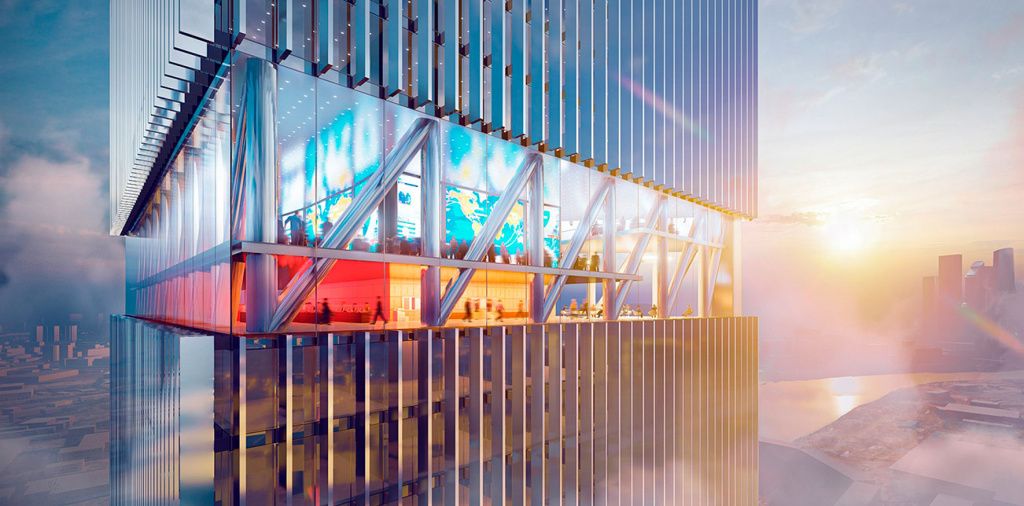
In addition, it is planned to renovate some of the production facilities and renovate dilapidated housing.
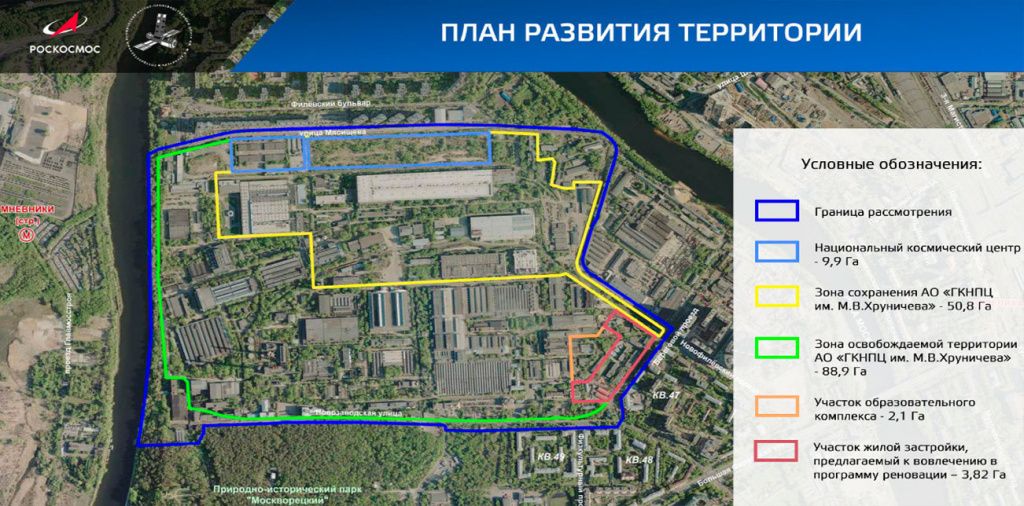
According to Marat Khusnullin, the street and road network had been planned long ago, but everything in the area was concentrated around the Khrunevich Plant. This left the area on the bend of the Moskva River seemingly cut off from the city. After all, the only way into and out of the area by car is via the Shelepikhinsky Bridge, and those using public transportation must take a bus along the narrow Novofilevsky Proyezd to the nearest metro station on the Filevskaya Line. Thus, the journey to the metro during rush hour can take half an hour or more, although in normal traffic, the entire journey can be completed in 10 minutes. Furthermore, public transportation options and exit routes out of the area are quite limited. From here, you can either go to Kuntsevo or to the city center, and then continue in your desired direction from there.
Marat Khusnullin is confident that the situation will improve significantly with the completion of the space cluster. It is intended to become an extension of the "Big City" area. City officials also plan to bring positive changes to the street structure within the district itself, creating a new main road, a landscaped central boulevard, and organizing new traffic routes. Plans also include transforming Novozavodskaya Street into a pedestrian zone.
The already functioning North-West Chord and the newly opened girder bridge connecting Narodnogo Opolcheniya Street and Nizhniye Mnevniki are the final elements of the traffic-light-free thoroughfare. But to further connect the area with the rest of Moscow, the embankment from Moscow-City will be extended to Mnevniki. Reconstruction of the area from Filevsky Park to the Pyotr Fomenko Workshop is already underway.
Thus, the main load is distributed between the North-West Chord, the Moscow Central Diameters (MCD), the Moscow Central Circle (MCC), and the northern Kutuzovsky Prospekt alternate. Three expected bridges across the Moskva River will help alleviate these loads even further.
New metro stations
The "Big City" project also envisions the opening of the Dorogomilovskaya metro station after 2023. Three more stations on the Big Circle Line (BCL) will also be built near the National Space Center: Ulitsa Narodnogo Opolcheniya, Karamyshevskaya, and Mnevniki. Work on these plans is already underway, according to Mars Gazizullin, CEO of JSC Mosinzhproekt.
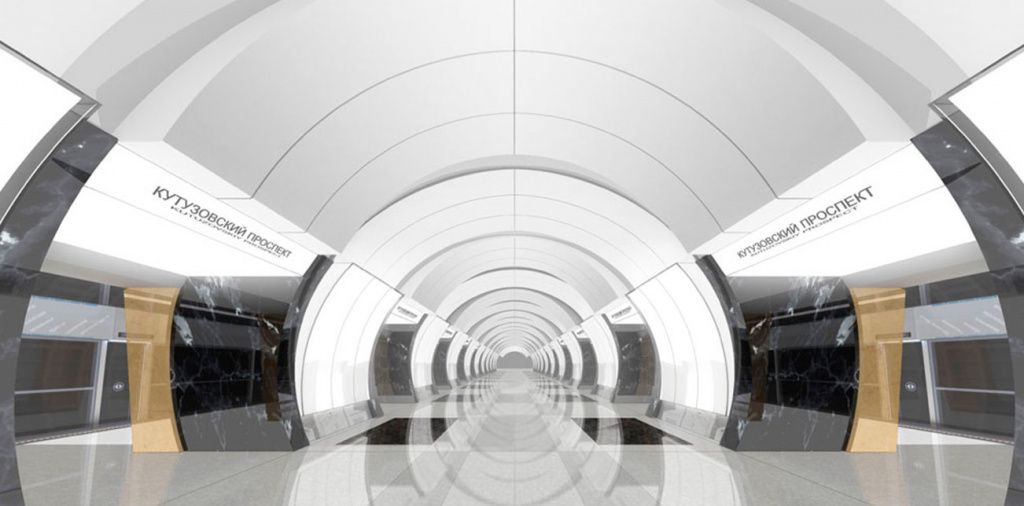
The Mosinzhproekt group of companies is currently quite successful and is developing rapidly. It has already completed numerous projects, but is particularly proud of the Luzhniki Stadium, the Zaryadye landscape park with its concert hall, and the Gymnastics Palace. It began operations in 1958 and was transformed into its current form in 2011. Mosinzhproekt has built 82 km of metro lines, 42 stations, and 10 electric train depots, and we've only listed a few of the projects it has completed in recent years. Therefore, there is every reason to believe that the company's plans will be successfully implemented within the agreed-upon timeframes, while also embracing cutting-edge technologies.
Thus, the "Ulitsa Narodnogo Opolcheniya" station is planned to become a transfer station and connect the Big Circle Line with the Rublevo-Arkhangelskaya Line. It is being built along Marshal Zhukov Avenue at its intersection with Narodnogo Opolcheniya Street. The main station structures are already being installed, and the excavation of two tunnels from Khoroshevskaya station to it is more than half complete, with the tunnels connecting "Ulitsa Narodnogo Opolcheniya" with "Karamyshevskaya" already fully completed.
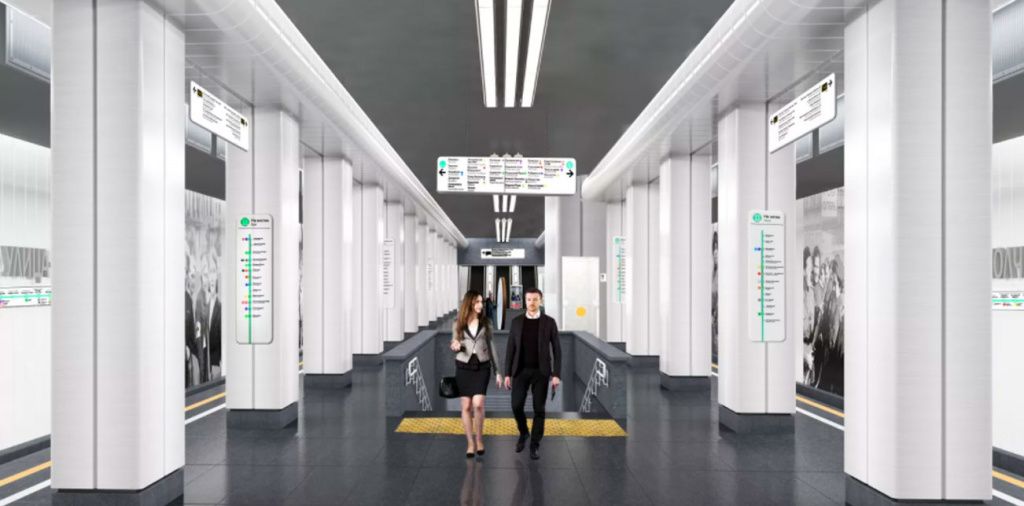
The Karamyshevskaya station itself is designed with two underground vestibules and exits to the Mnevnikovskaya floodplain. According to Mars Gazizullin, the underground section from this station to Davydkovo will be double-track.
The final planned new metro station, Mnevniki, will be built in the southern part of the floodplain. The foundation pit has already been excavated, and one tunnel, connecting Karamyshevskaya and Mnevniki, is being constructed using a 10-meter shield. The design of both stations was selected based on the results of an open architectural competition.
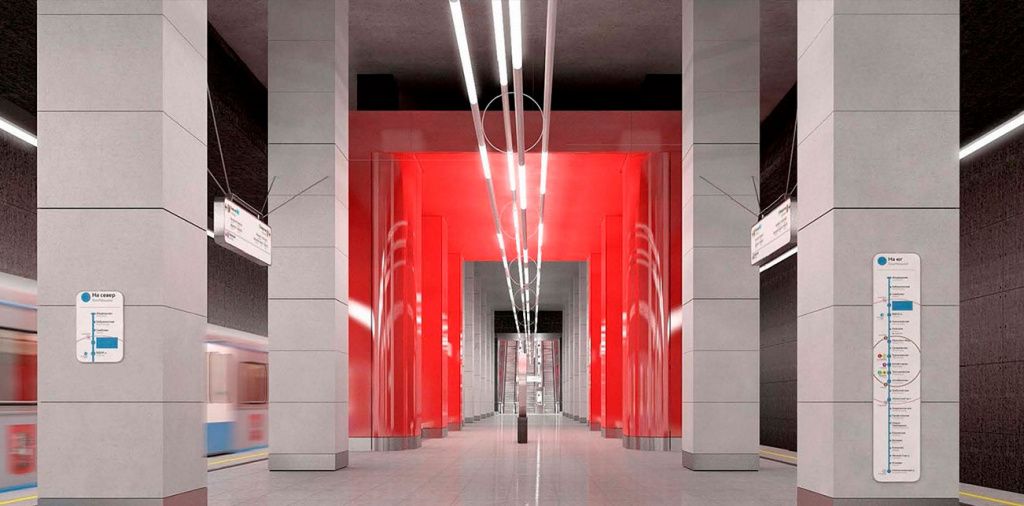
In Kuntsevo, the Mozhayskaya station will open, which will serve as a transfer station with the existing Kuntsevskaya station.
Renovation of the Presnensky District
The "Big City" project envisions a large-scale renovation of the district. According to a map developed by the construction complex, nearly half of the old housing stock will be demolished within three years, to be replaced with new buildings and modern, well-developed infrastructure. The first steps in this direction are already being taken, and residents of buildings slated for demolition are already moving into new apartments of comparable or even larger sizes.
In terms of numbers, the renovation program covers 52 residential buildings in the Presnensky District, and 109 in the Central Administrative District. Therefore, to provide housing for all apartment owners in the buildings to be demolished, approximately 300,000 square meters of housing are needed, not counting the new buildings already completed on Mukomolny Proyezd. Authorities are currently actively searching for suitable sites in central Moscow.
One of the first to be renovated will be the Kamushki microdistrict . The starting point is located at 14 Strelbishchensky Lane, where construction will begin after 2022.
Infrastructure
In addition to the aforementioned kindergartens, schools, and clinics, the "Big City" project envisions preserving existing educational and medical institutions, as well as creating new ones operating on a commercial basis. Furthermore, plans call for the development of new infrastructure facilities and the improvement of public spaces.
But while the Krasnopresnenskaya Embankment is currently undergoing rapid improvement, other areas will be expanded in the near future. Sergei Sobyanin, in his interview, shared that approximately 5 km of embankments on both banks of the Moskva River will be improved. This will include areas from the Karamyshevsky to the Dorogomilovsky Bridges, previously occupied by industrial zones.
Attention is also being paid to addressing the parking problem, which is so pressing in Moscow City. A large above-ground and underground parking facility has already been built directly within the Moscow International Business Center, and a large five-level parking garage under the Third Transport Ring is expected to open soon.
Thus, the area is being transformed from a dismal industrial zone into one of the most attractive, modern, and well-maintained in the entire capital. Even Marat Khusnullin was quick to point this out in one of his speeches.
Additional materials on the topic: