Guarda Wallet - a multi-currency crypto wallet for BTC, ETH, and USDT
 Website
 Type
 Keys


Guarda Wallet
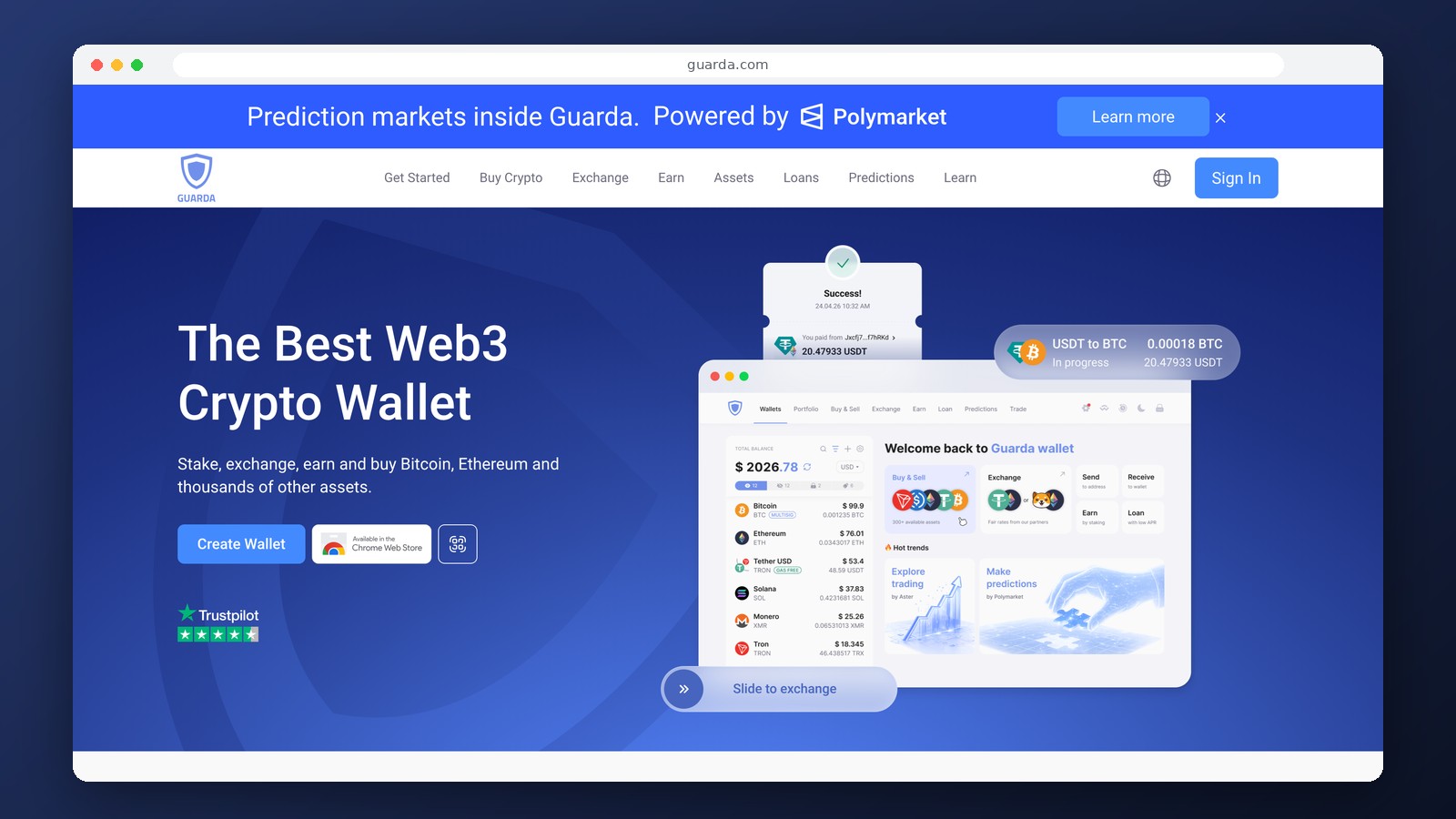
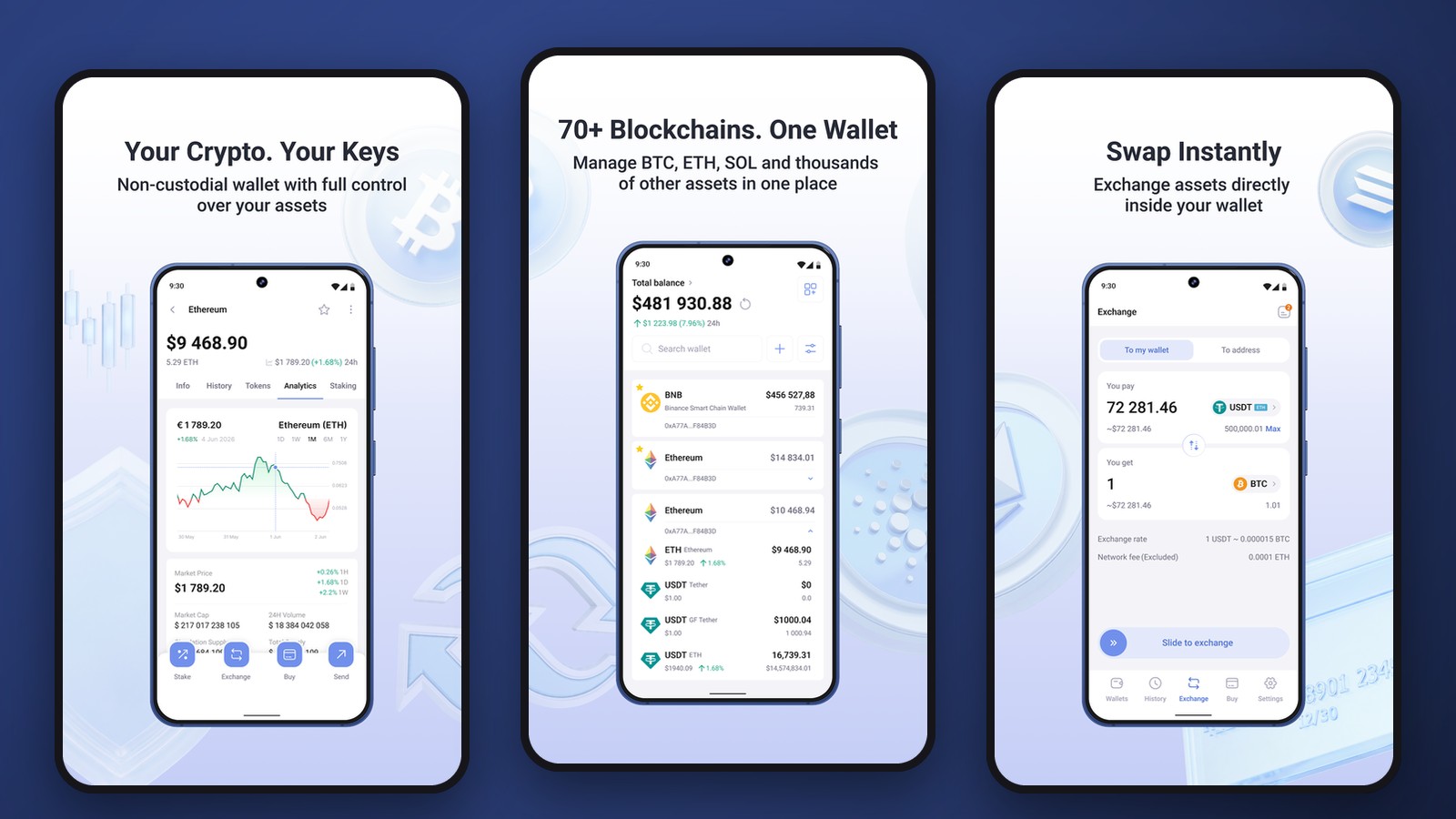
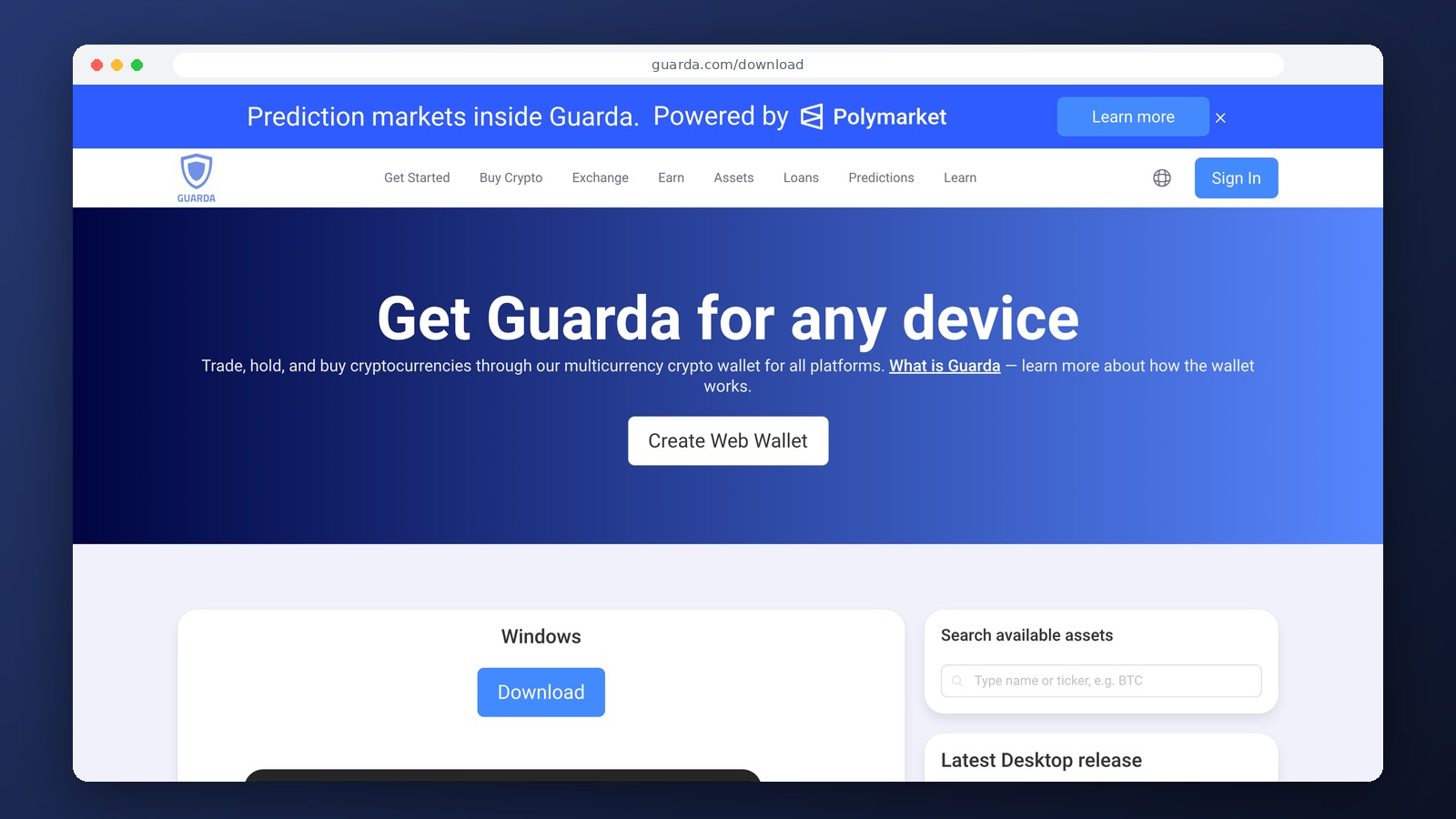
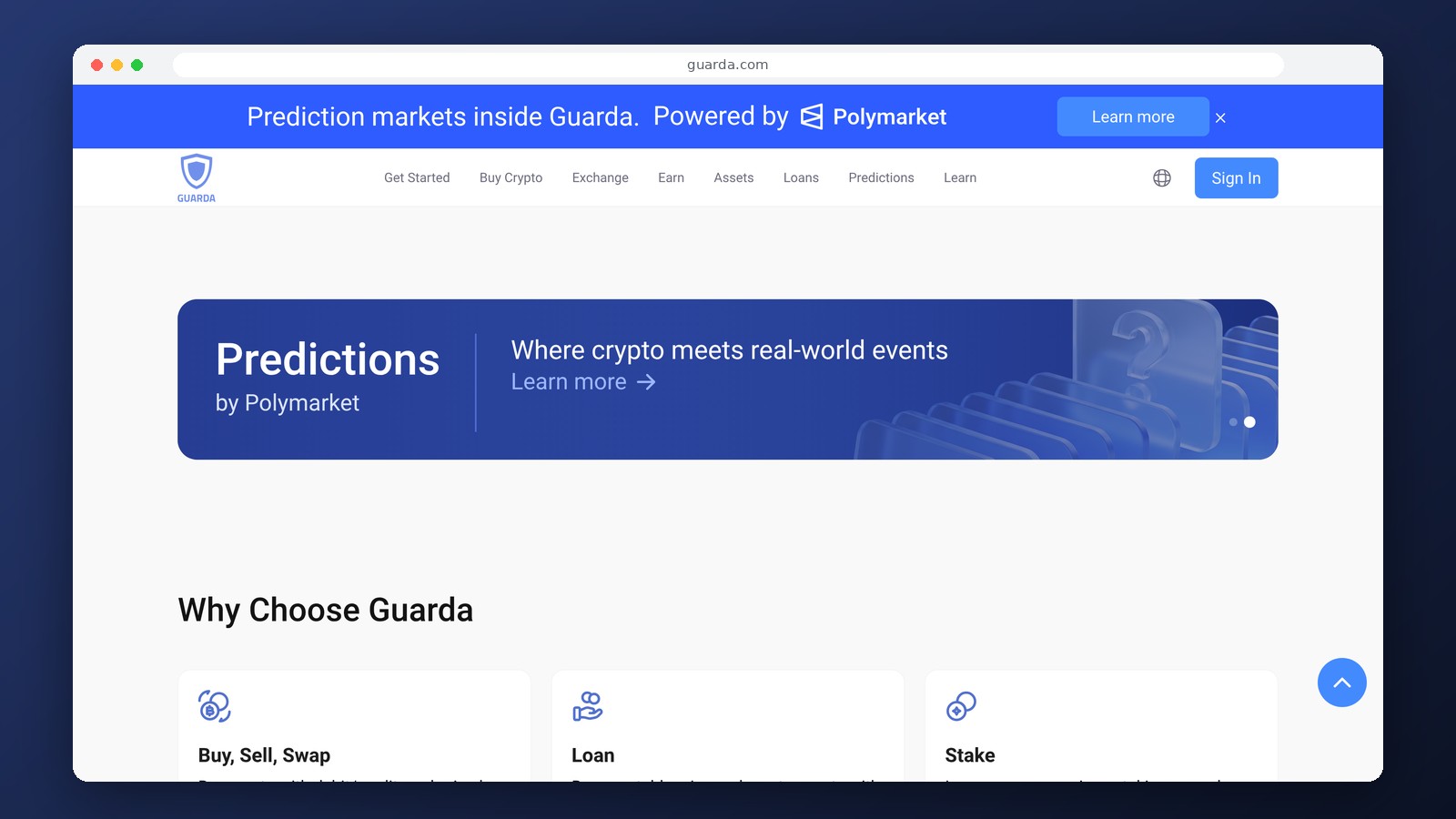
Guarda Wallet is a non-custodial, multi-currency crypto wallet for Bitcoin, Ethereum, USDT, and other digital assets. It is available in a browser, on iOS and Android, as desktop software, and as a browser extension. Private keys remain under the owner’s control, so storing cryptocurrency does not require transferring coins to an exchange account. You can use a single interface for everyday payments, and transactions on different blockchains are executed independently of one another.
Supported Coins and Networks
Guarda supports Bitcoin, Ethereum, TRON, BNB Smart Chain, Solana, and many other blockchains. It also supports tokens of various standards, including ERC-20, BEP-20, and TRC-20. For example, USDT on Ethereum and USDT on TRON are different tokens with different addressing rules and network fees. Just because they share the name “USDT” doesn’t mean transfers between networks will happen automatically.
When selecting a currency, Guarda displays the token’s network. Before receiving a transfer, it is important to verify that the sender’s network matches the recipient’s wallet. Selecting the wrong network can result in the loss of funds; the crypto wallet does not have a mechanism to reverse a confirmed blockchain transaction.
The following popular operations are supported:
- receiving and sending BTC, ETH, TRX, and compatible tokens;
- multiple independent addresses and wallet management;
- storing USDT on supported blockchains;
- exchanging available cryptocurrencies through integrated providers;
- purchasing coins through external payment partners;
- staking of certain assets, when supported for the selected network.
The presence of a coin in the storage list does not guarantee that this same coin can be purchased with rubles or exchanged within the app. Exchange liquidity, directions, and payment methods depend on our partners.
Keys, Backups, and Access from Different Devices
Guarda does not store private keys or recovery phrases on the user’s behalf. After creating a wallet, you must save a backup and recovery data. Before switching devices, make sure the backup file and recovery phrase are accessible; otherwise, simply logging in from a new phone may not restore access to your funds.
Managing your wallet via the app or a browser is convenient, but it does not make the cryptocurrency custodial. The owner controls transactions but also bears the risk of losing their keys. Passwords, biometrics, and interface locks protect local access but do not replace a backup. Secret data must never be shared with third parties, even under the guise of technical support.
USDT Transfers and Network Fees
When sending USDT, you must consider the blockchain’s base currency. For ERC-20 USDT, the fee is paid in ETH; for TRC-20 USDT, TRON network resources and TRX are typically used; and for tokens on the BNB Smart Chain, BNB is used. The fee amount varies depending on network conditions. Guarda may support specific fee payment methods for certain destinations, but these do not apply to all assets.
Creating a wallet is free. For on-chain transfers, a network fee applies; the calculated amount is displayed before the transfer is confirmed. The fee for an exchange or fiat purchase is calculated separately, as these services are provided through payment and exchange partners. It’s important to compare not only the advertised percentage but also the final number of coins, the exchange rate, and the amount after fees are deducted.
Exchanging and Buying Cryptocurrency
Guarda features an “Exchange” section for converting supported pairs. The user selects the source asset and the target currency, specifies the amount, checks the exchange rate, and confirms the transaction. Internal exchanges are processed through third-party providers, so the minimum amount, available networks, and exchange pairs may vary. If the wallet holds a specific token but the Exchange feature is unavailable for it, transfers and storage may still function normally.
Purchasing cryptocurrency with a bank card or via another fiat method also depends on the partner and the country. Such a partner may request KYC, even if no documents are required to create a standard Guarda Wallet. For users in Russia, it’s important to distinguish between generating a wallet address, receiving cryptocurrency via the blockchain, and paying for a purchase with a Russian bank card: these are not the same functions.
Using Guarda in Russia and Withdrawing to a Card
The non-custodial Guarda wallet allows you to work with blockchain addresses provided you have access to the relevant networks. However, fiat purchase and withdrawal methods depend on the jurisdiction, bank, and payment provider. Direct withdrawal of rubles to a Russian bank card cannot be considered a core feature of the wallet. This usually requires a separate cryptocurrency trading service, which has its own rules for customer verification and money transfers.
Before making a large transfer, it’s best to conduct a small test transaction. This is especially important for USDT, since the same token is available on multiple networks and not all recipients accept every standard.
Frequently Asked Questions
Does Guarda Wallet store users’ private keys?
No. This is a non-custodial wallet: the owner controls access to the keys and recovery options.
Does it support TRC-20 USDT?
Yes. Guarda supports TRC-20 tokens, including USDT on the TRON network. When sending, you must take into account the network’s resources and fees.
Is it possible to create a wallet without a passport?
For a standard non-custodial wallet, KYC is not a requirement. When purchasing cryptocurrency with fiat currency, the payment provider may require identification.
Can you withdraw funds from Guarda directly to a Russian bank card?
There is no universal direct withdrawal in rubles to a Russian bank card. Such a transaction depends on the external platform and the banking options available to it.
Editor’s Opinion
Guarda is suitable for those who use multiple blockchains and want to store their assets outside of a centralized exchange. The availability of a web version, desktop software, and mobile apps allows you to choose a convenient way to work, and support for different USDT standards helps you avoid having to use a separate app for each network. However, the built-in exchange should not be confused with a guaranteed purchase or withdrawal of fiat money: the terms are determined by independent partners. There are extensive options for storing and transferring cryptocurrency, but before converting large amounts, you should check the final exchange rate, the networks involved, and the transaction fees.
Ask a question to a company representative