Solflare - A Solana crypto wallet for SOL, USDT, and staking
 Website
 Type
 Keys


Solflare
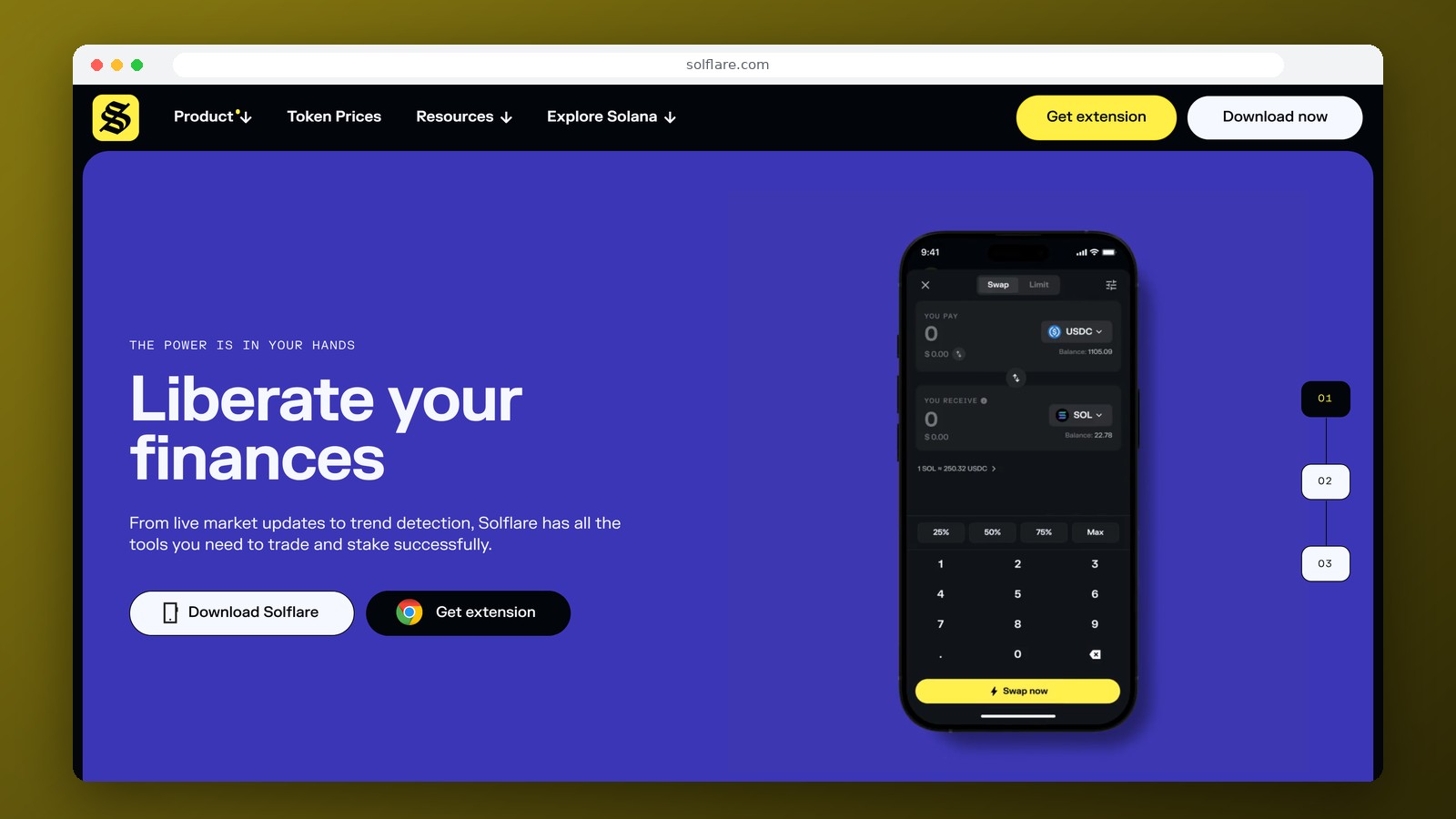
Solflare is a non-custodial crypto wallet for the Solana blockchain. Its main features include storing SOL and network tokens, sending transactions, exchanging assets, and staking. The app is available on iOS and Android, as a browser extension, and via a web interface. You can create a wallet using your own recovery phrase or use it in conjunction with a Ledger hardware wallet.
Solflare is specifically designed for Solana. It makes it easy to work with SOL, USDT, and USDC in the Solana standard, as well as with SPL tokens and NFTs. Note that USDT on Solana and TRC-20 USDT on TRON are different assets. Having the same ticker does not make the addresses interchangeable. Before receiving a transfer, you must confirm the Solana network with the sender and verify the selected token.
Working with Solana Tokens and Applications
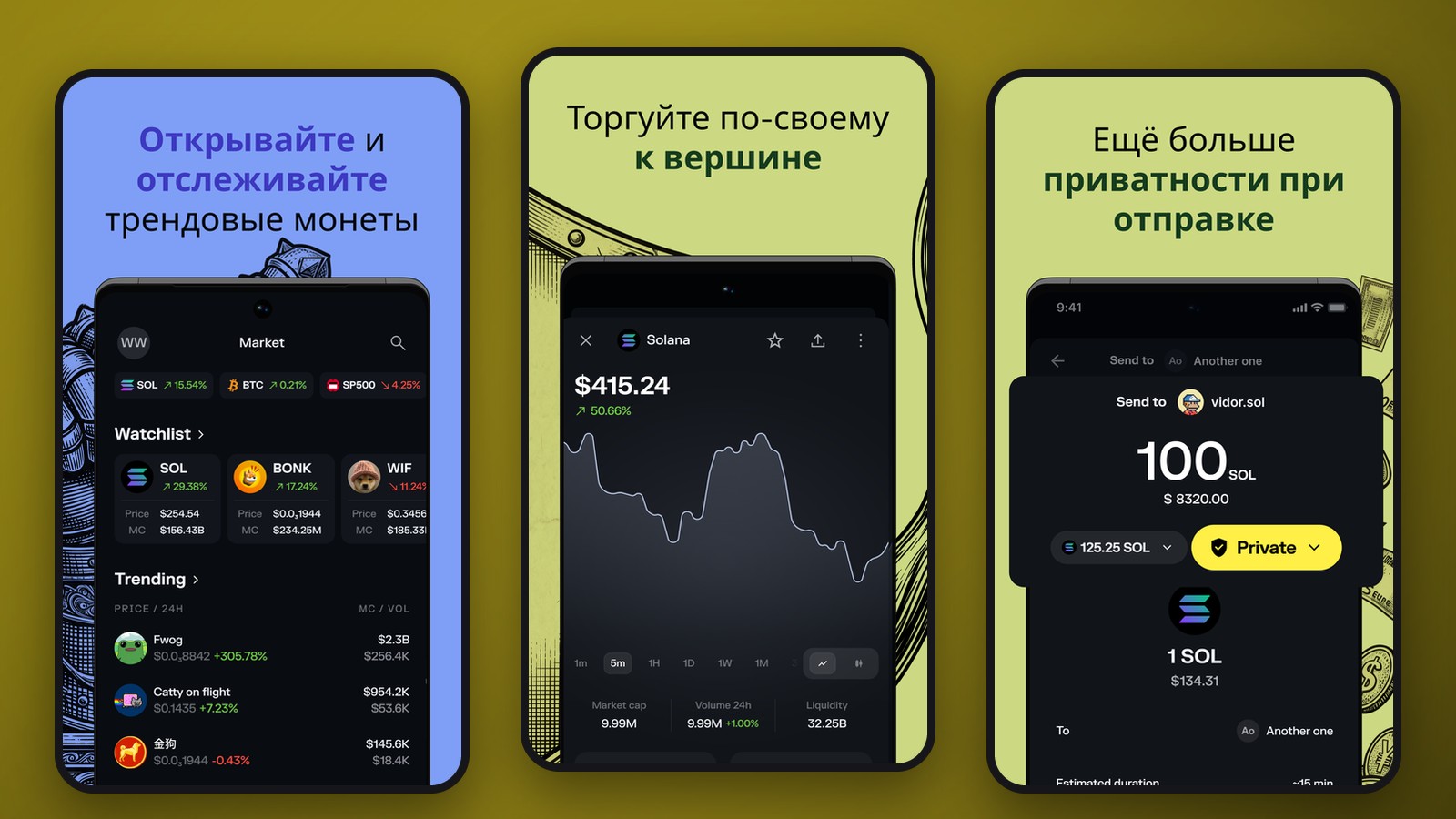
Solflare allows you to receive assets at your wallet address, send them to other users, and connect to services within the Solana ecosystem. The built-in exchange uses liquidity routing via Jupiter, which enables you to compare exchange routes for SPL tokens. The final price depends on the pair’s liquidity, the transaction volume, and slippage.
Solflare features:
- storage of SOL, USDT, USDC, and other Solana network tokens;
- transfers to addresses, NFT transactions, and integration with dApps;
- exchanges via the built-in interface with customizable slippage limits;
- delegating SOL to a validator and tracking staking;
- connecting a Ledger hardware wallet without transferring private keys to the browser.
A small amount of SOL is sufficient for regular operations. On Solana, this coin is used to pay for transaction execution and to open individual token accounts. Even if you have USDT in your balance, a transfer may require SOL. The app offers Gasless Send and Gasless Swap: under certain conditions, network fees are deducted from the token being sent or sold. This is a fallback option, not an elimination of network fees.
Staking SOL via Solflare
For native staking, the user delegates coins to a validator. Earnings depend on network conditions and the performance of the selected validator, and accrual does not begin immediately. Creating a new staking account requires a temporary network deposit of 0.002 SOL. This amount is returned when the account is closed. The current interface requires a minimum of 1 SOL for a new native delegation.
A validator may deduct a fee from the rewards. Delegated coins cannot be immediately sent to a regular address without exiting staking: the process includes a deactivation period tied to Solana epochs. Therefore, staking is not suitable for the portion of your balance needed for urgent payments. The rate of return is not fixed and is not equivalent to a bank’s deposit rate.
Fees and Security
Creating and maintaining a wallet is free. Network fees for transfers are usually small, but their amount depends on the transaction. When exchanging, the route, exchange rate, and slippage are also taken into account. Before confirmation, Solflare displays the expected receipt amount, which helps you estimate the final outcome of the transaction.
Solflare keeps access to cryptocurrency under the owner’s control. When setting up the wallet yourself, you create a recovery phrase, which should be stored separately from the device. For added security, you can connect a Ledger: signing takes place on the hardware device, while Solflare serves as the interface. If a user confirms a malicious authorization or enters their passphrase on a fake website, having an app password does not guarantee the safety of their funds.
What Happened to the Solflare Card
The Solflare Card program suspended operations on July 28, 2026, due to a change in partners. Virtual and physical cards are no longer processing payments; their previous subscriptions have also been suspended. However, the wallet itself, tokens, transfers, exchanges, and staking continue to function. Therefore, Solflare cannot be considered a currently viable method for guaranteed payment of international subscriptions via bank card. The timeline for resuming card issuance and the geographic availability of the new product require separate verification before ordering a card.
For users in Russia
Creating a Solflare account and making blockchain transfers do not require a bank account. Purchasing cryptocurrency with rubles and withdrawing funds to a Russian card are not guaranteed features of a non-custodial wallet. Payment partners may restrict certain countries, banks, and payment methods. If your goal is to receive USDT on the Solana network and then transfer it, all you need are compatible addresses and a balance sufficient to cover transaction fees. If you need to withdraw rubles, you’ll need a separate service with suitable terms.
Frequently Asked Questions
Does Solflare support USDT TRC-20?
No. Solflare is designed for the Solana network. USDT TRC-20 belongs to the TRON blockchain, and it cannot be sent to a Solflare address.
How much SOL is required for staking?
A minimum of 1 SOL is required to open a new native delegation. Creating a staking account also requires a temporary network deposit of 0.002 SOL, which is returned after the account is closed.
Does the Solflare Card work?
The previous card program has been suspended as of July 28, 2026. The crypto wallet itself works, but you should not assume that an active bank card is available.
Can I connect a Ledger?
Yes. Solflare supports the Ledger hardware wallet for storing and signing transactions without transferring private keys to a software wallet.
Editor's Opinion
Solflare should be viewed as a specialized tool for Solana, rather than a universal wallet for all popular cryptocurrencies. Its advantages are most noticeable when frequently trading SPL tokens, making exchanges via Jupiter, and participating in staking. The ability to connect a Ledger helps balance user-friendly interface with key security. The main risk for beginners is confusing USDT on Solana with tokens on Ethereum or TRON: such a mistake is more significant than differences in wallet fees. It’s also important to note that the card program is currently suspended: having a crypto wallet does not mean you can make payments via Visa or Mastercard. For users whose assets are concentrated on Solana, Solflare offers a sufficient set of core features without unnecessary multi-chain complexity.
Ask a question to a company representative