


PST.NET: Virtual Prepaid Card, Rates, and KYC

 Type



PST.NET
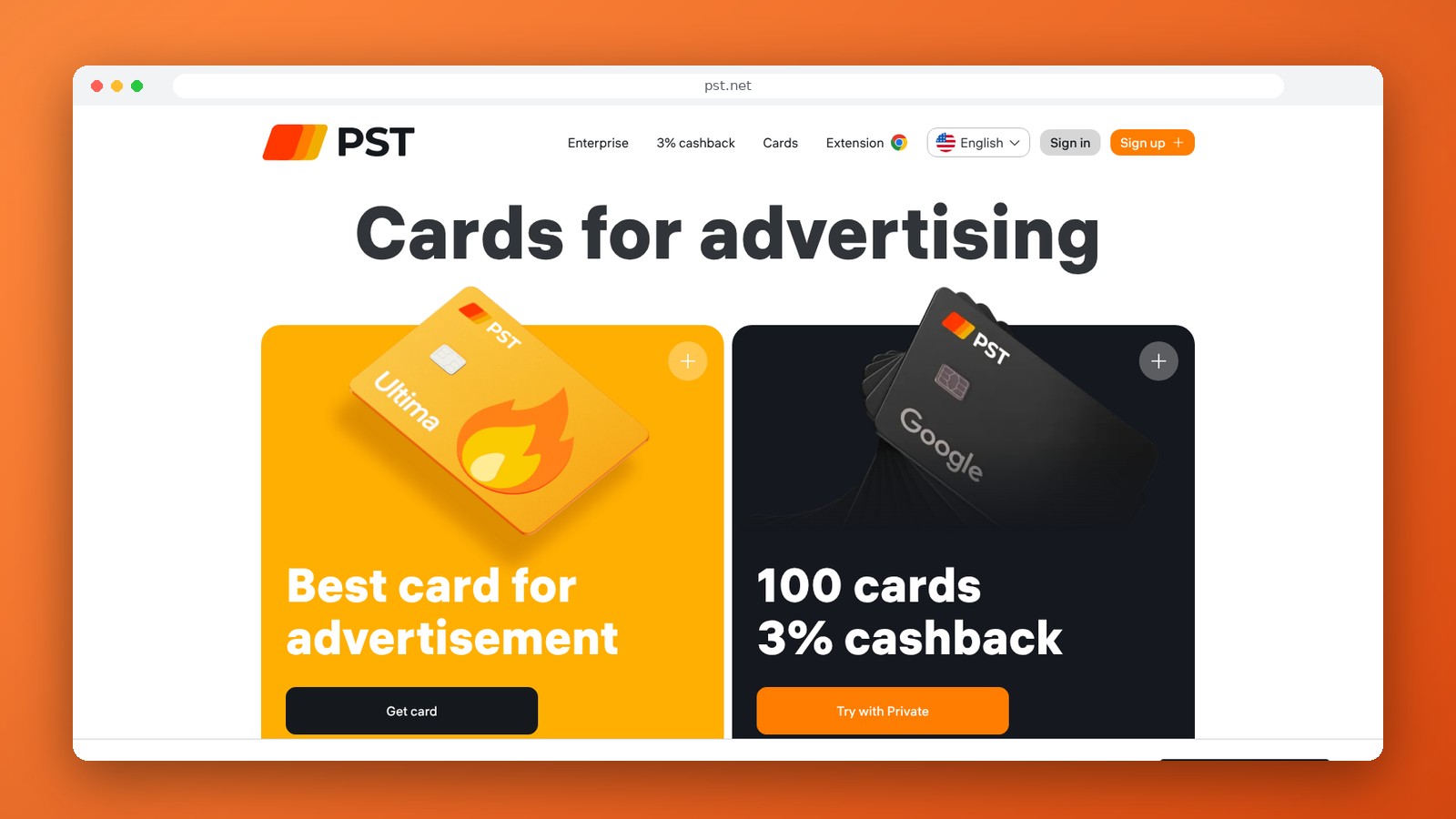
PST.NET is a platform for virtual payment cards designed for online shopping, advertising, and media buying. The product lineup includes a standard Virtual Prepaid Card and specialized products for Google Ads, TikTok Ads, and other advertising platforms.
The basic Virtual Prepaid Card is issued immediately after registration and account funding. The basic Virtual Prepaid Card supports 3D Secure, and the fee for a standard transaction is 0 USD.
Key terms for the Virtual Prepaid Card:
- issuance fee: 7 USD;
- the first month of service is included;
- Starting from the second month—7 USD per month;
- transaction fee for a standard transaction: 0 USD;
- 3D Secure: supported;
- Issuance takes less than a minute after the account is ready;
- The number of cards is not limited by the terms of the base product;
- Transaction management and history are available in the account dashboard;
- Restrictions apply to certain MCC categories.
PST.NET also offers Ultima and specialized advertising cards. For media buying, over 20 private BINs are available, along with dedicated solutions for Google and TikTok, as well as universal advertising dashboards. The fees and costs for these cards differ from those of the basic Virtual Prepaid Card.
PST.NET’s KYC process is handled through Sumsub. For full access, eKYC is conducted via Sumsub:
- a government-issued ID;
- a selfie and liveness verification;
- basic personal information;
- for companies—business documents and UBO verification;
- additional AML verification.
Without passing verification, access to the platform and transaction limits may be restricted. The service also maintains a list of prohibited countries and jurisdictions. If your citizenship, residency, or the country where your company is registered is on this list, you will not be able to complete onboarding. The list is subject to change, so it should be checked before registration.
The platform allows you to issue multiple cards, and actual limits depend on KYC, BIN, and the issuing partner’s rules. In practice, limits may depend on KYC, the specific BIN, the bank’s rules, and the account’s risk profile.
The basic card is accepted in standard categories where the corresponding bank card is supported, but some MCCs are blocked. Among the published restrictions are:
- brokerage services;
- dating services;
- massage parlors;
- gambling.
For advertising products, the list of permitted merchants may be even more restricted and depends on the selected BIN.
Depositing funds into your account and PST.NET’s internal financial model differ from those of a typical bank account. The terms of service specify the use of a proprietary wallet and fee rules, and a card is issued after funds are deposited into the account. Before making a large deposit, be sure to check the current fee for your chosen payment method.
PST.NET is particularly geared toward teams that need a large number of cards. The dashboard provides transaction reports, filters by card and team, and—for corporate products—an API and private BINs.
For a single small subscription, the $7 monthly fee makes the basic card quite expensive. For media buying, the cost may be justified by bulk issuance, specialized BINs, and management tools.
PST.NET is a fintech platform; cards are issued and accounts are serviced by licensed partners. In addition to mandatory identity verification, it’s important to note that certain countries and merchant categories are restricted. The “zero transaction fee” advertised for the basic card does not mean there are no fees for card issuance, ongoing maintenance, or account reloads. For teams using dozens of promotional cards, it’s worth comparing BIN rates, API functionality, fees for declined transactions, and corporate account requirements separately.
Questions and Answers
How much does the PST.NET Virtual Prepaid Card cost?
The issuance fee is 7 USD. After the first month, the monthly service fee is also 7 USD.
Is there a fee for a regular purchase?
The fee for a standard transaction using a Virtual Prepaid Card is 0 USD.
Is KYC required?
Yes. PST.NET conducts eKYC with document and biometric verification through Sumsub.
Is PST.NET suitable for advertising?
Yes. The service offers separate cards for Google Ads, TikTok Ads, and universal advertising BINs.
Editor’s Opinion
PST.NET is most useful for media buying, where having dozens of cards, private BINs, an API, and statistics on advertising payments are essential. For the average user, the basic Virtual Prepaid Card is reasonably priced, but the $7 monthly fee after the first month makes it expensive for a single subscription. Pros: 3D Secure, instant issuance, and no fees for standard transactions. Cons: mandatory KYC, geographic restrictions, and certain prohibited MCCs. Before issuing a PST.NET card, you must check country availability, BIN specifications, and MCC restrictions. The service is better suited for advertising than for occasional personal online purchases.
Ask a question to a company representative





PST.NET
Использую отдельные карты для Facebook и Google. Списания по ним у меня проходят.
CommentНаписал в WhatsApp поддержки про регулярные списания и возможность добавить карту в PayPal. Ответ пришёл меньше чем за минуту, на все вопросы ответили понятно и вежливо. Именно консультацией остался доволен.
CommentЯ только начинал пользоваться платформой, поэтому вопросов было много. Поддержка быстро на них ответила и помогла разобраться. Для новичка такое общение действительно полезно, после консультации планирую пользоваться дальше.
CommentС платежами возникли сложности, поэтому понадобилась помощь поддержки. Там быстро отреагировали и помогли разобраться с проблемой. За внимательное отношение и помощь спасибо.
Comment