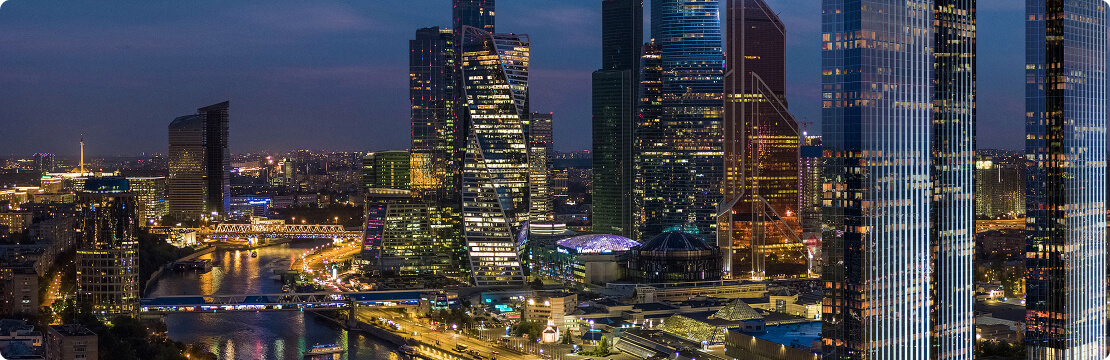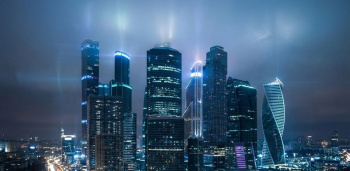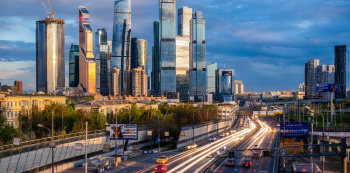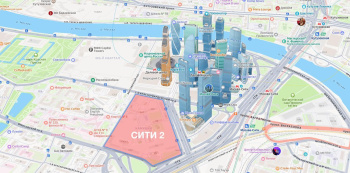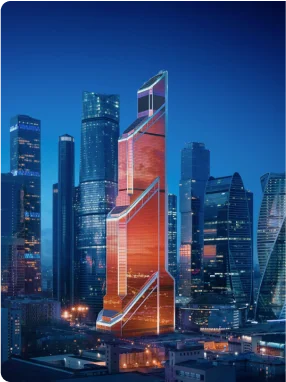



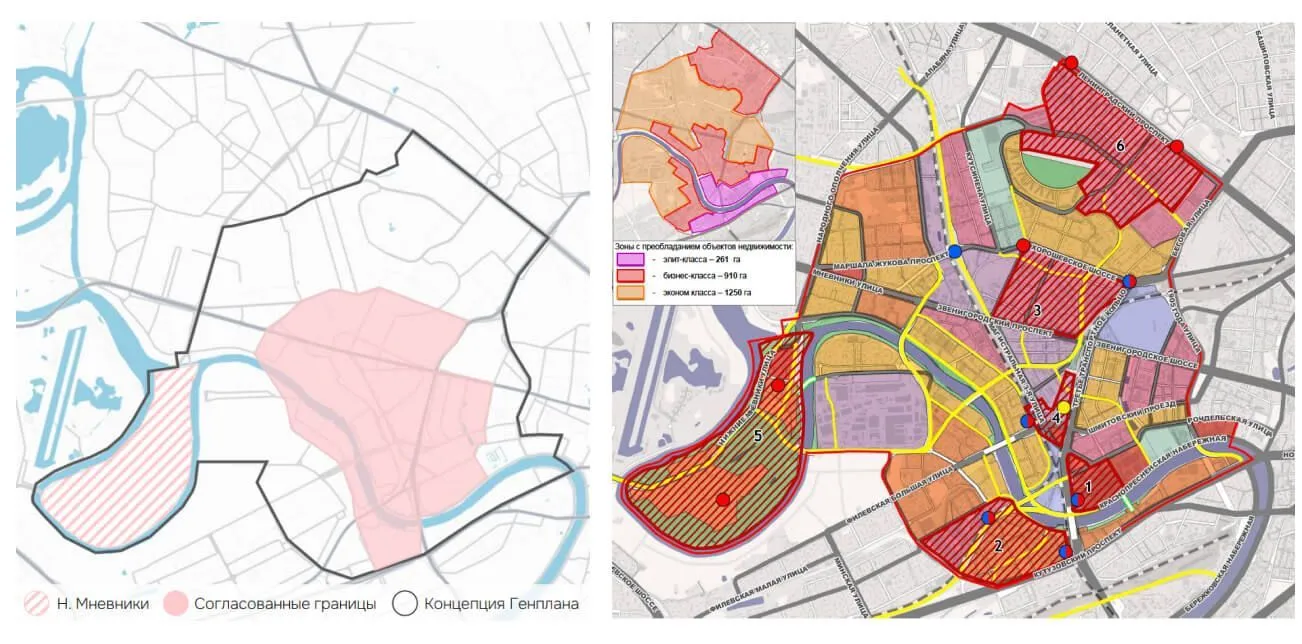
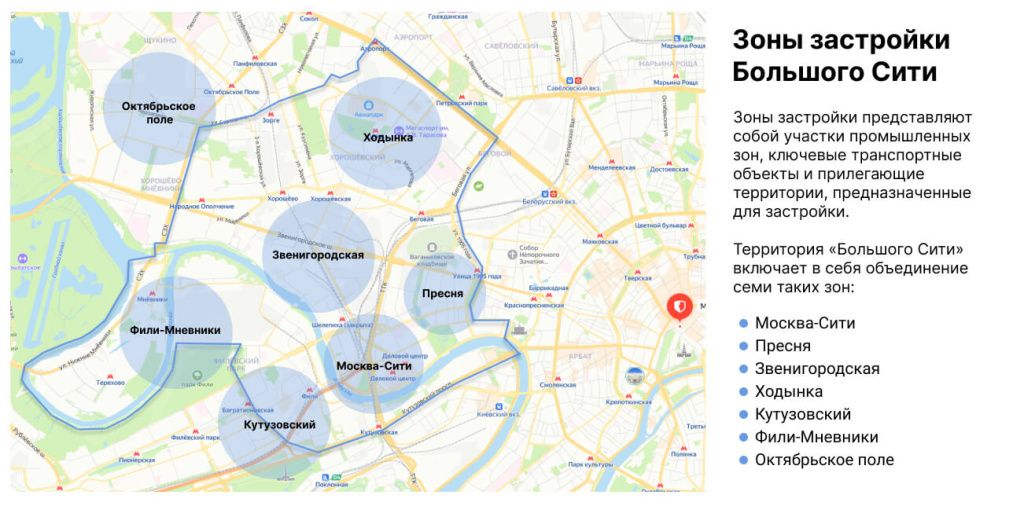
A new business cluster, "Big City," is rapidly developing in western Moscow, encompassing the areas around Moscow City, Krasnopresnenskaya Embankment, and Khodynka Field. This project is supported by Moscow City Hall and includes ambitious plans to increase office space, reorganize the surrounding areas, and improve transportation infrastructure.
At the beginning of 2025, the total office space in the "Big City" district stood at 2.8 million square meters, making it one of the capital's largest business clusters. However, by 2035, this figure will increase 2.5-fold, reaching 6.8 million square meters.
Key indicators and forecasts
According to research by IBC Real Estate, office space growth in the Greater City area significantly exceeds the Moscow average. While the capital as a whole is projected to grow by 43% (to 27.1 million square meters by 2035), within the Greater City area, office space will increase by 142%.
- Moscow City will remain the cluster's core, increasing its office space from the current 1.6 million square meters to 2.1 million square meters by 2035.
- Khodynka Field will more than triple its office space, from 557,000 square meters to 2 million square meters.
- The Shelepikha metro and Zvenigorodskaya station area is expected to see supply grow from 156,000 square meters to 1.6 million square meters, representing a more than tenfold increase.
Successful Project Implementation: Current Achievements
Over the past few years, important facilities have been commissioned within the boundaries of the "Big City", including:
- Lucky project (18 thousand sq. m) near the Ulitsa 1905 Goda metro station.
- Orbital business center (20 thousand sq. m) near the Shelepikha metro station.
- The Moscow Towers business complex (263 thousand sq. m), the largest project of 2024.
In 2024, the total volume of commissioned space amounted to 315 thousand square meters, which is 7.5 times more than the previous year.
Integrated Territorial Development Program (ITDP)
One of the key development tools for the "Big City" is the KRT program, which enables the transformation of inefficiently used areas into modern residential and business zones.
As of early 2025, 645 hectares have been allocated for development under the program, 164 hectares of which are already under construction. An example of the project's successful completion is the Oktyabrskoye Pole technology park (7,000 square meters), the first completed KRT facility in Moscow.
High demand for office space
Moscow-City maintains its leading position among the capital's business clusters. Its vacancy rate is only 1.5%, and the share of new projects contracted during the construction phase exceeds 60%. High demand for office space is driven by high-quality infrastructure and the prestigious location.
Key projects for the next decade
Among the significant projects under construction and planned are:
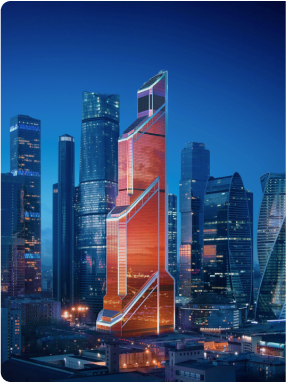
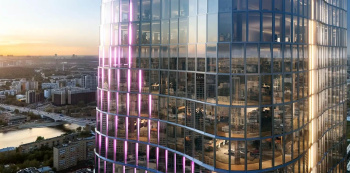
- The Space Tower (91,000 sq. m) in Moscow City, part of the iCITY project from developer MR Group.
- The Sydney City complex (51,000 sq. m) in the Shelepikha metro area, where the headquarters of the developer FSK will be located.
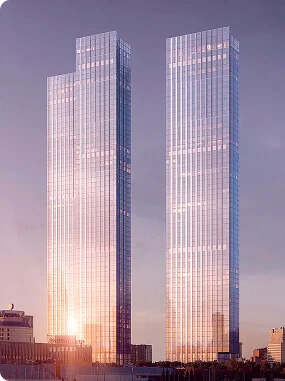
- STONE Khodynka 1, 2, 3 projects with a total area of 150 thousand square meters.
- AIR project (91 thousand sq. m) from Tekta Group.
- Projects Light City (109 thousand sq. m), MYPRIORITY Presnya (61 thousand sq. m), Orbital 2 (44 thousand sq. m).
Challenges and Prospects
Despite these impressive plans, experts warn of potential risks. These include a slowdown in the pace of building completions and occupancy. A case in point is the 2024 situation, when 43% of planned business centers were delayed.
Nevertheless, thanks to the development of transport infrastructure and the support of the Moscow mayor's office, "Big City" will continue to attract developers and tenants, strengthening its position as one of the largest business clusters in Russia.
By 2035, "Big City" will become Moscow's largest business district, uniting modern office buildings, transportation hubs, and social facilities. This project will not only be an example of effective urban planning but also an important step in strengthening the capital's economic potential.
We previously wrote: Big City 2024: Real Estate Market Growth and New Horizons
The article uses materials from the consulting company IBC Real Estate