



According to new Deputy Prime Minister Marat Khusnullin, the long-awaited apartment standardization bill will be prepared as early as 2020. This issue has generated much debate in recent years, as the concept of apartments is quite ambiguous and has varied interpretations. Each Russian city constructs apartments differently, making it impossible to develop a unified formula for them.
The Ministry of Construction first pinned its hopes on the adoption of a law on the status of apartments in 2016. At that time, it was assumed that, legally, they would be no different from residential premises in apartment buildings. This would allow for permanent registration in them. However, apartments are still classified as non-residential premises, where, at best, temporary registration for five years is possible, and even then, only if they are managed by a hotel operator.
Tax rates
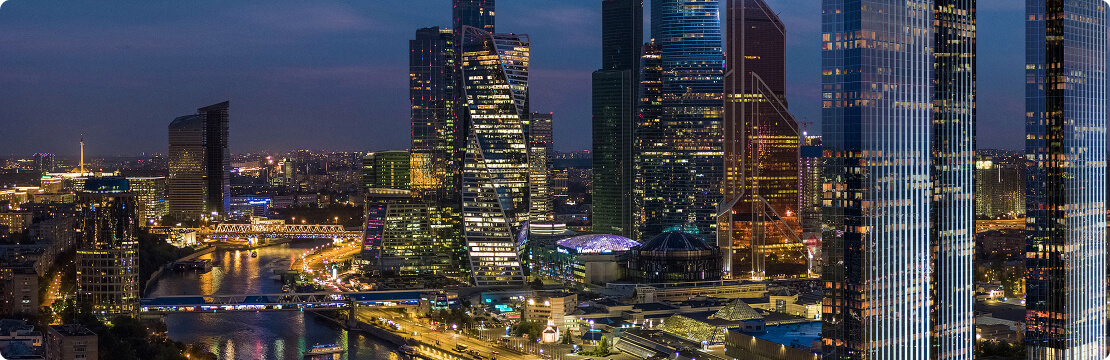
Apartments differ from traditional flats in many other ways. In particular, owners are not given the opportunity to obtain a share in the common property. Furthermore, they are not eligible for tax deductions or other benefits for this type of property . Furthermore, the property tax for apartments can be as high as 2%, while for flats it does not exceed 0.3%. The highest taxes are paid by owners of apartments located in administrative, business, or shopping centers, primarily Moscow City.
As for the land plot on which the building with apartments is erected, it cannot be classified as the common property of the owners and is also subject to a tax of 1.5%.
Other disadvantages of apartments
The amount of utility bills is determined individually for each building by the management company. It is not regulated by Moscow's regulations, leaving management companies ample discretion in calculating their profits.
Another disadvantage of this type of housing is the significantly higher costs for heating, water, and electricity. Compared to apartments, they are 10-15% higher.
The main advantages of the apartments
Indeed, given all the disadvantages of apartments, it's unclear why they are so popular. In fact, they have many advantages. First and foremost, it's the non-residential status of the premises that is the main stumbling block. Not only does this create numerous disadvantages, but it also allows for construction in areas where residential multi-family housing is prohibited.
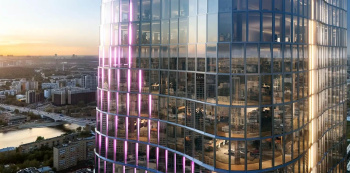
These primarily include former industrial zones, particularly Moscow City. Buying an apartment in such a district is very practical, especially for those who work in one of the business district's towers. After all, work is just a stone's throw away from home, or you can simply take the elevator down. At the same time, there's no need to navigate morning traffic jams, spend money on gas to get to a restaurant or sports club, and so on.