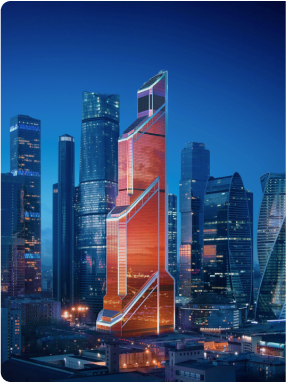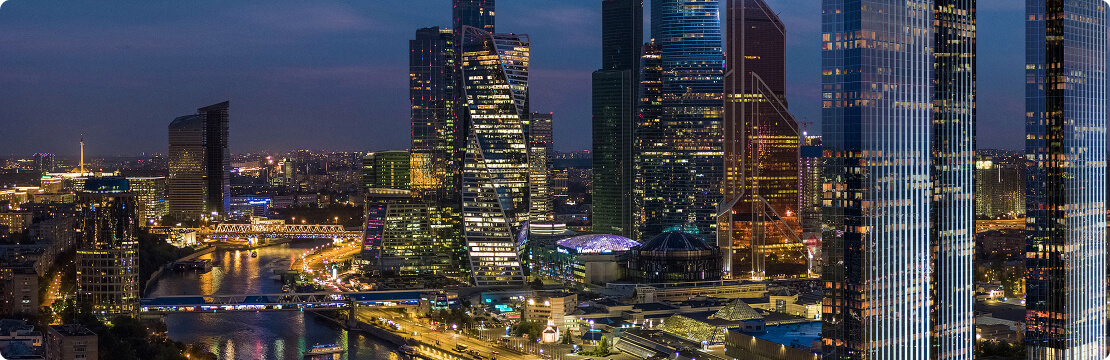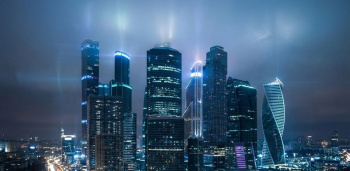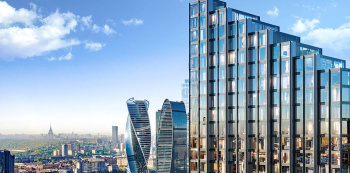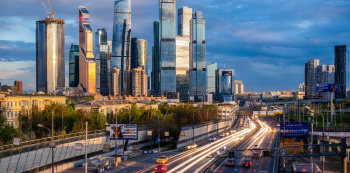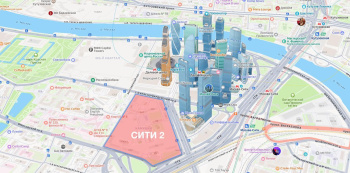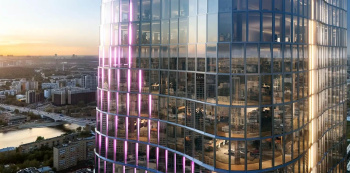



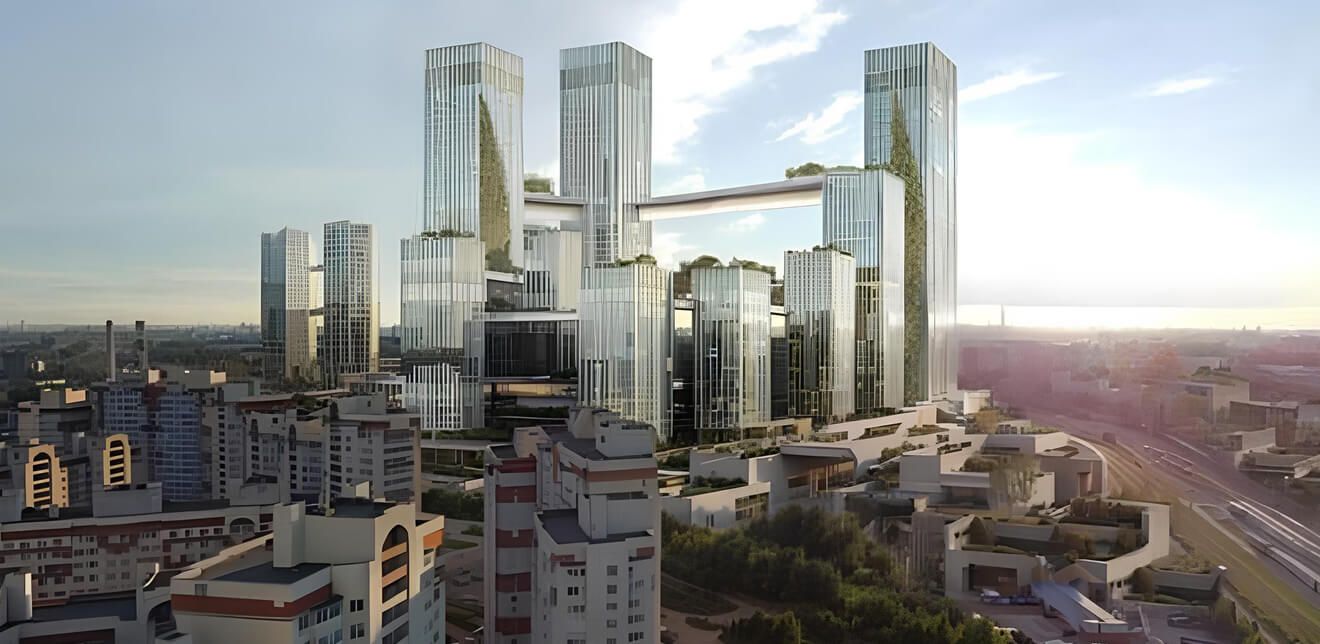
A project is launching in St. Petersburg that could radically transform the urban landscape: the multifunctional public and business center "St. Petersburg City." In scale and concept, it will become a northern equivalent of "Moscow City." At the same time, it will propose a new model of urban development that meets the challenges of the 21st century.
A project with megacity ambitions
According to a presentation by developer KRT Development, the project is scheduled for completion between 2024 and 2030. The total investment will be at least 350 billion rubles, and the total development area will exceed 3 million square meters. Financing will be provided entirely through private capital.
The project is positioned as:
-
A new image of St. Petersburg as a global metropolis of the 21st century;
-
A new center for business, social and cultural life;
-
A new lifestyle – compact, convenient, “no traffic jams” and “one step away from everything”.
Where and why here?
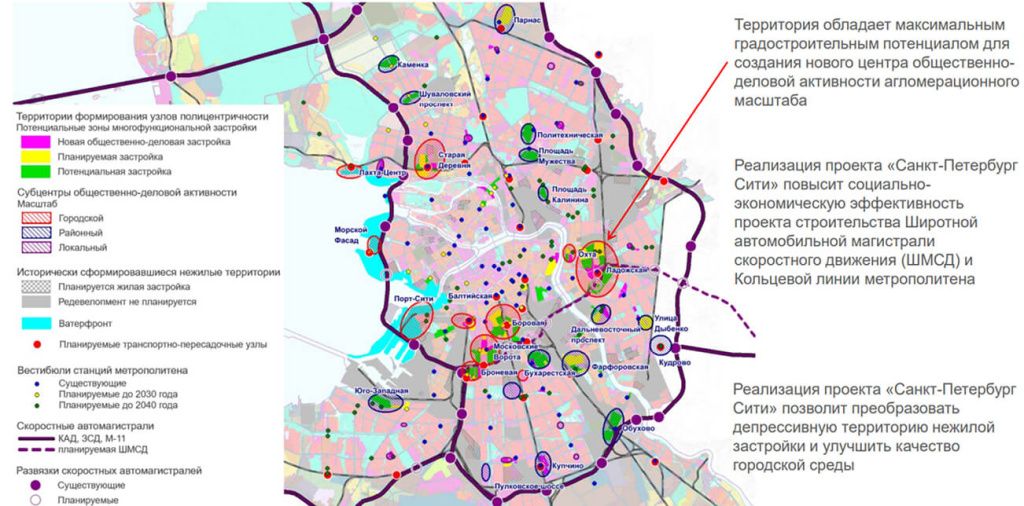
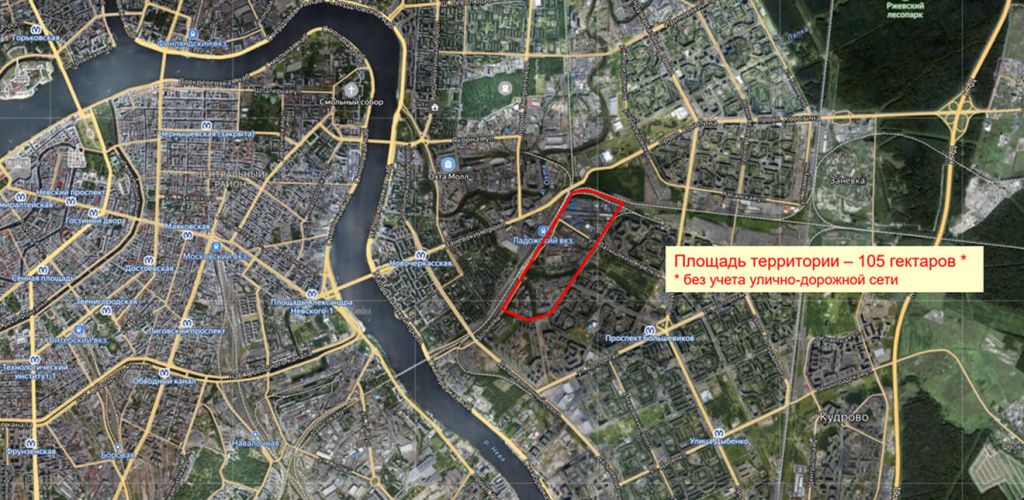
A 105-hectare site has been allocated for development near the Ladozhskaya metro station, Ladozhsky Railway Station, and the Shirotnaya High-Speed Highway (SHMSD). This location offers maximum urban development potential:
-
Proximity to the historical center and the ring road;
-
Direct connection with Pulkovo Airport;
-
Possibility of integration with the Circle Line of the metro (future station "Ladozhskaya-2");
-
The site is located in a depressive development zone: it is home to outdated industrial facilities, a penal colony, semi-legal parking lots, abandoned warehouses, and ecologically unsafe areas.
Petersburg City - the "5-minute city" and "smart" urbanism
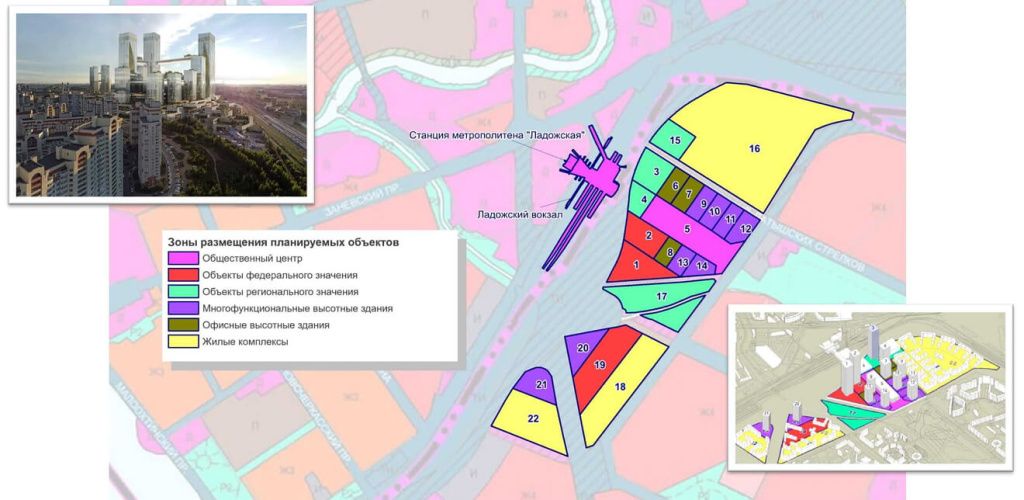
The project is built on the principles of a "five-minute city" and transit-oriented development (TOD), in which housing, work, education, healthcare, and leisure are all within walking distance—often even under the same roof.
Key elements:
-
The headquarters of BRICS and SCO are analogous to the UN quarter in New York;
-
Government complexes: "Nevskaya Ratusha 2.0", representative offices of federal and regional authorities;
-
Offices of the largest corporations: Gazprom, Sber, VTB, Yandex, Rosneft, VK, Russian Railways, Rostec;
-
University urban campus: inter-university apartments, laboratories, research centers, libraries;
-
Scientific and cultural cluster: concert venues, museums, “City of Childhood”, shopping and entertainment centers;
-
Sports and health centers: water park, fitness, SPA;
-
New standard residential development, hotels, co-living spaces and serviced apartments;
-
Central Park, green pedestrian areas, farmers' markets, restaurant streets.
Digital, smart, green
Saint Petersburg City will implement the principles of sustainable and smart urbanism (ESG, UrbanTech, Smart City):
-
Intelligent utility systems;
-
Modern digital services and mobile applications;
-
Mixed logistics: separation of pedestrian, vehicle and cargo flows;
-
Safe, immersive urban environment;
-
High level of ecology and energy efficiency of buildings;
-
Reducing commuting and traffic congestion in the historic centre.
Scale of influence: for the city, the country, and the world
-
100,000 new jobs;
-
50,000 new residents;
-
500+ high-tech enterprises;
-
30+ billion rubles in budget revenues per year;
-
A new tourist and architectural symbol of the city;
-
A real example of partnership between government and business.
What's next?
The project is still undergoing review and approval. Given its scale, implementation will require support from the governor and federal agencies. However, interest in St. Petersburg City from both the government and private investors is already evident.
If the project is launched on schedule, by 2030 the Northern Capital will have a unique business and social center that will be able to compete not only with Moscow City but also with leading districts in world capitals—from Paris to Singapore.
The article uses materials from KRT Development.
Related materials:
Petersburg City: A Redesigned Skyscraper Concept Near Ladozhsky Station