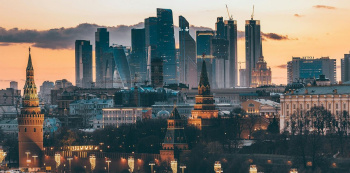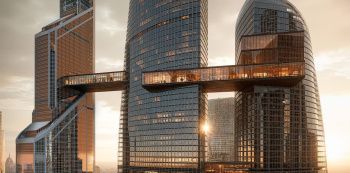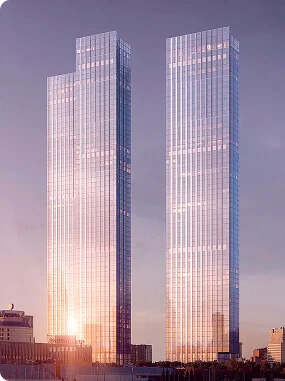




Currently, the apartments in the Moscow International Business Center (MIBC) skyscrapers are legally classified as non-residential premises. Sergei Kolunov, a member of the State Duma Committee on Construction and Housing and Utilities, explained that reclassifying them as residential premises would require the city to ensure the presence of kindergartens, schools, and clinics near the business center. This would create a colossal burden on the authorities and the city budget.
From the owners' perspective, apartments are no different from regular flats. However, if they are granted residential status, they will need to comply with current residential development regulations and provide the necessary social infrastructure.
According to Sergei Kolunov, Moscow authorities will face the greatest challenges in this case, as other regions are almost completely lacking apartments. Meanwhile, Moscow City alone has hundreds of thousands of such square meters. Therefore, the authorities will have to not only find funds for all the necessary social institutions but also find space for them. Given the dense development of the MIBC area, resolving the latter issue poses particular challenges. Similar problems, albeit on a smaller scale, exist in St. Petersburg and the Moscow region, where there are also a significant number of apartments.
The deputy sees the solution to this problem as separating apartment buildings into a specific category. He is confident that all the nuances that have arisen will be taken into account in the draft law "On Multifunctional Buildings," which has been unofficially dubbed the "Apartment Law." The draft has been sent to the regions for revision, but it should be fully completed by 2022. As currently formulated, it introduces the concept of multifunctional buildings, regulates the requirements for them, and defines their status, as well as that of all the spaces located within.
We previously wrote about the apartment reform .