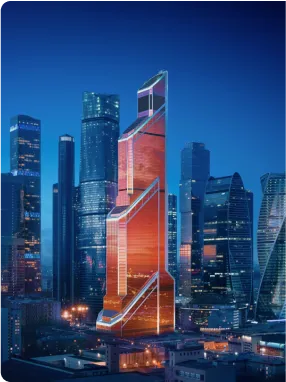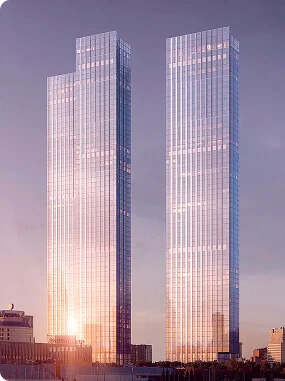



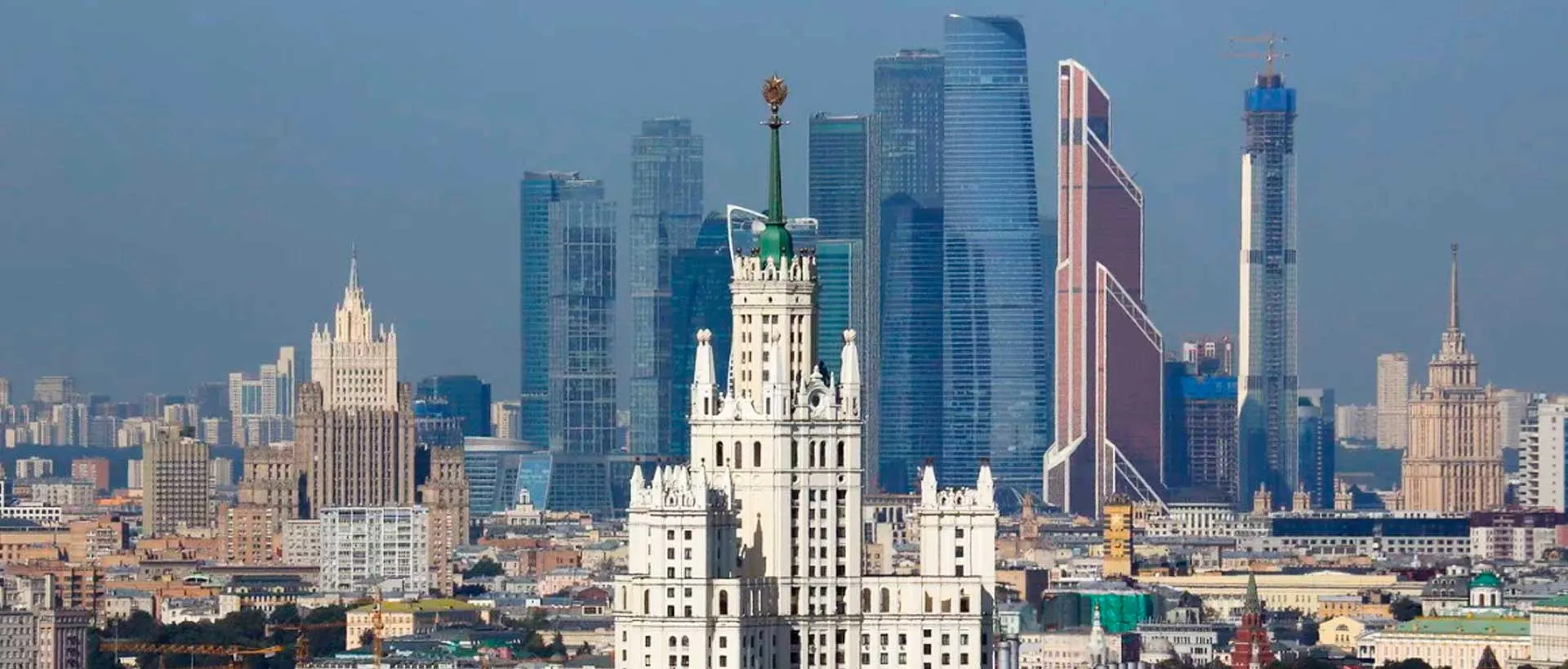
Every year, the number of apartment skyscrapers in Moscow is steadily increasing. This year, the capital's housing stock will be expanded with the opening of the Nebo residential complex, and in 2024, construction of One Tower, tipped to become the tallest residential building in Europe, is expected to be completed. However, increasing supply is impossible without increasing demand for this type of housing. Therefore, today, skyscrapers offer a wide range of housing options, from comfort and business class to premium.
Incidentally, according to recent research, Moscow ranked second among all cities in the world for the number of buildings taller than 35 meters. However, when it comes to the number of true skyscrapers over 150 meters tall, it only ranked in the top 30.
How many sky-high buildings are there in Moscow?
The Moscow City Architecture Committee doesn't strictly monitor the number of skyscrapers in the capital, but unofficial data suggests there are 37, with the majority concentrated in Moscow City. However, recently, there has been a trend toward shifting focus from the city center to the outskirts. While the Central Administrative District accounted for 65% of all skyscraper housing supply in 2019, its market share dropped to 46% by the end of spring 2020. The Western Administrative District is currently experiencing significant skyscraper construction. While it accounted for only 7% of supply in 2019, it has now climbed to second place in the rankings.
The peak of sky-high construction in Moscow occurred between 2000 and 2010. During these years, such towers as the Mirax Park, Krylatskaya Panorama, Korona Severa, and Severnye Vorota residential complexes were erected. However, most of these were built on major highways, which, while making the towers dominant at entry points, didn't always blend harmoniously with the neighborhood's architecture.

Consequently, the construction site was occasionally surrounded by scandals, the most notorious of which involved the erection of a candle on Oruzheyny Lane. Construction of this building began back in 2000, and the architects styled it after a Stalinist high-rise. But at the time, many remained unconvinced by the project's concept and the need for such a radical intervention in the Garden Ring. Further delays, caused by the developer's financial difficulties, added fuel to the fire, as the unfinished frame of the high-rise had long marred the landscape. Construction resumed only in 2010.
Why skyscrapers are becoming increasingly popular among developers and buyers
Since 2013, every new skyscraper project has been discussed by an architectural council. Numerous factors are considered, including solar insolation, architectural direction, and so on. Consequently, projects are often sent back to developers for revision, which, it should be noted, hasn't diminished their interest in the idea. This is partly due to the fact that the number of sites suitable for large-scale projects is steadily decreasing, and the opportunity to make a significant profit using only a small plot of land appeals to everyone.
However, land allocated to developers as part of industrial zone redevelopment projects is increasingly being used for tower construction. This is an attempt to mitigate the aggressiveness of this environment, but such surroundings often come as an unpleasant surprise to buyers of residential square meters in the towers.
Buyers in skyscrapers are attracted by beautiful views, immediate accessibility, and well-developed infrastructure. Therefore, the price per square meter rises progressively with the increase in floor level. This is why the gap between expectations and reality often has such a profound impact on the purchase experience. Most buyers hope for a breathtaking view of the Moscow skyline, but instead are confronted with unappealing views of old warehouses or industrial buildings. This discrepancy is most acutely felt by buyers from Europe and Asia, who make up the majority of skyscraper apartment buyers. After all, in their home cities, there are no such stark differences between old and new housing.

Besides the views, buyers of skyscraper apartments and condos are also attracted by the amenities, particularly the lobbies. Some argue that the popular Moscow City towers are inferior to Bangkok in this regard, while others, on the contrary, see numerous advantages and are entirely satisfied with the layout of the public spaces. Many apartment owners value the ability to reach their workplace in minutes by simply taking the elevator, and after work, descend a few floors for a full workout in the gym.
Residential Complex "Nebo" - an almost completed skyscraper of the JSC
One of the most ambitious projects being implemented in the Western Administrative District is the "Nebo" residential complex. Its creator, Vladimir Plotkin, chief architect of TPO "Reserve," is confident that skyscrapers can be an excellent way to organize space in Moscow, as it combines buildings of varying heights, and in Ramenki, the "Sveta" clearly blends seamlessly into the landscape.

This area of Moscow boasts superb natural surroundings and excellent visibility, giving the building a dominant position. "Nebo" is currently 98% complete and comprises three buildings. All are shaped like perfect parallelepipeds, painted silver. This color scheme lends the residential complex its unique character, and the views from the top floors of nature, the Moscow City towers, and Moscow State University add to its appeal.
Nebo does not offer courtyard parking. For this purpose, an underground parking garage has been created beneath the complex, capable of accommodating approximately 80% of residents. A parking space can be purchased for 2.5 million rubles, while the price per square meter of housing in the complex exceeds 300,000 rubles. However, the high prices have not deterred buyers, and many apartments have already been sold.
The lower floors of the Nebo residential complex house a central heating station. The building is fully equipped with an alarm and smoke removal system, and you can pass the time while waiting for the elevator by eating a caramel from the nearby bowl.
What about the regions?
Skyscrapers are being built not only in Moscow but also in the regions. Specifically, the tallest residential building in St. Petersburg is the "Alexander Nevsky" residential complex, located in Rybatskoye. It is 100 meters tall and has 37 floors. Including the spire, the total height of the "Alexander Nevsky" reaches 126 meters. The "Peter the Great" complex, with 32 floors, is slightly shorter. Overall, St. Petersburg has approximately 30 buildings taller than 100 meters.

Yekaterinburg also boasts a significant number of high-rise buildings, 850 of which exceed 35 meters in height. Of these, 40 have more than 25 stories, four have 32, and two have more than 50. However, of these two buildings, which can rightfully be called skyscrapers, only one—the 52-story Iset—is residential. The other, the Vysotsky, is a hotel.

Kazan has only one building higher than 35 stories. However, 22 other buildings there have 25 stories or slightly more.
The Chance parachute system is a real chance for high-rise residents to escape.
The Thermodinamika holding company, part of Rostec, developed the "Chance" system for rescuing people from high-rise buildings during fires and other emergencies. Russian ministries have already begun purchasing it, with the first parachute systems sold in Moscow.
"Chance" was designed to allow a person to safely parachute from any nine-story building (at least 33 meters) even without special skills or experience. The system features three domes, which maintain a predetermined descent speed, and an automatic body stabilization system. The dome will not collapse even upon impact with the building, thanks to the use of innovative technologies.

Similar technologies are being developed at the Moscow Aviation Center. However, in Moscow, with its relatively high concentration of skyscrapers, the most effective fire rescue method is a helicopter. It can help rescue people from the roof of a building even if the fire is more than 100 meters above the ground. However, not all high-rise buildings have helicopter landing pads. Modern high-rise buildings, however, are equipped with reliable safety systems, including dedicated technical floors equipped with all necessary equipment, automatic fire suppression systems, and safe evacuation stairs.