
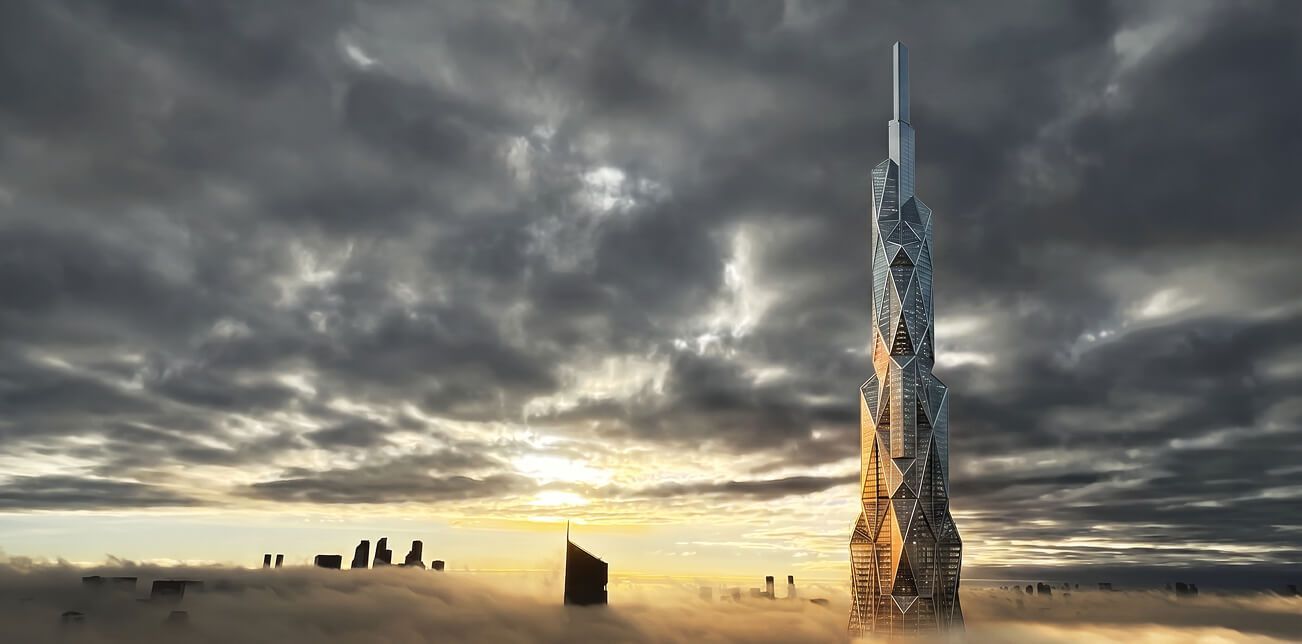
Today, a skyscraper a mile tall—or even nearly two kilometers—no longer seems like science fiction. Building such a tower is extremely difficult, very expensive, and not always sensible from an urban economic perspective, but the engineering feat itself no longer seems impossible. Against this backdrop, Russia looks particularly interesting: while the Middle East discusses future world records, Moscow and St. Petersburg are already shaping one of Europe’s most active high-rise agendas. And Moscow City remains the main symbol of this process—not as a single record-breaking tower, but as a living vertical district around which the Greater City is gradually growing.
Two kilometers up: where the skyscraper ends and the symbol begins
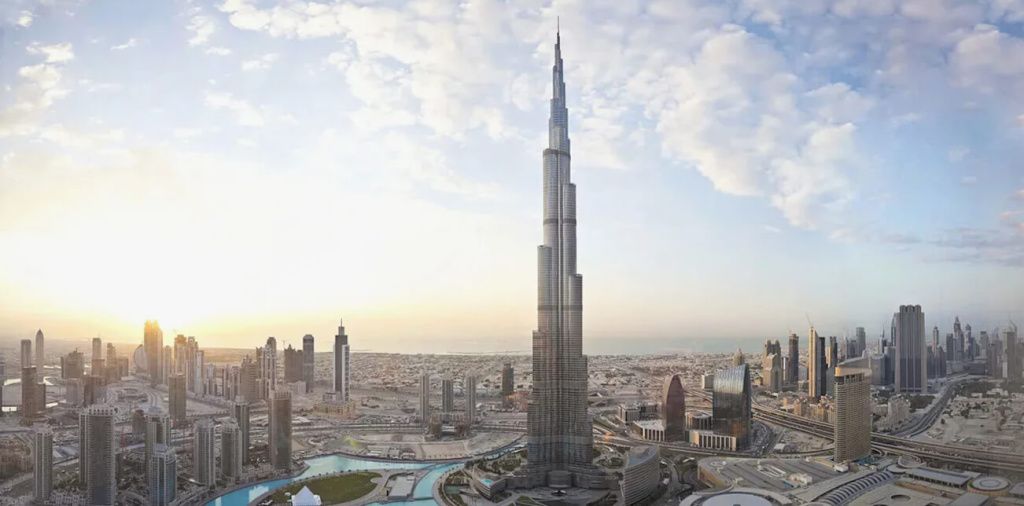
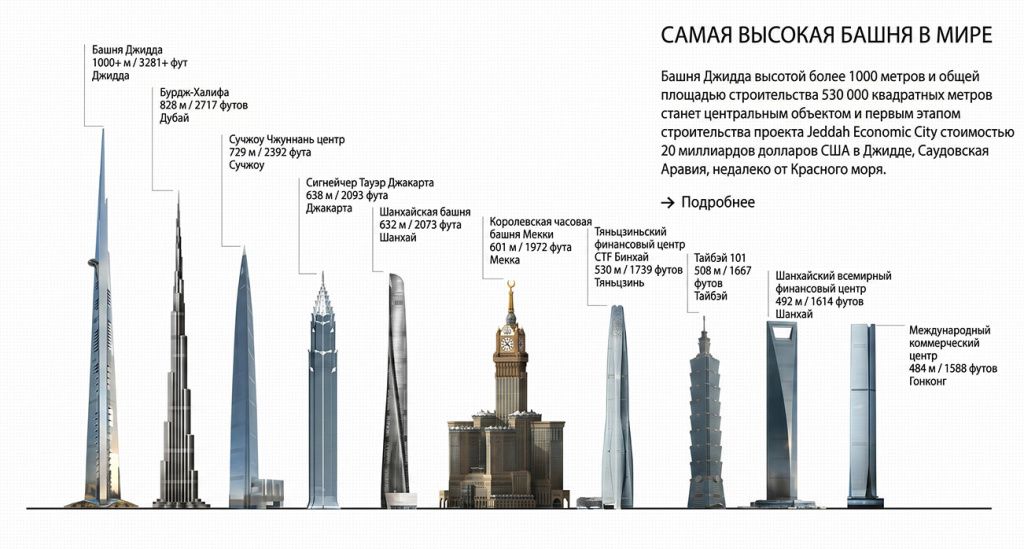
Until recently, it seemed that the Burj Khalifa in Dubai had settled the question of maximum height for the foreseeable future. 828 meters—a figure that is still perceived today as nearly the architectural limit. But in the world of supertall construction, the bar is gradually being raised.
Architects and engineers are already talking about towers a mile high, and sometimes even buildings nearly two kilometers tall. To the average person, this sounds almost absurd: two kilometers up is not just a “very tall building,” but an entire vertical city that extends beyond the familiar boundaries of the urban environment.
But professional discourse works differently. Experts don’t ask “can this even be built?” but rather “how much will it cost, how will it function, and why does the city need such a structure?” And that is the essence of the modern high-rise race.
Technically, humanity already knows how to engineer such structures. We can design complex aerodynamic shapes, reinforce the structural core, install multi-level elevator systems, simulate wind loads, and create special technical floors and facades designed for extreme conditions.
But the taller the tower, the more architecture becomes a blend of mathematics, economics, and politics all at once.
The main issue with supertall buildings is not engineering, but meaning
Skyscrapers follow a simple yet strict logic: every meter added beyond a certain height becomes increasingly expensive. Up to a certain point, a building can grow quite rationally: more floors, more space, higher status. But then comes a point where height ceases to be mere commercial real estate and becomes a statement.
A tower nearly two kilometers tall is no longer just offices, apartments, or a hotel. It is a national symbol, an architectural manifesto, a technological showcase, and only then a real estate asset.
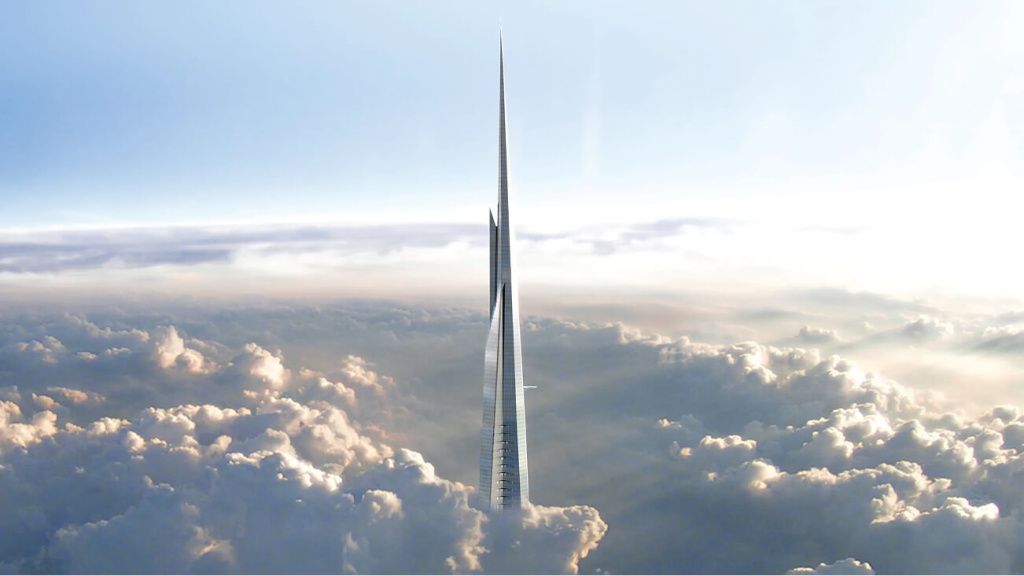
That was the case with Dubai. That is what Saudi Arabia is now trying to do. That is precisely why the Jeddah Tower, which is set to exceed 1,000 meters, is perceived not simply as just another skyscraper, but as a transition into a new category of high-rise construction.
Even more ambitious are the discussions about a potential Saudi tower standing nearly two kilometers tall. There is no definitive clarity on such projects yet, but the very fact that they are being discussed shows that global architecture is once again entering a period of grand vertical ambitions.
Russia in this race: not a world record, but European leadership
At first glance, it may seem that Russia is standing on the sidelines of this race. We have no tower under construction that is a kilometer tall, no approved project for a two-thousand-meter tower, and no desire right now to compete with Dubai or Saudi Arabia for the absolute world record.
But that’s only if you look at a single peak. If you take a broader view—at the number of high-rise projects, the density of construction, and the role of skyscrapers in urban development—the picture becomes quite different.
Russia today appears to be one of Europe’s leading high-rise markets. And this is no longer just a subjective impression. A viral ranking of Europe’s skyscrapers under construction, which went viral on social media, revealed a very telling picture: the majority of the tallest buildings under construction on the list are located in Russia.
According to the ranking, Russian projects occupy 39 out of 50 positions. That’s about 78% of the list. The top of the ranking looks even more dominant: the first six spots are Russian, and nine of the top ten projects are linked to Russia.
Yes, such lists should be taken with a grain of salt. They may mix different statuses: in some cases, a building is already under construction; in others, a project has been announced; in some, the height may still change; and in others, the timeline remains an open question. But even with this caveat, the overall conclusion is clear: Russia is no longer catching up to Europe in high-rise construction. By many measures, it is setting the trend.
Moscow and St. Petersburg: Two Different Scenarios for High-Rise Russia
There are two main forces in Russian high-rise architecture today—St. Petersburg and Moscow. And they play different roles.
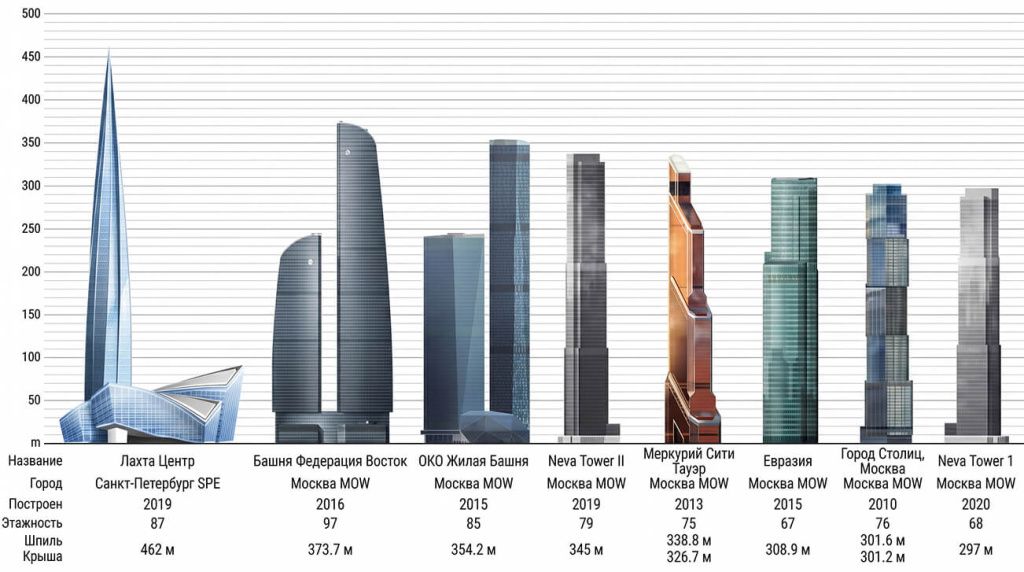
St. Petersburg holds the absolute record. The 462-meter-tall Lakhta Center has already become the tallest building in Russia and Europe. And the Lakhta Center 2 project, if realized at the announced height of 703 meters, could take St. Petersburg to a whole new level. It would no longer be just a European skyscraper landmark, but a world-class landmark.
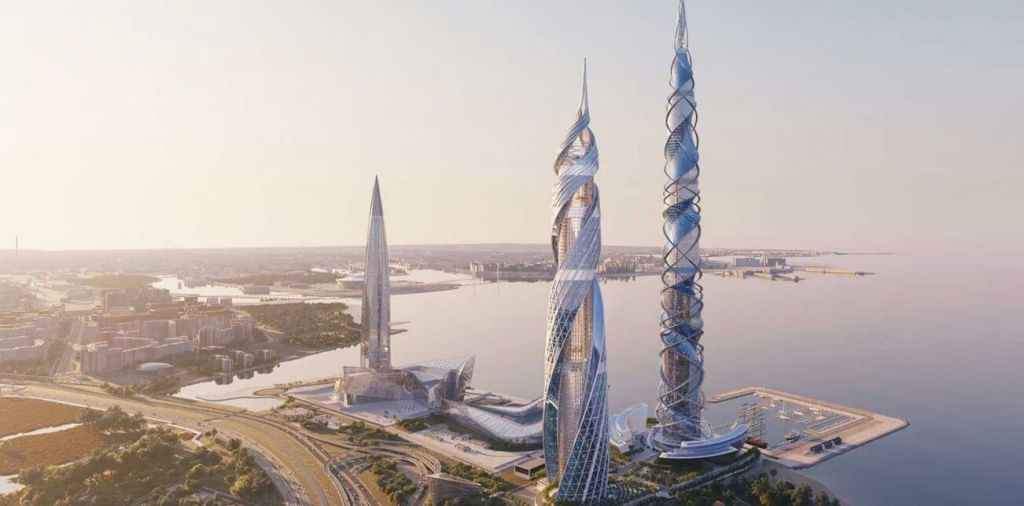
Moscow takes a different approach. It relies not on a single record-breaking tower, but on density, quantity, and urban scale. It is here that the country’s main high-rise district—Moscow City—has taken shape.
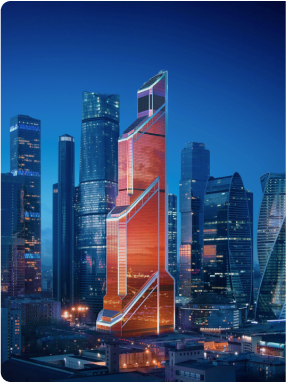
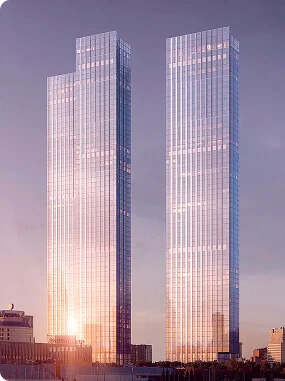
The Federation Tower, OKO, Neva Towers, Mercury City Tower, City of Capitals, Eurasia, and the IQ Quarter—all these buildings have long functioned not as individual skyscrapers, but as a unified image of Moscow’s new business district. Their skyline has become as recognizable as Stalinist skyscrapers were for 20th-century Moscow.
And that is an important distinction. St. Petersburg may hold the height record. Moscow is creating a high-rise system.
Moscow City: Not a Record-Breaking Tower, but a Vertical District
The main value of Moscow City does not lie in the fact that it is home to the country’s tallest building. That is no longer the case: the absolute record has long since gone to Lakhta. But Moscow City is important for another reason. It is the first district in Russia where skyscrapers have become not the exception, but the norm of the urban environment.
Here, height functions not as a solitary gesture, but as part of a larger mechanism. Offices, apartments, restaurants, retail spaces, observation decks, transportation links, business services, and tourist attractions are all gathered in one place. This is precisely why Moscow City is perceived not simply as a collection of towers, but as a self-contained urban organism.
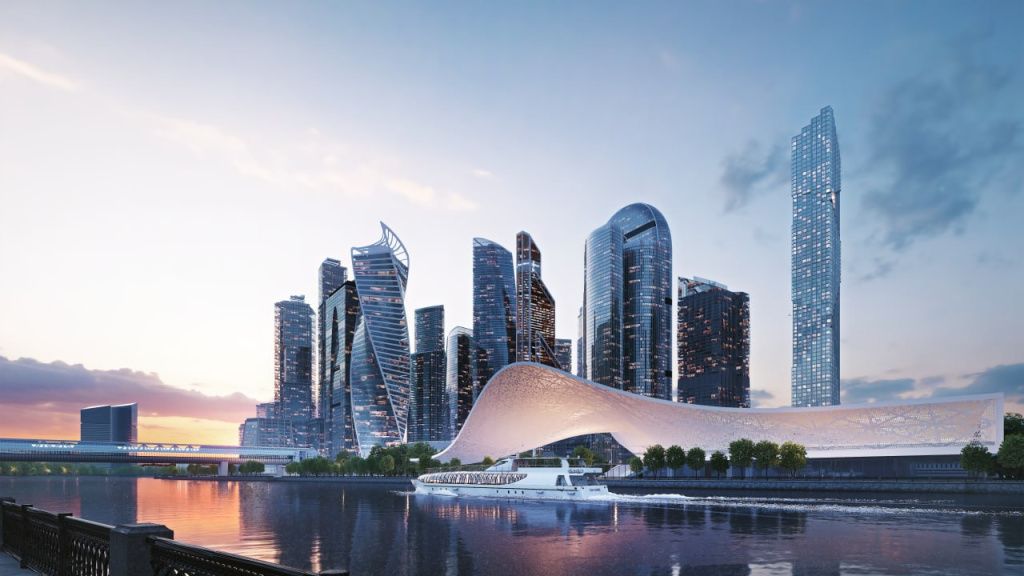
This is most evident now, as a broader outline of Greater City is gradually taking shape around the original Moscow International Business Center. Presnya, Shelepikha, Kutuzovsky Prospekt, City-2, and neighboring areas are beginning to function as an extension of a single grand vision: Moscow is growing not only outward but also upward.
And this is an entirely different level of discussion. Not “which tower is taller,” but “what urban district is forming around the skyscrapers.”
What Europe’s skyscraper rankings reveal
The viral World of Statistics list became interesting not just for its numbers. It showed just how different perceptions of high-rise construction can be within Russia and beyond its borders.
For a Russian audience, the active construction of skyscrapers in Moscow no longer seems surprising. Moscow City has long been part of the cityscape. New projects reaching 200–300 meters are seen as notable, but not unbelievable.
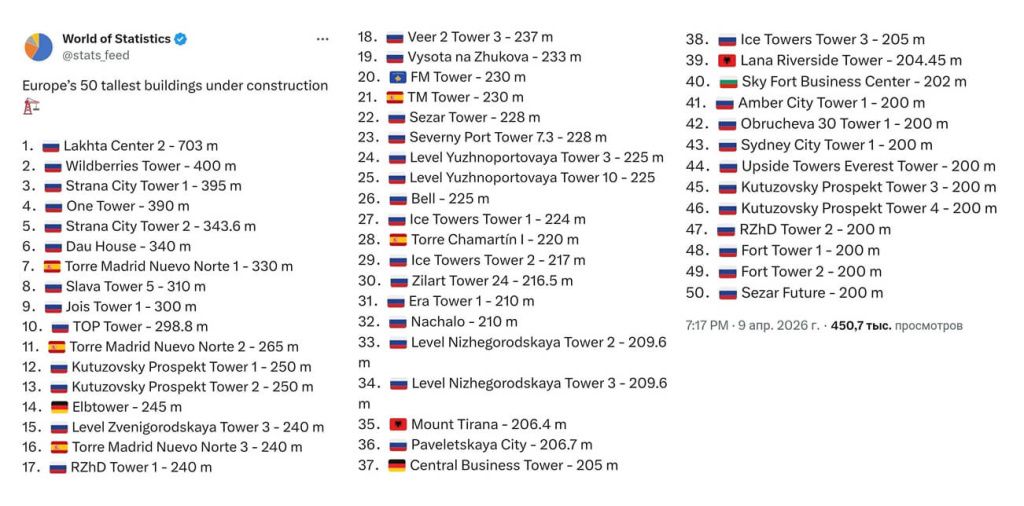
For many European users, the picture came as a surprise. In the common perception, Europe is London, Frankfurt, Paris, Madrid, and Warsaw. But when it comes to high-rise construction, the balance has shifted toward Russia.
Several trends stand out immediately on the list:
-
St. Petersburg maintains its high-rise profile thanks to Lakhta and the potential Lakhta Center 2 project.
-
Moscow accounts for the bulk of high-rise projects—from Wildberries Tower and One Tower to Strana City, Dau House, Slava, Level, Ice Towers, and other complexes.
-
Russia’s high-rise landscape is gradually expanding beyond the two capitals: skyscrapers are emerging or being announced in Yekaterinburg, Novosibirsk, Grozny, Kemerovo, and other cities.
-
High-rise construction is increasingly becoming not only office-based but also residential and multifunctional, linked to a new model of urban density.
This does not mean that every project on such lists will necessarily be built exactly as proposed. But as a trend indicator, the list is highly revealing. Russia is already perceived in Europe not as a country with a few skyscrapers, but as a market where high-rise construction has become a widespread phenomenon.
Why Moscow Hasn’t Built a 700-Meter Tower Yet
Against this backdrop, a logical question arises: if Moscow is building upward so actively, why is there still no tower here taller than Lakhta Center? Why hasn’t the capital announced a project for a 600-, 700-, or 800-meter tower?
The answer most likely lies not in engineering constraints. Moscow knows how to build complex high-rise structures. The question is different: does the city need such a tower right now?
A supertall building requires a special economic framework. It places an enormous burden on transportation, utility networks, the development model, safety, operations, and urban planning. A single record-breaking structure can have a powerful image-boosting effect, but it is not always better for the city than several large projects integrated into the overall fabric of the neighborhood.
Moscow seems to have chosen a more pragmatic approach. Instead of a single record-breaking tower, the city is developing an entire high-rise district. This makes for less sensational headlines on the global stage, but it is far more sustainable for real urban life.
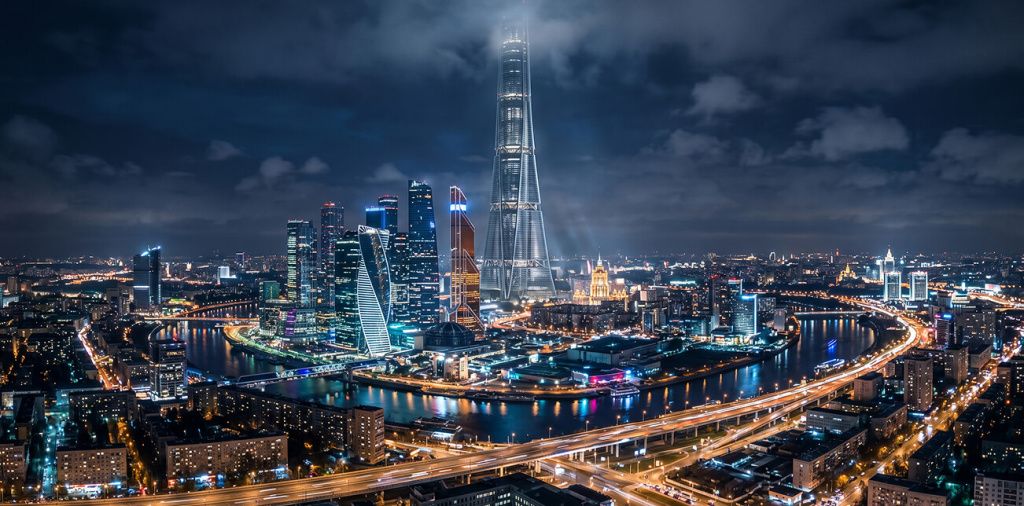
In this logic, Moscow City becomes not the final destination, but the starting point. It has already proven that a high-rise business district in Moscow is possible. Now the task is broader—to connect it with neighboring areas, transportation, housing, public spaces, and new centers of attraction.
From Stalinist skyscrapers to the glass verticals of the 21st century
For Moscow, high-rise architecture is nothing new. The city has long been accustomed to expressing itself through large vertical structures. In their time, Stalinist skyscrapers were not merely buildings, but architectural statements. They defined the scale of the capital, shaped its skyline, and reflected the ambitions of the era.
Moscow City continued this tradition, but in the language of the 21st century. Instead of monumental stone—glass, metal, complex facades, engineering systems, and multifunctional spaces. Instead of Soviet symbolism—a business center, an international image, offices, apartments, investments, and new urban density.
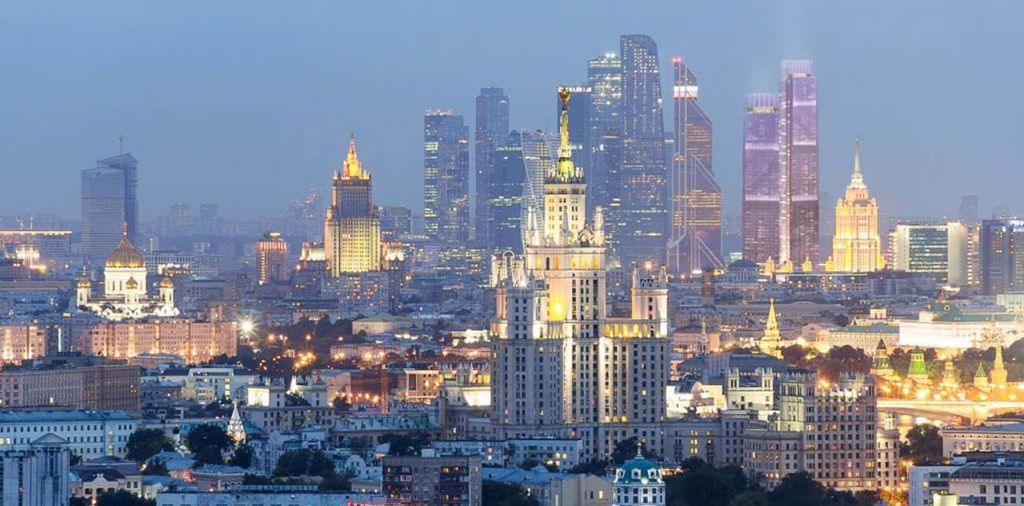
But the connection to Moscow’s tradition is still palpable. Moscow still loves bold silhouettes. It’s just that now they’ve become lighter visually, more complex technically, and far more diverse in function.
In this sense, Moscow City is not a random insertion into the urban fabric. It is a new chapter in Moscow’s old habit of thinking big.
The tallest tower or the liveliest neighborhood?
The global race for height will continue. A kilometer-tall skyscraper will almost certainly become a reality. A two-kilometer-tall tower remains, for now, a project on the edge of what is possible, but it no longer seems like pure fantasy.
However, in the future, the question “How high?” will be less and less sufficient. Another question will become far more important: “Why does the city need this height?”
You can build a record-breaking tower that will make all the magazine covers and become a symbol of ambition. But if a full-fledged urban life doesn’t develop around it, it will remain, above all, a monument to a record.
Moscow City presents a different scenario. It is not the tallest in the world, nor is it even Russia’s absolute record-holder. But it has become a district that functions every day: for business, residents, tourists, restaurants, services, transportation, and the entire urban economy.
That is precisely why its significance cannot be measured solely in meters. Moscow City is important as an example of how height becomes not merely a decoration of the city, but a part of its fabric.
Russia and Europe’s New Skyscraper Map
While the Middle East is currently competing for the highest point, Russia is winning in another area—the scale of high-rise construction on the European continent. St. Petersburg sets the upper limit. Moscow creates a dense vertical environment. Other cities are gradually joining this wave.
Viral rankings have merely highlighted what has already been happening in recent years: Russia has become one of the main centers of European skyscraper construction. For some, this is a surprise. For Moscow, it is a natural continuation of its development.
Moscow City plays a central role in this story. It became the first major proof that a modern, world-class high-rise business district could emerge in Russia. And the development of the Greater City shows that this is not a finished experiment, but the beginning of a larger urban process.
The world may be discussing towers a mile and two kilometers high. But Moscow is already tackling an equally important challenge: how to make high-rise architecture part of a vibrant metropolis.
And perhaps this is precisely what will prove to be the more long-term strategy. Because the skyscraper of the future is not just about height. It is about meaning, context, and the ability to serve the city. Moscow City already embodies this meaning.
Related articles:
How many skyscrapers are there in Moscow—and is that a lot?
The skyscraper trend: one in three residential complexes under construction in the capital exceeds 30 stories
Moscow’s Skyscrapers: How the Capital Is Growing Upward and Changing Its Look
Monuments to the Sky: The Technical Foundations of the World’s Skyscrapers
Skyscrapers: An Inevitable Future or a Temporary Fad