In mid-February 2020, the World Urban Forum, sponsored by the UN, was held in Abu Dhabi, where Moscow presented its key urban development programs. This major international event, held since 2002, evaluates not only the originality of urban development projects but also their impact on residents, the economy, politics, climate change, and other areas. Moscow participated in the World Urban Forum for the first time, but its stand and program proved to be one of the most interesting and memorable events.
The project itself has existed since 2001. It was founded by the UN to discuss the most pressing issues facing modern cities. The World Urban Forum addresses issues of development, urbanization, and addressing the negative impacts of climate change. It was first held in Nairobi.
WUF participants included 160 countries. They showcased their projects and best urban development ideas at the UAE capital's exhibition center, which covers over 18,000 square meters. The event brought together over 15,000 delegates, including ministers and mayors from 50 different cities, academics from leading universities, renowned architects, businesspeople, artists, writers, community activists, and, of course, UN-Habitat experts. The 2020 forum was themed "Cities of Opportunity: Connecting Culture and Innovation."
The Russian capital presented its most important urban development programs, which, according to Sergei Levkin (Head of the Department of Urban Development Policy), are sure to surprise WUF participants. He noted that Moscow is currently developing very actively. New programs are being introduced to improve the quality of life for city residents, including housing renovation, the creation of a new urban environment, and the improvement of transportation infrastructure.
Sergey Levkin noted that the Moscow government's stand, styled after Zaryadye Park, attracted the largest number of visitors and was the largest at the entire WUF exhibition. It featured:
-
business program area;
-
the "Moscow Map" multimedia complex, which showed viewers the most iconic locations on the map of the Russian capital;
-
lounge area;
-
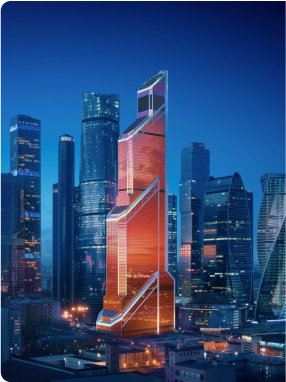
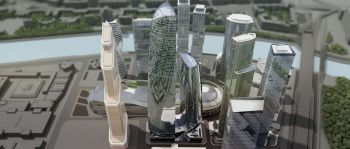
a model of the Big City, reflecting the development of an actively developed area and the project of the One Tower residential tower;
-
Mosinzhproekt zone, which provides complete information on the nature of the Moscow metro development;
-
an interactive "scanner" that demonstrated key Moscow landmarks.
Guests had the opportunity to participate directly in the business program and examine Moscow's most ambitious projects for housing renovation, park development, sports clusters, public spaces, industrial zone reorganization, and transportation development.
One of the city's key programs is the development of the Moscow Metro by Mosinzhproekt Holding, which was also included in the exhibition stand. This was presented to guests in the form of an interactive presentation demonstrating the construction of the world's longest underground ring. It is 70 kilometers long, and the project is called the "Big Circle Line of the Moscow Metro." Abu Dhabi's Minister of Transport, Falah Mohammed Al Ababi, was among those attending the presentation, while UN Deputy Secretary-General Maimunah Mohd Sharif personally attempted to operate a tunnel boring machine in interactive mode. The company also presented its other projects, both new and already completed, to WUF guests.
Maimuna Mohd Sharif stated that cities are a kind of incubator for comprehensive progress. They preserve both cultural heritage and identity. Therefore, in her opinion, it is crucial to preserve them and pass them on to future generations. However, innovation in megacities is not just a trend; it makes a significant contribution to the lifestyle of everyone on the planet. Modern countries strive to improve their own territories and bring them up to high international standards. Therefore, Moscow's accumulated experience over many years will certainly be useful for many other megacities.
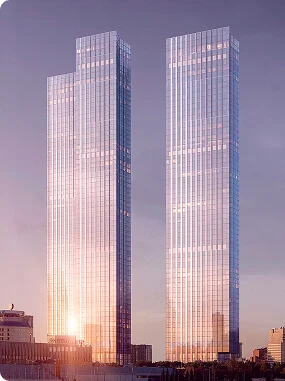
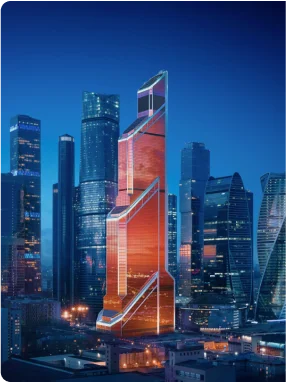
The Moscow City development model, where the promising One Tower residential skyscraper is currently under construction, also generated considerable interest among WUF participants. The tower will reach 428 meters, making it the tallest residential building in Europe. Mosinzhproekt is also constructing it, promising to complete all construction work within five years.
One Tower will be 106 stories tall and promises to be a true city within the city. Its lower floors will house numerous shops, cafes, restaurants, and a children's center. A fitness center and offices will be located a bit higher, while the main portion of the building will be dedicated to apartments. The highest point of One Tower will be an observation deck with a restaurant.
Thus, Moscow participated in virtually all of the forum's events. It's therefore no surprise that it generated such strong interest among WUF participants. Sergey Cheremin, head of the Moscow Department of Foreign Economic and International Relations, believes that many global megacities have much to learn from the Russian capital. Therefore, following the events, all WUF participants were invited to the Moscow Urban Forum.
It will be held from July 2 to 5, 2020, in Zaryadye Park, which has become a symbol of Moscow since the Abu Dhabi forum. Its theme will be "Superstar Cities: Lessons in Successful Transformation." Denis Boykov, Director of the Moscow Urban Forum, stated that Moscow is now a valuable source of advanced urban planning practices for cities around the world. Previously, Moscow was seeking new development paths, which was the impetus for the forum. But while about 10 years ago Moscow was merely collecting global practices and studying ways to implement them, today it is already able to independently share them with other megacities.
By superstar cities, Denis Boykov means not only vibrant, established metropolises like New York, but also emerging cities that have rapidly transformed themselves for the better. He cites Vancouver, Abu Dhabi, and Copenhagen among them. Abu Dhabi, renowned for its successful practices and shining examples that serve as inspiration for other megacities, deserves special attention from the MUF director.
Moscow authorities plan to organize a roadshow this spring specifically for heads of diplomatic missions from other countries and leaders of major foreign companies. According to Sergey Cheremin, they will certainly be interested in assessing the development of the TiNAO infrastructure and the prospects for high-tech clusters. It's much more convenient to build roads and develop the transportation network here, while Moscow's historical character, so treasured by city residents, remains intact.
Sergei Cheremin indicated that Moscow authorities plan to offer companies opening manufacturing facilities in the city not only favorable terms for working in technology parks and technopolises, but also long-term contracts for the supply of various products and services.
Of course, the sanctions regime has impacted the development of the Russian capital, but the accumulated foreign investment in the city by 2019 was sufficient to implement the most significant projects. Incidentally, their total volume amounted to approximately $250 billion.