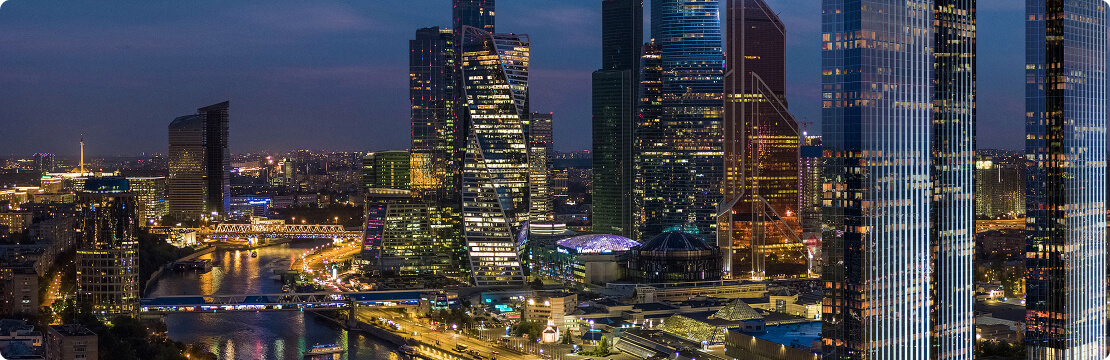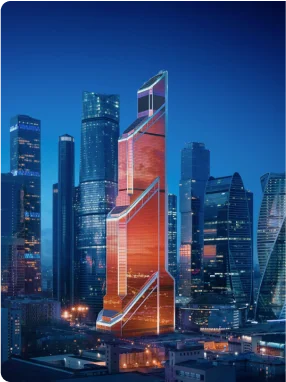



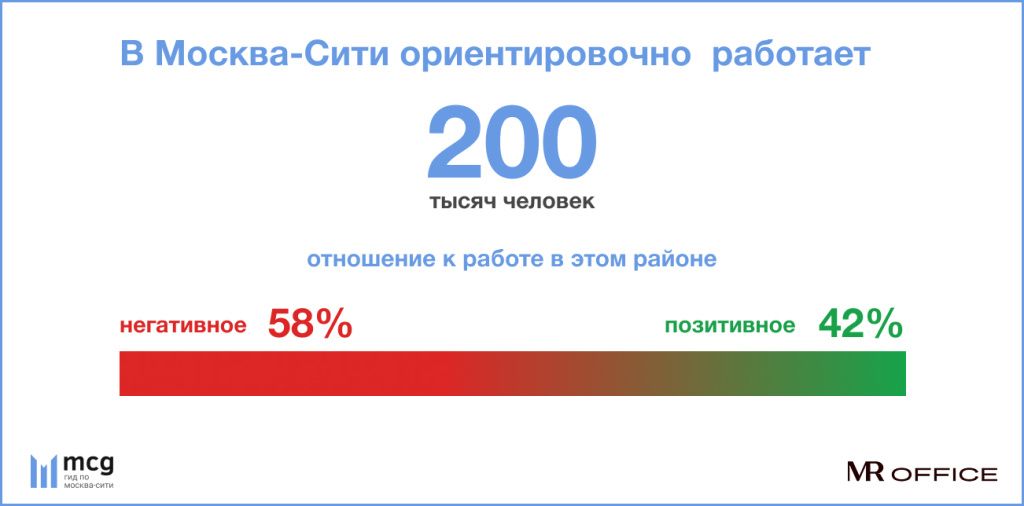
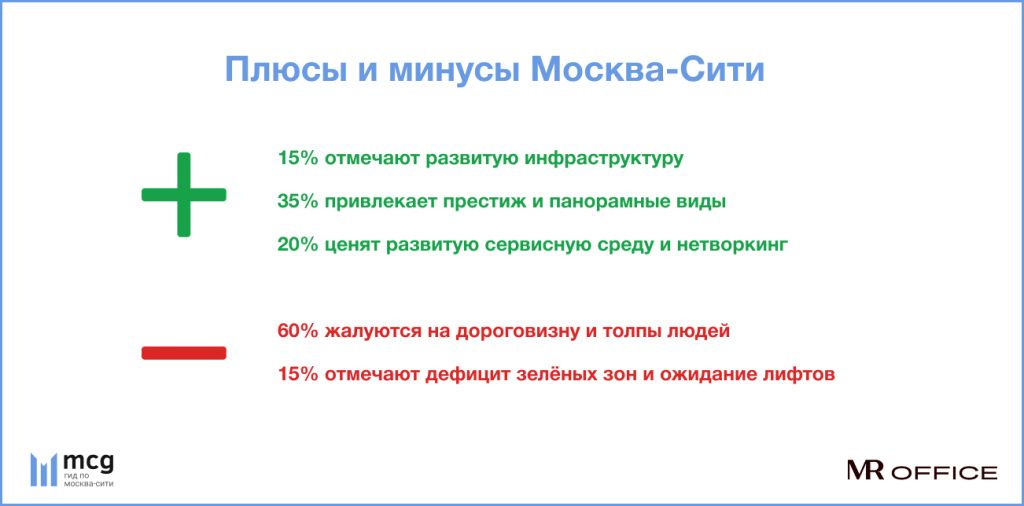
The country's main business cluster continues to evoke mixed feelings among Muscovites. Currently, approximately 200,000 people work in Moscow City, but their attitudes toward their place of work are mixed. According to a survey conducted by MR Office in October 2025, 58% of city residents have a negative attitude toward working in the district, while 42% maintain a positive attitude toward the capital's business complex.
The main complaints about Moscow-City remain the same: six out of ten respondents complain about crowds and the high cost of local restaurants and shops, while a quarter of respondents note a lack of green spaces and walking routes and are dissatisfied with long waits for elevators in offices. At the same time, one in four now cites developed infrastructure and transport accessibility—previously among the main attractions—as advantages of the district. Thirty-five percent of respondents are attracted by the prestige of the location, panoramic views, and atmosphere. Twenty percent each value the business cluster for its well-developed service environment and networking opportunities.
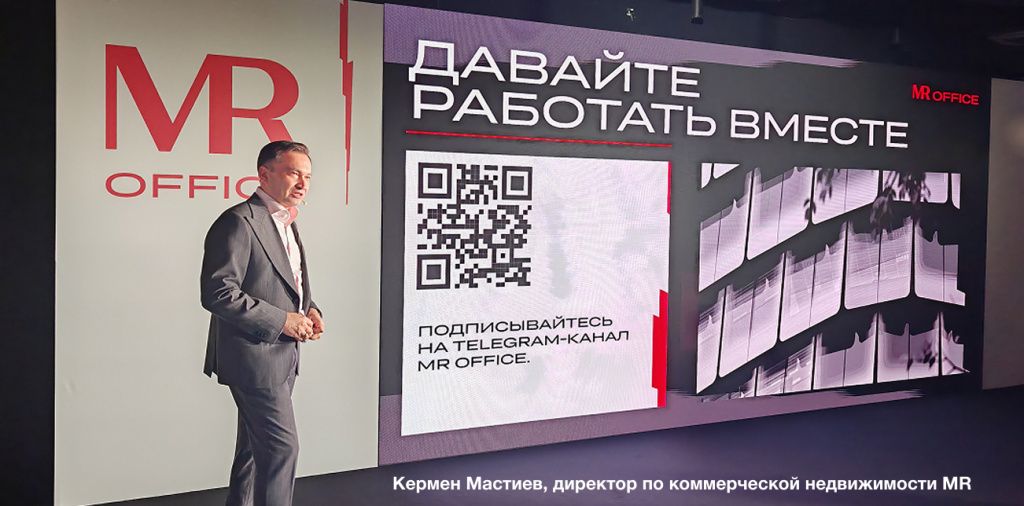
"Our survey showed that 53% of Muscovites would prefer to work in a modern business park with shops, services, and green spaces—regardless of its location. In this regard, Moscow City is actively working on its mistakes: the district is rapidly transforming into a location where prestige combines with convenience and a modern urban environment. The paradigm of office development is shifting: from an isolated and cold business center to an ecosystem that offers space for business, leisure, and residence. The trend is clear—the City is becoming more comfortable, thanks in part to our projects, and this is changing attitudes toward it," noted Kermen Mastiev, Commercial Real Estate Director at MR.
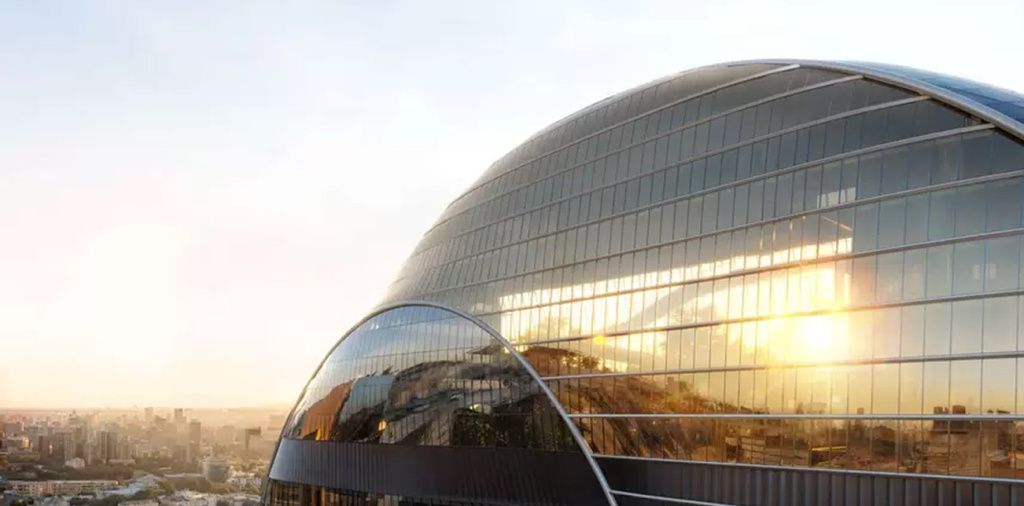
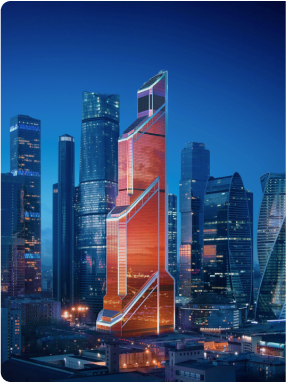
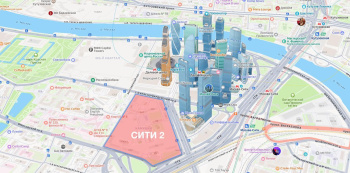
Today, there are approximately 1.6 million square meters of office space in the capital's business center. For a long time, new projects were rare and poorly addressed residents' needs for a comfortable environment. This situation will change dramatically in the near future: by 2030, another 700,000 square meters of office space will be built in the district. In these new projects, developers are shifting from infill development to creating a balanced urban environment focused on the needs of residents and residents of adjacent areas.
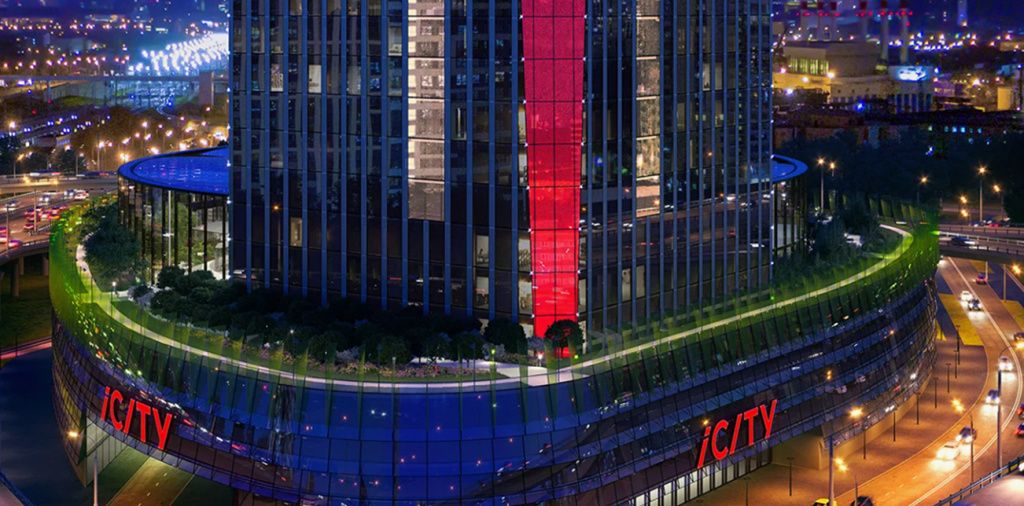
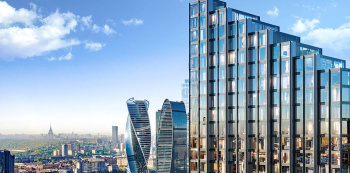
The new iCITY skyscraper features the largest landscaping in Moscow City—almost 15,000 square meters of landscaping have been completed on the stylobate of the new iCITY skyscraper. Promenades, cafes with summer terraces, restaurants, shops, a fitness center with a swimming pool, and a third of the space is occupied by a landscaped park planted with perennial grasses and shrubs.
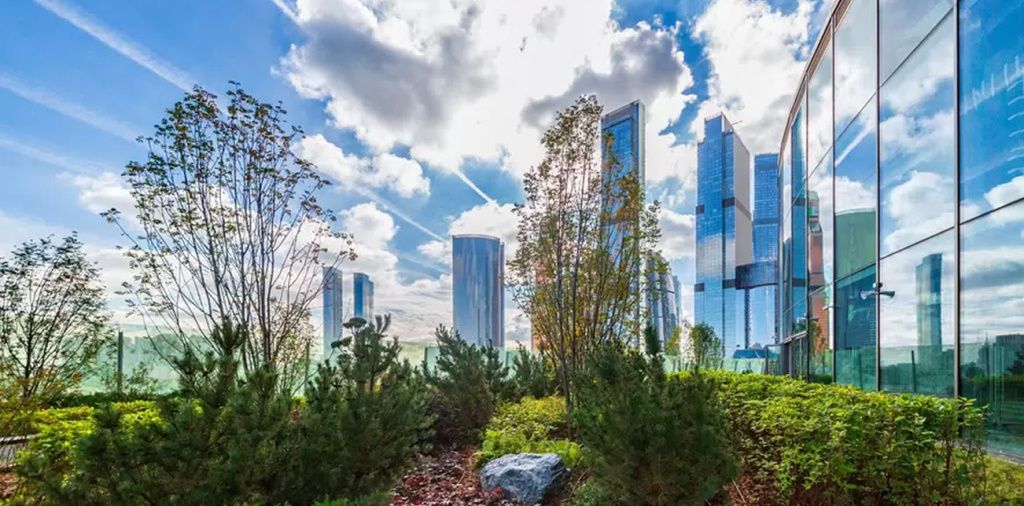
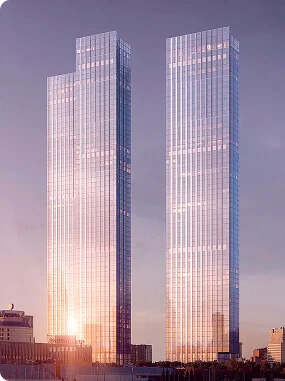
In the future, the number of green spaces in the area will increase. For example, another new project, Tower One , announced in the summer of 2025, includes a park on the 85th floor. The 400-meter Bagration Tower project also includes landscaping and greenery.