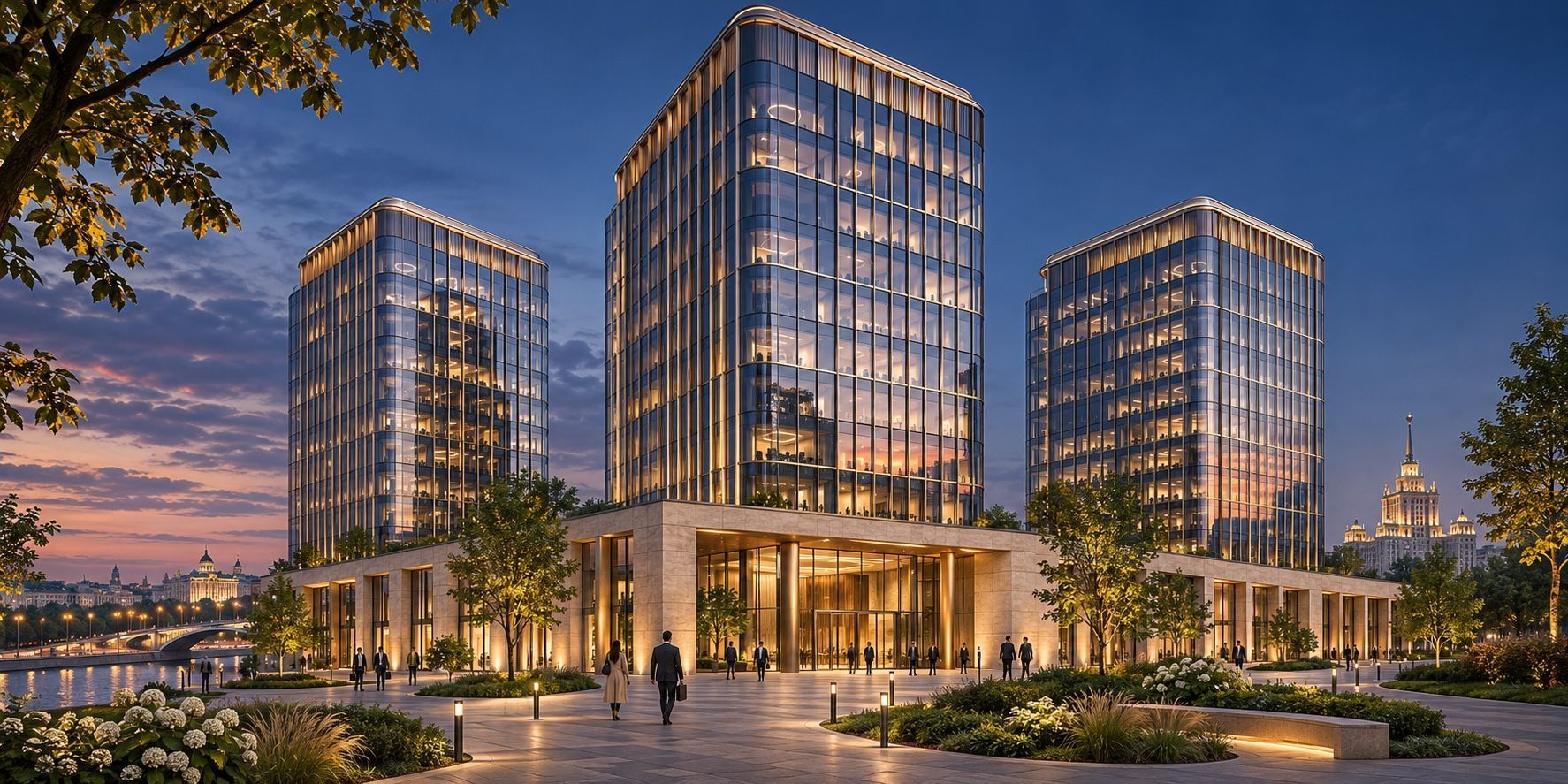
SLAVA Business Centre comprises three 20-storey office towers at 2, 1st Yamskogo Polya Street. Their commissioning was announced in October 2025. In July 2024, the Bank of Russia had announced the purchase of the complex while it was under construction. SLAVA's residential buildings belong to separate phases of the former watch factory site's redevelopment.
SLAVA Business Centre address and specifications
SLAVA encompasses several parts of a larger project: apartments, residential buildings, a business centre and public spaces. They have different uses and delivery schedules. Information about a home in a new building does not describe an office tower, and the completion target for the whole quarter is not the commissioning date of each building.
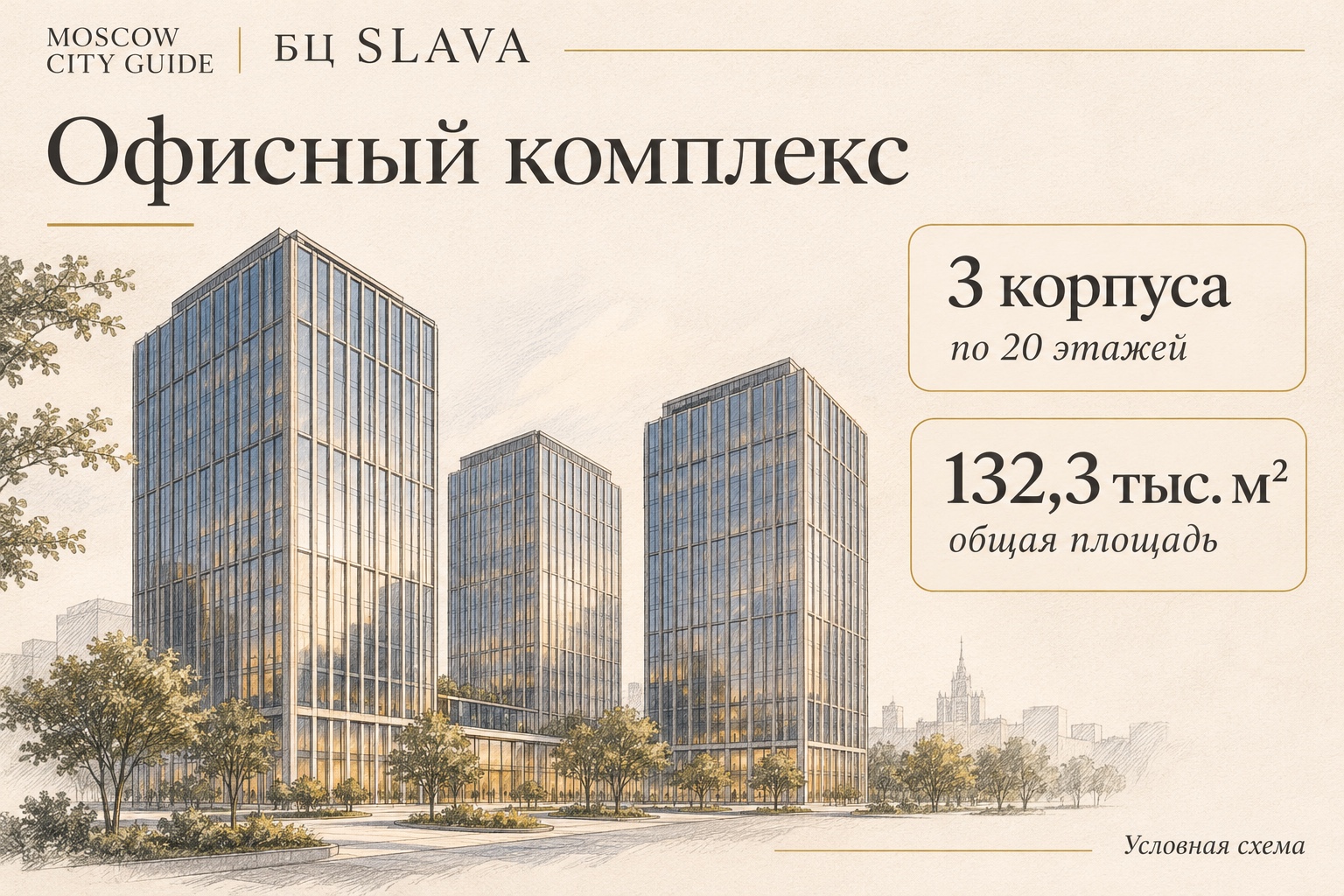
The business centre consists of three 20-storey buildings. The Moscow construction oversight authority's announcement published by CRE gives the postal address as 2, 1st Yamskogo Polya Street. VEB.RF and MR developed the project together. The office buildings' commissioning was announced on 9 October 2025.
| Parameter | Commissioned business centre |
|---|---|
| Location | Begovoy District, 2, 1st Yamskogo Polya Street |
| Buildings | Three buildings, each 20 storeys |
| Gross floor area | 132,300 m², according to the commissioning announcement |
| Offices and retail | 110,700 m² combined, according to the same announcement |
| Design capacity | Around 12,500 workplaces |
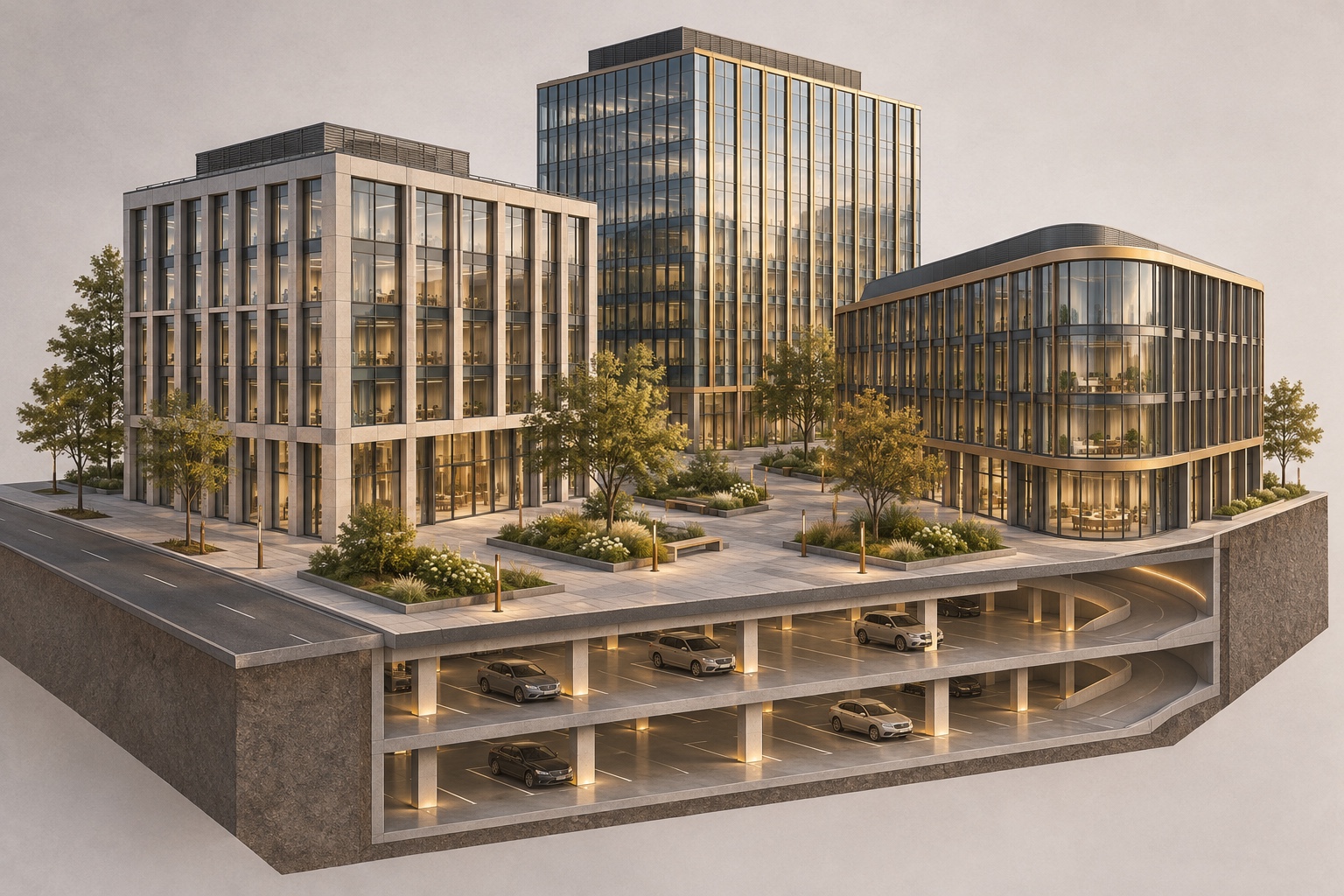
| Underground parking | Two levels, 589 spaces |
| Project partners | VEB.RF and MR |
The combined office and retail figure is not the net office area. Nor is design workplace capacity the number of employees already arriving every day. These distinctions matter when using building statistics to estimate traffic or future demand for local services.
SLAVA commissioning and the planned handover
SLAVA office offers appeared in 2023. In July 2024, the Bank of Russia announced its purchase of the complex under construction; the commissioning announcement followed in October 2025.
- 19 July 2024. The Bank of Russia announced the purchase of the complex under construction, with handover planned for the first quarter of 2026.
- 9 October 2025. Details of the three office buildings' commissioning were published.
- Handover and relocation. An announced handover date, building commissioning and the start of staff operations are separate events.
The Bank of Russia's press service on 19 July 2024 announced a contract with the VEB.RF group. The regulator described the purchase as a way to consolidate office space: after receiving the complex and completing fit-out work, it planned to transfer a substantial share of its existing buildings to Rosimushchestvo, the federal property agency. It intended to retain its historic building on Neglinnaya Street.
The same statement gave the first quarter of 2026 as the planned handover period. That date cannot automatically be treated as proof that relocation occurred. Contract signing, commissioning, handover, fit-out and staff arrival are separate milestones. The public sources used for this review confirm commissioning; this article does not claim that the entire relocation has been completed.
This distinction avoids a common error: an old announcement of a future deadline later becoming an alleged established fact in directories. For a large corporate property, the gap between construction completion and operational readiness can be particularly significant.
What the Bank of Russia announced about the purchase
According to Interfax's report of 9 October 2025, the transaction included all office space in the business centre. It therefore should not be listed as a source of available offices for small companies without further checks. An old sales page still visible in search results does not establish current availability.
This case illustrates the difference between new office construction and new space available to rent. A major completion increases the city's office stock, but a building purchased in advance by an occupier may not expand the choice for other tenants. Total floor area and actual market availability can therefore change in different ways.
SLAVA adds to commissioned building stock in a market review. Inclusion in a list of available offices requires separate evidence: a current offer specifying the floor, area and landlord's contact.
The Bank of Russia's official statement did not disclose the price. Expert estimates published in the business press should not be presented as the confirmed contract amount. The established purchase and the business centre's scale are sufficient to explain its market role.
The redevelopment of the factory site
SLAVA is being developed on a former watch factory site, and its name preserves a link to that industrial history. The modern business centre should nevertheless be regarded as new construction, not automatically described as restored factory buildings. A historical reference in a brand and the preservation of an original building are different things.
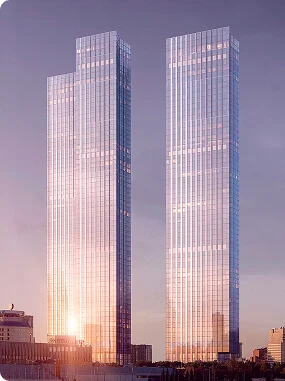
The commissioning announcement describes extensive glazing, pale golden-toned piers, arches and decorative facade motifs. The three buildings form one composition. Recognition comes from repetition and the relationship between volumes rather than the exceptional height of a single skyscraper.
The base of the complex matters equally to the street experience. Entrances and service premises on the lower floors are what pedestrians encounter. The upper levels shape the distant skyline; the lower ones determine whether the route past the buildings is convenient, entrances are clear and there are reasons to spend time nearby.
An industrial site is usually organised around production, separating it from surrounding streets. Its transformation into a mixed-use quarter brings a different task: connecting workplaces, homes and public routes. Success can be judged not only by facades but by the continuity and clarity of the resulting urban space.
What is known about the building systems
The construction oversight authority's published announcement lists mechanical supply and extract ventilation with heat recovery, four-pipe air conditioning and motion-sensor lighting. These describe systems in the commissioned building and help explain its technical specification. They are not an independent assessment of actual operating costs.
For a large corporate office, building services need to maintain suitable conditions for many occupants. Evaluating them requires specific design parameters and operating patterns. An equipment list alone cannot establish comfort, resource use or cost per employee.
The same distinction applies to environmental commitments in early presentations. An intention to meet a standard and an awarded certificate are different statuses. A review should rely on confirmed systems and cite separate certification only when the relevant document and date are available.
What the new offices change around Belorusskaya
A large office development affects its district in several ways. Staff need transport, food and everyday services; visitors need clear directions and waiting areas; neighbours need convenient pedestrian routes and manageable interaction between business and residential activity. These interests meet at ground-floor level and in public spaces.
The design capacity of 12,500 workplaces cannot be converted directly into a guaranteed number of customers for a nearby shop. Actual footfall depends on occupancy, attendance patterns, entrance locations and the employer's internal facilities. A business needs to study real routes, not capacity alone.
Major transport hubs play a prominent role. Proximity to rail and metro services extends accessibility but does not remove local obstacles such as crossings, level changes, vehicle approaches and the distribution of pedestrians between exits. A business district depends on many small connections, not simply a “near the metro” label.
How the office towers differ from the residential phases
SLAVA's office and residential properties share a name and an overall site concept, but remain separate products. The business centre's status does not establish the readiness of homes, and the Bank of Russia's office purchase does not mean it bought the entire residential quarter. This distinction prevents mistaken readings of project news.
For housing, examine the selected residential building's permitted use, delivery dates, finishes and documents. For retail premises, assess access, technical conditions and the actual customer base. The office transaction provides context but does not answer those questions automatically.
Nor should specifications of new neighbouring projects be applied to the three commissioned SLAVA towers. Other nearby buildings may have different heights and schedules. A shared developer and geographical proximity do not establish that projects belong to one phase without explicit documentation.
What the case means for the Moscow-City office market
Moscow-City and the Belorusskaya area represent different concentrations of business property. The former is defined by skyscrapers and a major mixed-use district; the latter combines established streets, a transport hub and several office quarters. SLAVA shows how a large corporate location can emerge within that setting.
Start an office search by confirming availability and the possible move-in date.
For space on the open market, consult other Greater City business centres and current property offers. The story of a major corporate property can help define the search without implying that offices there are available.
Wider context is provided in our Moscow-City office rental analysis. SLAVA is primarily notable as a completed construction phase and a major occupier purchase. Its history explains why new floor area, available offices and actual occupancy must be counted separately.
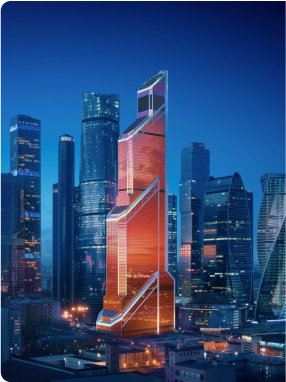
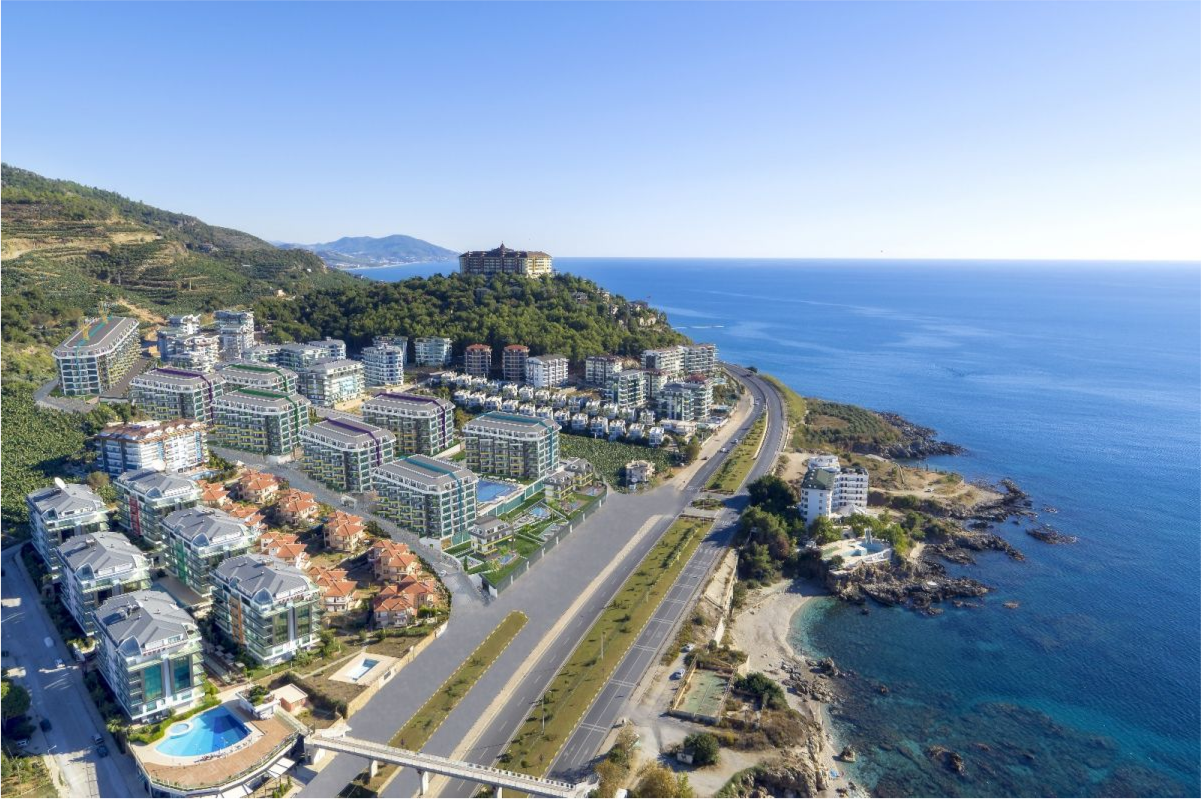
The images are artistic illustrations created for this article; the diagrams are not architectural drawings.