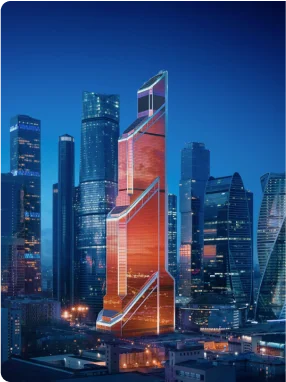


A new project within "City-2"
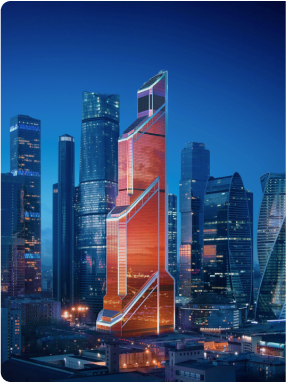
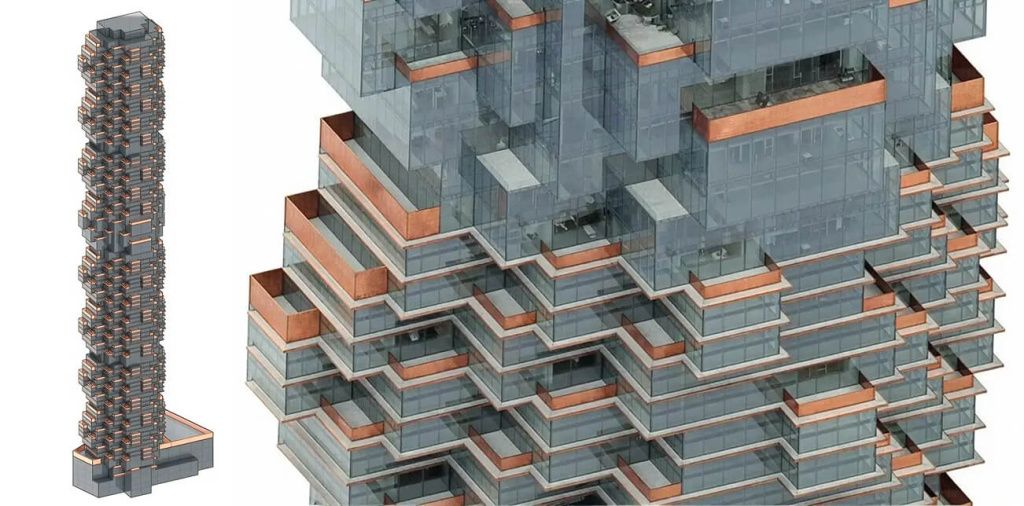
There is growing buzz about the future "City-2" district, which is taking shape next to the existing Moscow City International Business Center. According to reports from industry sources and Telegram channels, a super-tall residential project with a cascading facade is being planned on the site near Antonova-Ovseyenko Street: protruding terraces, loggias, and balconies form a silhouette that is already being compared to a tower made of Jenga blocks.
What is “Jenga”?
“Jenga” is a popular board game in which a tower is built from wooden blocks stacked in layers on top of each other. During the game, players take turns removing blocks from the lower levels and placing them on top, causing the structure to become increasingly stepped, uneven, and visually tense. This is precisely why architectural projects featuring protruding volumes, terraces, and offset elements are often compared to the “Jenga” style.
What is still unknown
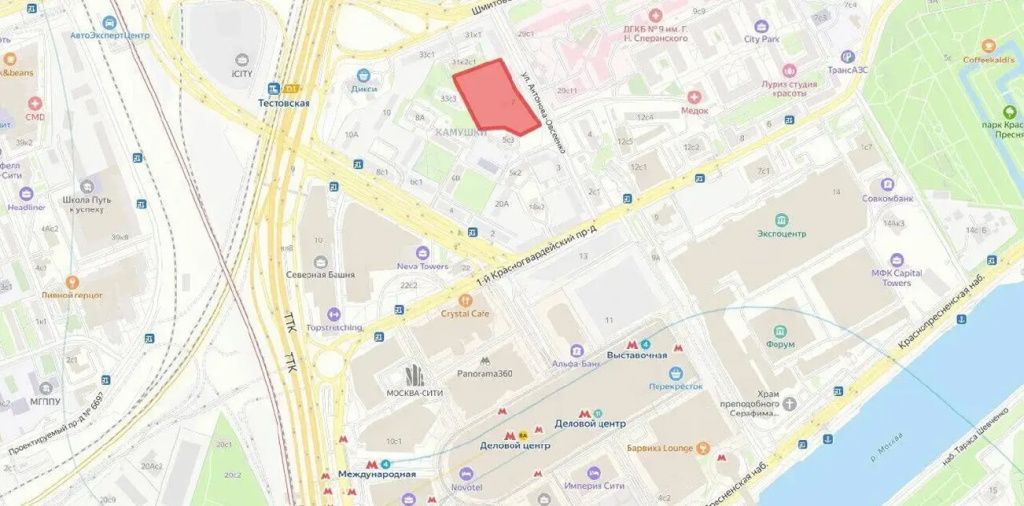
So far, there is no officially published final rendering, architect’s name, or exact height in the public domain. But the site itself has long been considered one of the most ambitious within “City-2.” As far back as 2024, industry media, citing urban planning documents, reported that a development spanning approximately 188,000 square meters could emerge on the 0.85-hectare plot on Antonova-Ovseyenko Street, with roughly 152,900 square meters allocated to residential space and a maximum height potentially reaching 450 meters.
According to publicly available data, the following parameters are under discussion:
- site area — 0.85 hectares;
- total area of the development — approximately 188,000 square meters;
- residential area — approximately 152,900 square meters;
- possible maximum height — up to 450 meters.
Why the concept sparked interest
This is precisely why the new leak regarding the model sparked such interest. If the concept is indeed retained in further development, “City-2” could gain not just another tower, but a residential skyscraper with a distinct “layered” architecture—a rarity in Moscow’s supertall market. Against the backdrop of the more austere glass volumes of the classic “Moscow City,” such a project would appear to be an attempt to establish a distinct visual language for the new district. This is not an official statement, but a conclusion drawn from the available materials and the very nature of the concept under discussion.
How the project stands out visually
- the cascading form of the facade;
- a large number of terraces, loggias, and balconies;
- the effect of “blocks stacked on top of each other”;
- its contrast to the more austere architecture of the existing “Moscow City.”
How “City-2” is developing
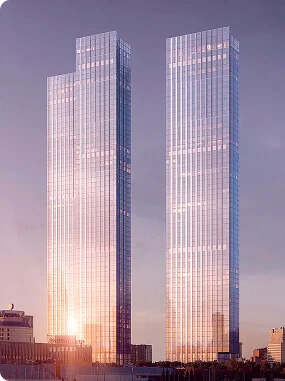
Meanwhile, “City-2” itself is rapidly moving from the design phase to the actual site preparation phase. An engineering plan has already been approved for the new cluster on the site of the Kamushki microdistrict, and the city has begun the reconstruction and construction of roads in the Antonova-Ovseyenko, Shmitovsky Proezd, and TTK areas. Work is also picking up speed at neighboring sites: in February, the developer Strana Development announced the construction of another super-tall residential complex in City-2, which is scheduled to be completed by 2031.
What is already happening on the site
- the engineering plan for the new cluster has been approved;
- road reconstruction and construction have begun;
- the area around Antonova-Ovseyenko, Shmitovsky Proezd, and the Third Ring Road is being developed;
- other super-tall residential projects have already been announced on neighboring sites.
What this could mean for “Moscow City”
If the Antonova-Ovseyenko project is officially unveiled in its current form, Moscow will gain another serious contender for the status of a new high-rise and visual landmark for the entire business cluster. For now, it is more accurate to proceed with caution: a new super-tall residential landmark is emerging in “City-2,” and by all indications, it promises to become one of the most unconventional towers in the future expansion of “Moscow City.”
Related materials:
The design for the bionic skyscraper “Strana.City” has been approved in “City-2”