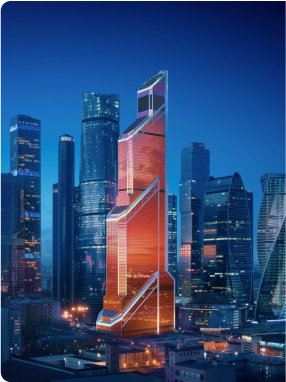
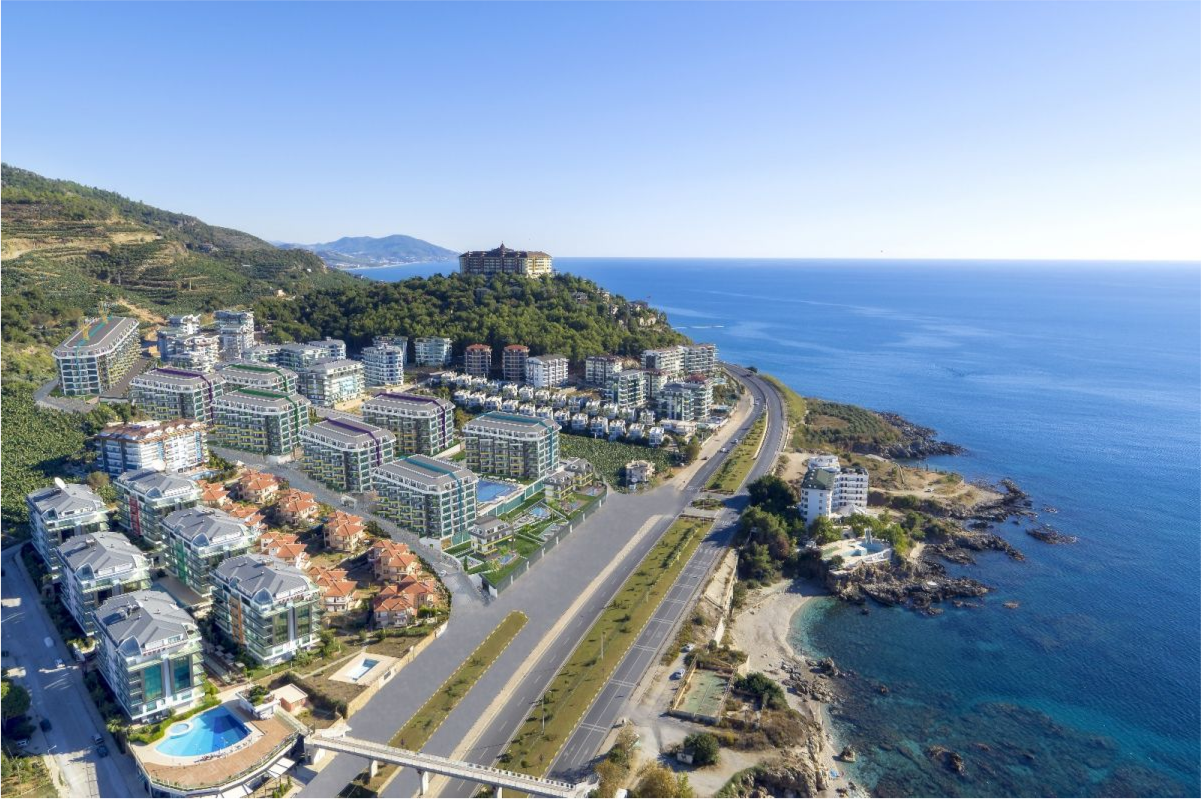
This selection covers six Moscow developers: Donstroy, MR Group, Sminex, PIONEER, KROST and STONE. Triumph Palace and Wellton Towers offer a comparison of completed residential high-rises. HIGH LIFE shows how phases within one development can differ. Lavrushinsky illustrates a residential building with its own park, while iCITY and STONE Towers offer two distinct office locations.
Comparing six developers through their projects
| Developer | Projects to explore | What to compare |
|---|---|---|
| Donstroy | Triumph Palace, the House on Mosfilmovskaya, Sobytie | Changes in high-rise architecture and the design of residential surroundings |
| MR | iCITY, ONE, TOPTOWER, FORUM, Luce | The differences between office developments and small, private residential buildings |
| Sminex | Lavrushinsky, Tishinsky Bulvar, Frunzensky | Residents’ amenities, acoustics and ongoing maintenance |
| PIONEER | HIGH LIFE | The completion stage of each phase and the shared spaces provided |
| KROST | Wellton Towers and the Wellton Park neighbourhood | How the towers connect to landscaped areas at street and podium level |
| STONE | STONE Towers and office projects near Savyolovskaya, on Khodynka and in Mnyovniki | The type of office property: a small unit, a floor or a separate building |
For residential examples, see the profiles of Heart of the Capital and LIFE TIME. Compare office locations in our Greater City business centre directory.
The table describes selected examples rather than setting fixed boundaries around each company’s business. A residential developer may also build offices, and a company known for its office portfolio may offer homes. To assess a particular offer, move from the brand to the project, then to the building and finally to the individual property.

Donstroy: residential towers and neighbourhoods
Buildings from different generations provide an introduction to Donstroy. Triumph Palace in Chapayevsky Lane is composed around a stepped silhouette and spire. Sergey Skuratov’s House on Mosfilmovskaya centres on the relationship between two unequal towers. Both stand out on Moscow’s skyline, but their architectural language and urban settings differ.
The company’s account of how its projects have developed gives particular attention to Sobytie, where shared spaces also extend high above ground. It traces a shift from a building conceived as a standalone urban landmark to a complex network of courtyards, routes and places to relax.
Buyers should consider the age of the property. A resale flat in an established building lets you inspect how its amenities work and the condition of common areas. A new building calls for different questions: what is included in its phase, which landscaping will be delivered alongside it, and how long construction will continue nearby? The reputation of an older landmark does not establish the terms of every new project by the same developer.
MR Group: iCITY and small, private residential buildings
MR offers a broad range of formats. Its office portfolio includes iCITY, ONE and TOPTOWER. Their completion schedules differ: iCITY is listed as built in 2025, ONE is scheduled for the second quarter of 2030, and TOPTOWER for the fourth quarter of 2029. The latter two dates are planned.
That distinction matters to a business. A company needing to move soon requires completed premises with a clear fit-out specification and access arrangements. Buying an office at an earlier stage means accepting a wait and budgeting separately for work after handover. Price per square metre alone cannot capture the difference.
The residential side of the portfolio is illustrated by Luce in Krestovozdvizhensky Lane, described as comprising 43 flats and three penthouses. This scale involves a very different choice from an office tower. Privacy, internal layouts, the finishes provided and the maintenance costs of a relatively small building all matter.
Sminex: homes and services
The Sminex portfolio includes Lavrushinsky in Bolshoy Tolmachevsky Lane, Tishinsky Bulvar in Elektrichesky Lane, Frunzensky on Frunzenskaya Embankment and other projects. The company describes the buildings’ own amenities, private courtyards, sports facilities and children’s spaces in detail.
The practical appeal is clear: some everyday activities move closer to home. But the general term “services” needs to be broken down into specific facilities. One buyer values a pool, another a children’s room, while a third cares more about quiet and avoiding extra journeys. Even spaces a family does not use can affect the building’s running costs.
Make a list of the facilities you need and check it against each project. What is available to all residents, what needs booking, which services cost extra, and how do guests gain access? These answers help you assess an offer without relying on the word “luxury”. A market segment or advertising claim cannot replace a list of services and their terms of use.
PIONEER: why the phase matters more than the overall project status
HIGH LIFE near Paveletskaya shows how different stages of completion can coexist within one development. According to PIONEER, the complex comprises six towers ranging from 24 to 47 storeys. The first three were commissioned in 2025; completion of the second phase is announced for the fourth quarter of 2027.
In practice, “buying a flat at HIGH LIFE” leaves many details unresolved. A completed building and one under construction may differ in move-in date, surroundings during the early years and available properties. Even with a common architectural and landscape concept, the decision concerns a particular phase.
The same approach helps when considering other developers. Do not apply the completion date of the first building to the whole neighbourhood. Check which entrances, access roads and shared areas will be available when you move in. This is especially relevant to families expecting to use the courtyard and school routes immediately, rather than wait for neighbouring works to finish.
KROST: towers and landscaping across several levels
Wellton Towers in Khoroshyovo-Mnyovniki is one of KROST’s high-rise developments. Three towers share a base with a landscaped area that the developer describes as a park 12 metres above ground. The official project page lists the complex as occupied. It forms part of the wider Wellton Park setting.
For residents, the different levels create distinct spaces: the city street below, a more secluded courtyard above, and the flat higher still. Photographs of the towers alone are not enough to assess the building. Walk the entire route from pavement to entrance and courtyard, noting the lifts, stairs and car park entrance.
A completed development lets you check these features on site. Attractive landscaping should also provide a convenient route with shopping, a bicycle or a pushchair. Architecture and day-to-day operation meet at every change of level.
STONE: office buildings and quarters
On the STONE website, office properties are grouped by scale: small units, floors, towers and buildings. Locations include several business clusters, among them Savyolovsky, Khodynka and Mnyovniki. The company also develops residential projects, so describing its current portfolio as exclusively offices would be inaccurate.
For a business owner, this range makes it possible to choose the size of the premises and degree of independence as well as the address. A small practice may suit an individual unit, a growing company a floor that can be reconfigured, and a large occupier a whole building. Owning an entire floor still leaves common rules for access, operation and building services in place.
If buying to let, consider the finances alongside the architecture: who might rent the property, what fit-out would they need, and how long could the office remain vacant? An advertised rent is not the owner’s net income. Account for costs and contract terms before judging the appeal of a particular property.
Where to check the developer’s and property’s documents
The developer’s brand, the residential complex’s name and the legal entity named in the documents may differ. This calls for careful cross-checking rather than an automatic assumption that something is wrong. For a building under construction, begin with the project declaration and its entry in the Unified Housing Construction Information System. Check the specific building and the current versions of its documents.
Use one comparison table for address, building, designated use, area, finishes, dates, total price and separate charges. If one seller includes finishes while another offers an unfinished space, the lower price per square metre may lead to higher costs by move-in. The same applies to offices: a ready-to-use workplace and a space without an internal fit-out meet different needs.
Request the full price and payment schedule from each developer as of the same date. If the final instalments differ, compare the amount you will need by handover.
How to narrow the choice to three suitable projects
Narrow the list step by step:
- A completed flat in a high-rise. Compare Triumph Palace and Wellton Towers by section, entrance and daily journey.
- A flat in a new building. Compare handover dates and the readiness of shared infrastructure, as with the two phases of HIGH LIFE.
- An office for your team. For iCITY and STONE Towers, first compare available premises, the route to reception and the technical specifications of the unit.
For an office in a Moscow-City tower, check the route to the correct entrance on a working day. Two residential projects in neighbouring districts may involve different connections and walking times.
For your own purchase, a good developer is one offering a suitable, verified property with clear obligations. Its portfolio and experience help form a shortlist, but the documents, individual premises and conditions of use determine the final choice. At this level, differences between Moscow developers become useful in practice.
The images were created as artistic illustrations for this article; the diagrams are not architectural drawings.