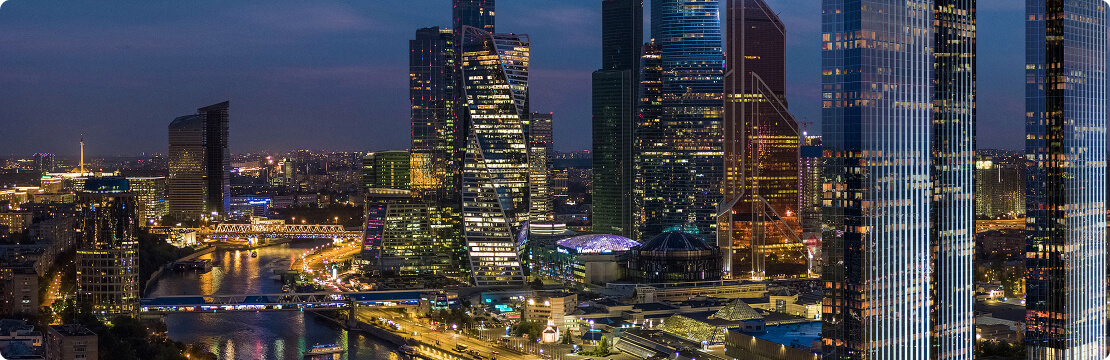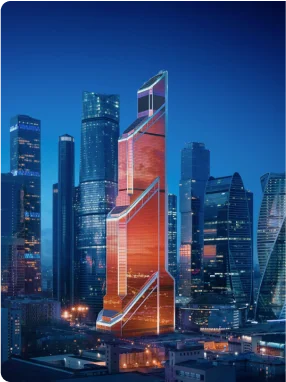


Early in the morning on June 12, an event took place in Moscow City that had been two weeks in the making but lasted less than a minute. Base jumper Sergey Boytsov—a multiple world record holder and member of the Russian Aeronautical Sports Federation—jumped from the roof of the Mercury Tower, a height of 338.8 meters. A colorful smoke trail trailed behind the athlete, and near the ground, a canopy unfurled in the colors of the Russian flag.
How it happened
It all happened at dawn, when the business center was practically empty. At 4:15 a.m., Boitsov unfurled the tricolor on the roof of the Mercury Tower; at 4:30 a.m., he activated the smoke flare and stepped off. According to Rosmolodezh, which published footage of the jump, this is the first official base jump from a building with a smoke bomb in Russian history.
The athlete dedicated the jump to Russia Day, and the event itself was held in support of the 2026 International Youth Festival. Boytsov noted that he shares the festival’s motto, “Follow Your Dream”: in his words, great achievements are born where there is a team, trust, and a willingness to take on what seems impossible.
Why the jump was considered particularly difficult
At first glance, the height of the “Mercury” should have made the task easier—providing more room for the canopy to open. In reality, the opposite is true. The towers of “Moscow City” stand close together, the wind currents between them are unpredictable, and the athlete had only a single air corridor for a safe flight. This situation left no room for error.
The architecture of the building itself also played a role: the Mercury’s distinctive slanted top determined the separation trajectory. That is precisely why the preparation took two weeks and included training jumps from airplanes and a hot air balloon, studying the area’s aerology, and testing the parachute equipment and special tracksuit. The final “window” for the jump was chosen based on wind conditions at different altitudes—in effect, the date and time were dictated by the weather.
What’s next
"Mercury" is an intermediate stage for Boitsov. The athlete’s next goal is the world record for a jump from a hot-air balloon at an altitude of 11–12 kilometers—that is, from the altitude where passenger planes fly.
For “Moscow City,” this jump is also significant. The business district’s skyscrapers have attracted extreme sports enthusiasts since construction began, but previously such stunts took place illegally and ended with police intervention. The jump from the “Mercury” is a different story: it was approved, prepared, and supported by the government. Perhaps the business district is taking on a new role—that of an official venue for high-altitude sports.