

On July 27, the Moscow Department of City Property finalized a transaction with Expocentre JSC. The city acquired three buildings with a total area of 4,108 square meters and two land plots with a total area of 1.6 hectares on 1st Krasnogvardeisky Proezd. The transaction was valued at 2 billion rubles.
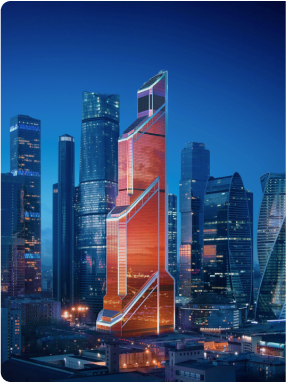
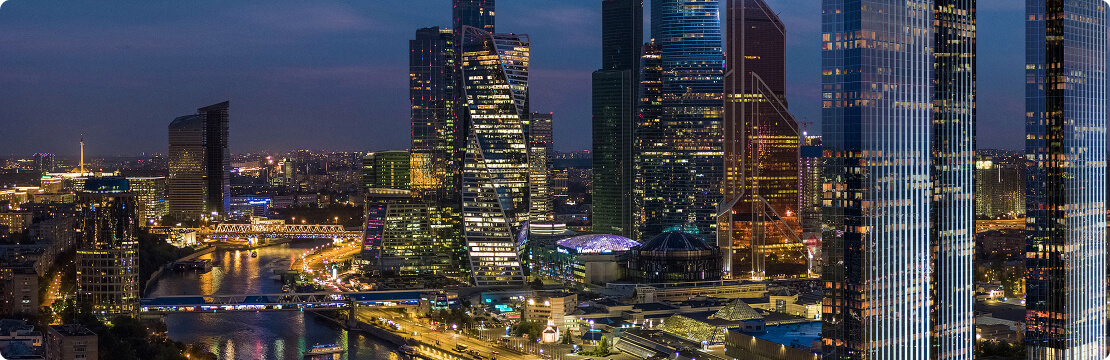
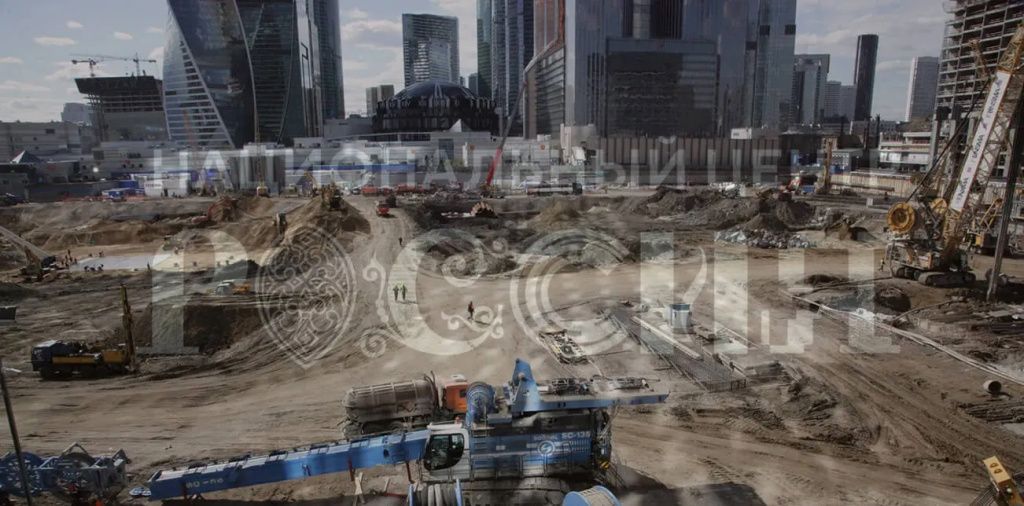
The property in question is the former utility site of the exhibition complex, located across the street from it—between Expocentre and the Moscow City towers. This acquisition marks the second such purchase this year: a year earlier, the city bought a neighboring former power plant from the same organization. Both purchases are adjacent to the construction site of the “Russia” National Center, which is set to open in 2029.
What Was Included in the Deal
The acquired buildings are classified as technical facilities: they supported the engineering and utility infrastructure of the entire “Expocenter” complex. Their combined area totals 4,108 square meters across the three properties.
The land represents the main value of the deal. The 1.6-hectare plot is located within the boundaries of existing development and is equipped with access roads and utility connections.
Transaction Value in a Market Context
Calculated per unit of area, the transaction was concluded at 1.25 billion rubles per hectare, or 125,000 rubles per square meter of land.
For comparison: according to VSN Group’s estimates, plots in Moscow without approved feasibility studies are valued at 200–300 million rubles per hectare in standard locations and reach 2–3 billion rubles in premium locations. Over the past year, the average price per hectare has risen by 15–20%—a reflection of the shortage of high-quality sites. This was reported by Alexander Meshcheryakov, Director of Business Development at VSN Group.
Thus, the city acquired the plot at a price in the upper half of the market range, without reaching its maximum. Given its location just five minutes from “Moscow City,” the availability of completed utilities and access roads, the price is in line with market rates.
Calculated per square meter of building area, the deal is equivalent to 487,000 rubles per square meter of technical space—a figure typical for Class A office real estate. This confirms that the acquisition was for the land, and the existing structures are highly likely to be demolished.
Proximity to the “Russia” National Center
The rationale behind the acquisition becomes clear when looking at the adjacent area.
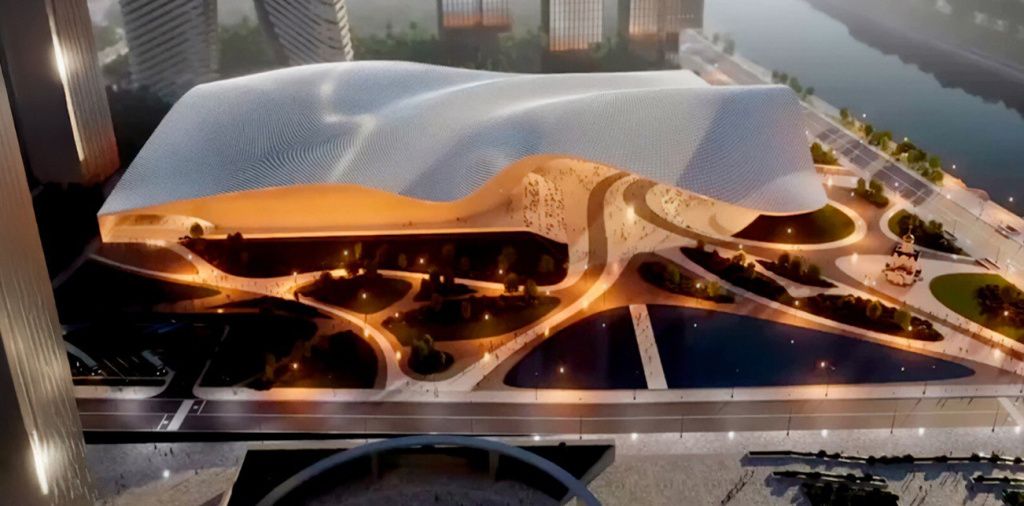
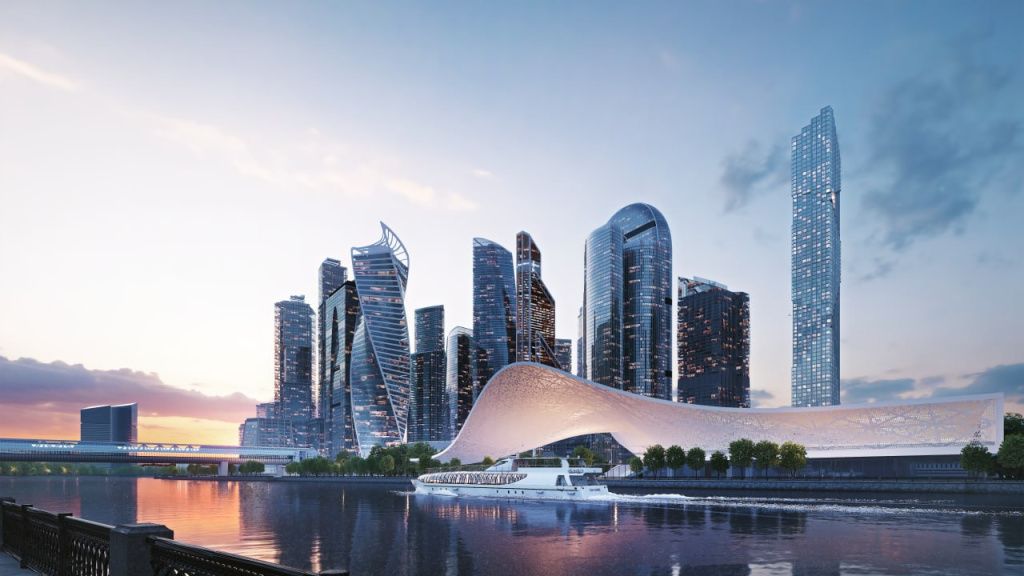
Since late March 2026, construction has been underway there on the “Russia” National Center, a project launched by Vladimir Putin. The project will consist of eight floors and cover a total area of approximately 205,000 square meters, with a capacity of up to 20,000 visitors per day. The opening is scheduled for 2029. The complex will include 60,000 square meters of exhibition space, a 3,500-seat concert hall, a media center, and a creative cluster for young people.
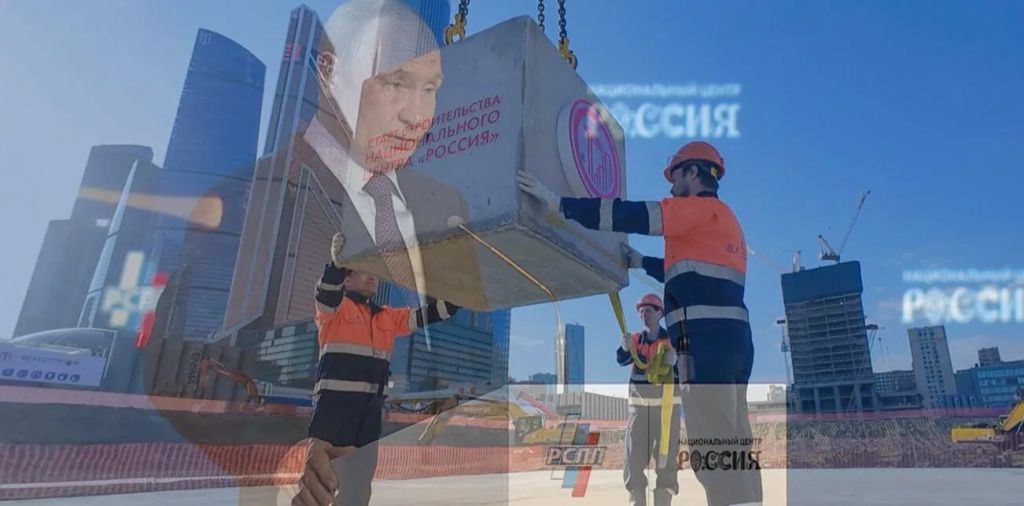
Construction is taking place under challenging conditions: the 15-meter-deep excavation pit is being dug directly above six tunnels belonging to three subway lines. Work is carried out at night, during a two-and-a-half-hour construction window between the last and first trains.
A project of this scale requires infrastructure support beyond the site’s boundaries: access roads, parking facilities, unloading zones, areas for managing visitor flows, as well as space for temporary structures during the construction period. The adjacent 1.6 hectares meet these requirements.
Sequential consolidation of the territory
The acquisition of the energy center a year earlier and the current transaction form a coherent strategy: two properties from a single seller, in a single location, surrounding a single construction site. The city is systematically forming a land parcel adjacent to the future center using a contractual mechanism.
For Expocentre, the sale is also justified. The complex has transferred three pavilions—Nos. 3, 4, and 7, with a total area of 37,000 square meters—to the “Russia” Center for exhibition purposes; the exhibition has been operating there since November 2024. Exhibition activity has declined, and the need for supporting infrastructure has decreased accordingly. Selling these assets to a buyer interested in the site is in the best interests of both parties.
Possible Development Scenarios
Official plans for the use of the new plots have not yet been disclosed. Market consultants identify two main directions.
The first is the creation of a cultural and educational center as an extension of the “Rossiya” complex.
In this case, the area would serve a single purpose, with the main facility acting as a satellite.
The second is commercial development.
The current permitted use allows for the construction of business and commercial facilities. In the headline of its article, Vedomosti also suggests the possibility of a residential complex—such a scenario is possible if the permitted use is changed.
It is also likely that both approaches will be implemented simultaneously: part of the area could be allocated for the center’s infrastructure, and part for revenue-generating development. The city uses a similar scheme to offset investments in public projects.
Significance for the District
Over the past two decades, the area around “Moscow City” has developed primarily through office and apartment construction. A business district has taken shape, characterized by the daytime activity typical of this type of development.
The current phase is changing the area’s profile. High-rise development is being complemented by public amenities: a center with a capacity of 20,000 visitors per day, a new waterfront promenade, and pedestrian zones. The composition of the audience is also changing—the flow of employees during working hours is being supplemented by a flow of visitors, including on weekends and in the evenings.
For residents of the district, this means increased traffic: 20,000 people a day is comparable to the passenger volume of a small metro station, and this volume is added to the existing business traffic.
For businesses, these changes open up new opportunities. Restaurants, service companies, and the hospitality sector are gaining an audience that was previously absent from this location.
The 2-billion-ruble deal demonstrates the city’s long-term interest in the area and its willingness to acquire land in phases, staying ahead of market price growth.
Related materials:
The “Russia” National Center—a New Architectural Landmark of the Capital
How the foundation pit for the “Russia” Center Is Being Dug Above the Metro Lines
The new embankment across from Moscow City
Expocenter: address, photos, information