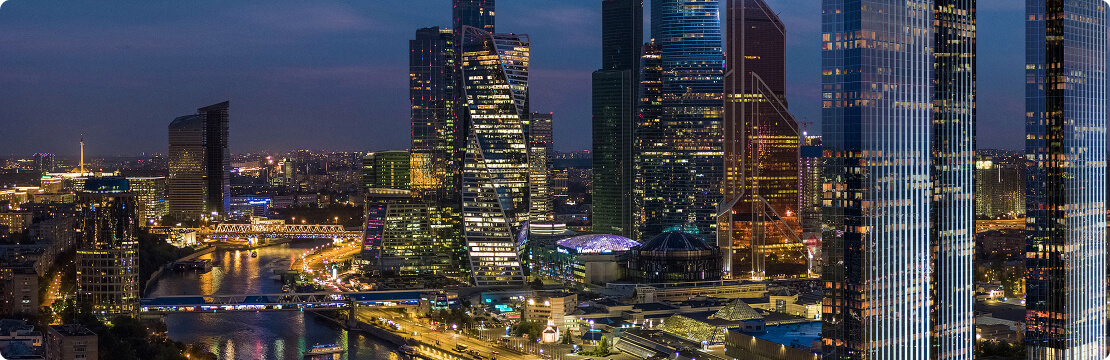

Moscow City is already one of the most accessible business districts in the capital, but its transportation network is set to change even more significantly over the next two years. By the end of 2026, the first section of the Rublevo-Arkhangelskaya metro line is scheduled to open here, and the announced pedestrian bridge over Testovskaya Street will connect the “Moscow City” transportation hub with the “IQ-Quarter” mixed-use complex. According to estimates by MR Office, the office division of developer MR Group, more than 23,000 people commute daily to the business cluster near Shmitovsky Proezd alone, 70% of whom use public transportation.
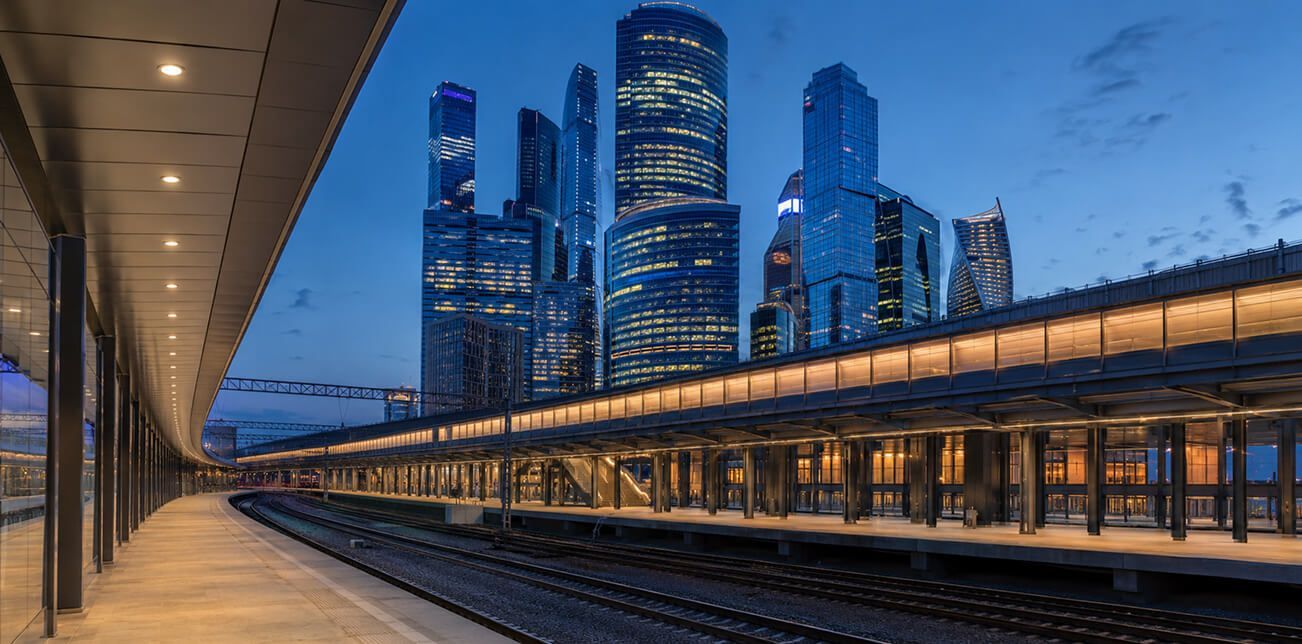
The “Moscow City” station connects the Metro, the Moscow Central Circle (MCC), and two metro lines
When traveling within Moscow City between “Shelepikha” and the core of the business district, more than half of employees and visitors choose to walk rather than take a taxi—according to MR Office. Today, the Metro, MCC, and MCD lines converge in Moscow City. In April 2026, the “Moscow City” urban station opened here, connecting the D1, D4, MCC, and Metro lines within a single covered complex. Transferring between modes of transportation takes no more than five minutes. From there, passengers can also transfer to the Aeroexpress for a ride to Sheremetyevo Airport.
Bolshoi City’s Roads: 35 Kilometers Built, About 25 More to Go
At the same time, Big City’s road infrastructure is being developed. About 35 km of roads, bridges, overpasses, and flyovers have already been built here, with plans to add another 25 km in the future. Construction and reconstruction are underway on nearly 3 km of roads in the area of Antonova-Ovseyenko Street, Shmitovsky Passage, and the Third Ring Road (TTK). New exits to the TTK and an additional access road along it will be built here, and Antonova-Ovseyenko Street and the TTK interchange with Shmitovsky Proezd will be reconstructed. The project will improve access to Moscow City and neighboring areas. Completion of the work is scheduled for 2028.
The flyover to TOP TOWER will open in early 2027
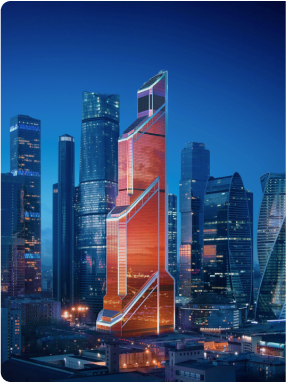
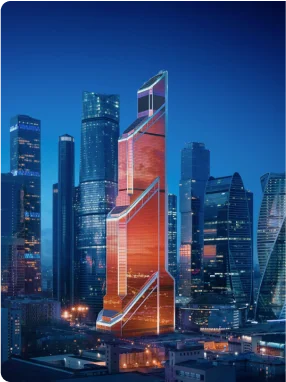
In early 2027, a new elevated roadway will open in the business district, providing access to the TOP TOWER skyscraper. MR Group is overseeing the project as part of its MR Office real estate division. The new access ramp will mean a shorter commute to the office for businesses, an expanded recruitment pool, and more reliable transportation options.
Quality of the commute from the subway to the workplace
For a business cluster where large companies are concentrated, what matters most is not so much the distance from the office complex to the subway station, but rather the quality of the entire commute from public transportation to the workplace. That is why MR Group is involved in developing pedestrian connections around its projects.
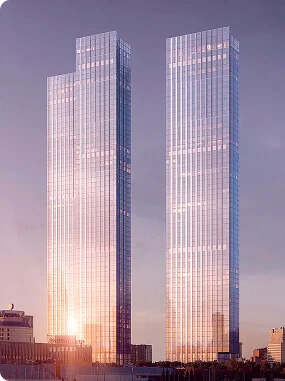
For example, a separate route is already being developed from the Shelepikha MCC station to the iCITY and TOP TOWER office towers. It will pass over the bridge spanning Shmitovsky Proezd, through a landscaped area, and through a tunnel under the MCC. At the same time, tunnels and underpasses beneath the railroad tracks are being renovated, and covered sections and new exits are being added. In preparation for the launch of the Rublevo-Arkhangelskaya Line, digital signage is planned to be installed at the “Delovoy Center” and “Shelepikha” stations to help passengers choose the most convenient route. Well-maintained pedestrian routes and renovated underground crossings lead to iCITY.
“For a modern developer, the work shouldn’t end with the construction of the office complex itself. It’s important to consider a person’s entire daily route: how convenient it is for them to exit the metro, walk from the station to the office, cross the street, and enter the building. It is precisely these scenarios that ultimately determine the true quality of a project. “That’s why transportation and pedestrian connections around the building must be embedded in its concept just as much as the architecture and engineering solutions of the business center itself,” notes Kermen Mastiev, Director of Commercial Real Estate at MR Group.
What This Means for Business
A multimodal transportation system is taking shape around Moscow City, in which the metro, the Moscow Central Circle (MCC), the Moscow Central Line (MCD), the Aeroexpress, and road and pedestrian routes complement one another. For tens of thousands of daily commuters, this allows for the distribution of traffic across different modes of transportation and makes travel times more predictable. For companies, it expands the geographic reach of their workforce and reduces employees’ dependence on a single route. Demand for high-quality office space in the area remains high: read more about this in the article on record vacancy rates and the office shortage in Moscow City.
This article was prepared based on information from the MR Group press office.