

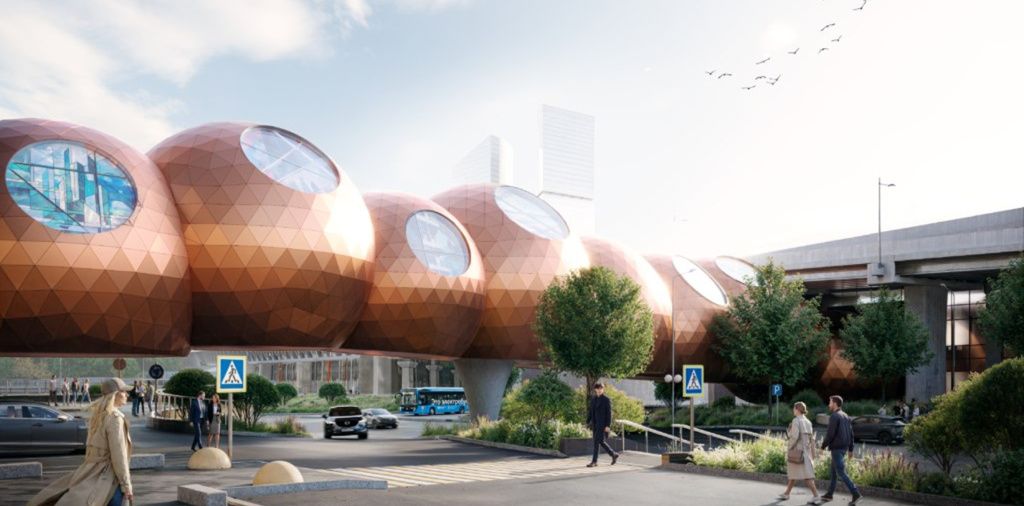
Moscow’s most unusual pedestrian bridge is back in the spotlight. New renderings have appeared online of the bridge, which will connect the public area of the City transit hub with the IQ-Quarter multifunctional complex. And the big news is that the spheres have changed color.
What has changed in the project
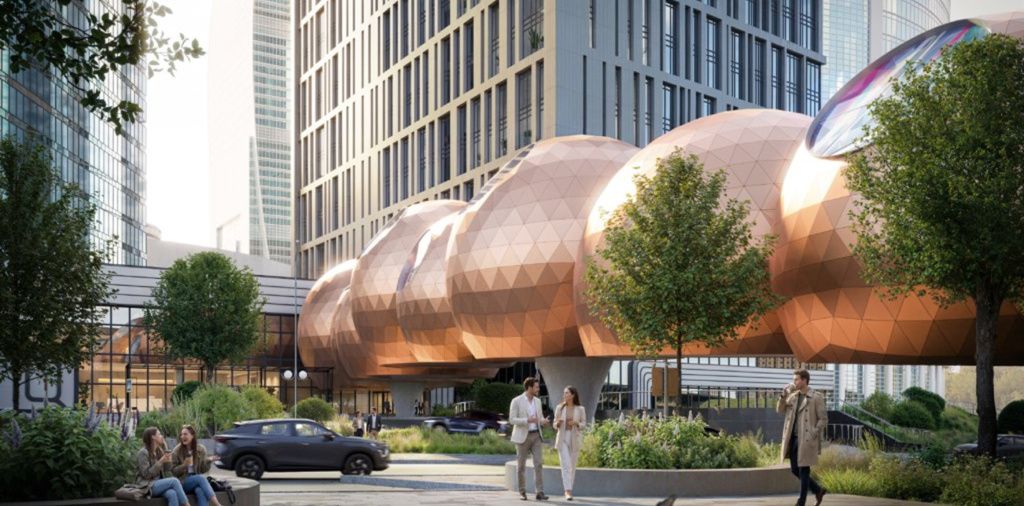
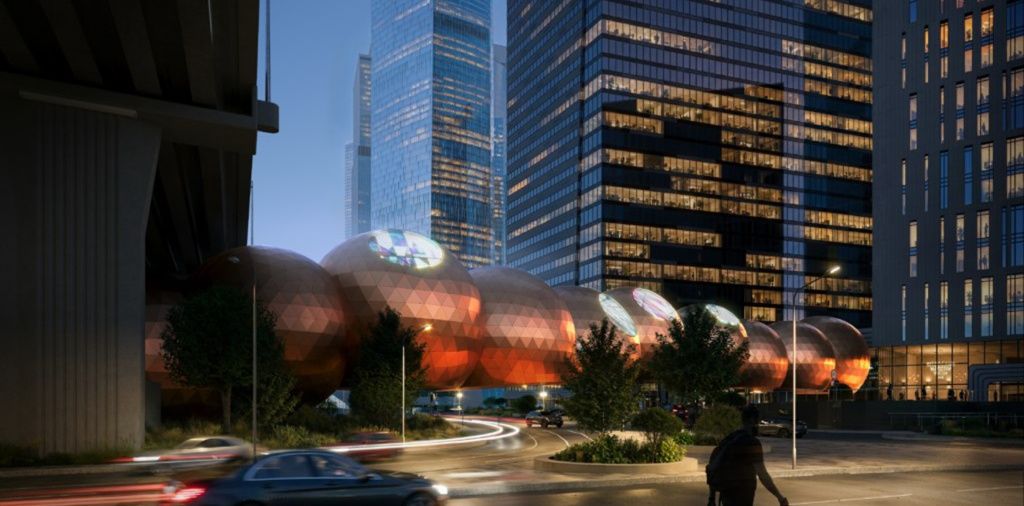
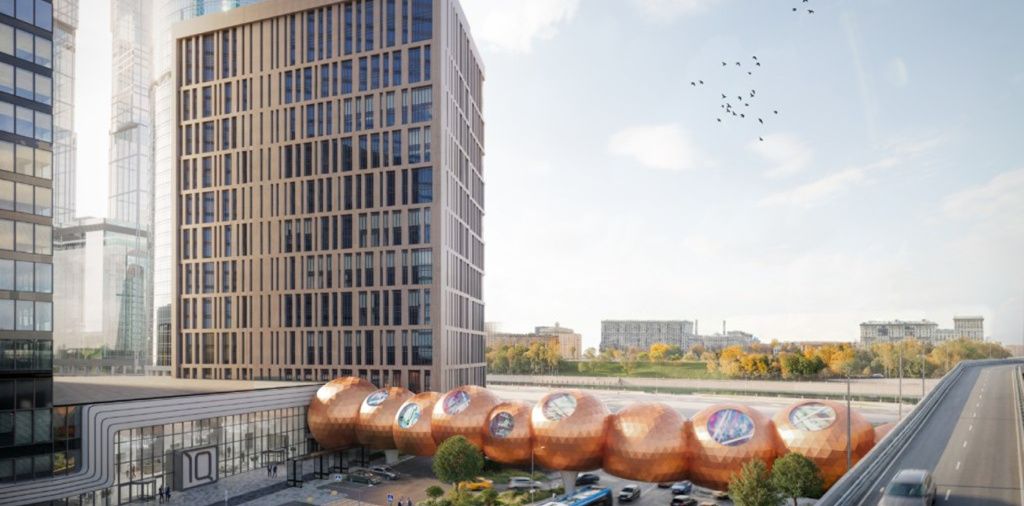
Remember the amaranth-purple spheres from the original 2022 concept? Forget them. Now, the ten spheres strung along the bridge’s axis are finished in a rich copper hue. A warm metallic sheen instead of cold purple—a controversial but striking choice. The copper will catch the setting sun and reflect the glass facades of the surrounding skyscrapers.
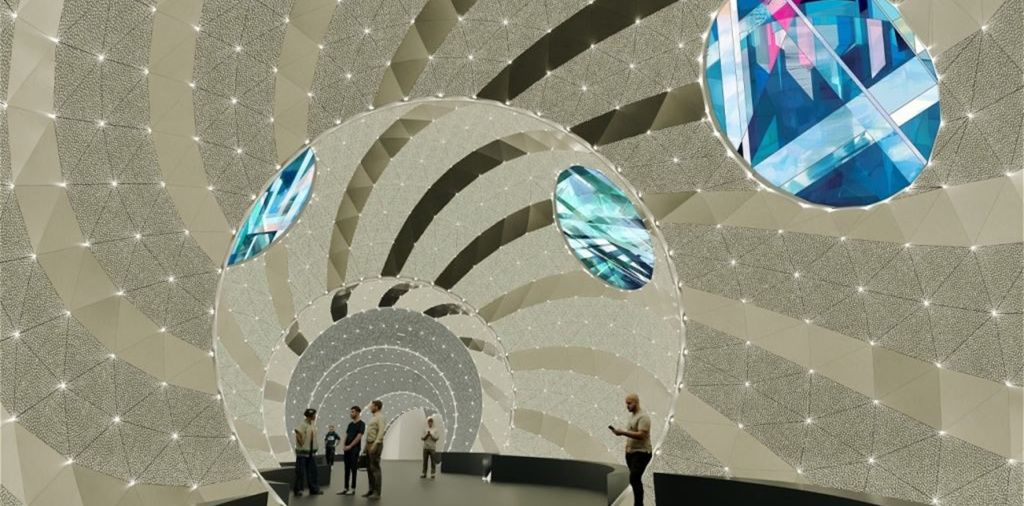
The second notable update is the stained-glass panes of the round porthole windows. In the original version, the windows were simply transparent; now, the light inside the passage promises to play with colorful reflections. For pedestrians, this means one thing: the walk from the station to the office will turn into a small architectural adventure.
Otherwise, the concept by Sergey Kuznetsov and Dmitry Sukhov remains unchanged. Ten spheres with diameters ranging from 13 to 16 meters, assembled according to the principle of Fuller domes: a self-supporting frame made of aluminum triangles, with no massive trusses. The walkway is 7 meters wide and heated inside, so it will be comfortable here even in the freezing cold of winter.
Why this bridge has been so long in coming
The project’s history dates back to 2022—and it’s full of drama. The first two design tenders (worth 69.6 and 72.5 million rubles) ended with the termination of the contracts. In the spring of 2025, the city launched a third attempt—a competition for design and survey work worth 106 million rubles. At the time, we analyzed this project in detail—from engineering solutions to the rounded crowns of the trees that will be planted along the pedestrian bridge.
And here is the result: the third attempt was successful. The project is in its final stage, and the architectural and urban planning solution has been officially approved. The next step is a tender for the construction itself.
The Engineering Behind It: The Subway Beneath Our Feet
The design of the underpass is more interesting than it appears in the renderings. The bridge supports taper toward the bottom—and this is not a mere design whim. Metro tunnels run about 20 meters below Testovskaya Street, so the designers ruled out deep foundations on principle.
Round windows will be placed on two levels: at eye level for pedestrians and almost beneath the dome of the spheres. During the day, this provides natural light and views of the City towers; in the evening, it offers spectacular lighting that will be visible from afar.
What’s Next
For the business center, this bridge is more than just a crossing. It is the final touch in connecting the “City” transport hub with the IQ Quarter, home to federal ministries, and a bid to create a new art landmark for the district. Incidentally, for Sergey Kuznetsov, who stepped down as Moscow’s chief architect in the spring of 2026, the sphere bridge could become one of the most memorable completed projects in “City.”
The construction timeline will be announced after the tender results are finalized. We’ll keep an eye on developments—as soon as details emerge, we’ll be the first to share them.