

us: 50%; background: #2e7d9e; } .mcg-city-ring-dot.mcg-live { background: #c0533e; } .mcg-city-ring-dot.mcg-culture { background: #7b5ea7; } .mcg-city-ring-dot.mcg-infrastructure { background: #2e7d9e; } .mcg-city-ring-dot.mcg-done { background: #2e9e6b; } .mcg-city-ring-dot.mcg-closed { background: #9c9c9c; } .mcg-city-ring-note { margin-left: auto; font-size: 12px; color: #7b828b; } .mcg-city-ring-caption { margin: 9px 0 25px; padding: 0 5px; font-size: 14px; line-height: 1.5; text-align: center; color: #777777; } /* ========================================================= FINAL TABLE ========================================================= */ .mcg-project-table { width: 100%; margin: 20px 0 24px; border-collapse: separate; border-spacing: 0; table-layout: fixed; border: 1px solid #e5e5e5; border-radius: 10px; overflow: hidden; background: #ffffff; font-size: 15px; line-height: 1.5; } .mcg-project-table th, .mcg-project-table td { padding: 14px 16px; box-sizing: border-box; text-align: left; vertical-align: top; border-right: 1px solid #e9e9e9; border-bottom: 1px solid #e9e9e9; overflow-wrap: anywhere; word-break: normal; } .mcg-project-table th { font-weight: 600; color: #222222; background: #f6f7f8; } .mcg-project-table td { color: #333333; } .mcg-project-table th:last-child, .mcg-project-table td:last-child { border-right: 0; } .mcg-project-table tbody tr:last-child td { border-bottom: 0; } .mcg-project-table th:nth-child(1) { width: 23%; } .mcg-project-table th:nth-child(2) { width: 17%; } .mcg-project-table th:nth-child(3) { width: 43%; } .mcg-project-table th:nth-child(4) { width: 17%; } /* ========================================================= TABLET ========================================================= */ @media (max-width: 850px) { .mcg-city-ring { padding: 18px; } .mcg-city-ring-grid { grid-template-columns: repeat(2, minmax(0, 1fr)); } .mcg-city-ring-item.mcg-center { grid-column: 1 / -1; min-height: 90px; order: -1; } .mcg-city-ring-note { width: 100%; margin-left: 0; } } /* ========================================================= MOBILE DEVICES ========================================================= */ @media (max-width: 700px) { .mcg-city-ring { margin-top: 15px; padding: 12px; border-radius: 9px; } .mcg-city-ring-grid { display: block; } .mcg-city-ring-item { width: 100%; min-height: 0; margin: 0 0 10px; padding: 13px 14px 13px 18px; } .mcg-city-ring-item.mcg-center { display: block; padding: 16px; text-align: center; } .mcg-city-ring-title { font-size: 15px; } .mcg-city-ring-item.mcg-center .mcg-city-ring-title { font-size: 19px; } .mcg-city-ring-text { font-size: 13px; } .mcg-city-ring-legend { gap: 8px 14px; margin-top: 13px; padding-top: 13px; font-size: 12px; } .mcg-city-ring-caption { margin-bottom: 22px; font-size: 13px; text-align: left; } /* The table is converted into cards */ .mcg-project-table, .mcg-project-table thead, .mcg-project-table tbody, .mcg-project-table tr, .mcg-project-table th, .mcg-project-table td { display: block; width: 100%; box-sizing: border-box; } .mcg-project-table { table-layout: auto; border: 0; border-radius: 0; background: transparent; font-size: 14px; } .mcg-project-table thead { display: none; } .mcg-project-table tbody tr { margin: 0 0 14px; overflow: hidden; border: 1px solid #e5e5e5; border-radius: 8px; background: #ffffff; } .mcg-project-table td { position: relative; min-height: 44px; padding: 10px 12px 10px 42%; border-right: 0; border-bottom: 1px solid #ededed; } .mcg-project-table td:last-child { border-bottom: 0; } .mcg-project-table td:before { position: absolute; top: 10px; left: 12px; width: 34%; font-size: 12px; line-height: 1.4; font-weight: 600; color: #555555; } .mcg-project-table td:nth-child(1):before { content: "Project"; } .mcg-project-table td:nth-child(2):before { content: "Function"; } .mcg-project-table td:nth-child(3):before { content: "Parameters"; } .mcg-project-table td:nth-child(4):before { content: "Deadline"; } } /* ========================================================= SMALL PHONES ========================================================= */ @media (max-width: 420px) { .mcg-city-ring { padding: 10px; } .mcg-city-ring-item { padding: 12px 12px 12px 17px; } .mcg-city-ring-legend-item { white-space: normal; } .mcg-project-table td { padding: 9px 10px 9px 40%; } .mcg-project-table td:before { top: 9px; left: 10px; width: 31%; } }
More happened around the business center during the four weeks of August than in any other year. On August 14, City Hall was unable to sell a plot in “City-2” for 12.2 billion—no bids were received. On the 20th, sales began at the upscale “César Silika” development on 3rd Silikatny Street. That same month, a pedestrian bridge connecting the City transportation hub to the IQ Quarter was announced, and the foundation slab for the National Center “Ros” was poured at the site of the Expocenter.
"Glow." Different news stories, same theme: the city is taking shape around the towers.For fifteen years, Moscow City existed as an island. Offices, apartments, a shopping plaza—and emptiness all around: the Shelepikha industrial zones, the five-story “Kamushkov” buildings, exhibition pavilions, and desolate embankments. Now this void is being filled in simultaneously from all sides, and there is a clear logic to the process. Let’s break it down layer by layer.
Map: What’s Happening in the First Ring
Sales launch: August 2026 · 4 towers up to 51 stories
Demolition of 18 buildings · ~2 million m² · 384-meter tower
On the site of the Expocenter · 205,000 m² · by 2029
Opening in September 2025
Center of the emerging urban ring
~500 m · Construction begins in April 2026
1.9 km · opened in July 2026
Amphitheater · by 2027
Closed until 2030
Four functions converge in a small area spanning one and a half to two kilometers: housing (“City-2” and “Caesar Silica”), culture (the “Russia” National Center), recreation (a 7-kilometer promenade along the right bank), and connectivity (three new bridges under construction). None of these projects belong to the Moscow International Business Center (MBDC) itself—and that is precisely why they are transforming it more profoundly than any new skyscraper.
Residential Sector: “Kamushki” Is Going, “City-2” Is Coming
The 804 portal has been tracking the neighborhood’s history for a long time: The 18 five-story buildings between Testovskaya Street and Shmitovsky Passage were vacated back in 2019–2020—residents moved into a new 48-story renovation building on Mukomolny Passage, with more than 1,500 apartments. The neighborhood then stood empty for four years. Demolition began in late 2024 and continues to this day.

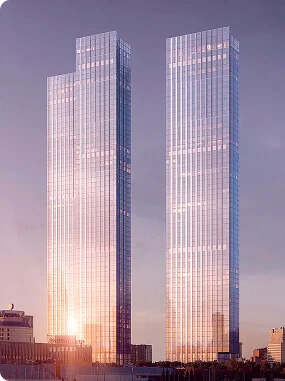
“City-2” is taking shape on the vacated land—about two million square meters of residential, office, and retail space. The area is managed jointly by the city and the developer: 60% is held by the state-owned enterprise “UGS,” and 40% by Capital Group. The first approved project consists of two towers by the “Strana Development” Group, with 96 and 83 stories, respectively. The taller of the two, at 384 meters, is billed as Europe’s tallest residential skyscraper; completion is tentatively scheduled for 2031.
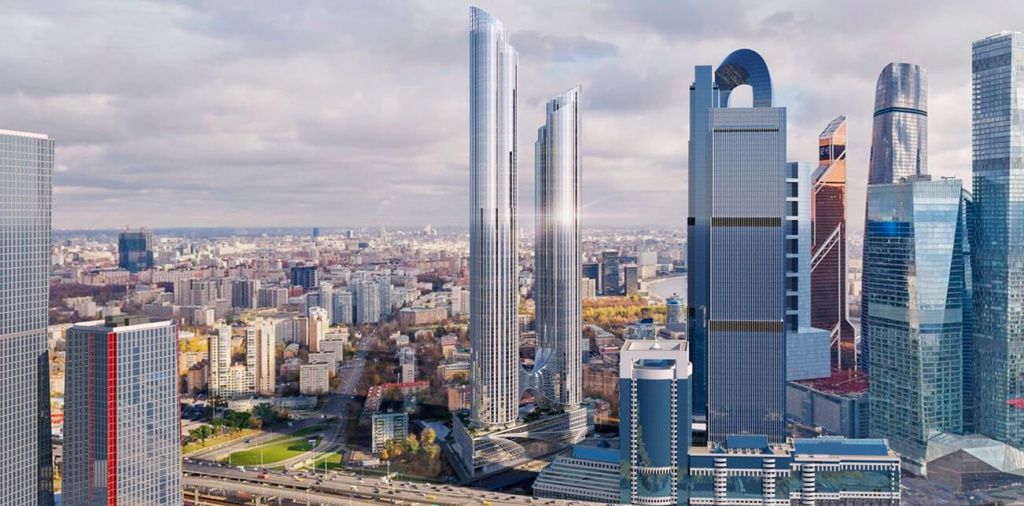
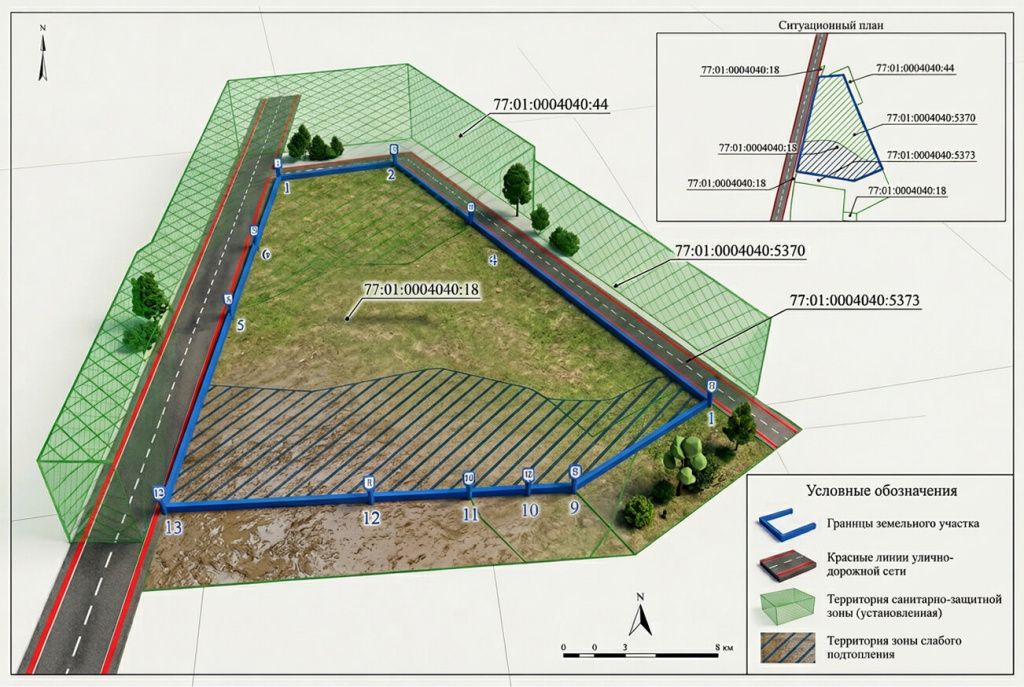
The August incident highlighted both the stakes involved and the fragility of the situation. A 0.9-hectare plot on Antonova-Ovseyenko Street was put up for auction at 12.2 billion rubles—for 303,000 square meters of future development. No bids were received, and the auction was declared void. Land near the City is so expensive that even the city government has to wait for buyers. A repeat auction is expected.
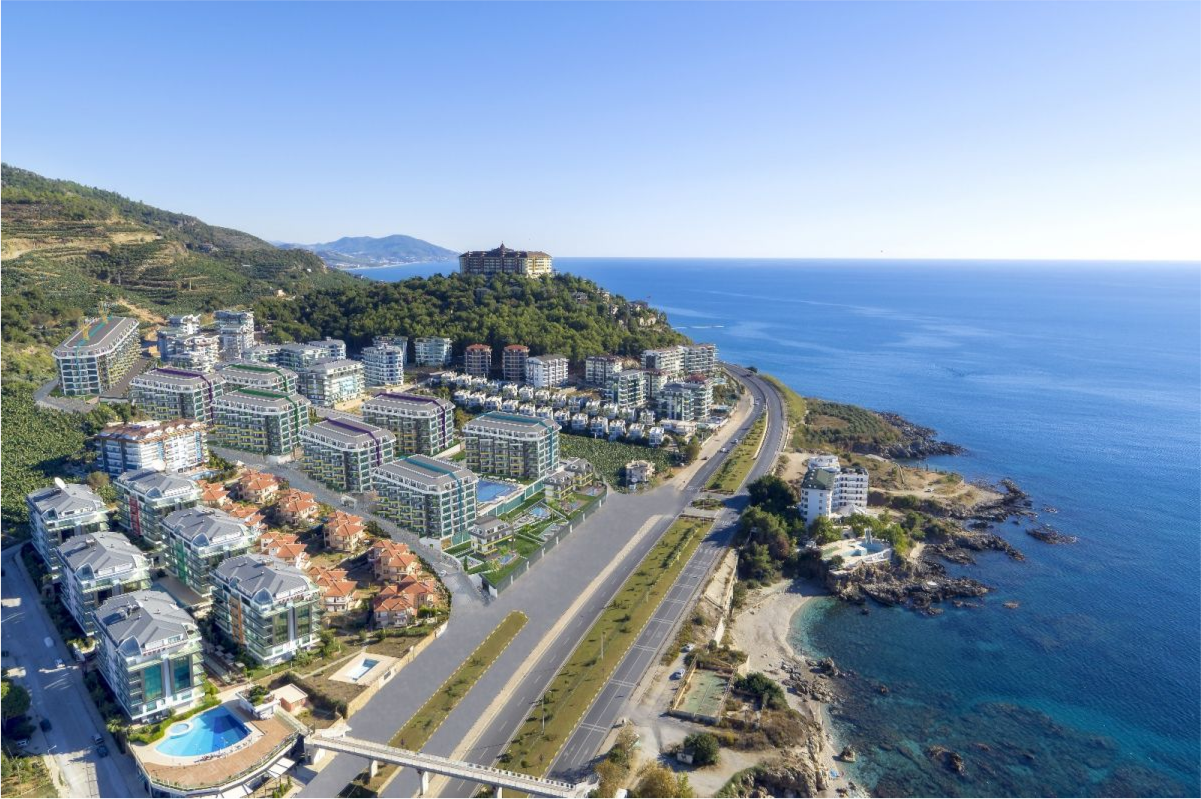
The second residential development announcement in August comes from the northwest. Sezar Group has launched sales at “Sezar Silika” on 3rd Silikatny Proezd: four towers ranging from 36 to 51 stories, approximately 1,500 apartments, with the first phase scheduled for completion by 2030. Starting prices begin at 22.8 million for a 35-meter apartment, or about 650,000 per meter. Technically, this is in Khoroshyovo-Mnevniki, three kilometers from the MMDTs towers. In essence, it’s the same market: the developer is selling a view of the City and membership in “Big City,” which we wrote about in detail in May.
How Much Does the “First Ring” Cost?
Analysts estimate the premium for proximity to the towers differently, but the trend is the same. As early as the beginning of 2024, Metrium estimated that new developments in Big City were 36% more expensive than the Moscow average. By July 2026, according to NF Group, the weighted average price per square meter in the area had reached one million rubles—up 17% over the year and up 36% over two years. By comparison, the average price per square meter in “old” Moscow is 787,000 rubles. The premium segment inside the Ring Road costs 1.31 million rubles per square meter, while the business-class segment costs 800,000 rubles, compared to an average of 533,000 rubles across the city. According to estimates by Whitewill and “Strana Development,” housing in the immediate vicinity of the Moscow International Business Center (MIBC) has risen in price by 43% in just one year. Meanwhile, the Presnensky District has become the leader in price growth within the Central Administrative District: the average price per square meter in local new-construction projects is 1.4 million. What’s available and how much it costs inside the towers themselves is a topic for a separate analysis.
Cultural Landmark: The "Russia" National Center
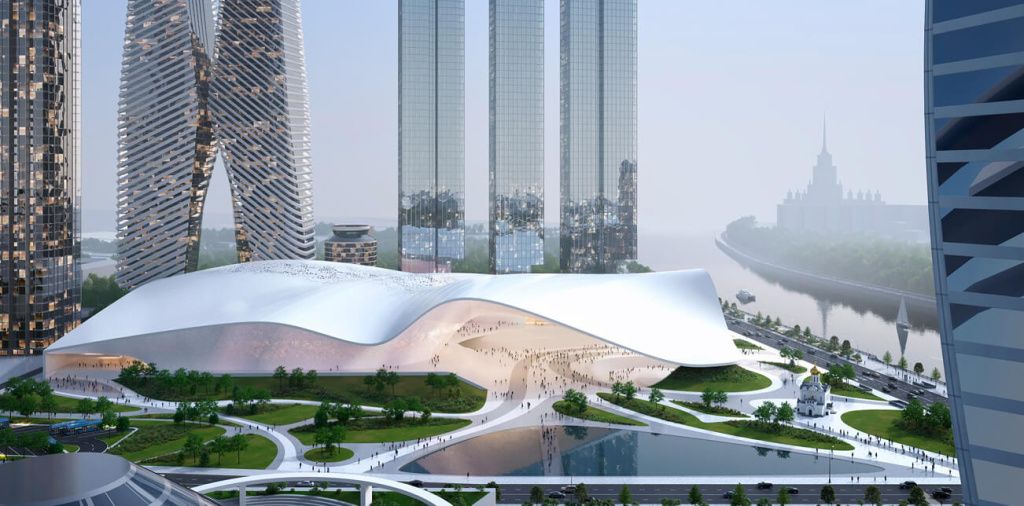
The largest non-residential construction project on the Ring Road is underway on Krasnopresnenskaya Embankment, 500 meters from the towers. Expocenter, which hosted exhibitions for half a century, has closed; its pavilions were demolished in the fall of 2025. In their place, the “Russia” National Center will rise by 2029 — a wave-shaped building spanning 205,000 square meters, designed to accommodate 20,000 visitors at a time, featuring an open-air amphitheater and a park with a pond that will connect to Krasnaya Presnya Park. In March, the main phase of construction officially began—the foundation slab is being poured ahead of schedule.
For the business cluster, this marks a shift in focus. Expocenter catered to the same office-based audience—business travelers, exhibitions, and business visits. The National Center is designed for city residents and tourists, year-round. Additionally, a cultural component is being incorporated within “City-2”: Capital Group held a closed international competition for the neighborhood’s public spaces—a park with a pond, underground galleries, and a cultural center are being designed by five firms, ranging from Moscow-based Wowhaus and A2M to Switzerland’s KOSMOS and Shanghai’s Kokaistudios.
Alongside this cultural dimension, a new business hub is emerging: near the closed Bagration Bridge, the headquarters of the merged company Wildberries and Russ is under construction—a tower up to 398 meters tall that will become Moscow’s tallest building. Read more about it in our August news article.
Infrastructure: Bridges and Seven Kilometers of Waterfront
The pedestrian revolution around the City began with a loss. The Bagration Bridge, which for a quarter of a century served as the only crossing from the towers to the right bank, is closed for reconstruction until the end of 2030—it is being rebuilt in conjunction with the construction of the RVB Tower. In its place, the city is building several new connections at once.
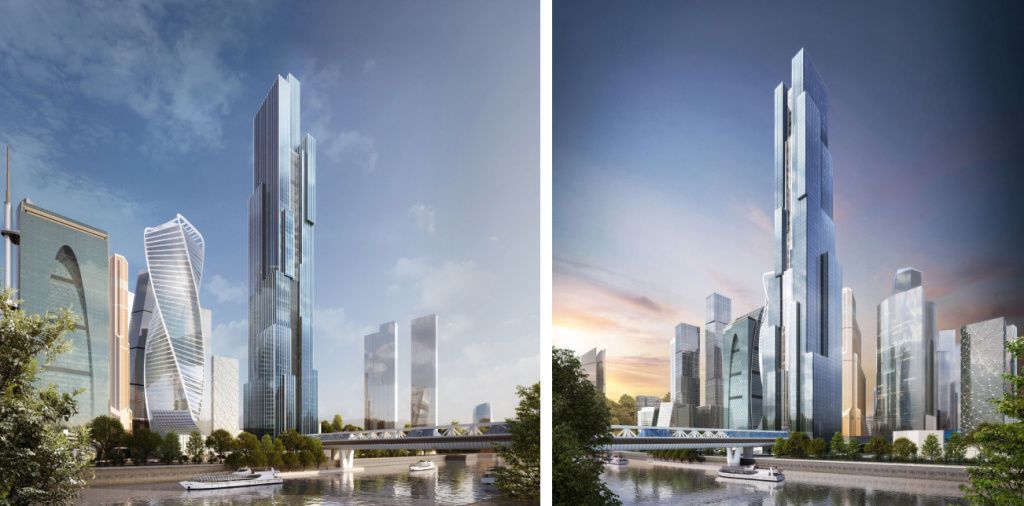
The first one is already in operation: the Academician Korolev Road Bridge opened in September 2025, connecting Shelepikhinskaya Embankment with Beregovoy Passage. The second has been under construction since April—a pedestrian bridge about half a kilometer long that will run along the lower level of the Dorogomilovsky Bridge on the Third Ring Road and connect Taras Shevchenko Embankment with Presnenskaya Embankment: featuring elevators, a heated walkway, and direct access to the towers. A third bridge was announced on August 4: a 90-meter bridge from the City transportation hub to the IQ Quarter, with construction set to begin in 2027. The outer loop consists of two bike-and-pedestrian bridges across the Mnevnikovskaya floodplain, leading to Fili Park and Krylatskoye: they are scheduled to be completed by the end of 2026–2027, at which point it will be possible to cycle from City to Serebryany Bor along the waterfront.
The waterfront itself is also shedding its back-alley image. In July, the “Western Port” promenade opened—1.9 kilometers of paths directly across from the towers. More than 70% of the Shelepikhinskaya Embankment has been renovated. A landscaped park with an amphitheater is being built along the Taras Shevchenko Embankment—to be completed by 2027. The city promises that the entire right-bank promenade—from the “Sail” Bridge to the Dorogomilovsky Bridge—a seven-kilometer stretch of uninterrupted waterfront—will be completed by the end of 2028.
For tenants of the tower, this changes their daily routines: a jog along the water instead of a treadmill at the gym, lunch on the embankment, and a bike ride home to Fili. For residents of the New Ring, however, the opposite is true: they’ll be able to walk to work in the City, which until now has been accessible mainly via the transit hub.
A neighborhood or a cluster?
Now for the main question. The business center was designed in the 1990s as a single-purpose cluster—a place where people come to work and leave in the evening. Everything currently being built around it runs counter to this model. The residential developments in “City-2” and Silikatny Proezd will bring tens of thousands of permanent residents. The National Center—millions of visitors who couldn’t care less about the offices. The embankments and bridges will weave the island together with Presnya, Shelepikha, and Dorogomilovo into a continuous fabric.
The numbers already contradict the stereotype that “the City empties out in the evening”: a dozen and a half residential and apartment towers within the MMDC, 1,500 renovated apartments on Mukomolny Street, and—coming soon—two million square meters of “City-2”. The share of premium projects in Greater City is growing, and prices per square meter here are rising faster than almost anywhere else in Moscow—buyers are voting for a district that, technically, doesn’t exist yet.
There will still be friction. Construction will take a decade: living in the “First Ring” in the coming years means living amid cranes, and the failed August auction serves as a reminder that even the most expensive land in Moscow has its limits in terms of demand. Pedestrian connectivity is currently developing in a paradoxical way—three new bridges are under construction, while the only familiar one is closed for five years. And yet the direction is clear: Moscow City is ceasing to be just a dot on the map and is becoming the center of a neighborhood that is gaining residents, parks, and a life of its own after 7 p.m. The complex took twenty-five years to build. The city around it—that’s happening right now.
New Presnenskoye: 4 Projects, 4 Functions
| Project | Function | Parameters | Timeline |
|---|---|---|---|
| “City-2” on the site of “Kamushkov” | Residential + offices | ~2 million m²; first towers with 96 and 83 floors (384 m) by “Strana Development” | First phase to be completed around 2031 |
| “César Silika,” 3rd Silikatny Prospekt | Premium residential | 4 towers, 36–51 stories, ~1,500 apartments, starting at ~650,000 ₽/m² | 2029–2030 |
| “Russia” National Center | Culture | 205,000 m² on the site of the Expocenter, an amphitheater, and a park with a pond | by 2029 |
| Bridges and Waterfronts | Infrastructure | Korolev Bridge (open), bridge under the Third Ring Road (~500 m), City–IQ Quarter Bridge, 7 km of right-bank promenade | 2026–2028 |
Sources: mos.ru, stroi.mos.ru, data from NF Group, “Metrium,” Whitewill, and developer publications; August 2026.